All talks & lectures

Debate ·

Artificial intelligence is ready to personalise care for people with MS — against

The case against declaring AI ready for personalised MS care: useful research tools are not yet proven clinical tools.

MS Frontiers 2024 · University of Liverpool
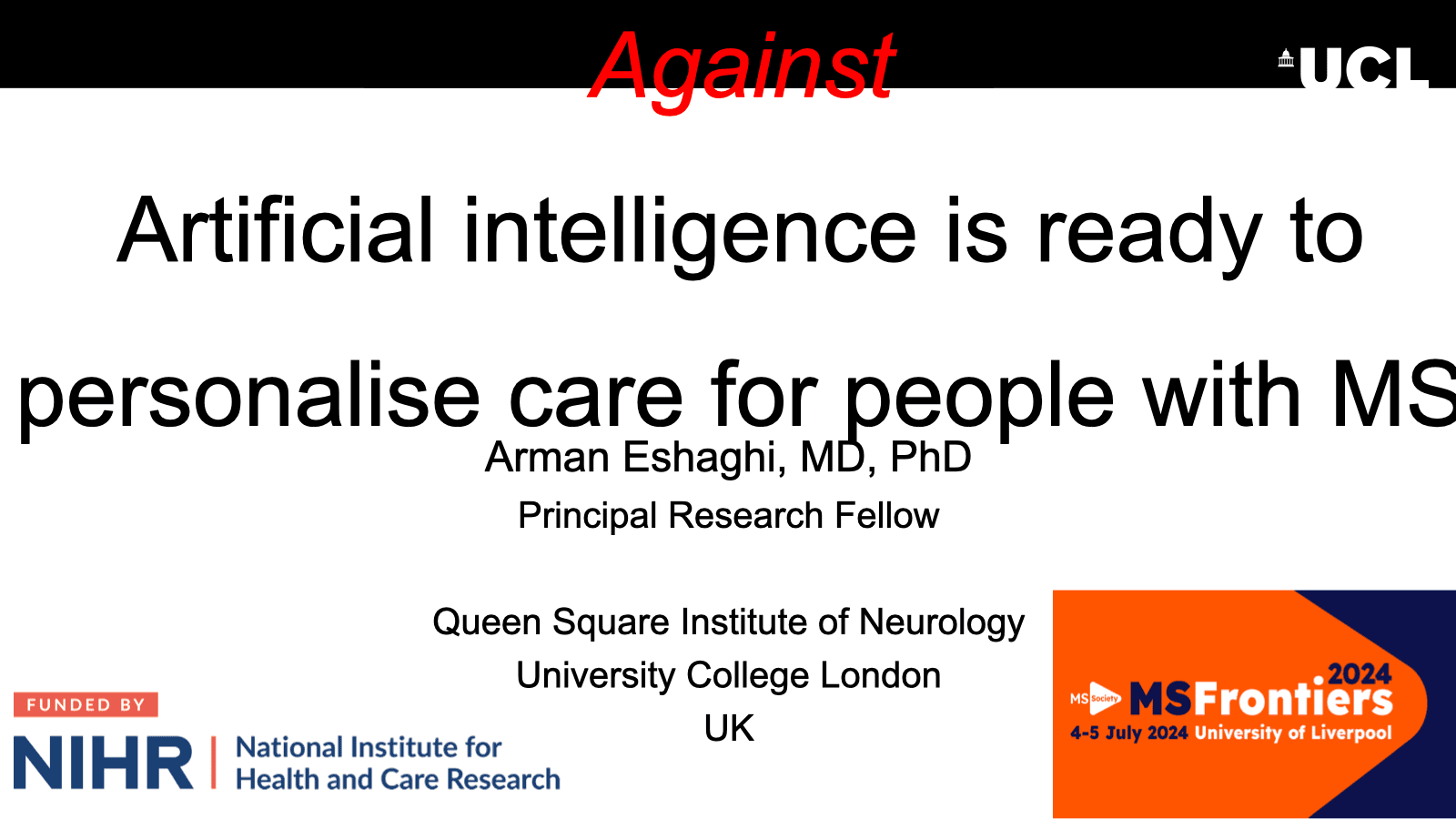
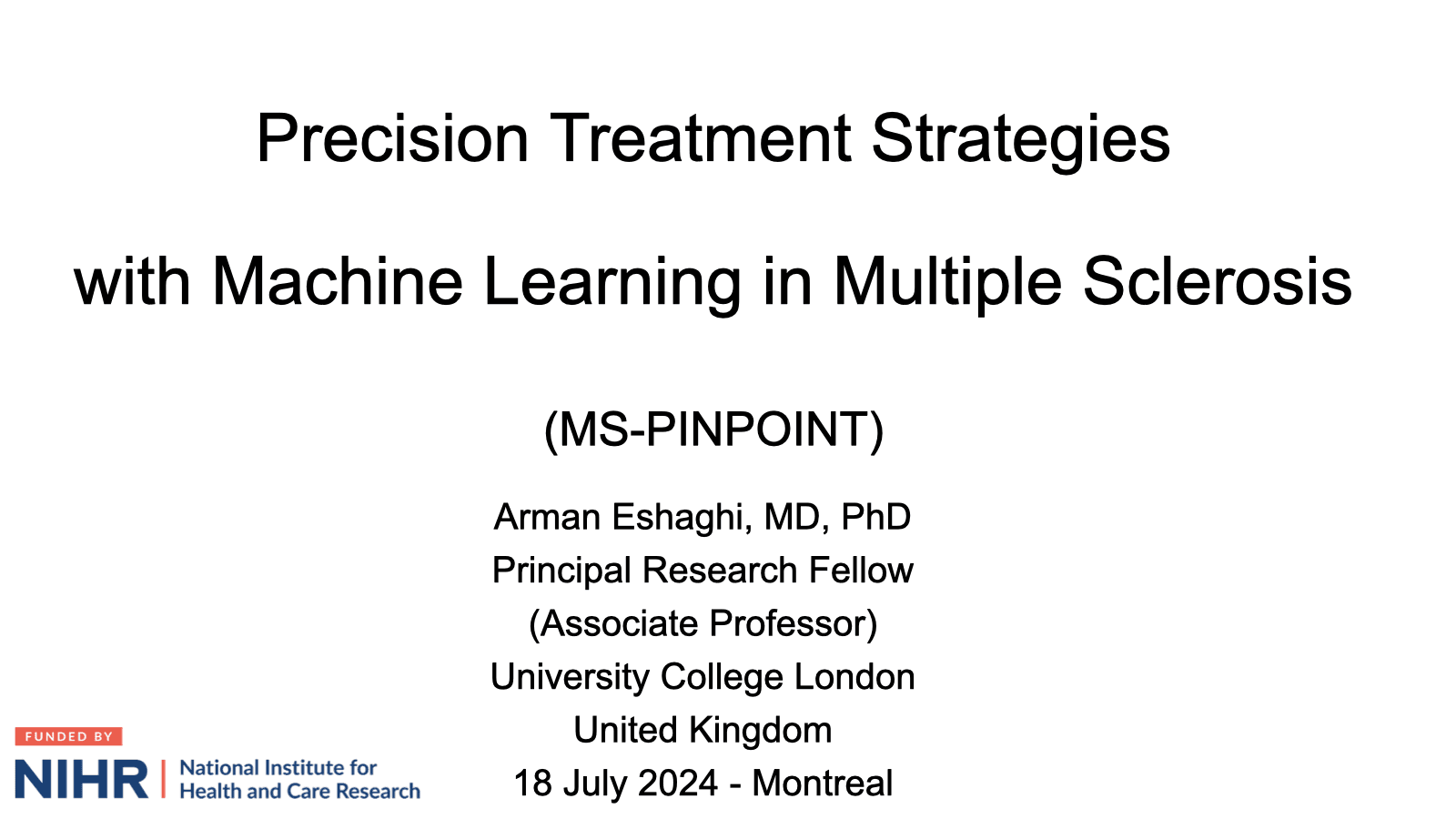
Opening slide for “Artificial intelligence is ready to personalise care for people with MS — against” at MS Frontiers 2024
Opening slide from the original presentation
Delivered
Event
MS Frontiers 2024
Place
University of Liverpool
Format
Debate
Source deck
12 slides

From the slides

Deck notes

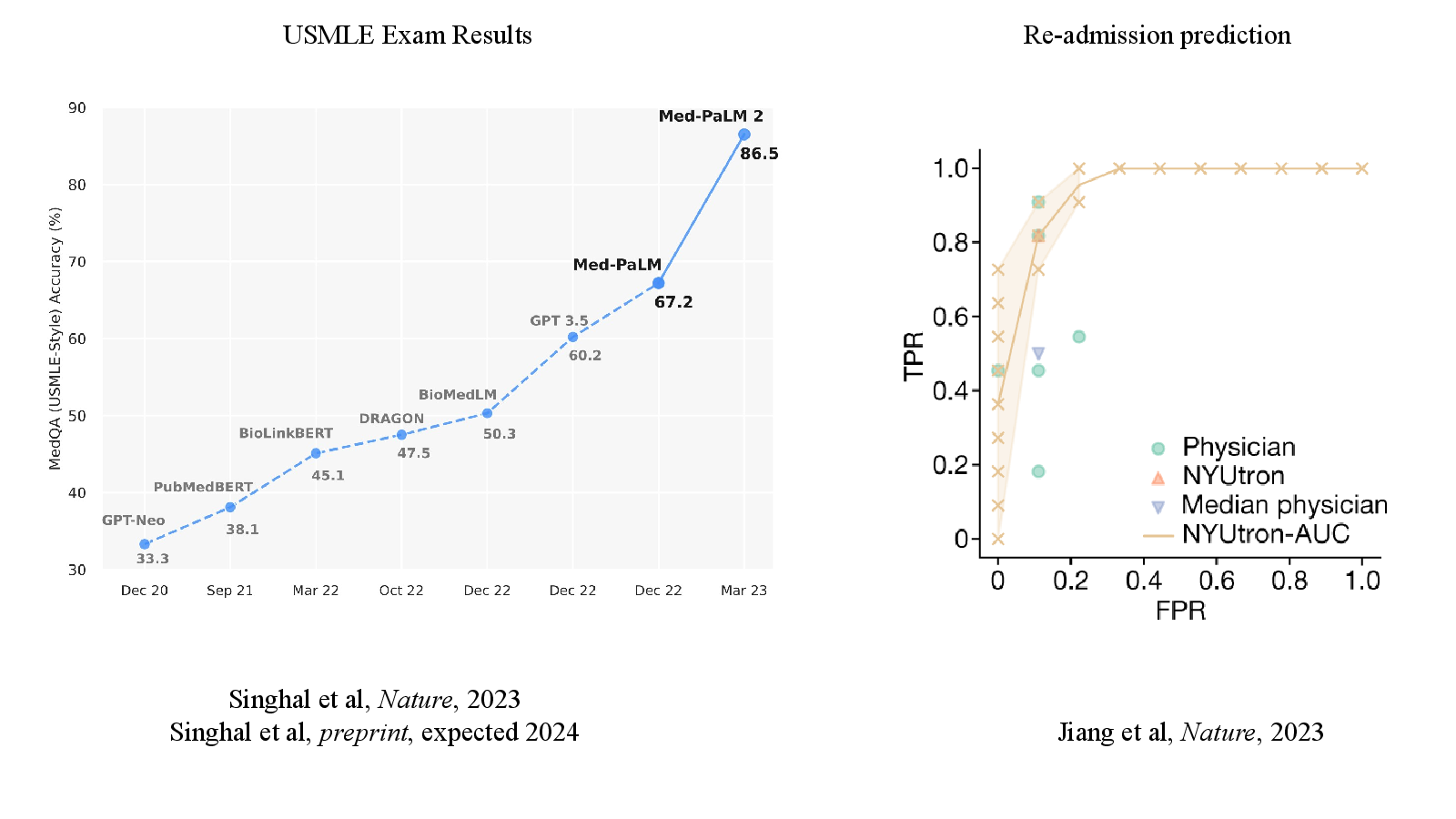
This conference debate made the case against declaring artificial intelligence ready to personalise care for people with multiple sclerosis. The argument was not that AI lacks promise, but that readiness requires evidence beyond technical performance.

The question

Do current AI systems have sufficient clinical evidence, maturity and coverage of the MS pathway to support personalised care now?

Deck outline

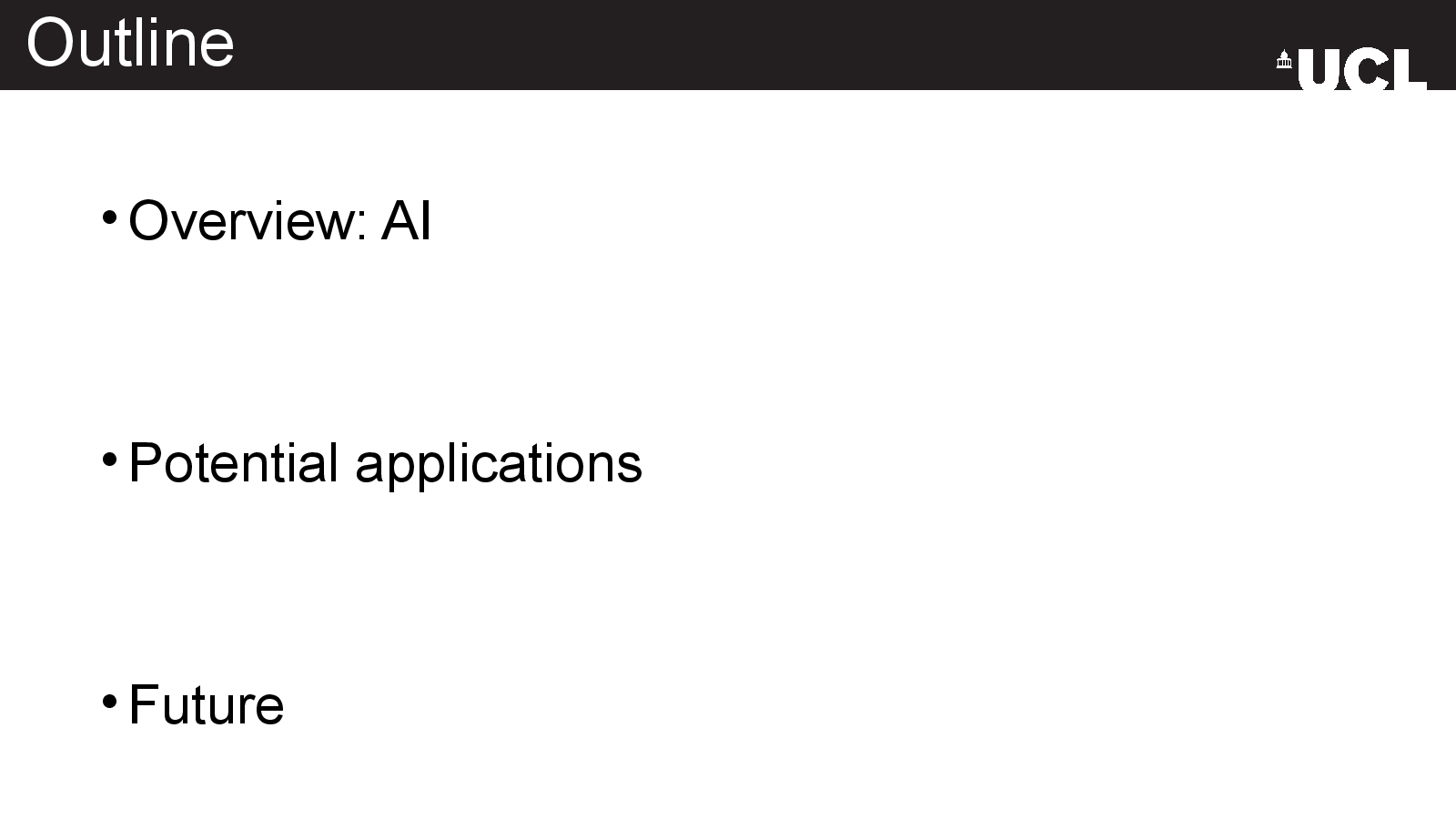
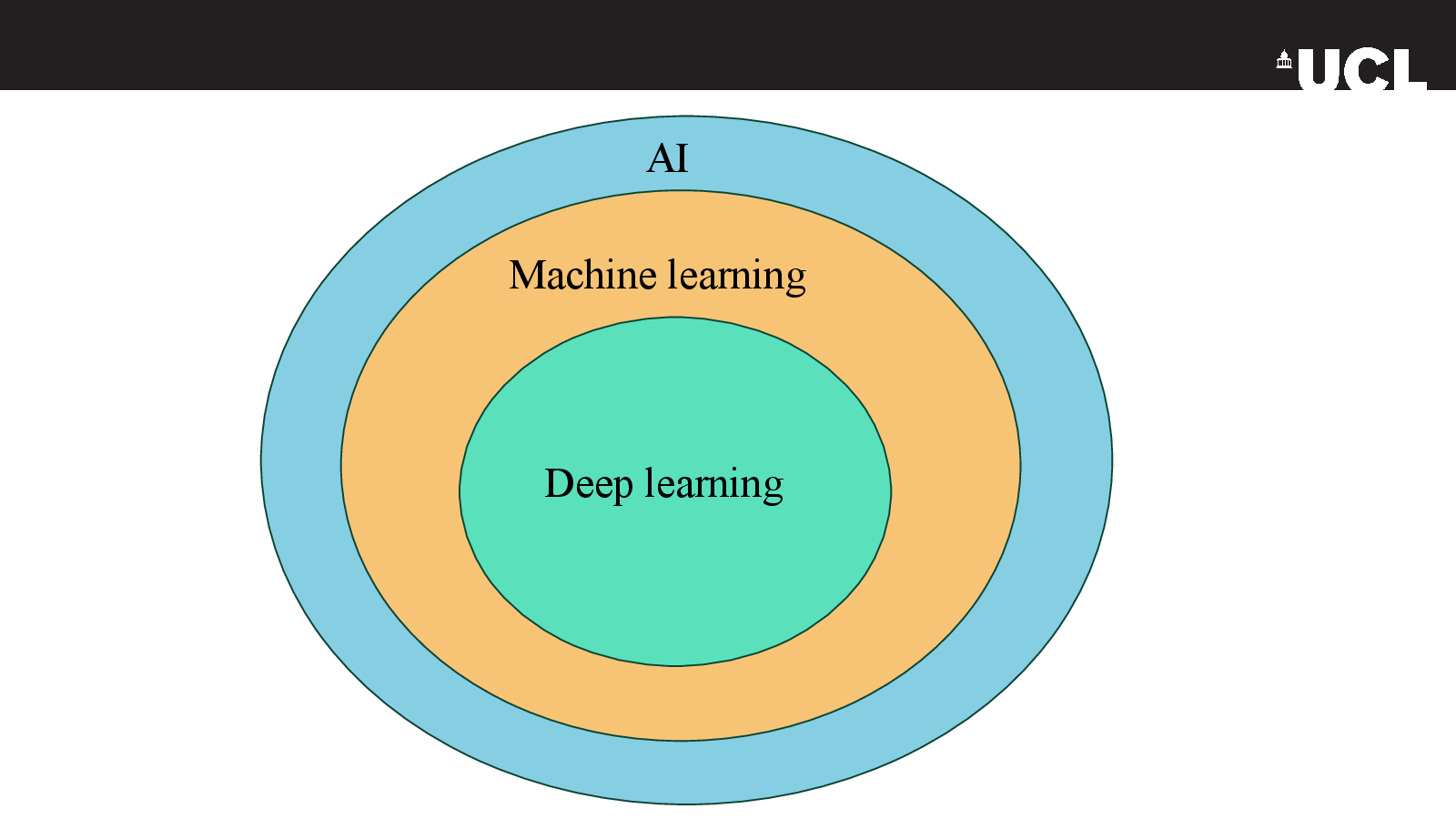
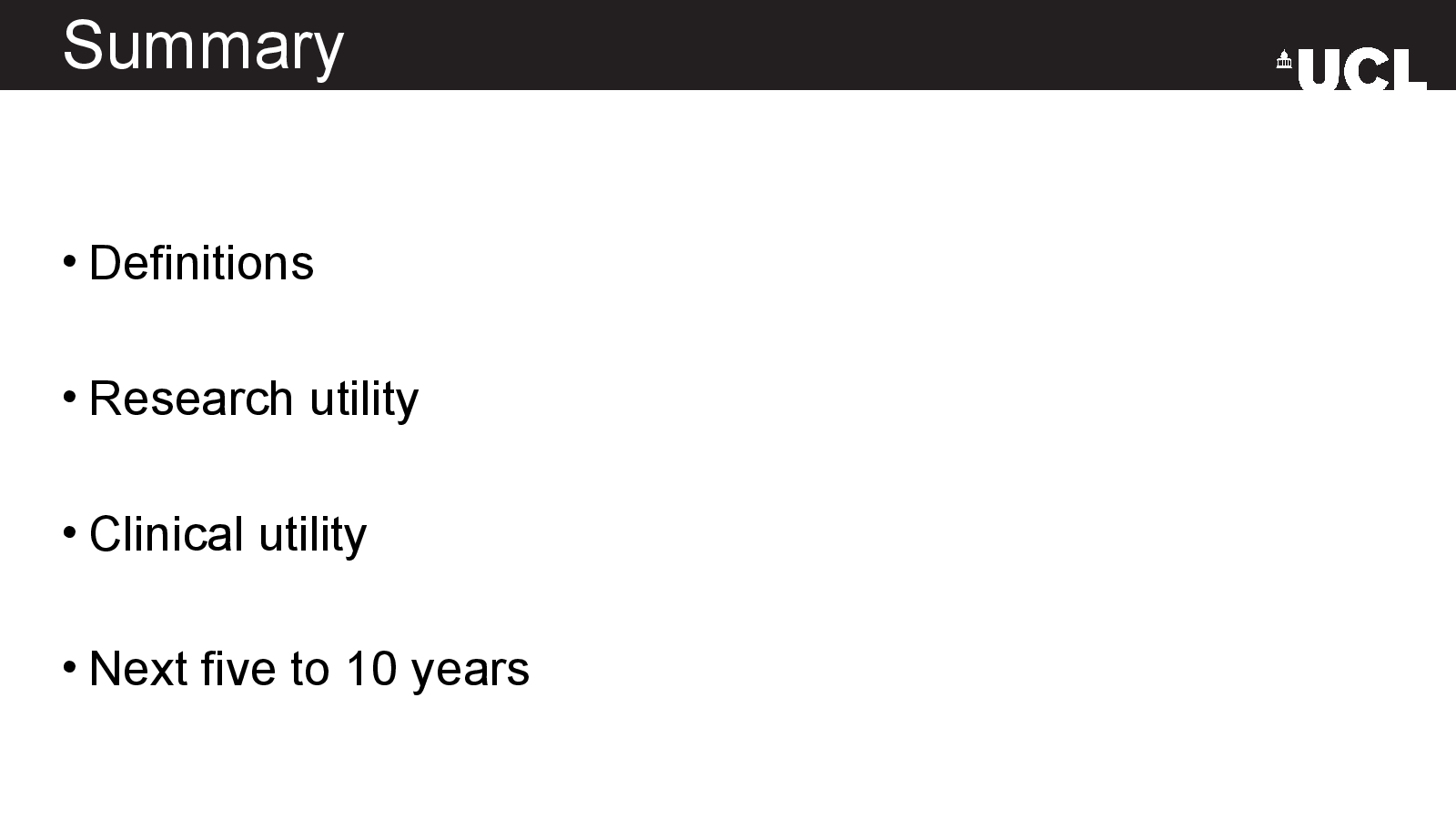
  • A concise definition of artificial intelligence, machine learning and deep learning
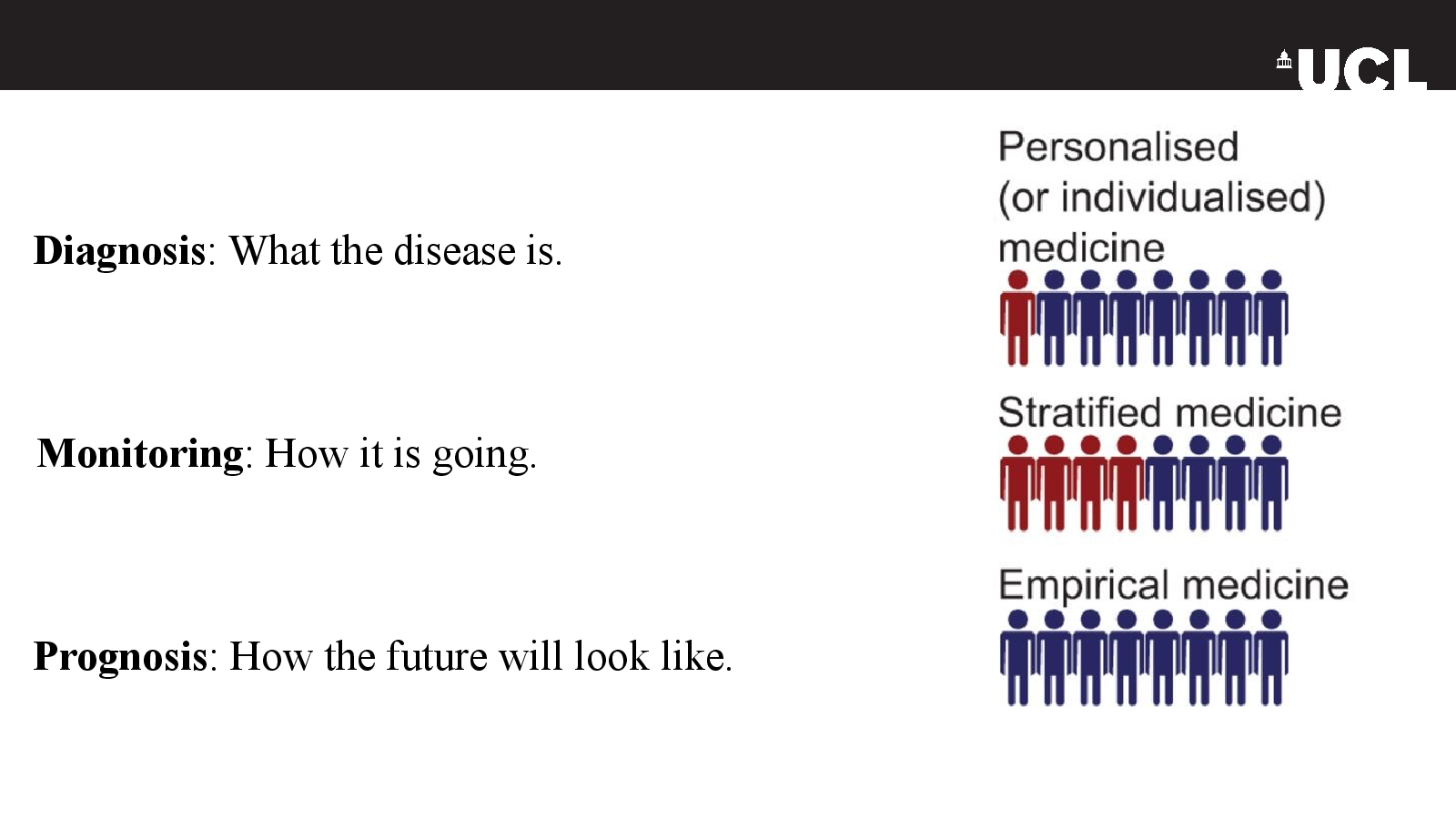
  • Diagnosis, prognosis and monitoring as distinct clinical tasks
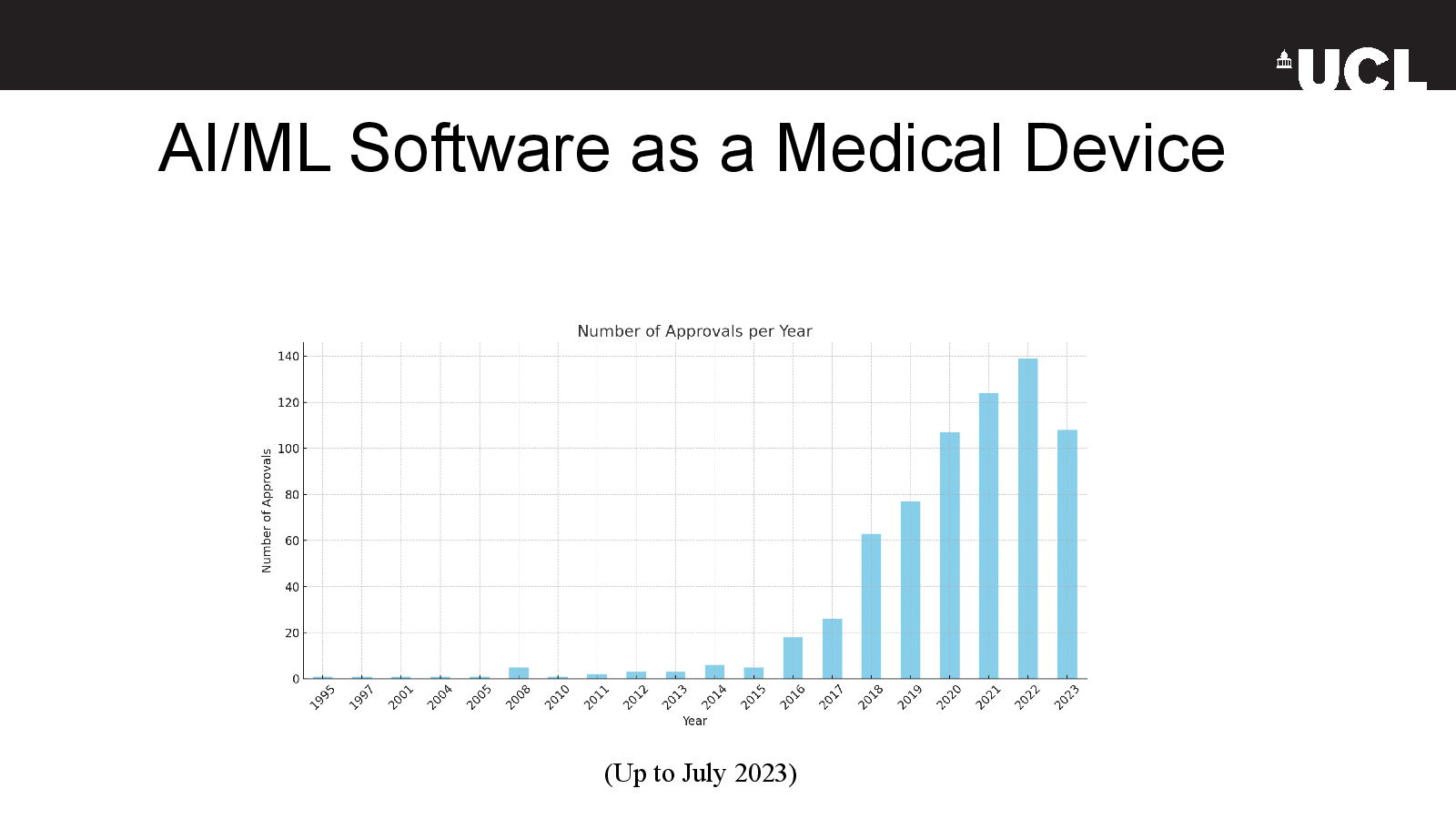
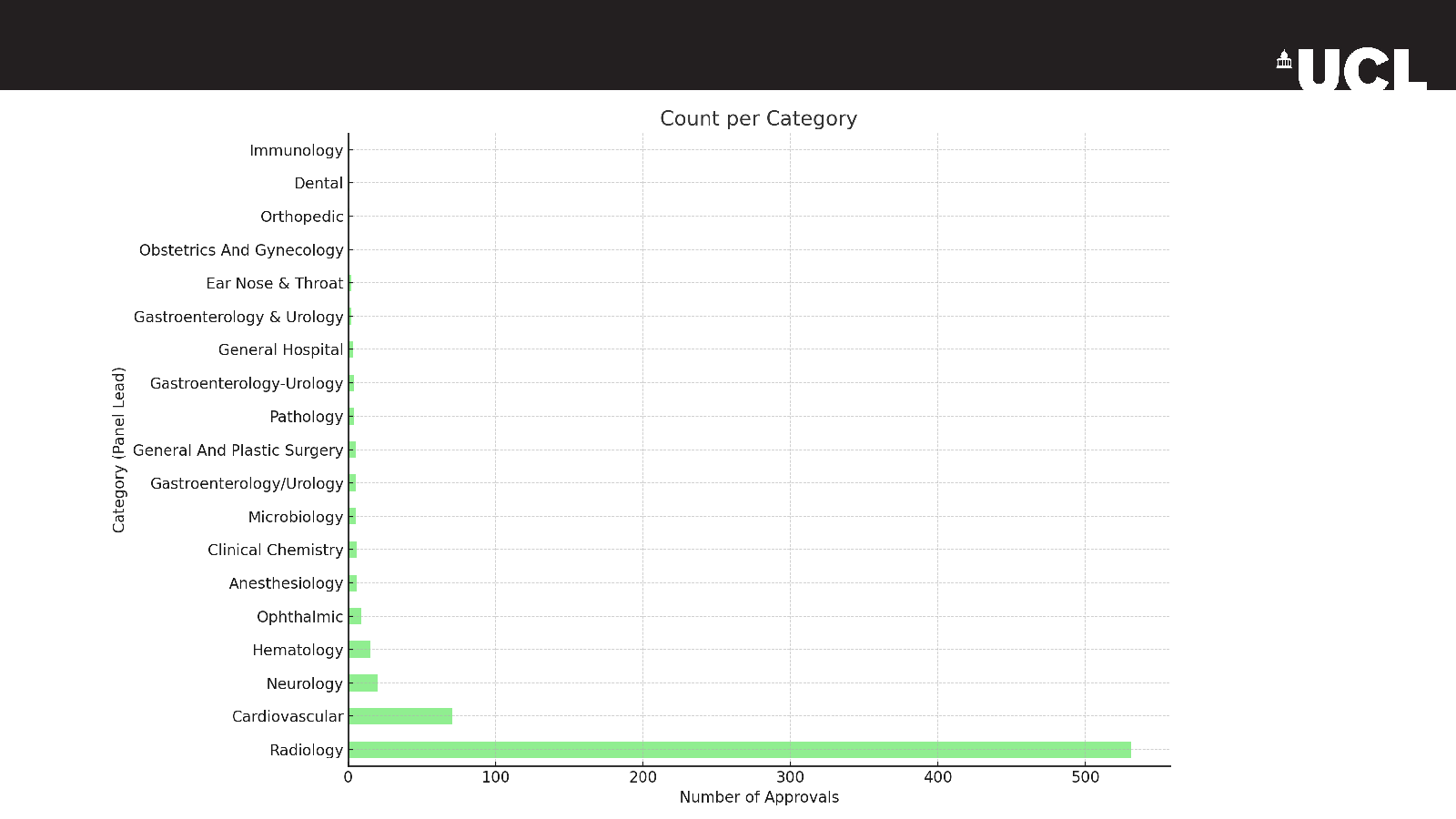
  • The current landscape of AI-based medical devices
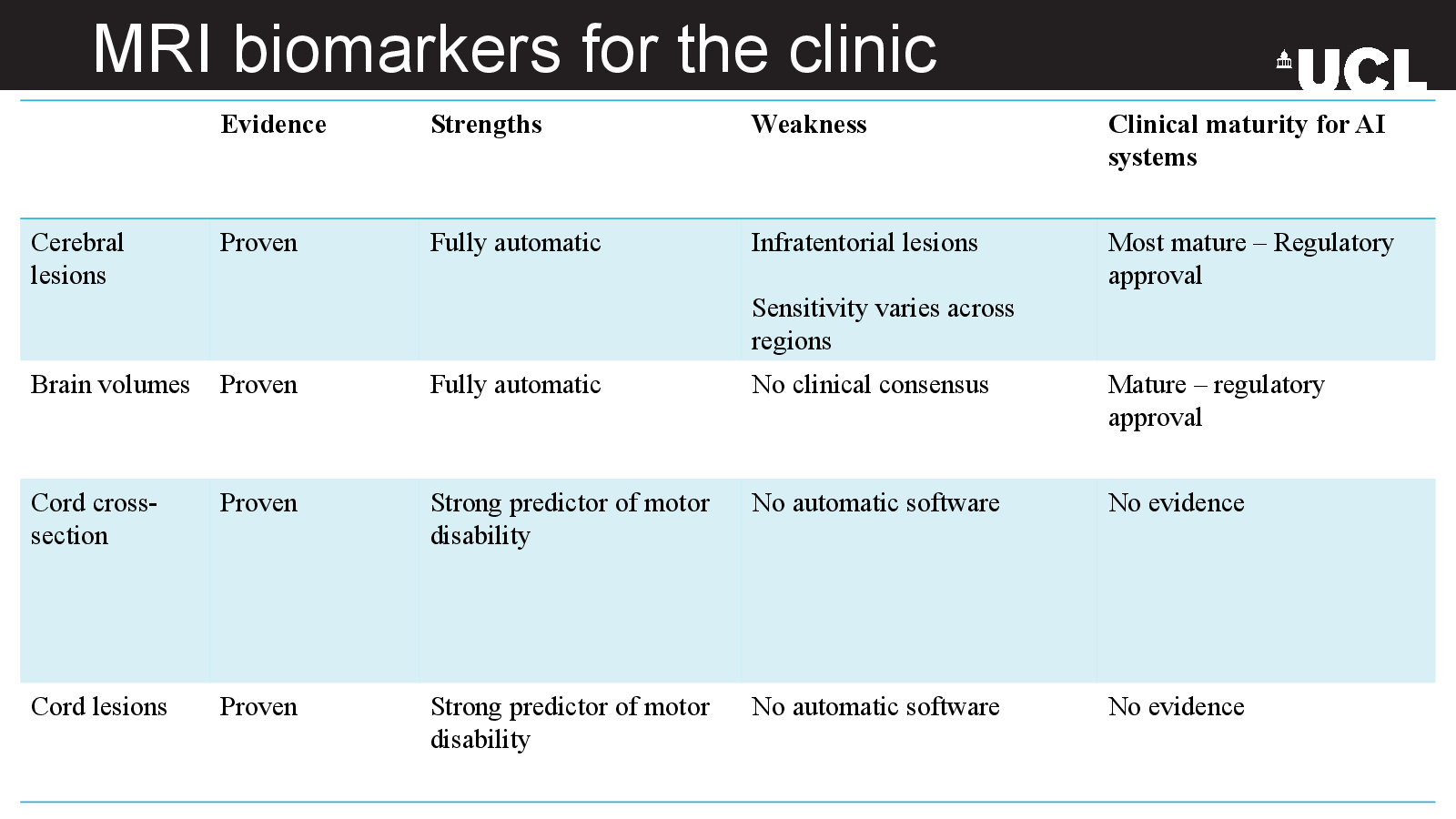
  • Strengths and limits of brain MRI biomarkers
  • Gaps in routine spinal cord analysis
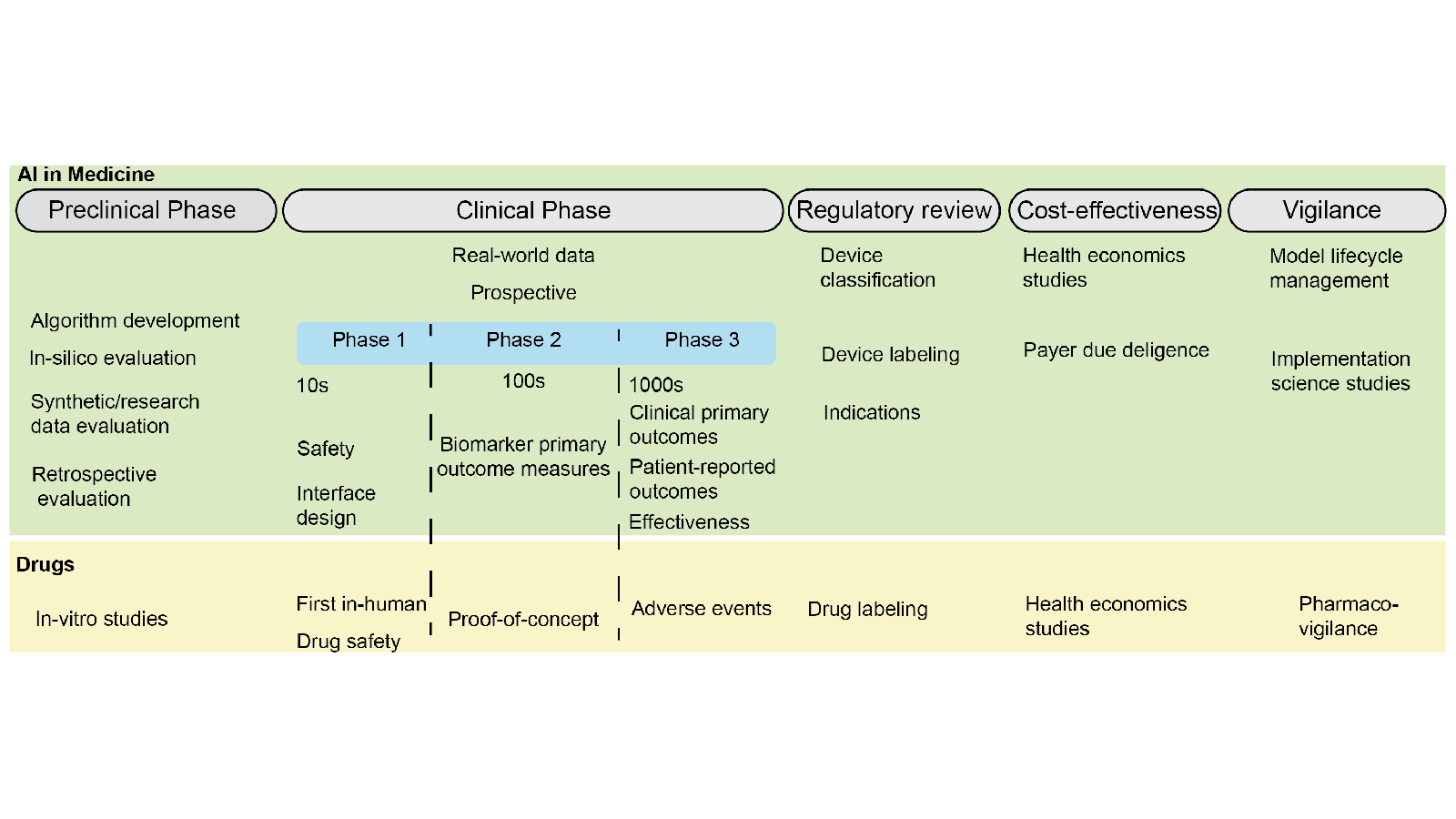
  • Clinical utility, implementation evidence and next steps

Take-away

Promising models and accurate image analysis do not by themselves establish personalised care. Readiness means showing benefit in practice, across diverse settings and outcomes that matter to people with MS.

Original deck

Slide by slide

Read the 12-slide presentation in order, or use the index to jump.
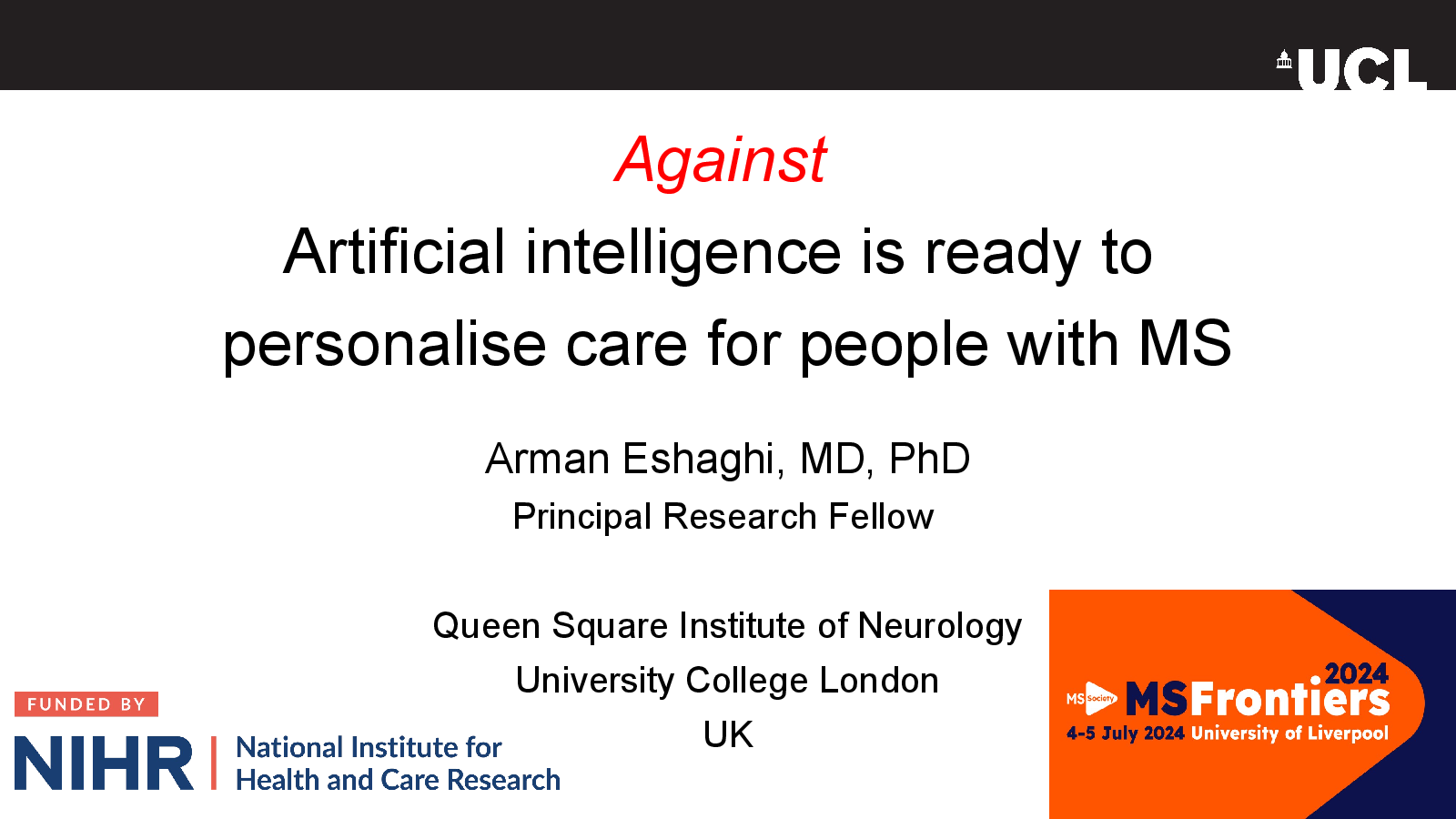
  1. Slide 01

    Against

    Slide 1: AgainstOpen full-size slide

    Artificial intelligence is ready to

    personalise care for people with MS

    Arman Eshaghi, MD, PhD

    Principal Research Fellow

    Queen Square Institute of Neurology

    University College London

    UK

  2. Slide 04

    Prognosis: How the future will look like.

    Slide 4: Prognosis: How the future will look like.Open full-size slide

    Diagnosis: What the disease is.

    Monitoring: How it is going.

  3. Slide 07

    MRI biomarkers for the clinic

    Slide 7: MRI biomarkers for the clinicOpen full-size slide
    • Evidence — Strengths — Weakness — Clinical maturity for AI systems
    • Cerebral lesions — Proven — Fully automatic — Infratentorial lesions / Sensitivity varies across regions — Most mature – Regulatory approval
    • Brain volumes — Proven — Fully automatic — No clinical consensus — Mature – regulatory approval
    • Cord cross-section — Proven — Strong predictor of motor disability — No automatic software — No evidence
    • Cord lesions — Proven — Strong predictor of motor disability — No automatic software — No evidence
  4. Slide 10

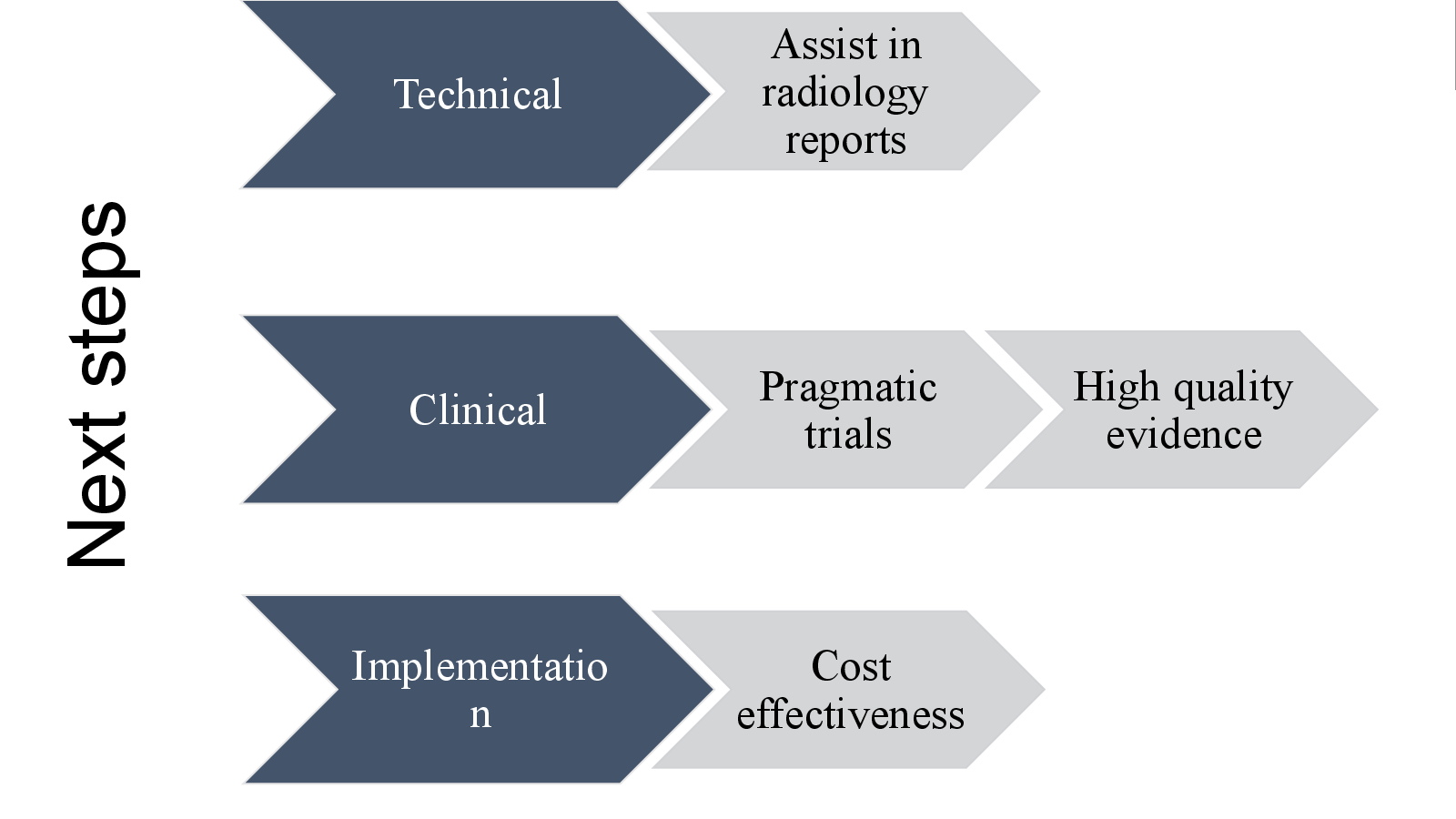
    Next steps

    Slide 10: Next stepsOpen full-size slide
    • Technical
    • Clinical
    • Pragmatic trials
    • High quality evidence
    • Implementation
    • Assist in radiology reports
    • Cost effectiveness