All talks & lectures

Conference ·

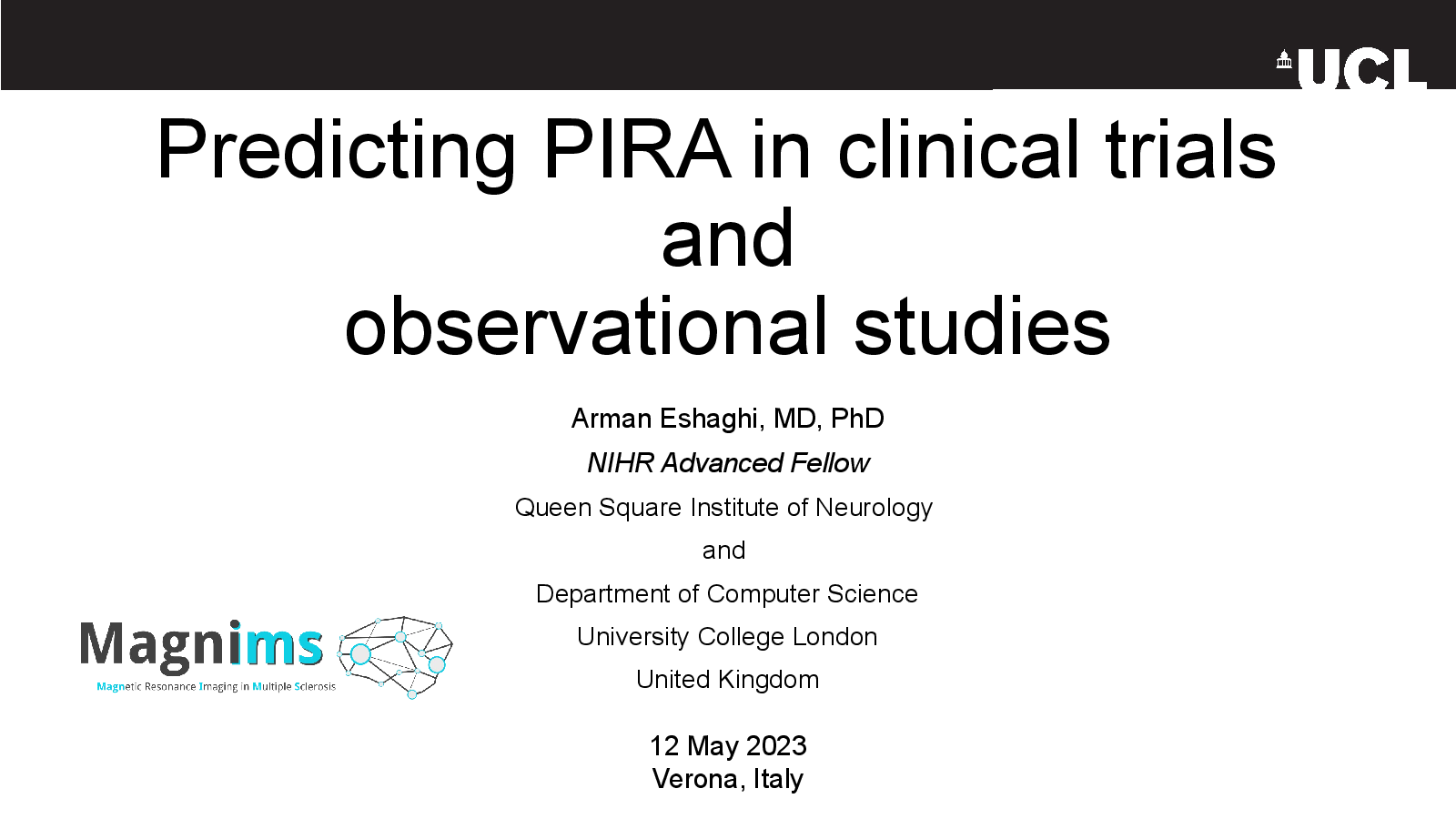
Predicting PIRA in clinical trials and observational studies
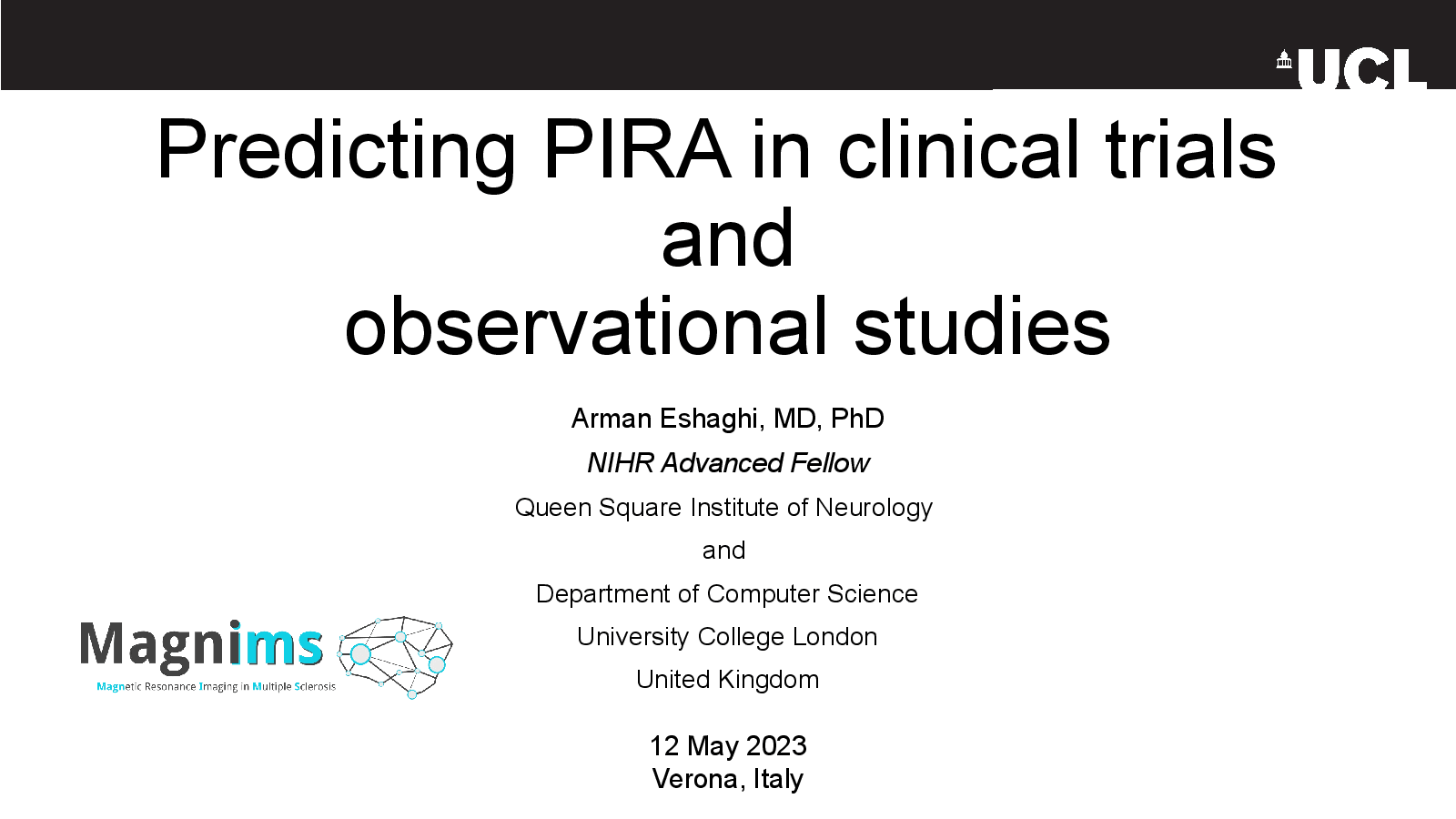
A focused examination of how progression independent of relapse activity can be defined and predicted.

MAGNIMS · Verona, Italy

A web sketch of the deck’s central idea
Delivered
Event
MAGNIMS
Place
Verona, Italy
Format
Conference
Source deck
22 slides

From the slides

Deck notes

This MAGNIMS presentation examined progression independent of relapse activity across trials and observational studies. It focused on the practical choices that shape an individual prediction.

The question

Can PIRA be predicted for an individual when its definition depends on outcome measures, follow-up and the choice of time zero?

Deck outline

  • PIRA as a clinical and trial outcome
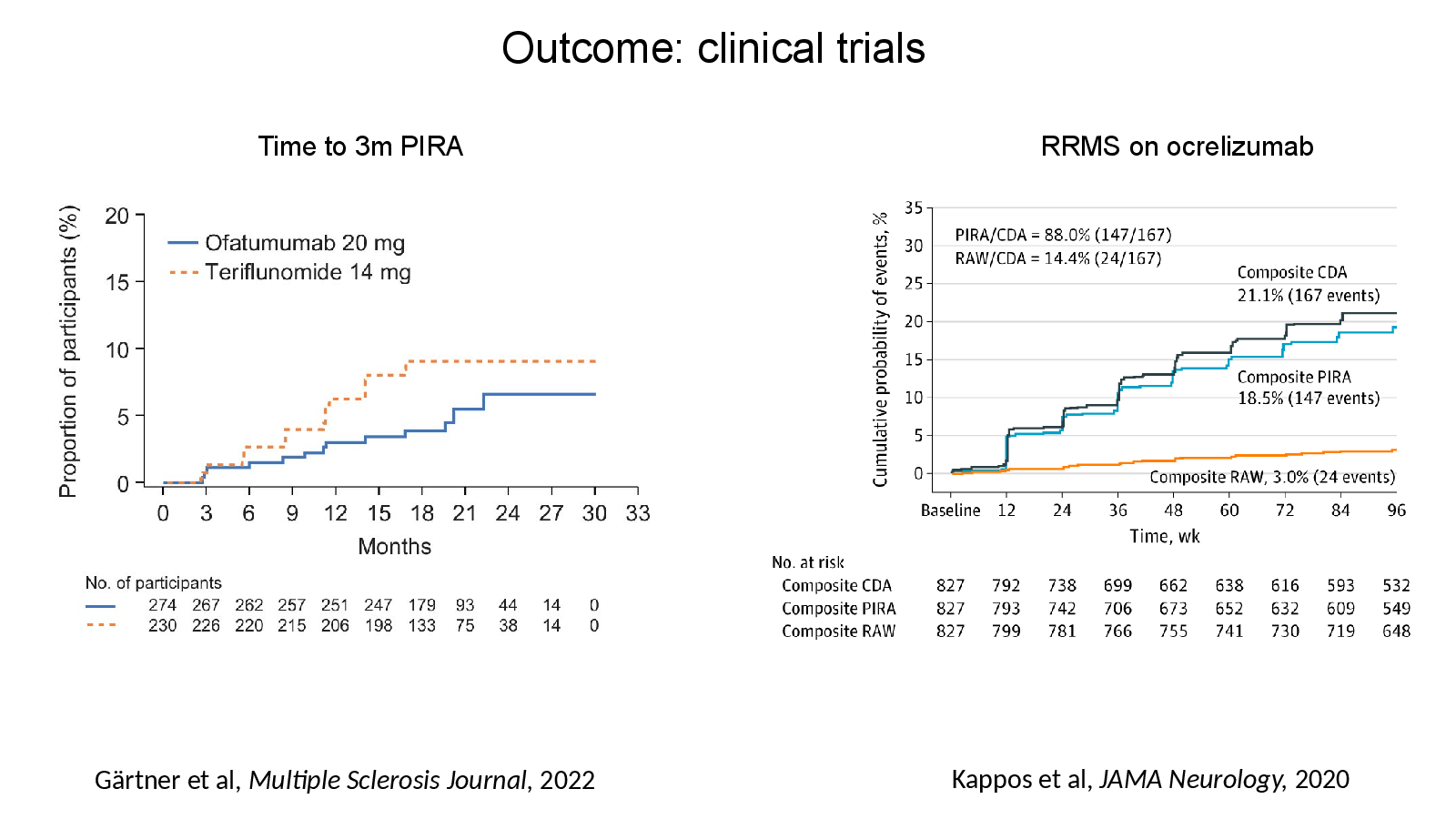
  • Evidence from clinical trials
  • Moving from group effects to individual prediction
  • Statistical framing and model groups
  • EDSS limitations and the definition of time zero
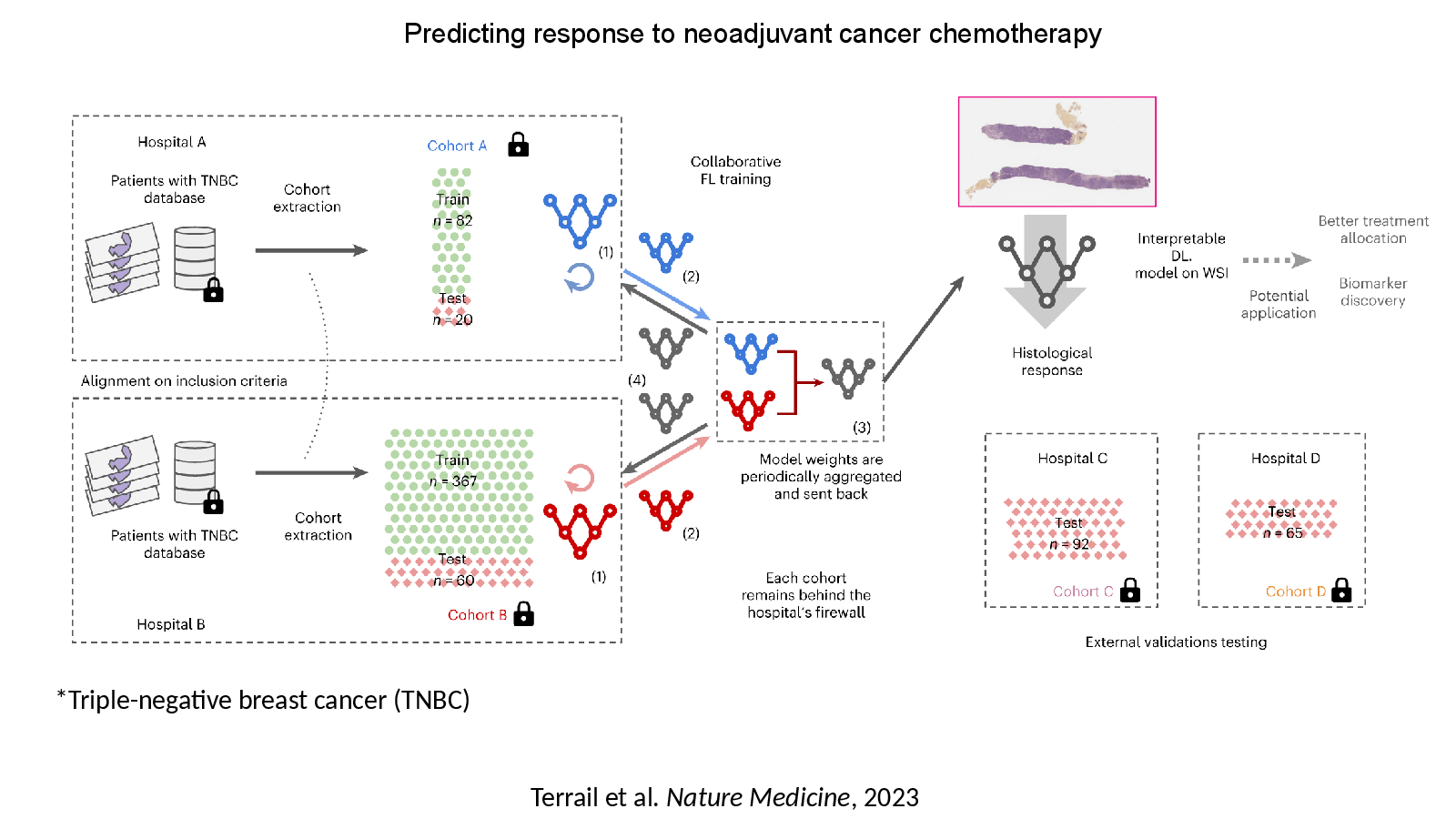
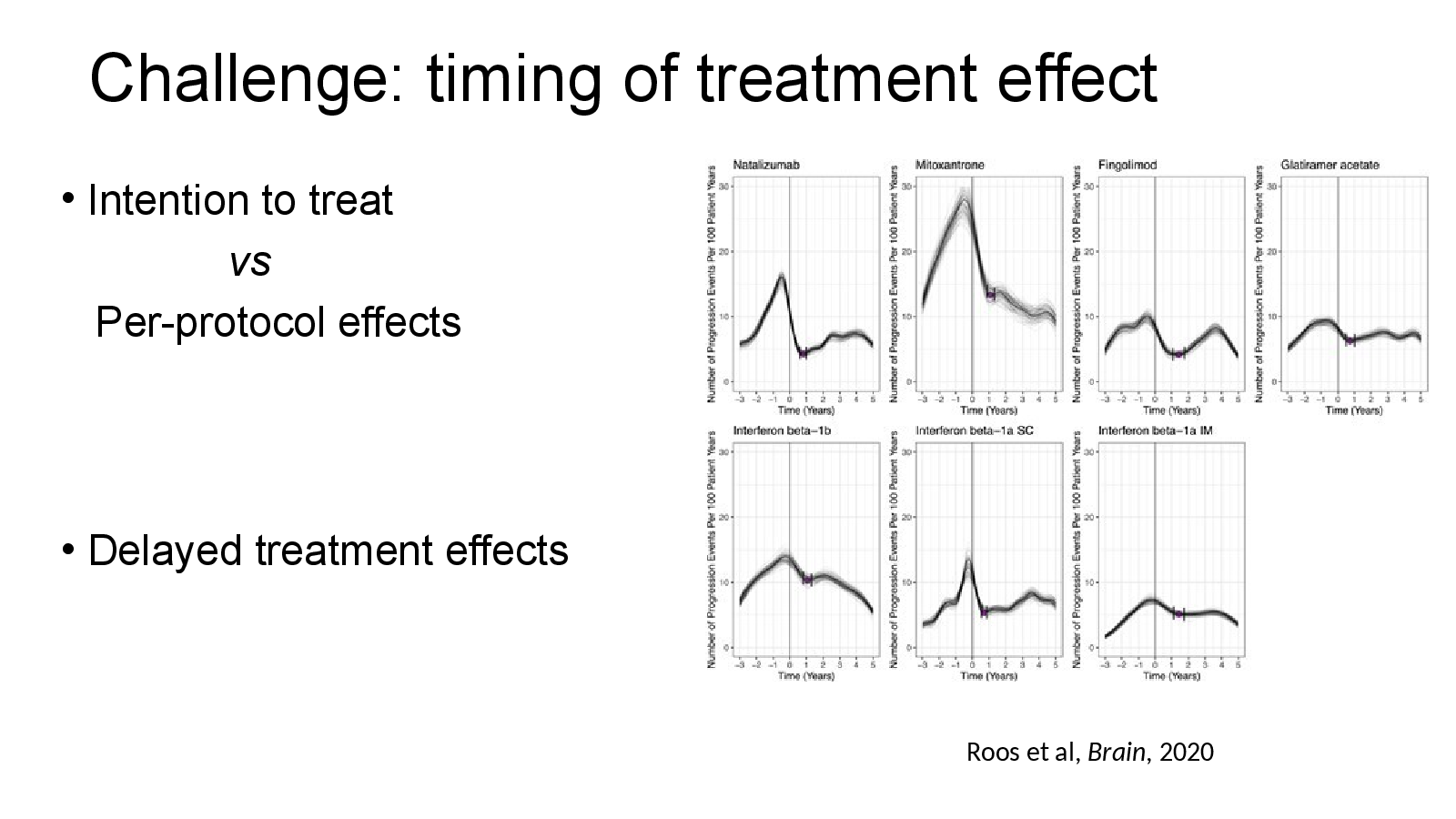
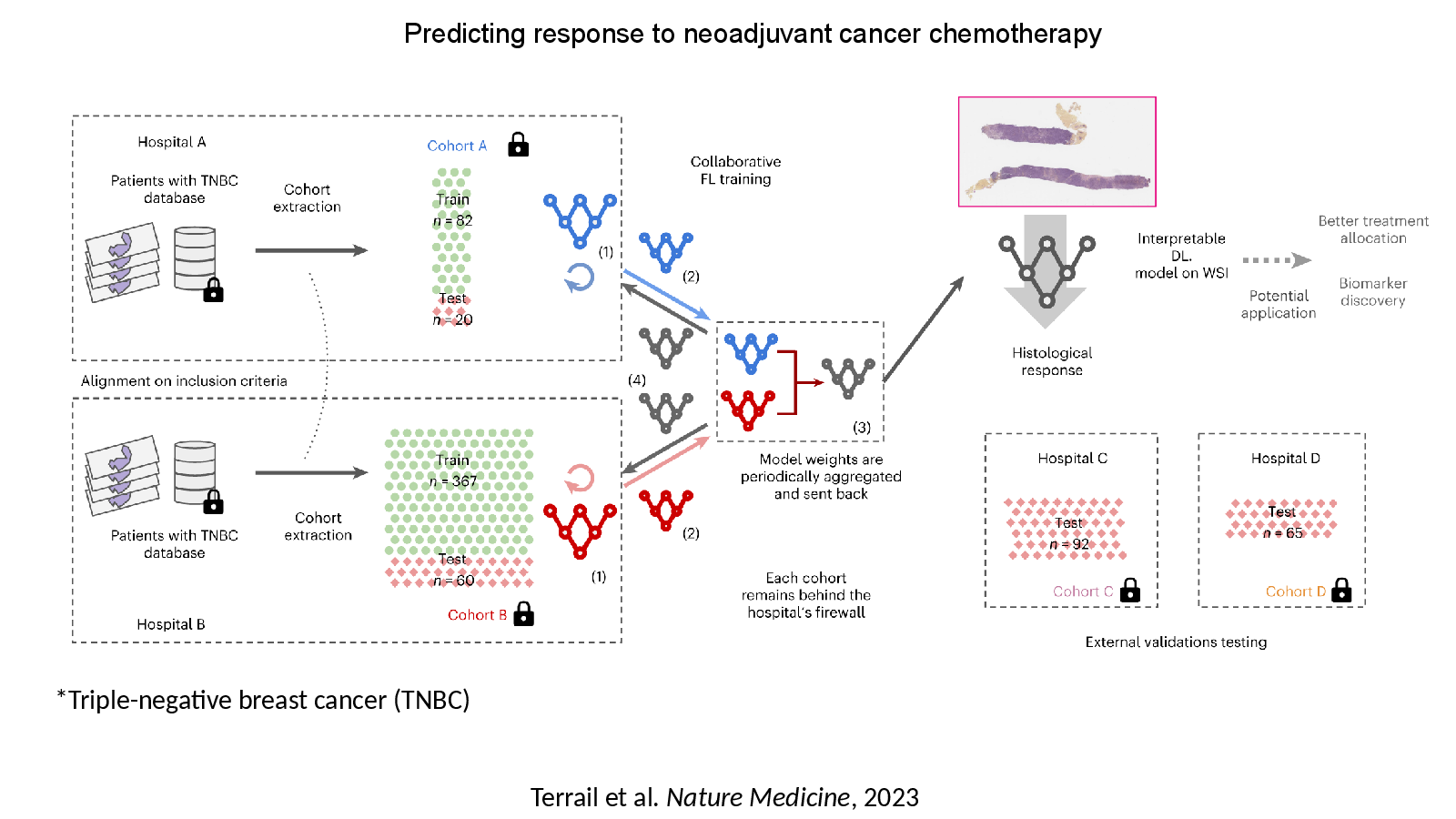
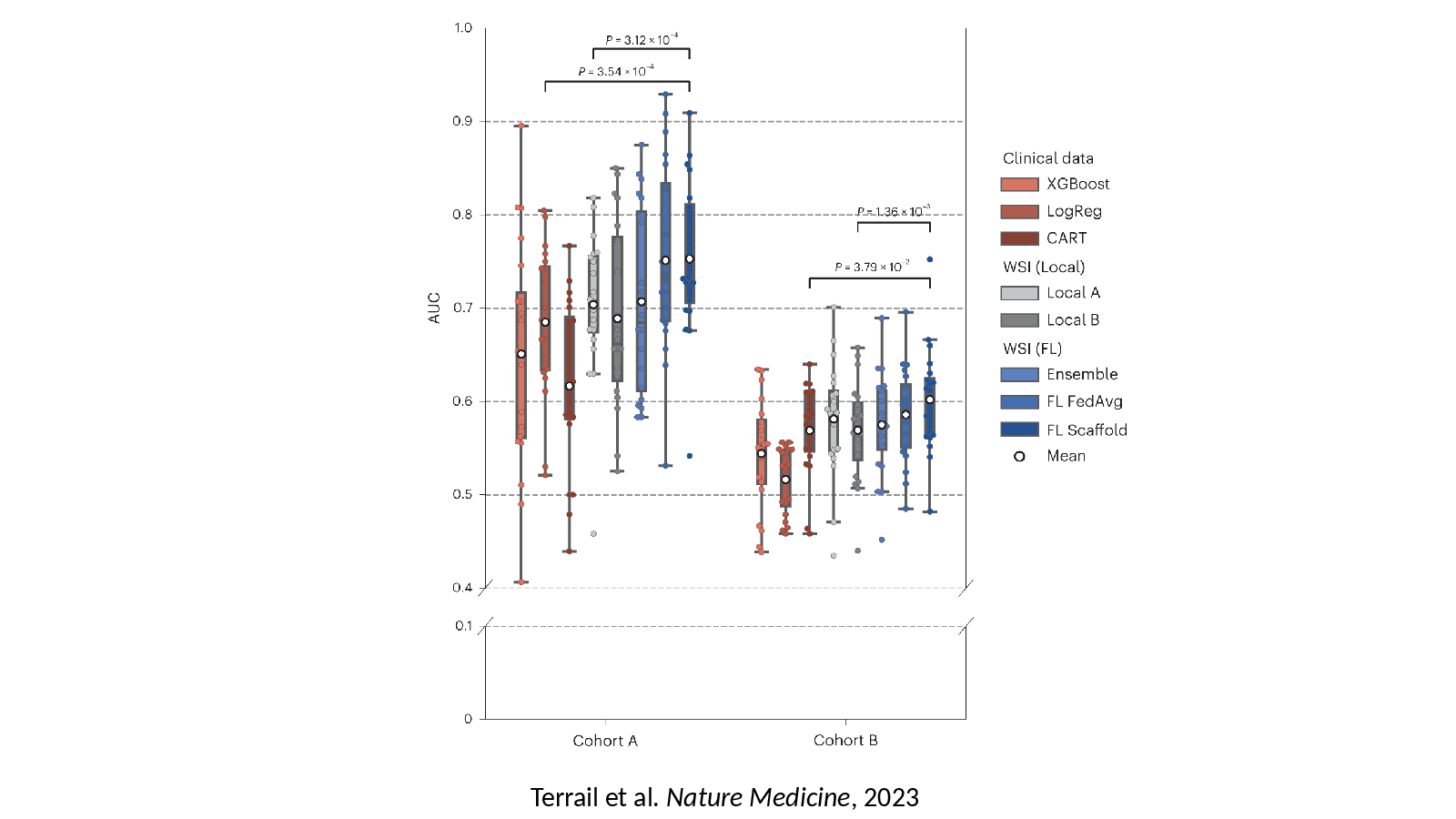
  • Intention-to-treat and decentralised approaches

Take-away

Individual PIRA prediction depends as much on a precise outcome definition and study design as it does on the modelling method.

Original deck

Slide by slide

Read the 22-slide presentation in order, or use the index to jump.

  1. Slide 01

    Predicting PIRA in clinical trials and observational studies

    Slide 1: Predicting PIRA in clinical trials and observational studiesOpen full-size slide

    Arman Eshaghi, MD, PhD

    NIHR Advanced Fellow

    Queen Square Institute of Neurology

    and

    Department of Computer Science

    University College London

    United Kingdom

    12 May 2023

    Verona, Italy

  2. Slide 02

    Disclosures

    Slide 2: DisclosuresOpen full-size slide

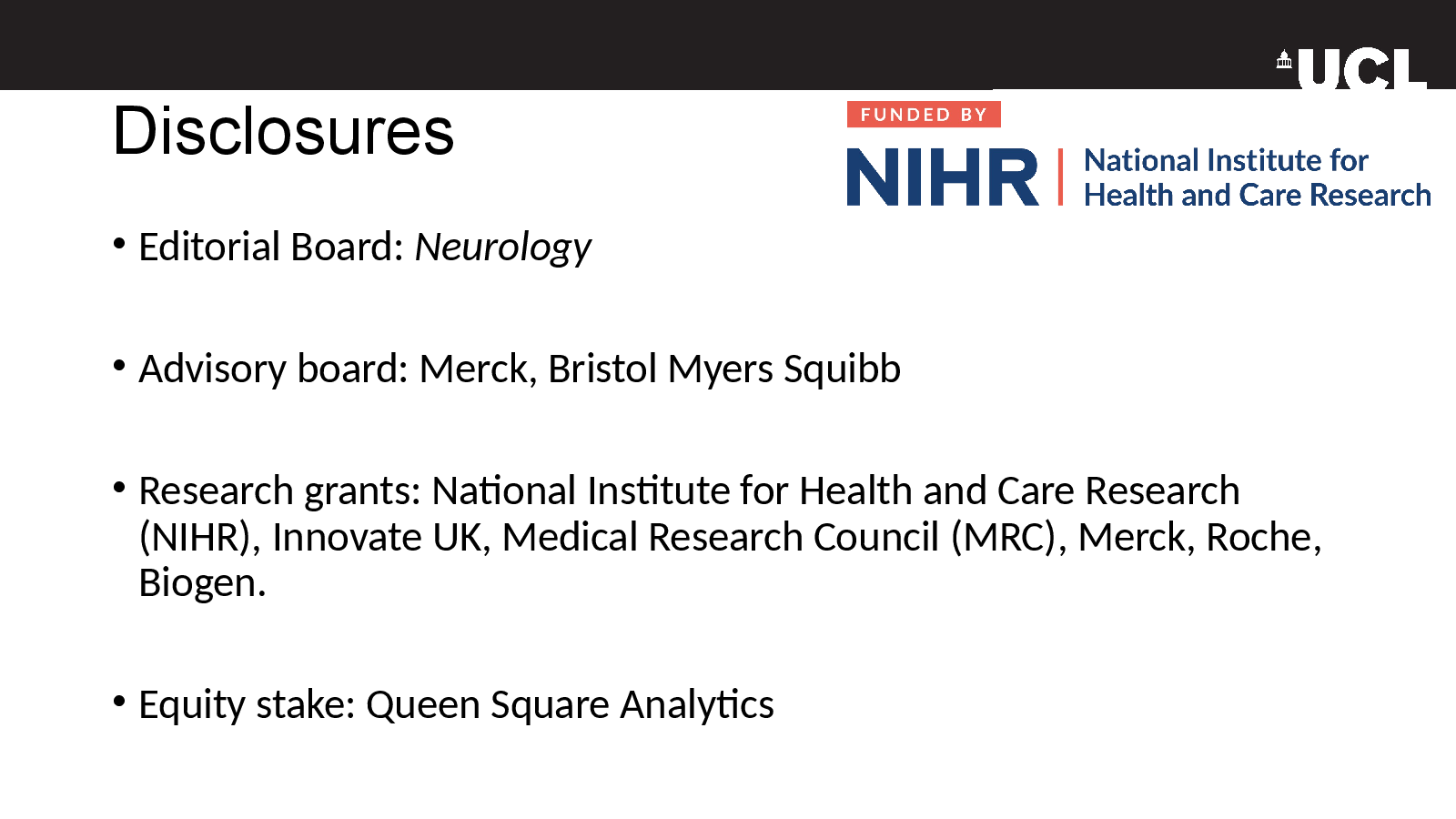
    Editorial Board: Neurology

    Advisory board: Merck, Bristol Myers Squibb

    Research grants: National Institute for Health and Care Research (NIHR), Innovate UK, Medical Research Council (MRC), Merck, Roche, Biogen.

    Equity stake: Queen Square Analytics

  3. Slide 03

    Outline

    Slide 3: OutlineOpen full-size slide
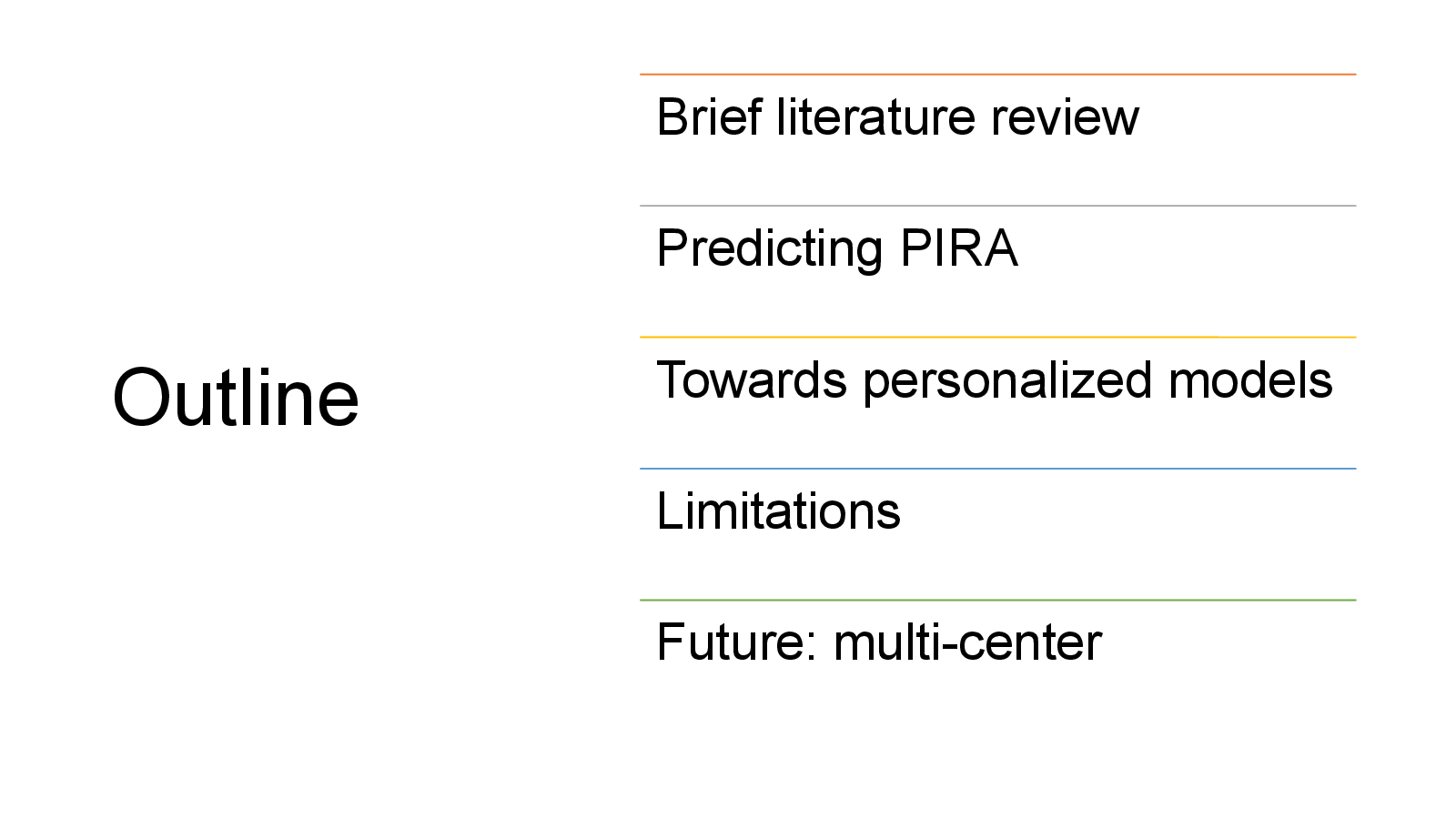
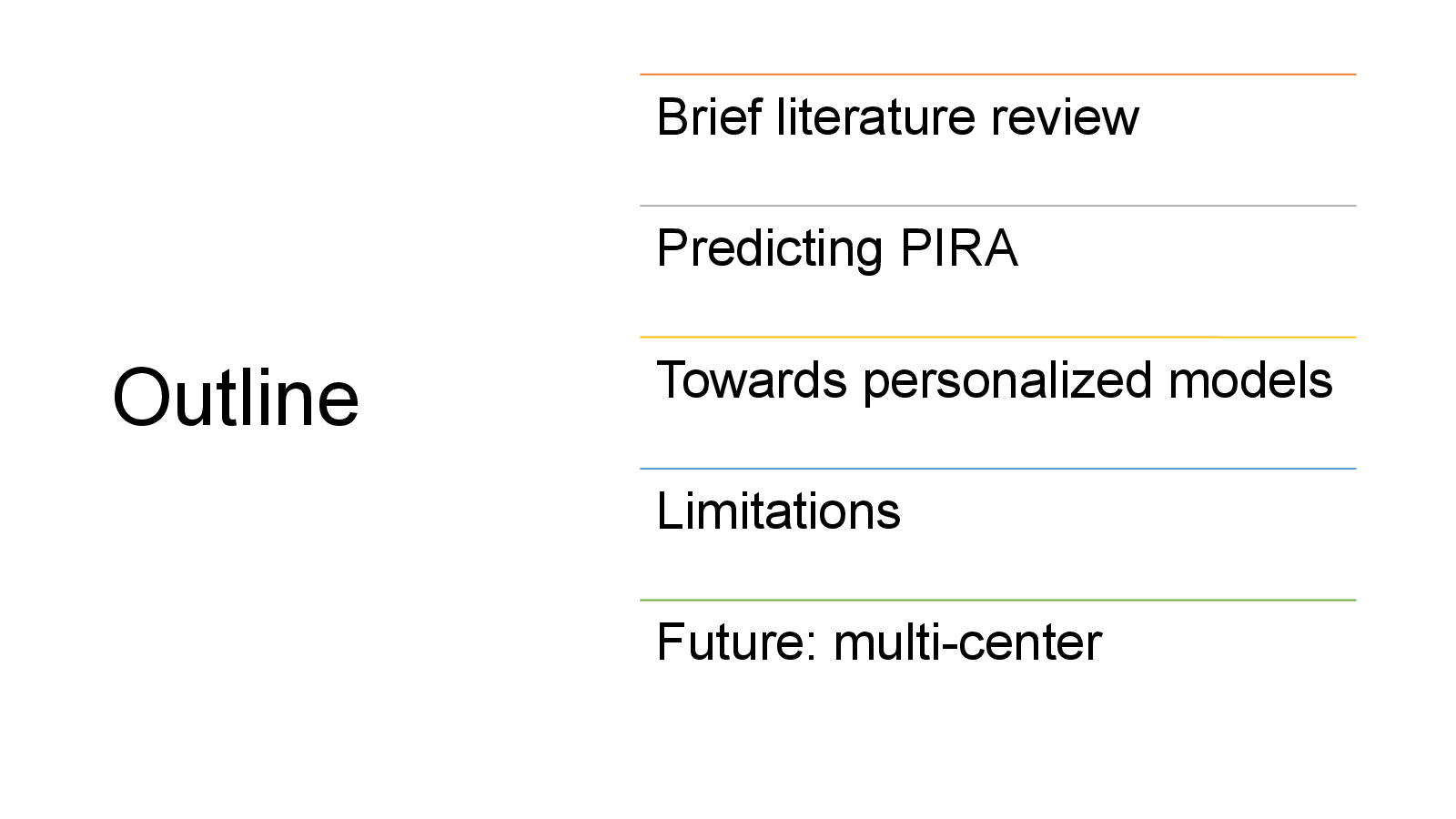
    • Brief literature review
    • Predicting PIRA
    • Towards personalized models
    • Limitations
    • Future: multi-center
  4. Slide 05

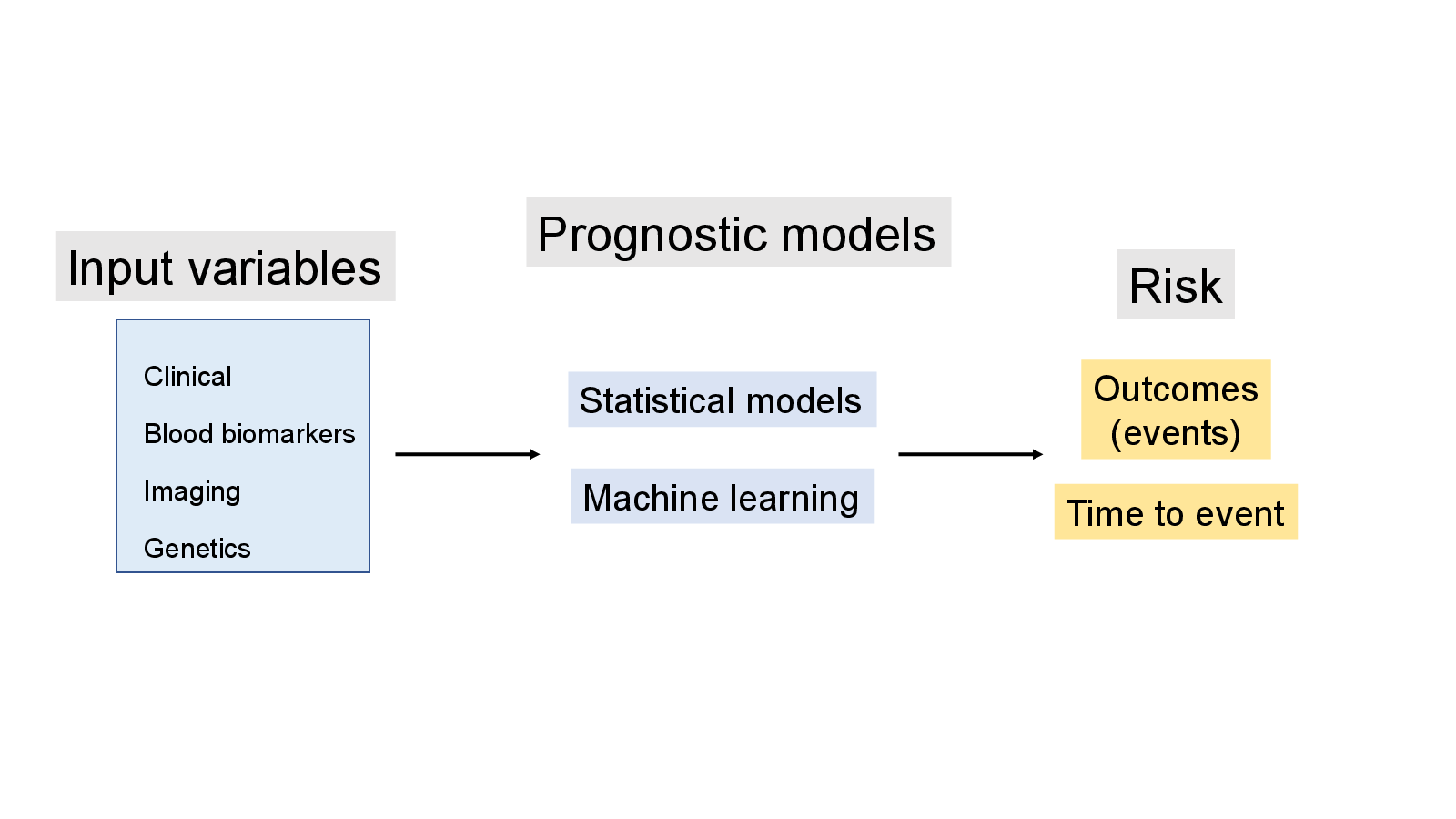
    Time to event

    Slide 5: Time to eventOpen full-size slide

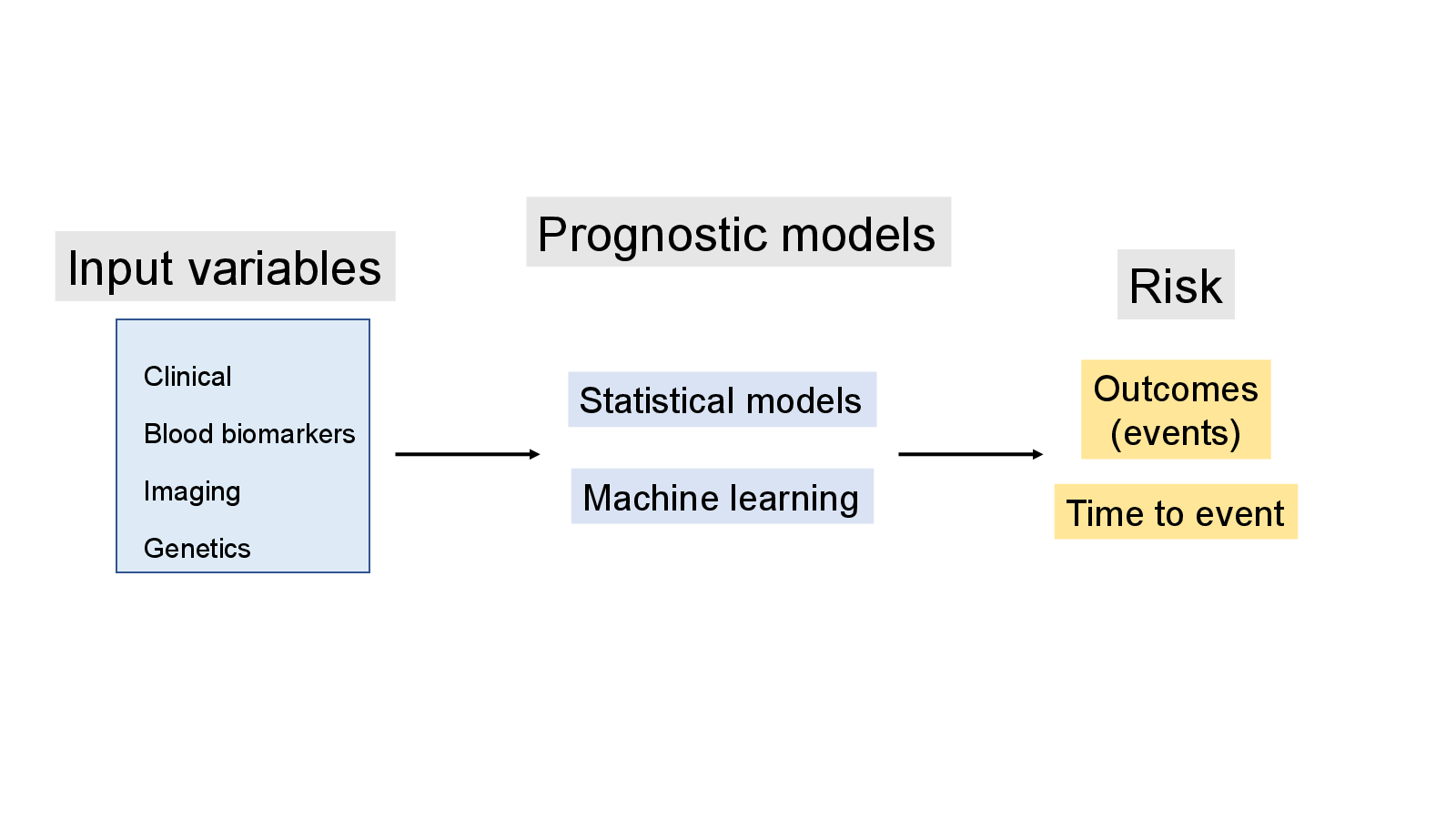
    Prognostic models

    Input variables

    Risk

    Clinical

    Outcomes

    (events)

    Statistical models

    Blood biomarkers

    Imaging

    Machine learning

    Genetics

  5. Slide 07

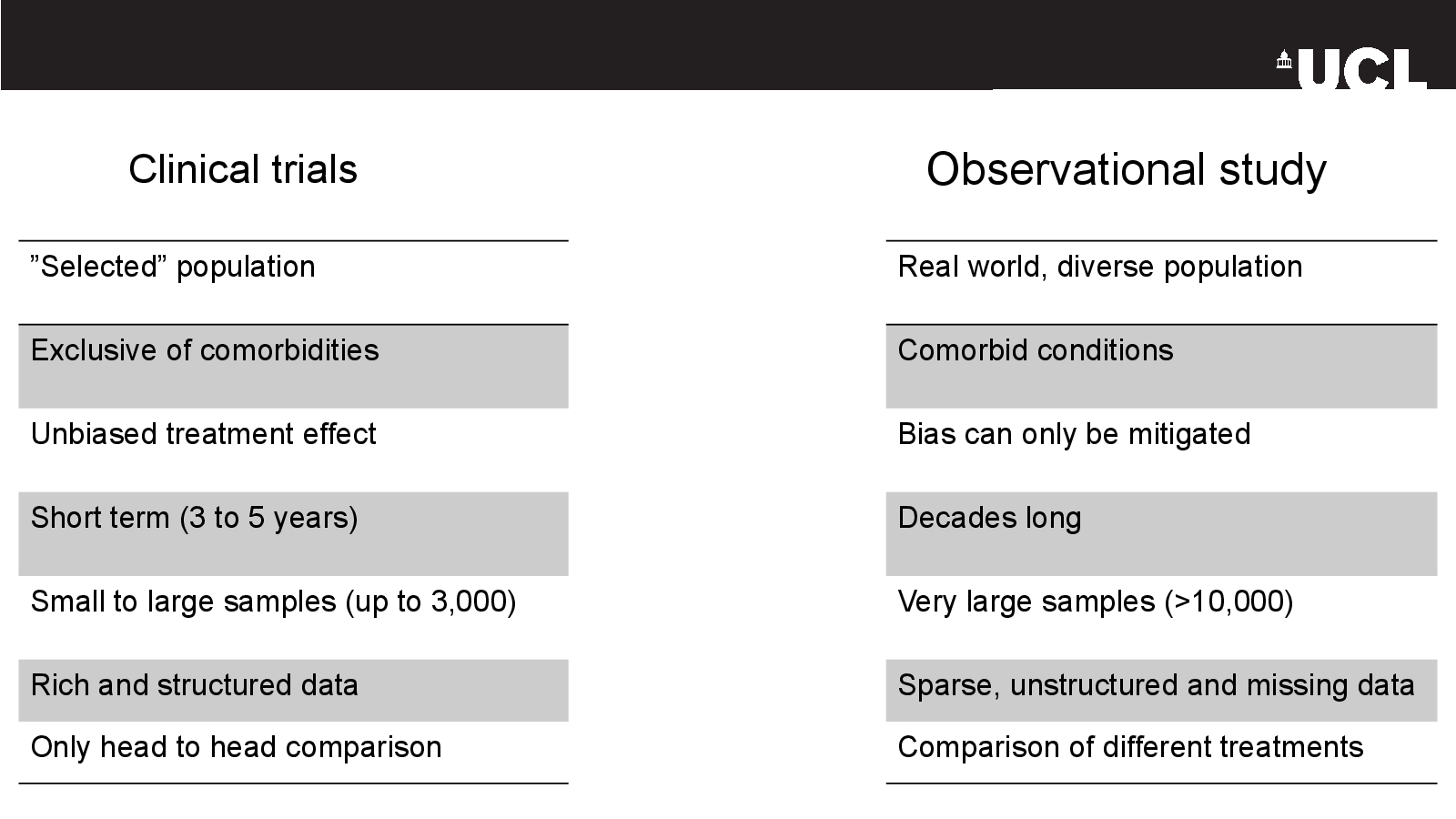
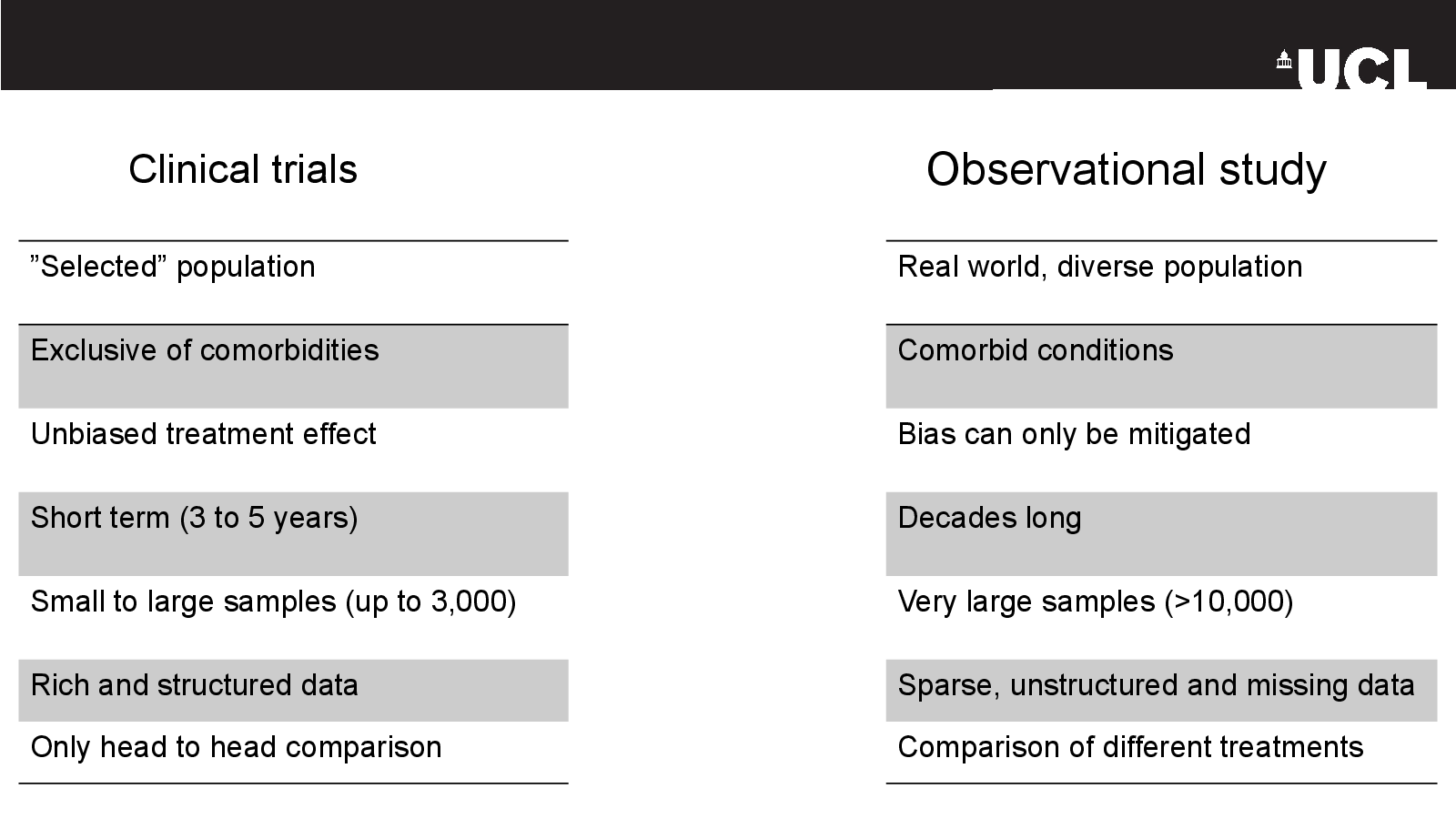
    Clinical trials

    Slide 7: Clinical trialsOpen full-size slide

    Observational study

    • ”Selected” population — Real world, diverse population
    • Exclusive of comorbidities — Comorbid conditions
    • Unbiased treatment effect — Bias can only be mitigated
    • Short term (3 to 5 years) — Decades long
    • Small to large samples (up to 3,000) — Very large samples (>10,000)
    • Rich and structured data — Sparse, unstructured and missing data
    • Only head to head comparison — Comparison of different treatments
  6. Slide 10

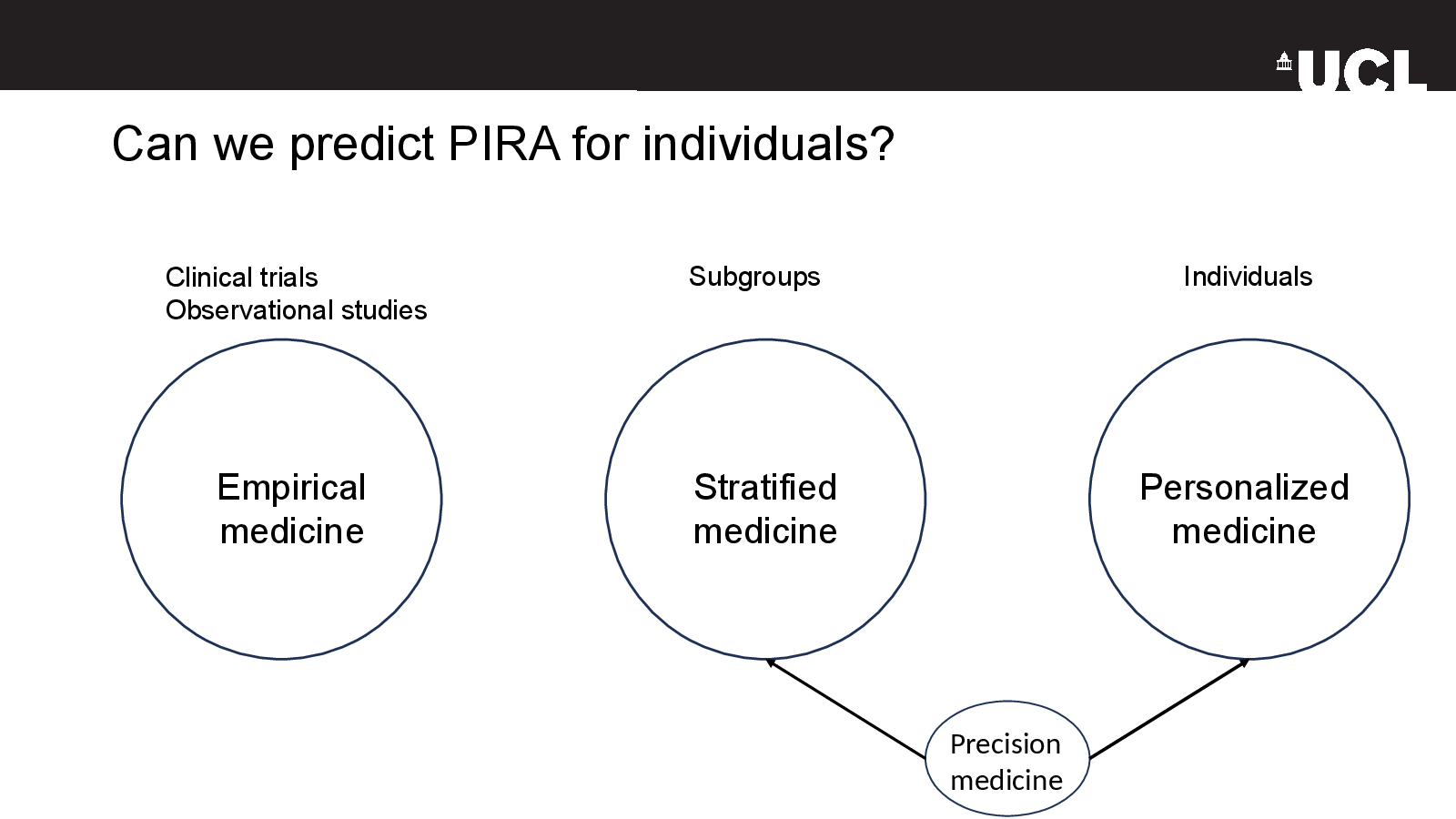
    Can we predict PIRA for individuals?
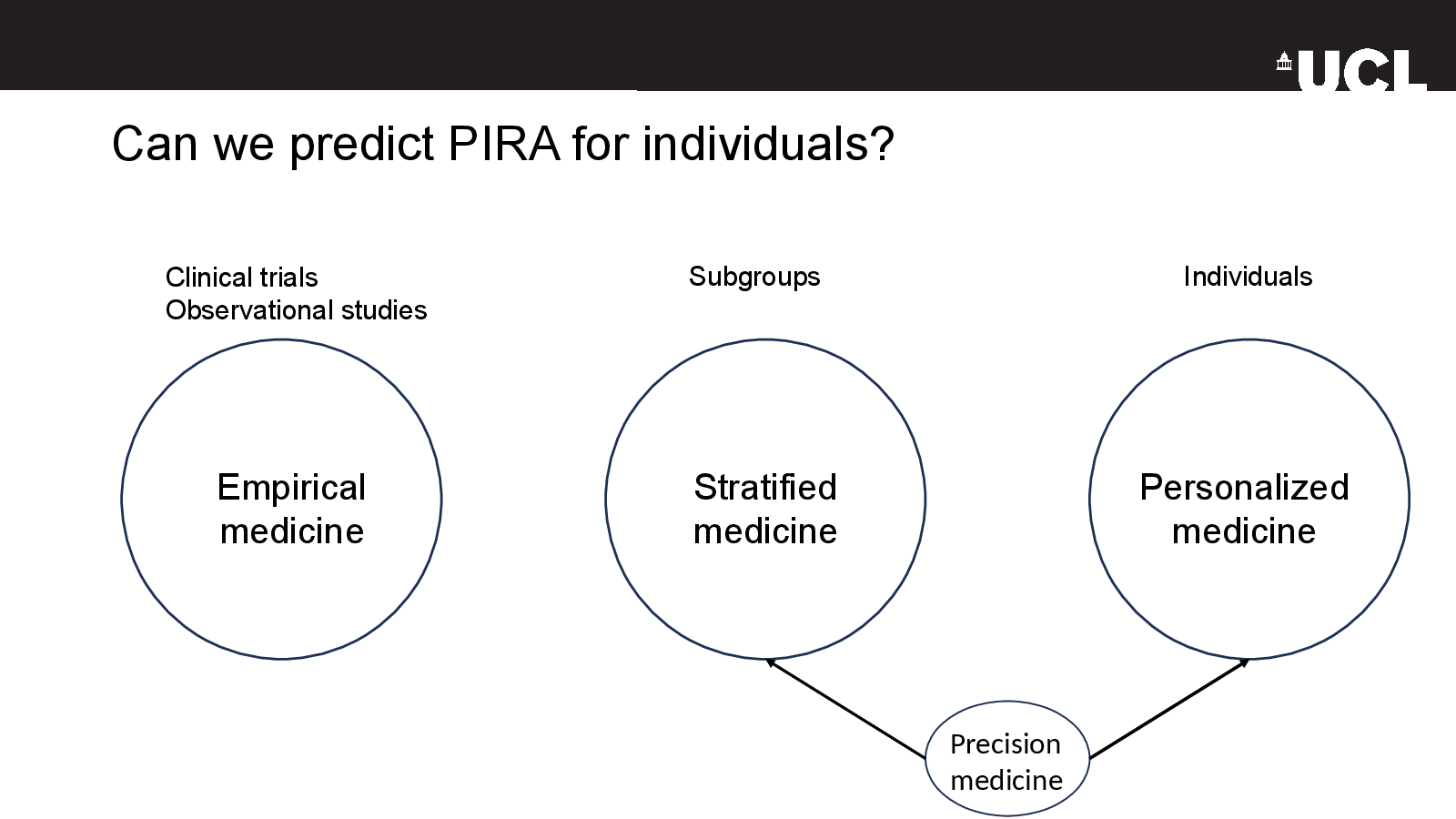
    Slide 10: Can we predict PIRA for individuals?Open full-size slide

    Clinical trials

    Observational studies

    Subgroups

    Individuals

    Empirical

    medicine

    Stratified

    Personalized

    Precision

  7. Slide 11

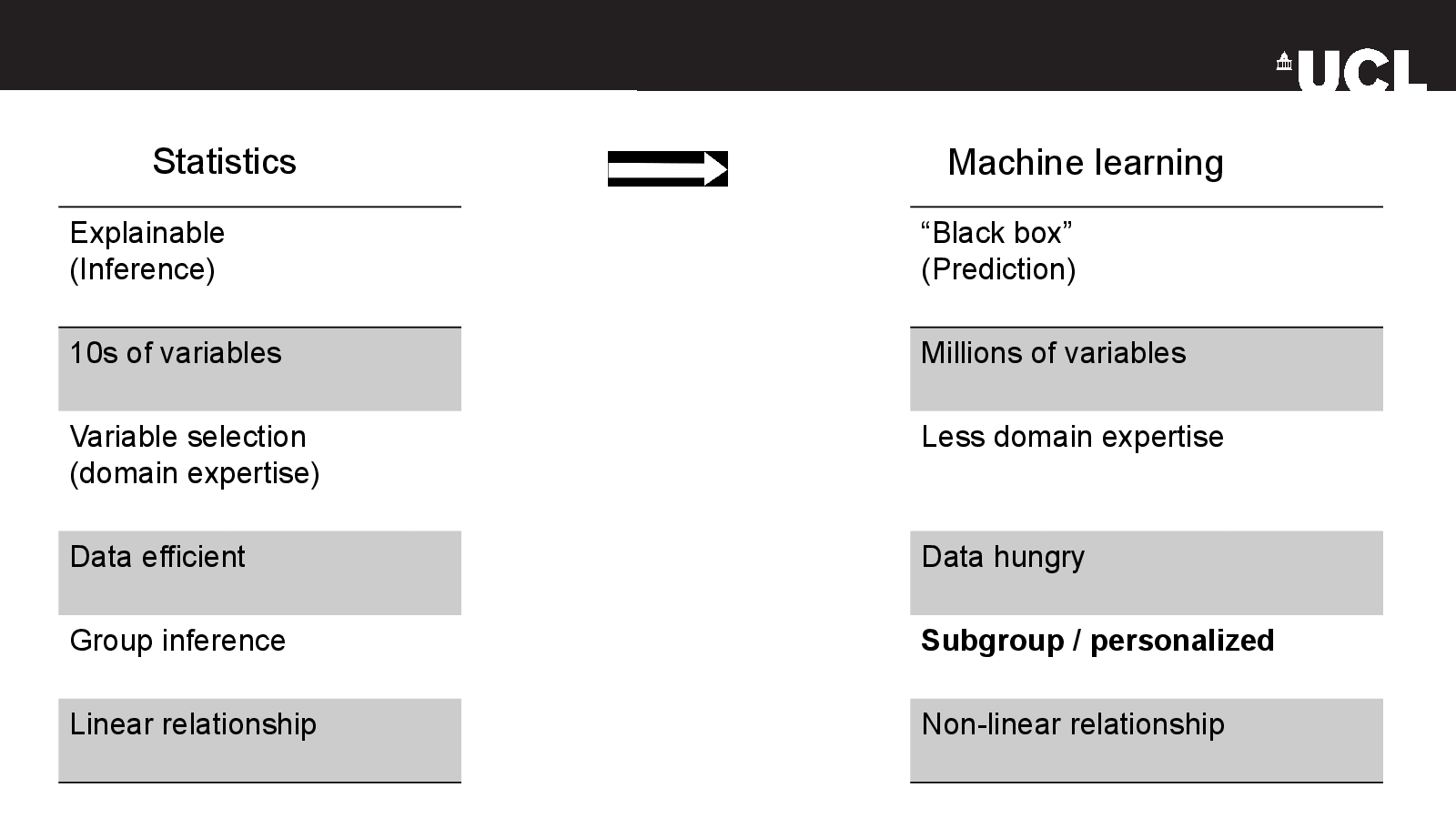
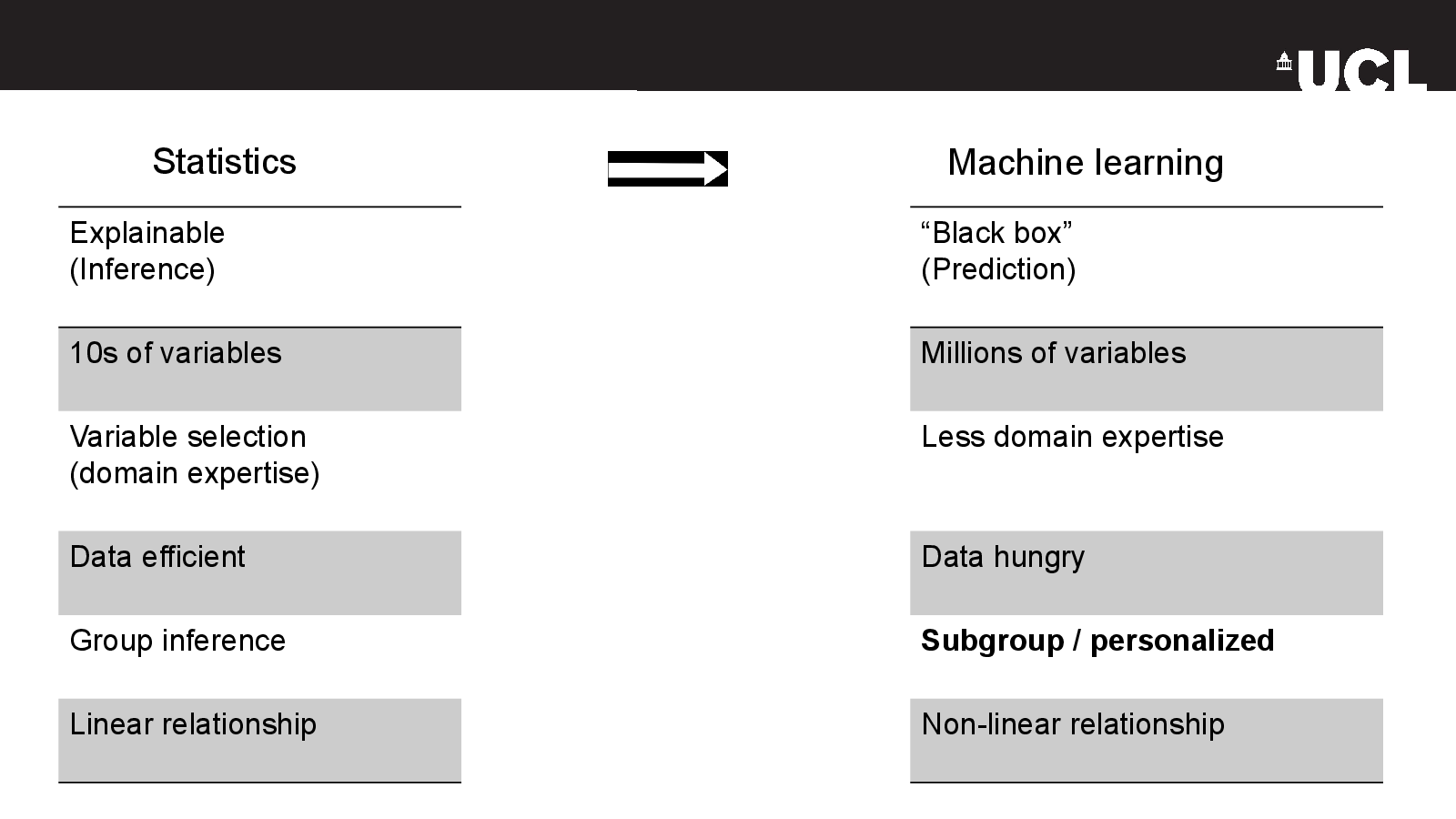
    Statistics

    Slide 11: StatisticsOpen full-size slide

    Machine learning

    • Explainable / (Inference) — “Black box” / (Prediction)
    • 10s of variables — Millions of variables
    • Variable selection / (domain expertise) — Less domain expertise
    • Data efficient — Data hungry
    • Group inference — Subgroup / personalized
    • Linear relationship — Non-linear relationship
  8. Slide 12

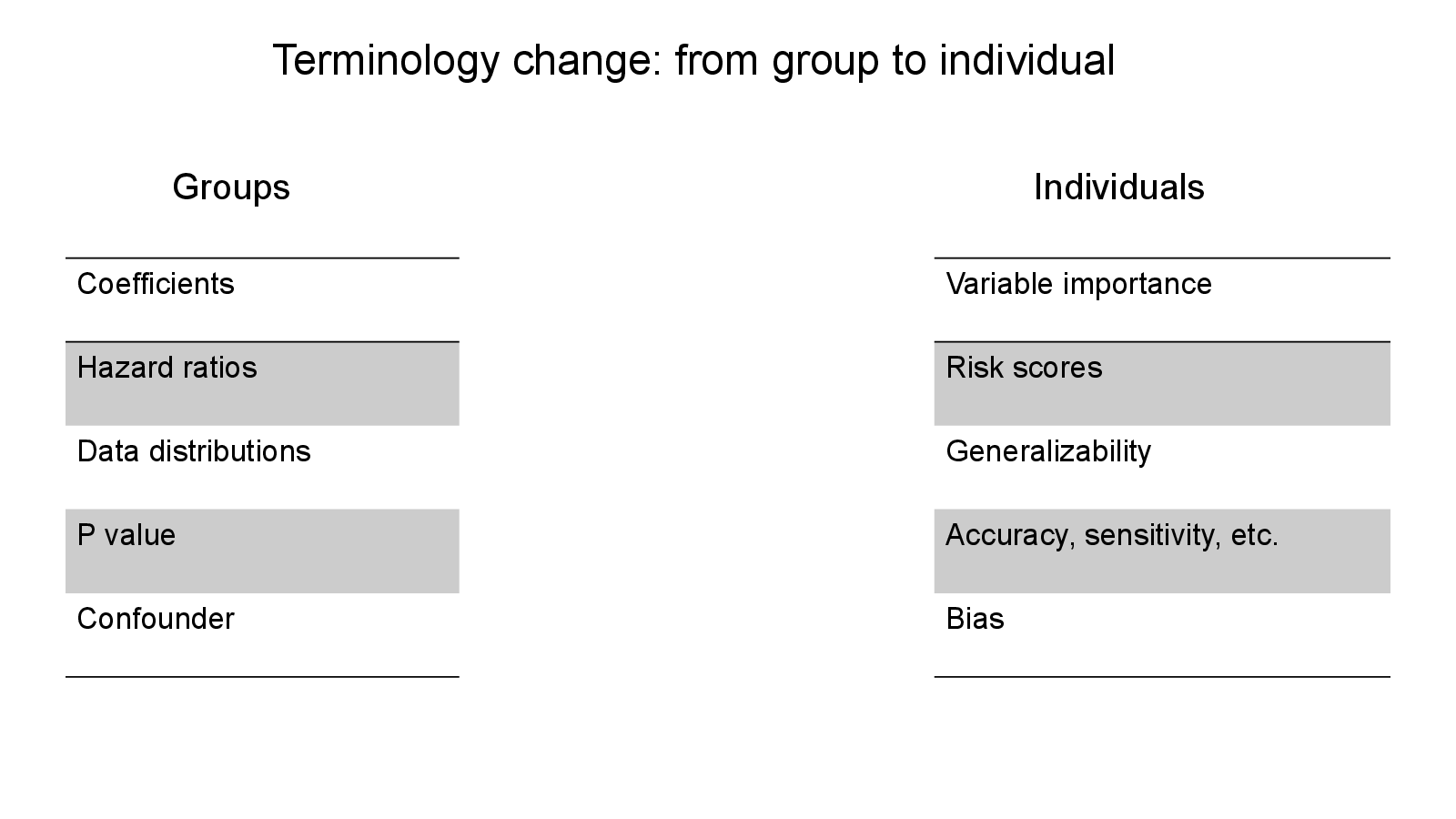
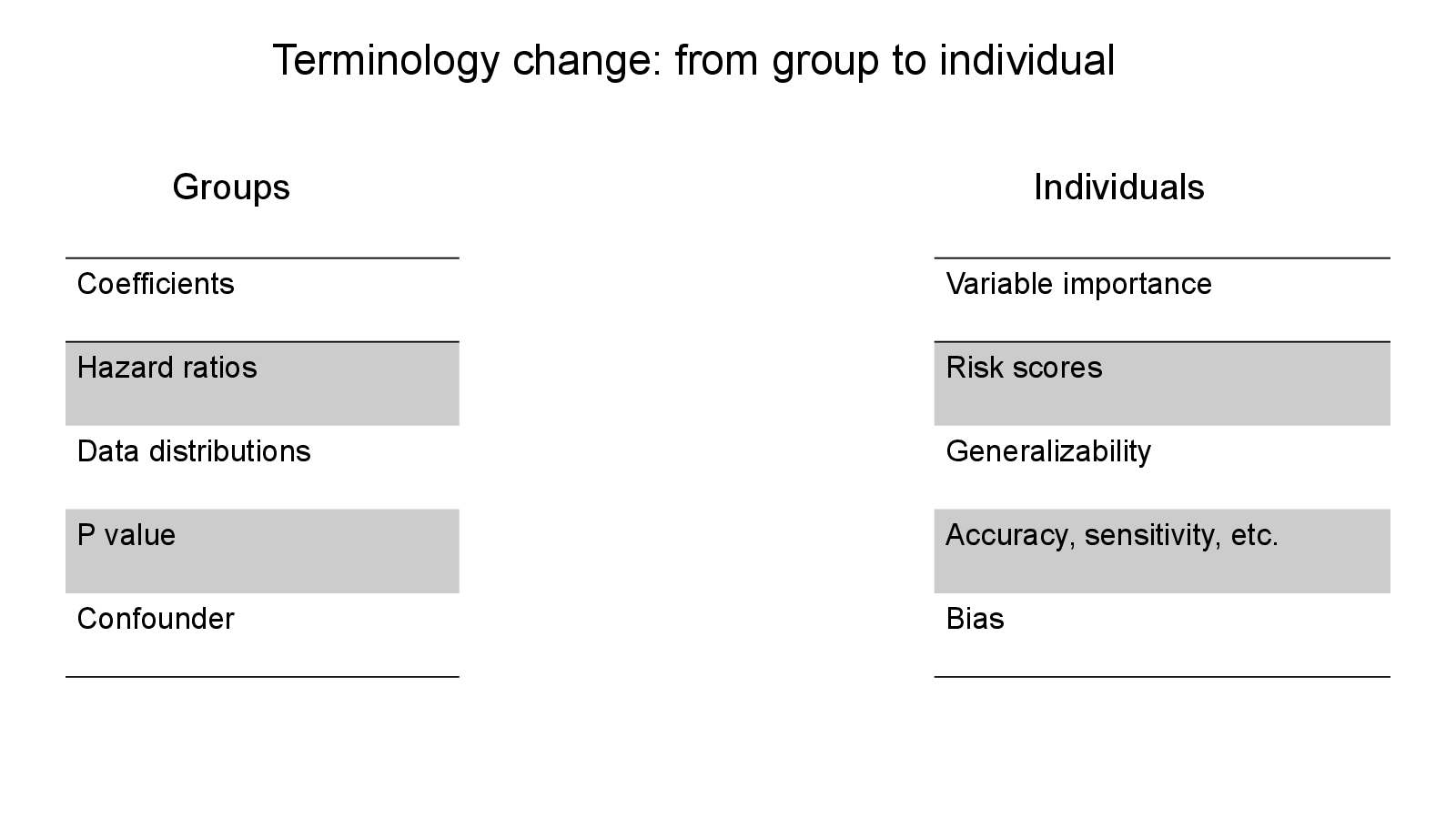
    Groups

    Slide 12: GroupsOpen full-size slide

    Individuals

    Terminology change: from group to individual

    • Coefficients — Variable importance
    • Hazard ratios — Risk scores
    • Data distributions — Generalizability
    • P value — Accuracy, sensitivity, etc.
    • Confounder — Bias
  9. Slide 15

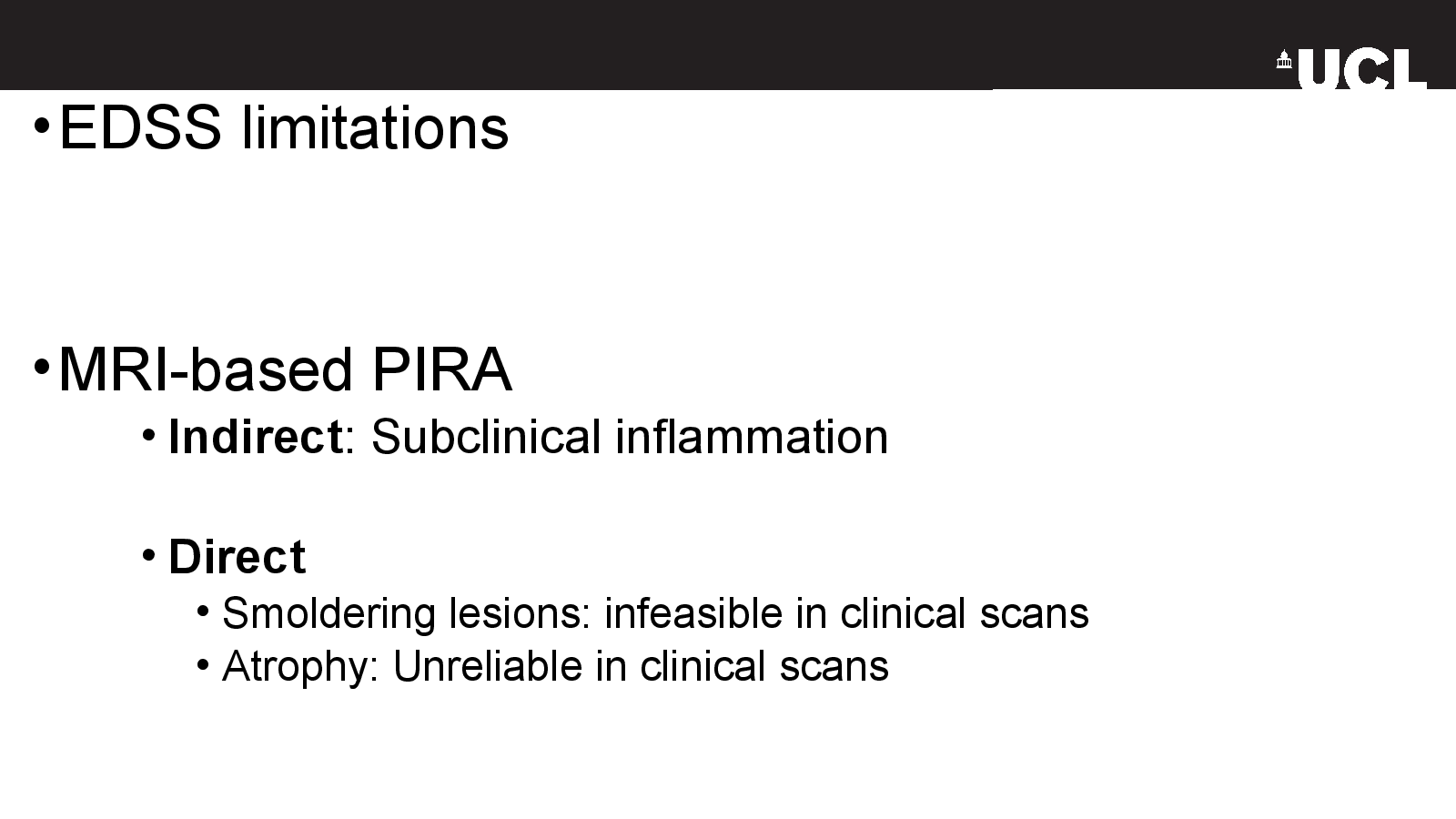
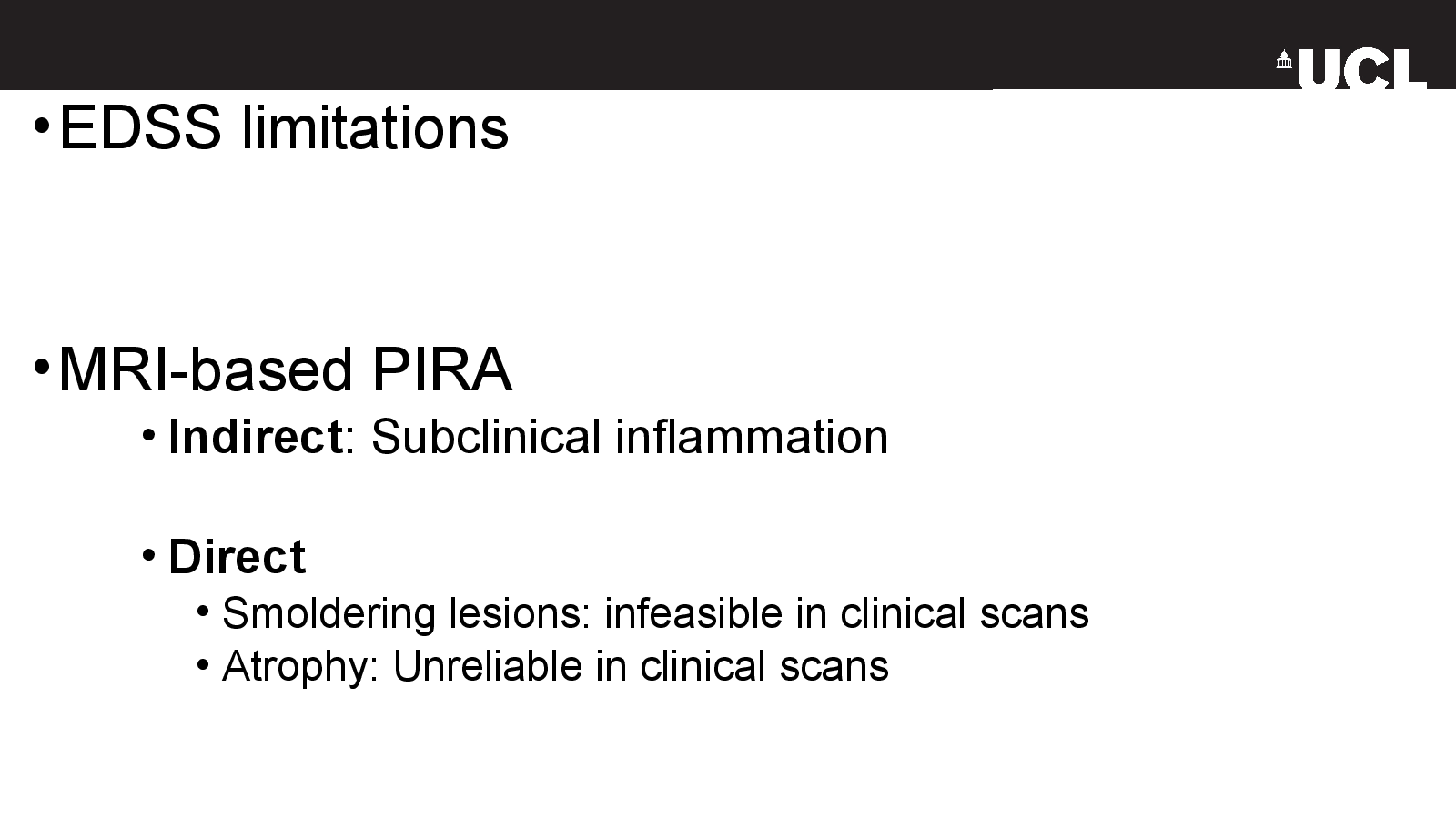
    EDSS limitations

    Slide 15: EDSS limitationsOpen full-size slide

    MRI-based PIRA

    • Indirect: Subclinical inflammation
    • Direct
    • Smoldering lesions: infeasible in clinical scans
    • Atrophy: Unreliable in clinical scans
  10. Slide 21

    Summary

    Slide 21: SummaryOpen full-size slide

    Predicting PIRA observational studies

    PIRA predictors/biomarkers

    Limitations

    Decentralized future