All talks & lectures

Invited lecture ·

Generative AI in MS Neuroimaging

A practical survey of synthetic MRI, privacy, fairness and the limits of generative models in multiple sclerosis.

NMSS

A web sketch of the deck’s central idea
Delivered
Event
NMSS
Format
Invited lecture
Source deck
20 slides

From the slides

Deck notes

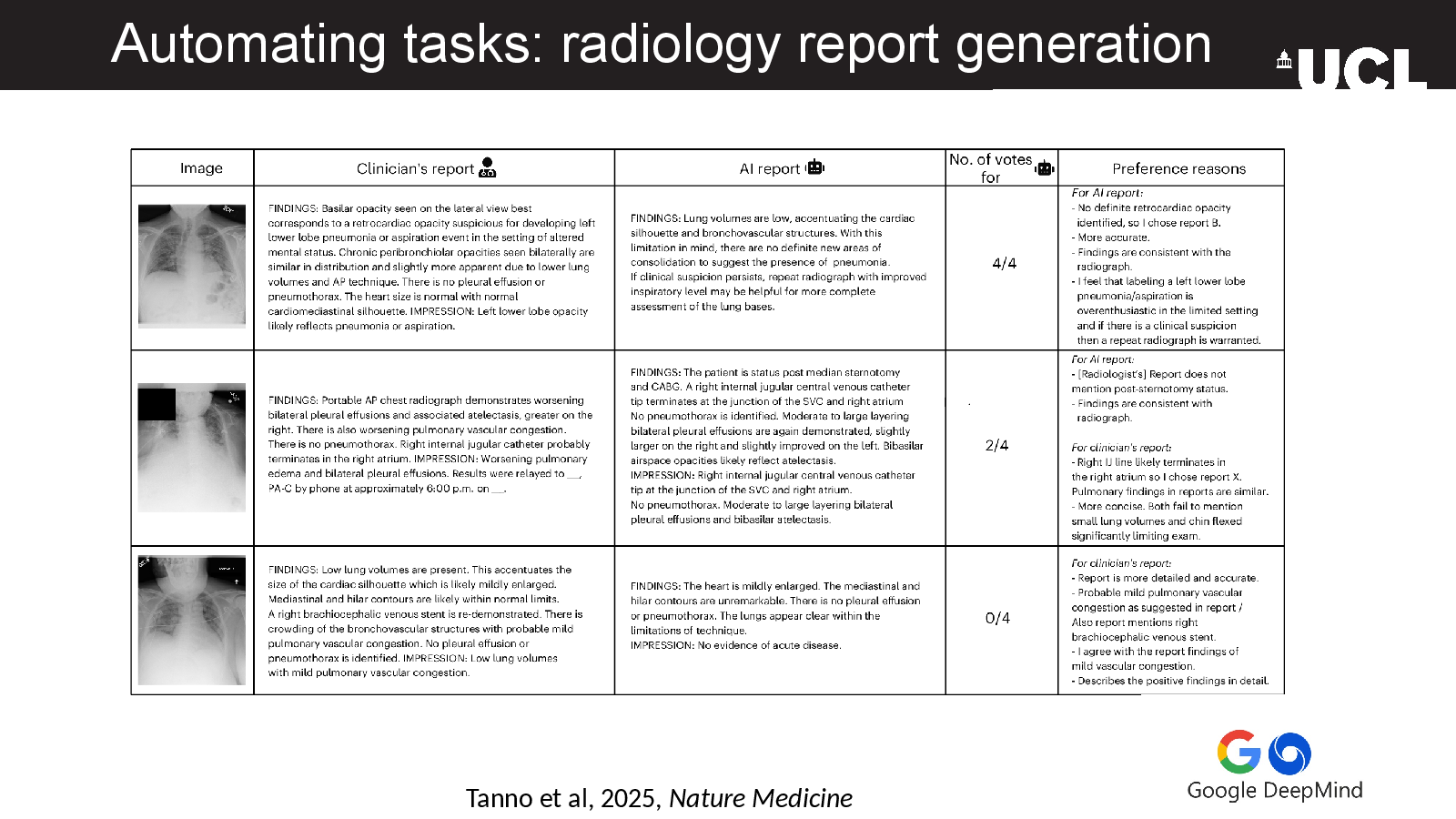
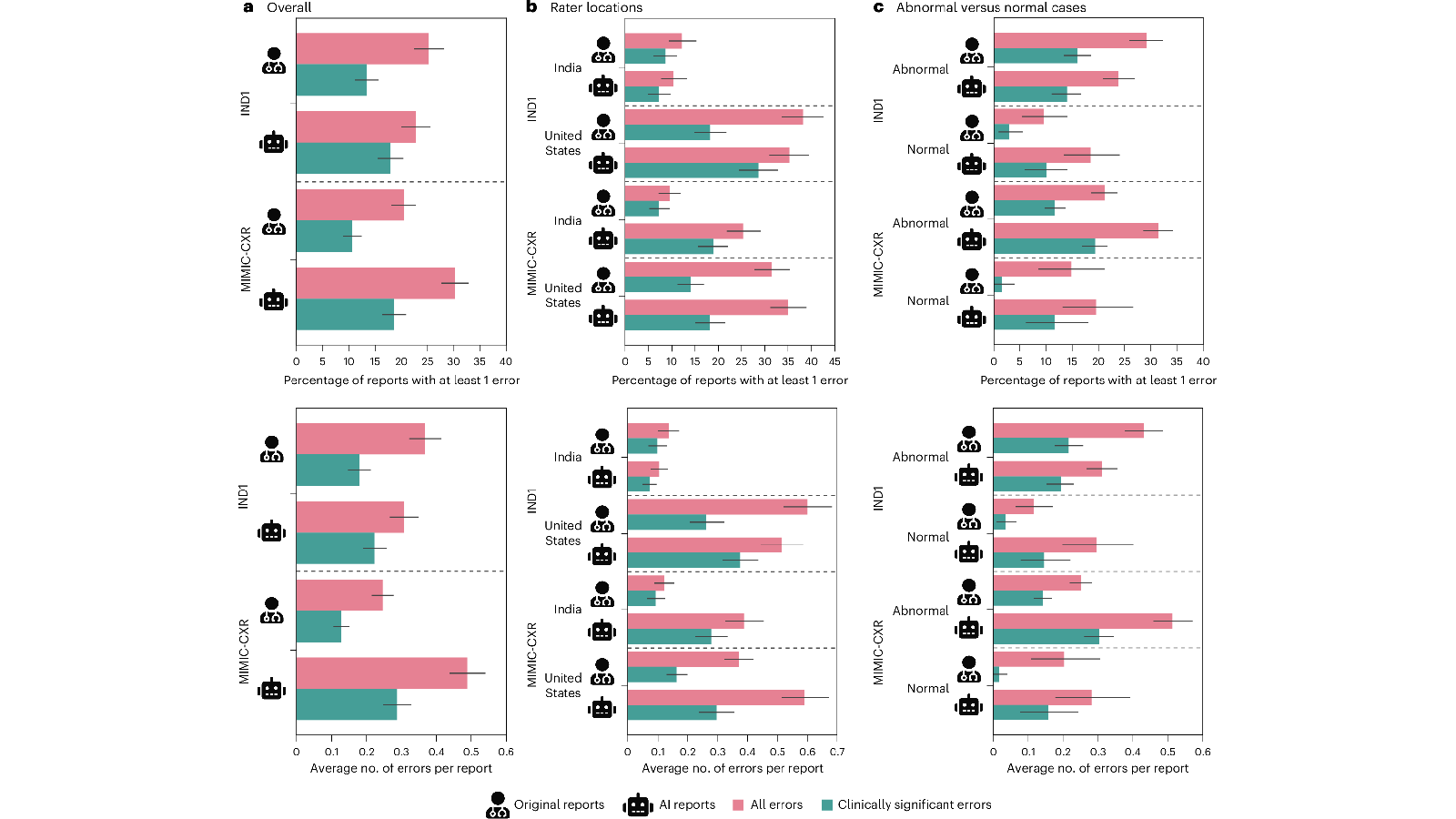
This lecture surveyed how generative models may help MS neuroimaging, from synthetic contrasts and privacy-preserving data to radiology reports. The same deck was used for an IPMSA session later in 2025.

The question

Can a model that learns the distribution of MRI data extend what researchers can study without introducing new error or bias?

Deck outline

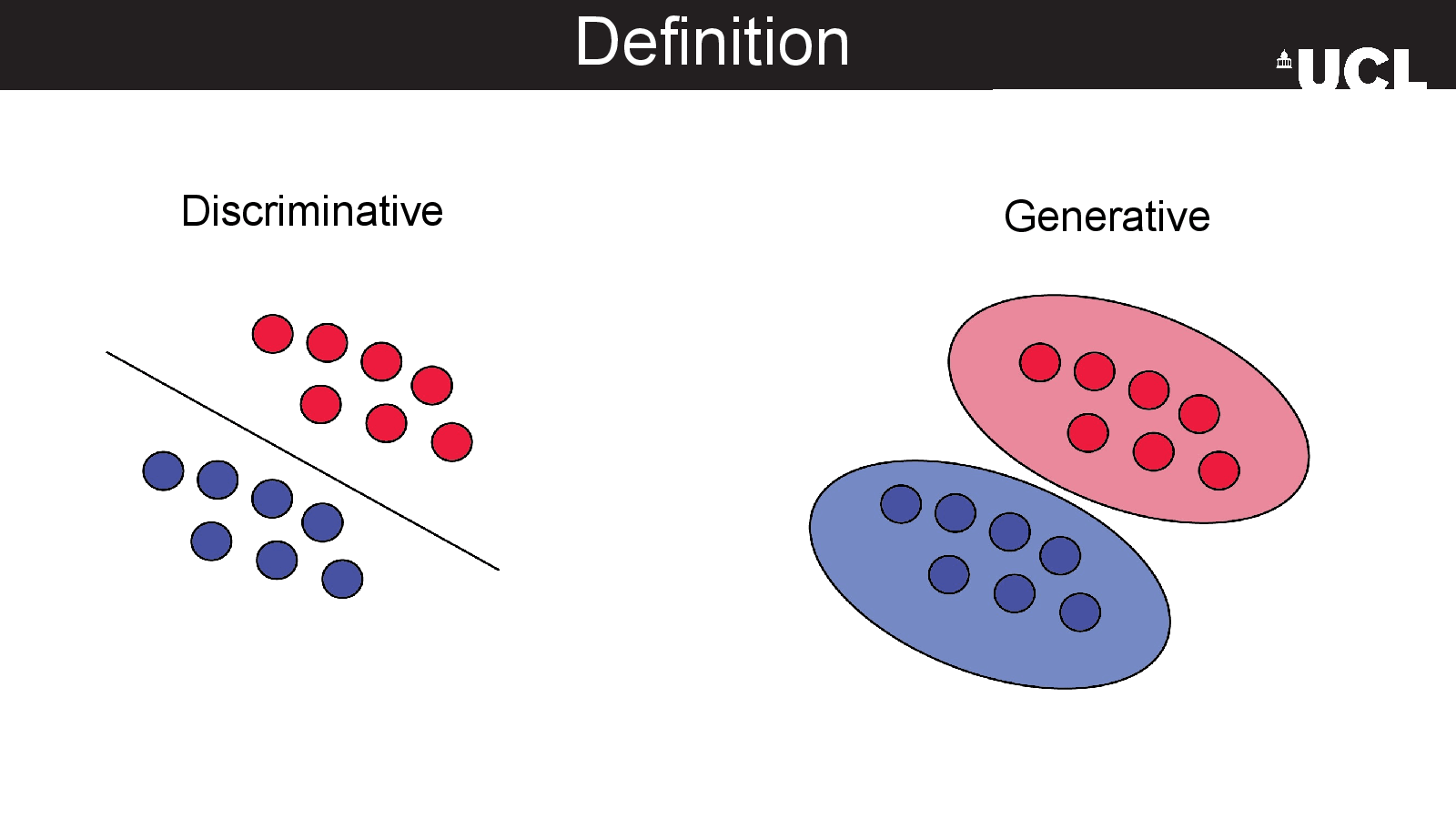
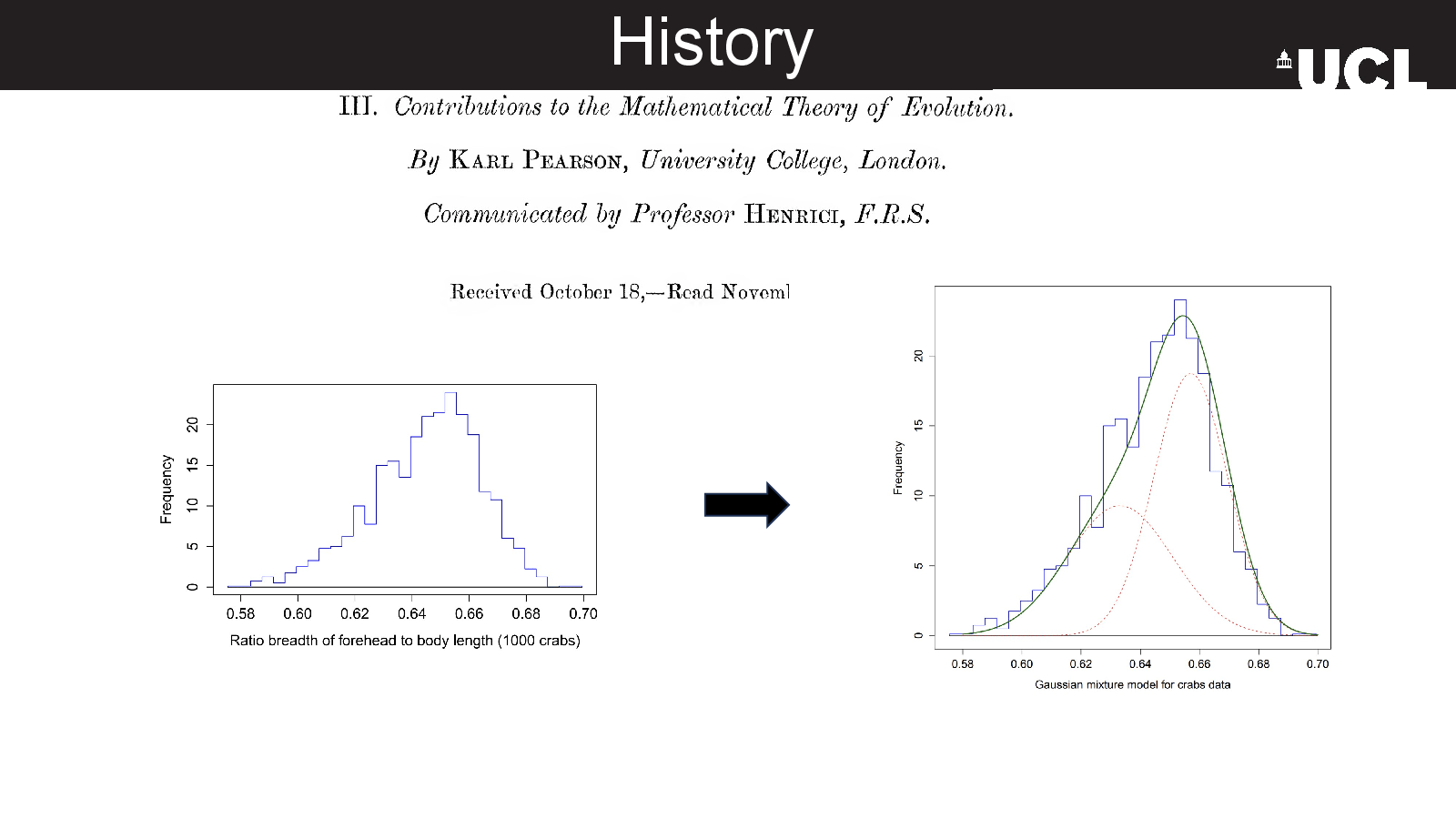
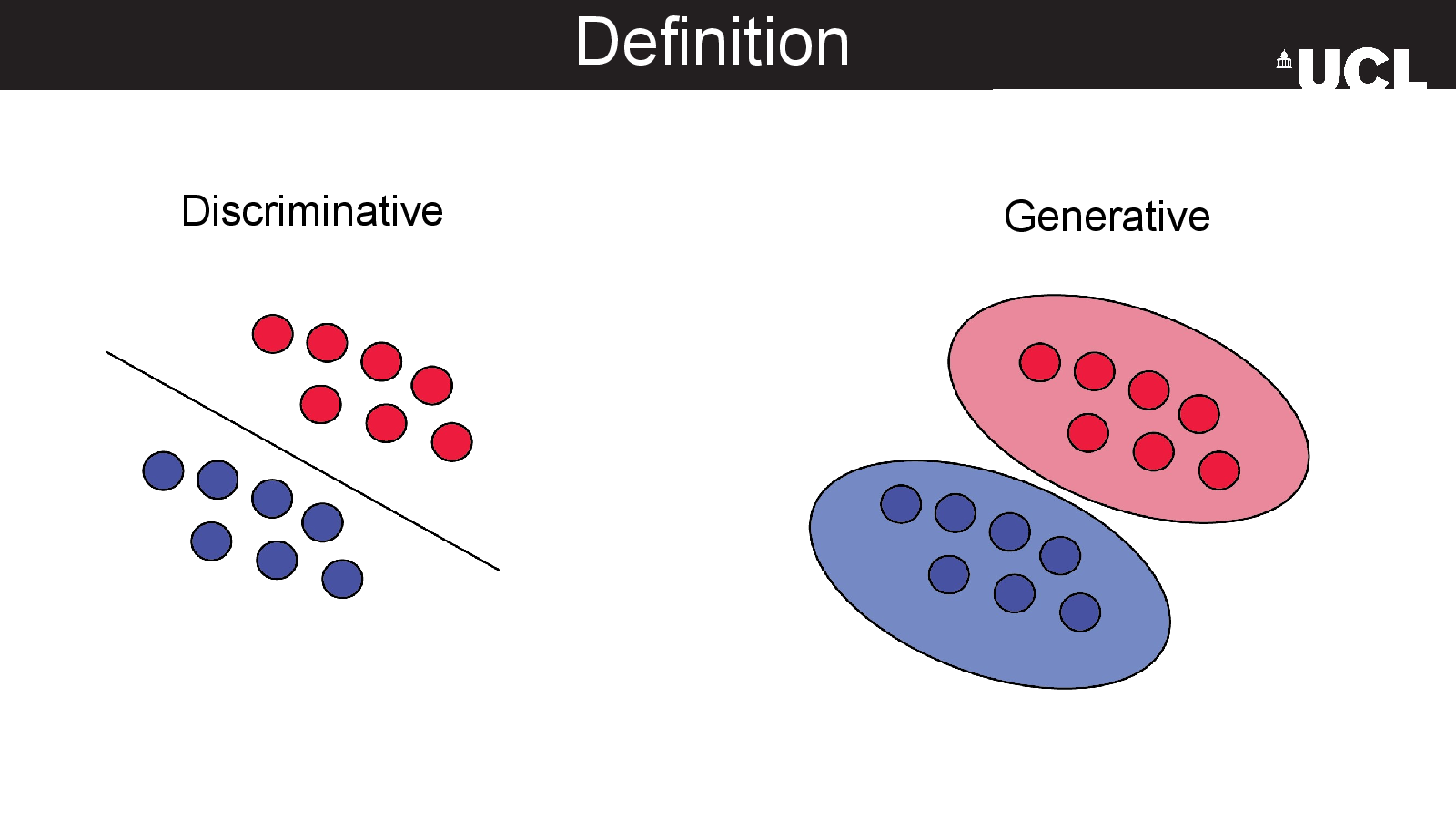
  • The distinction between discriminative and generative models
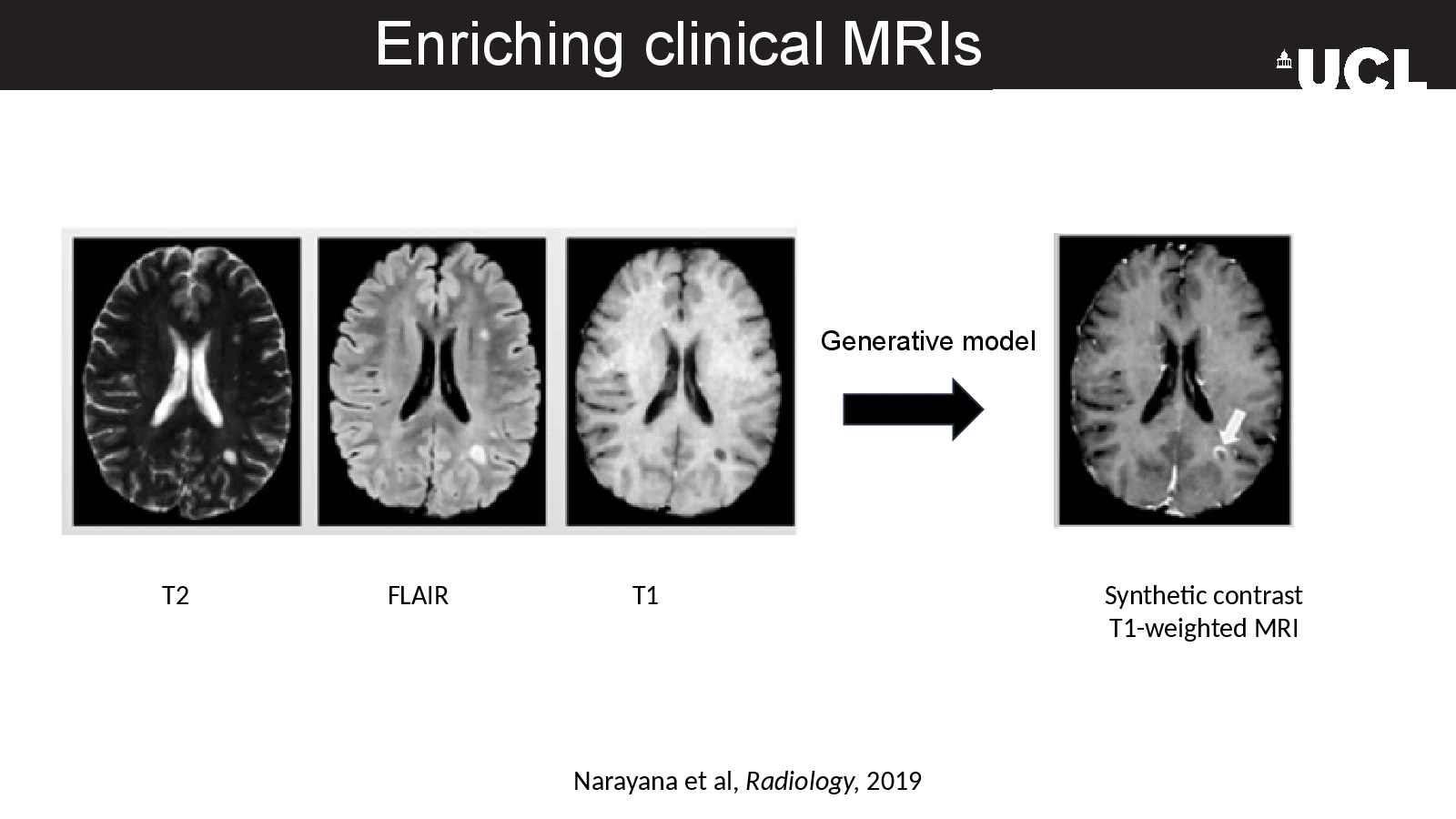
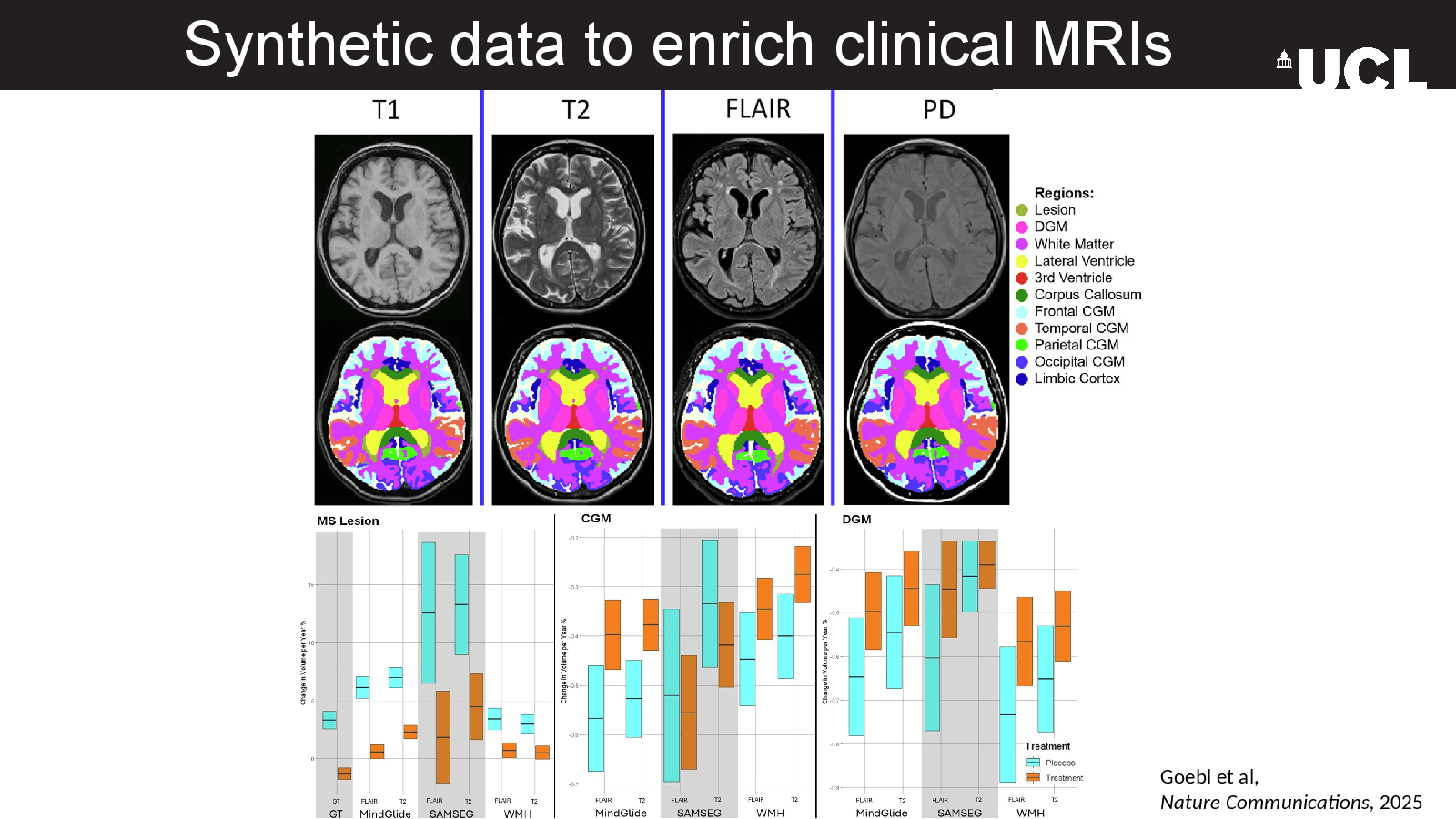
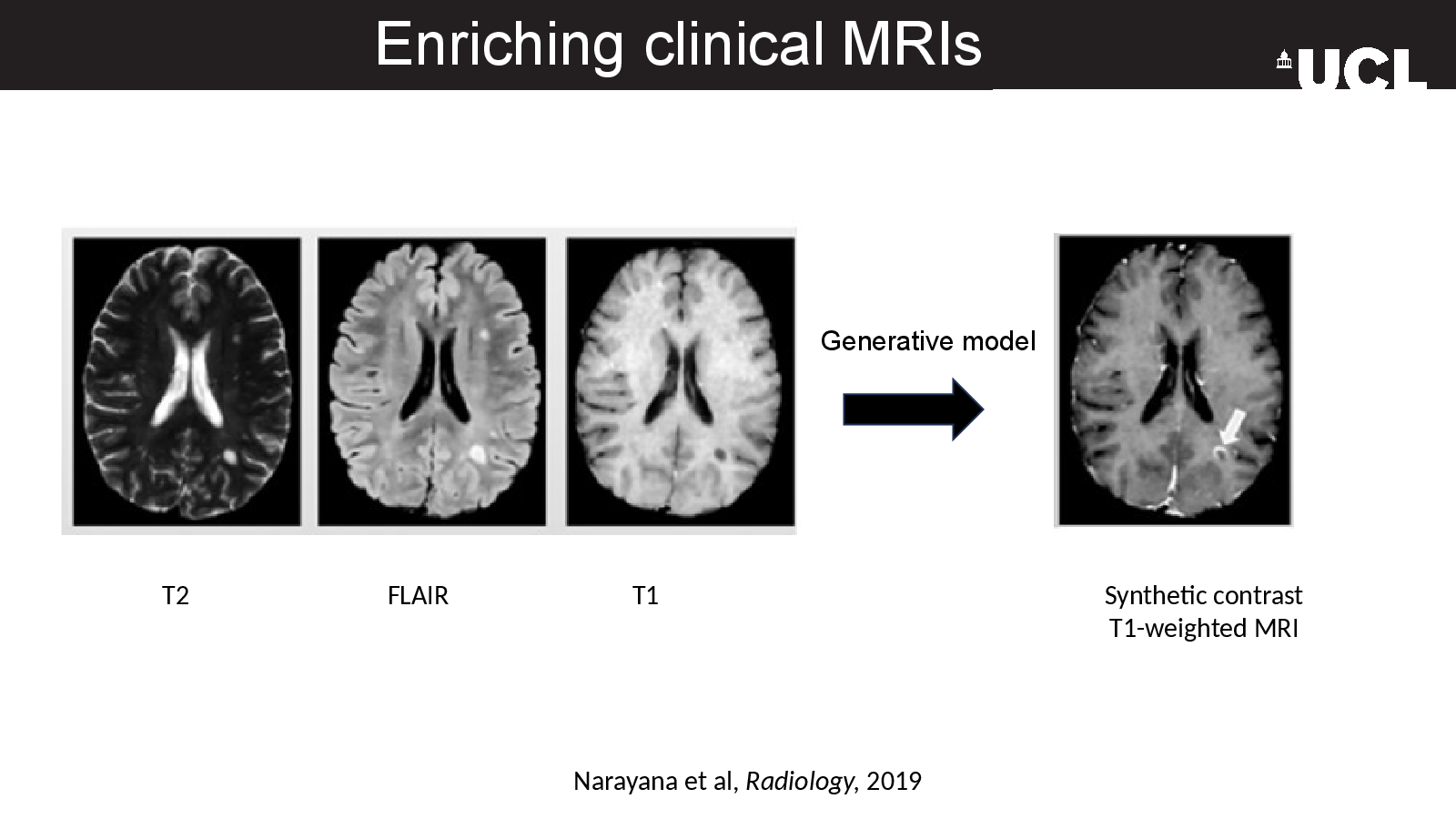
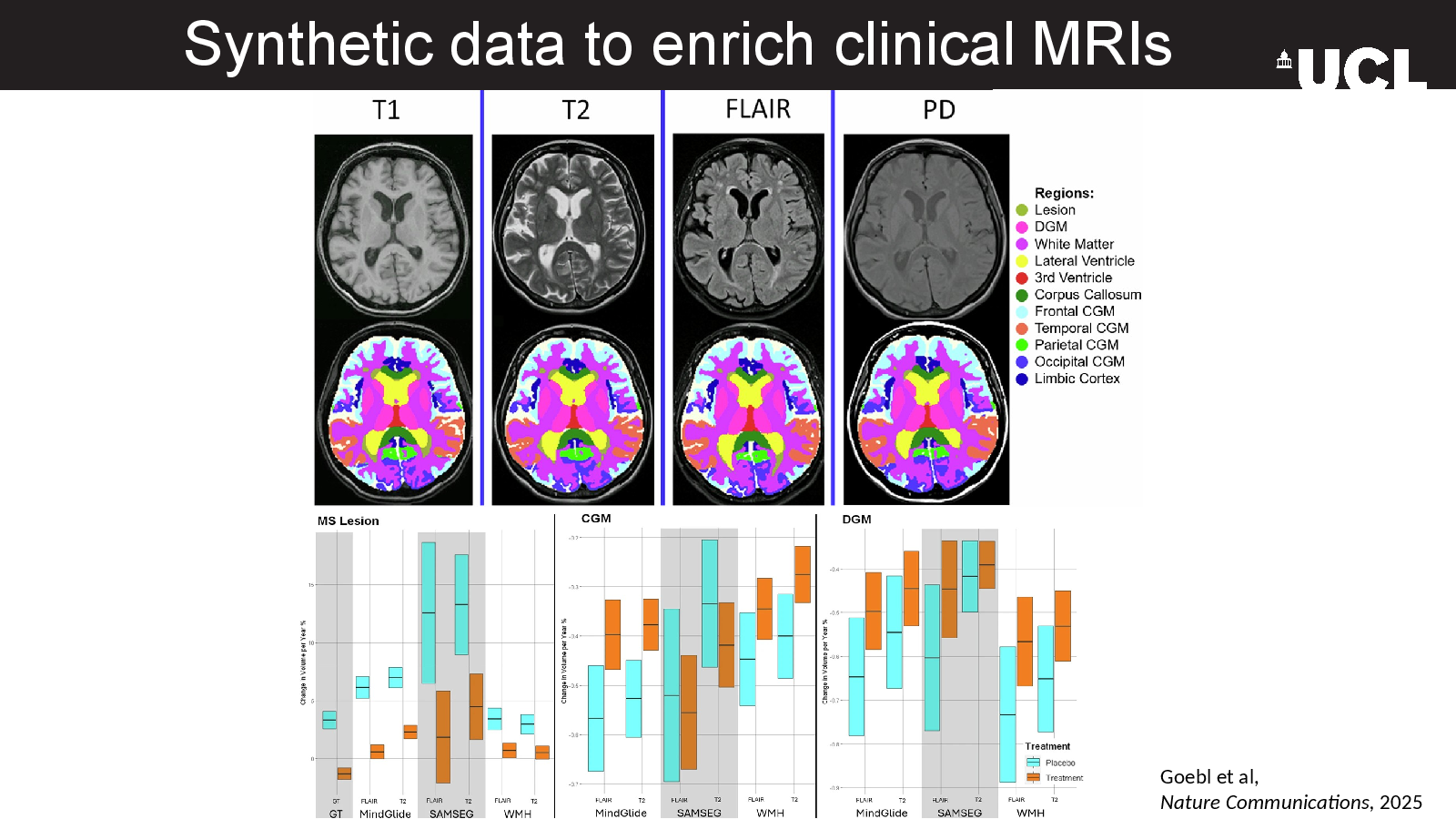
  • Synthetic MRI contrasts and enrichment of clinical scans
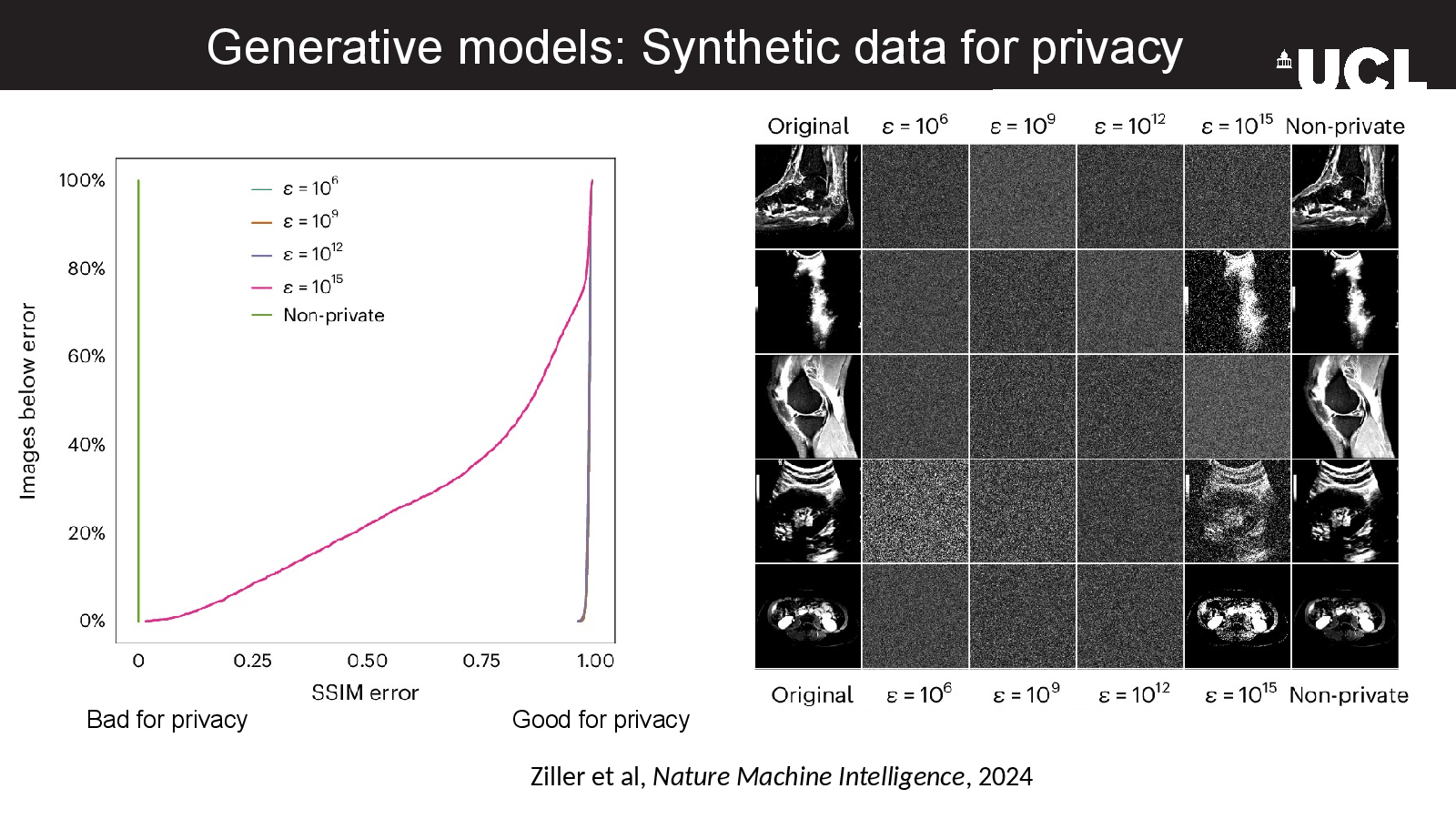
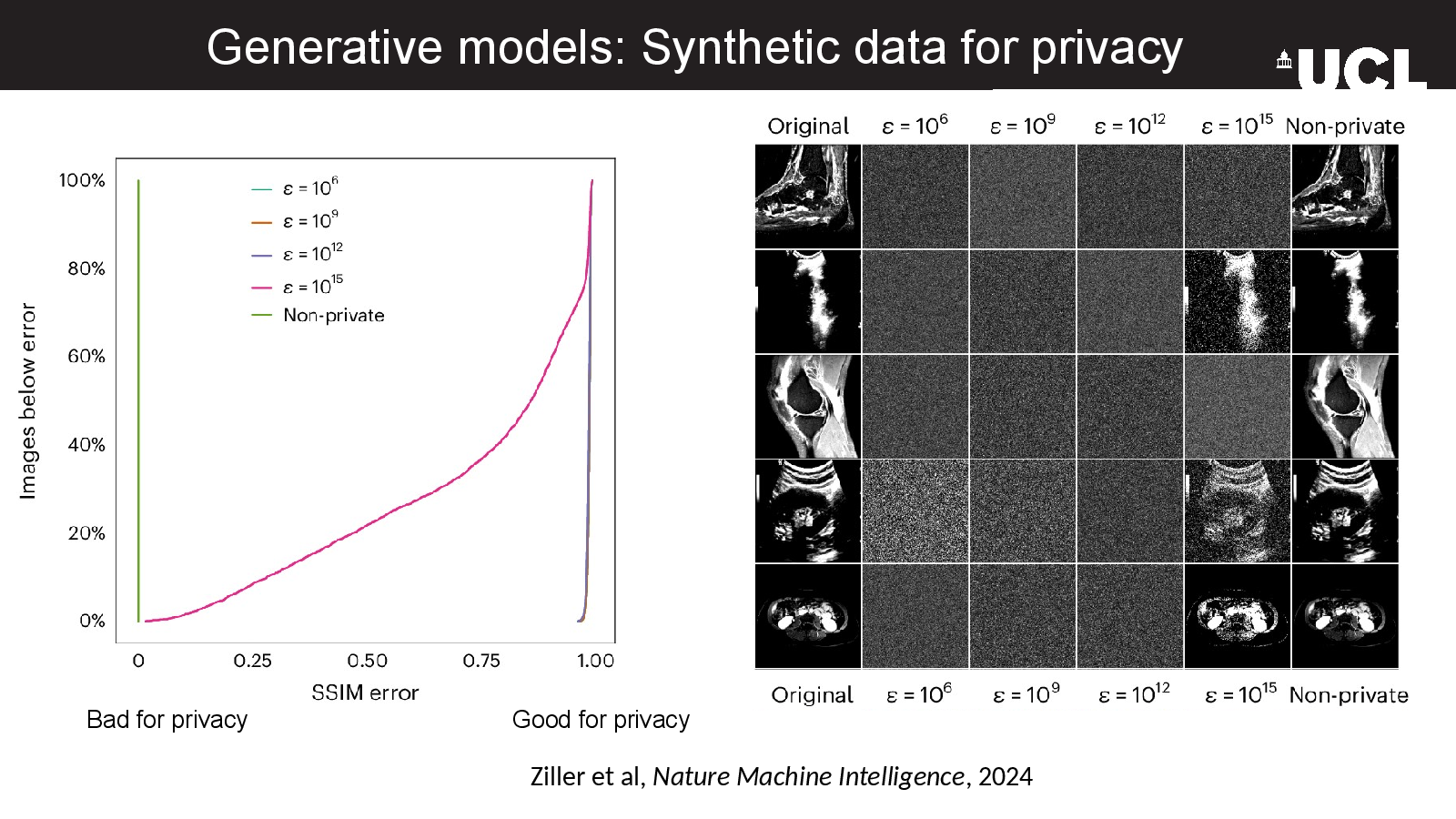
  • Synthetic data as a route to greater privacy
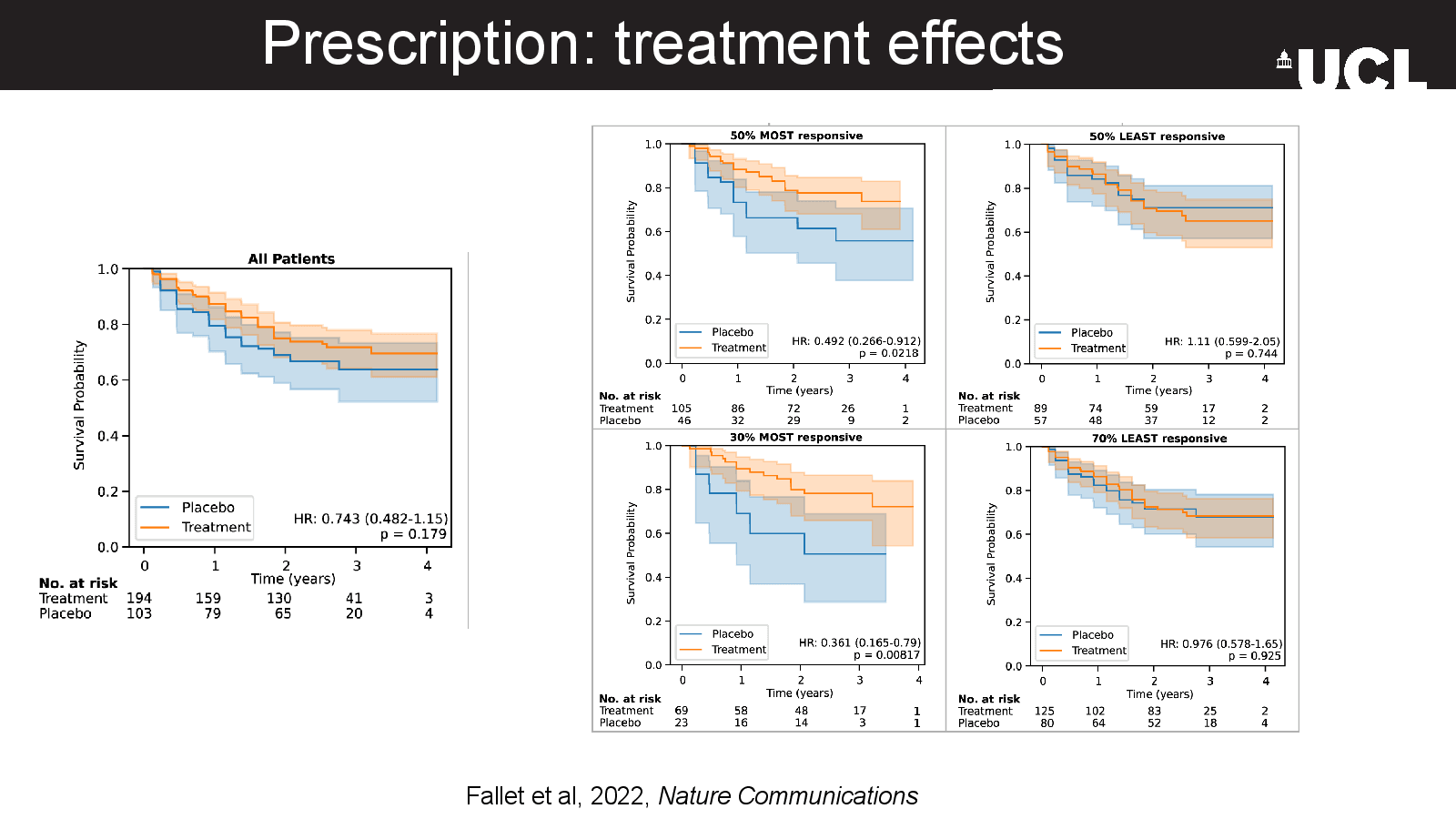
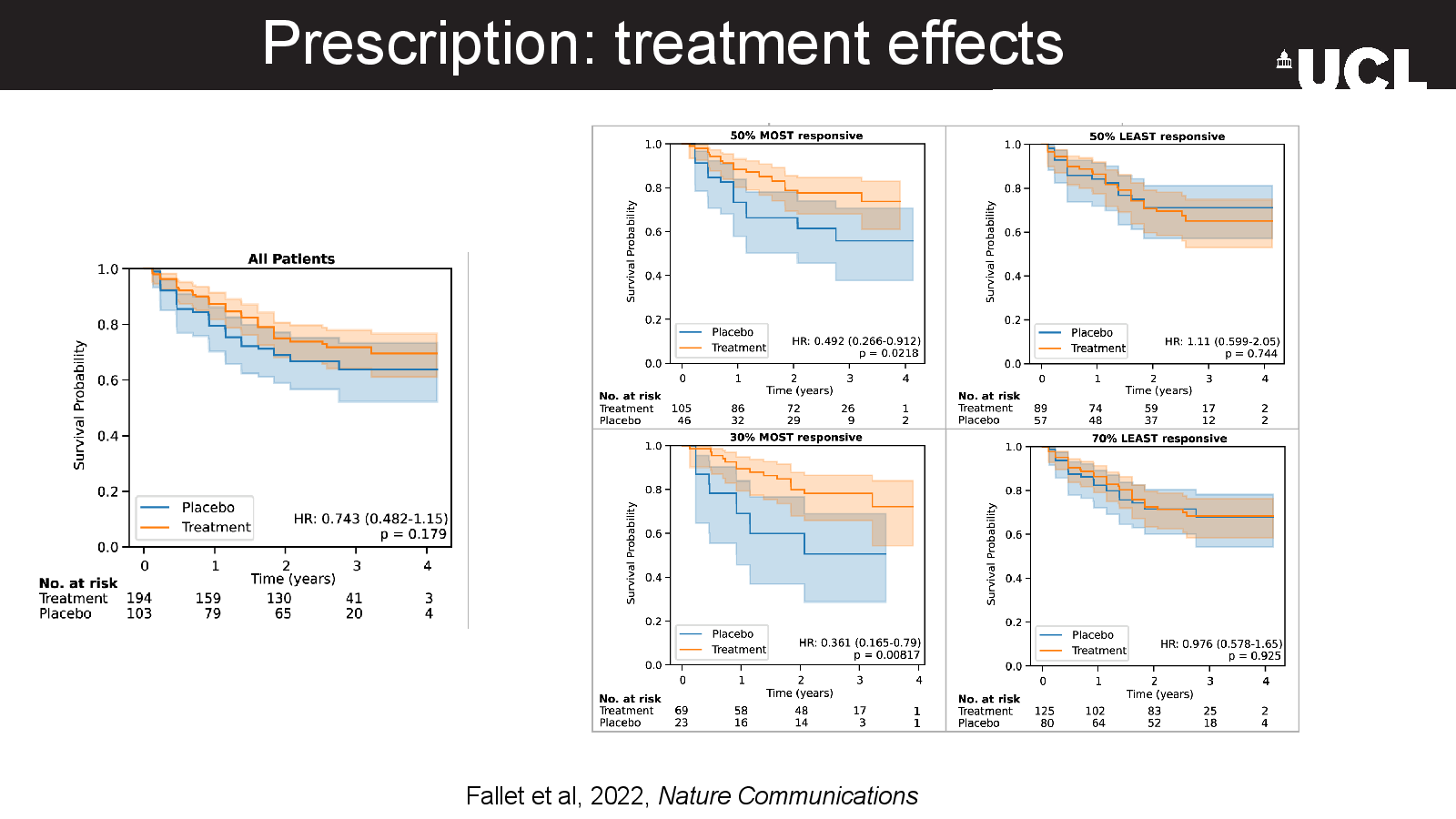
  • Generative models for treatment-effect research
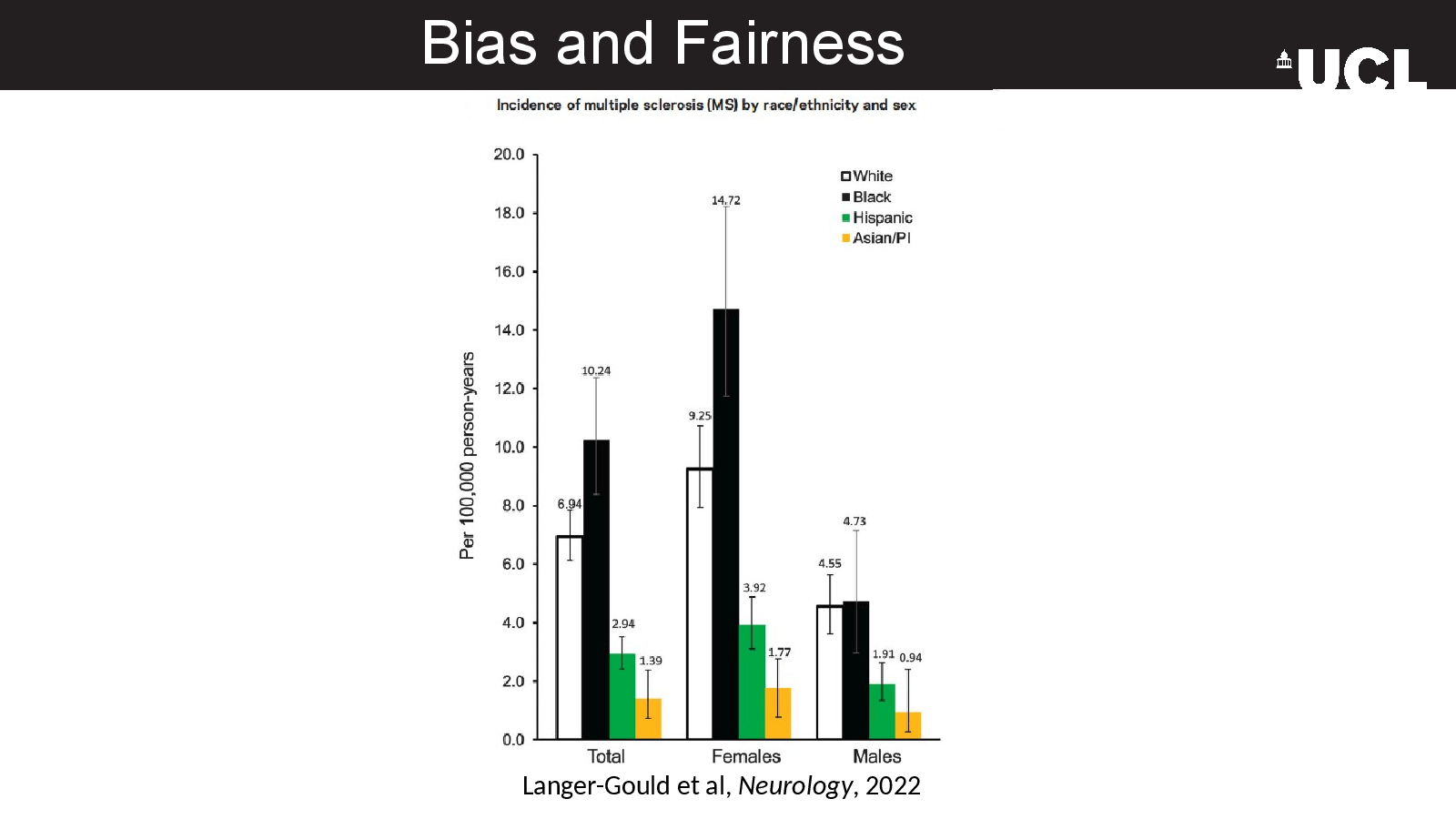
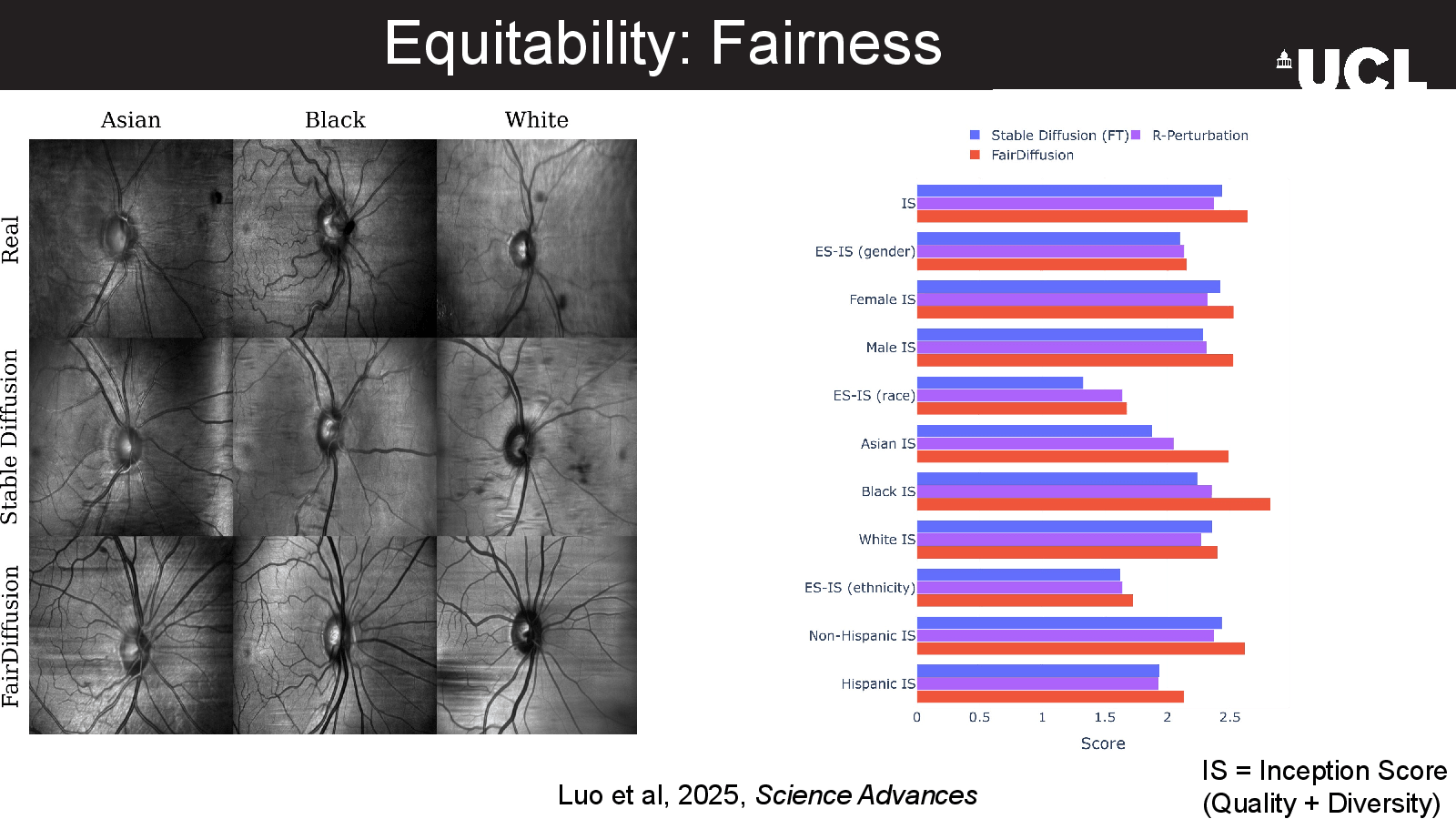
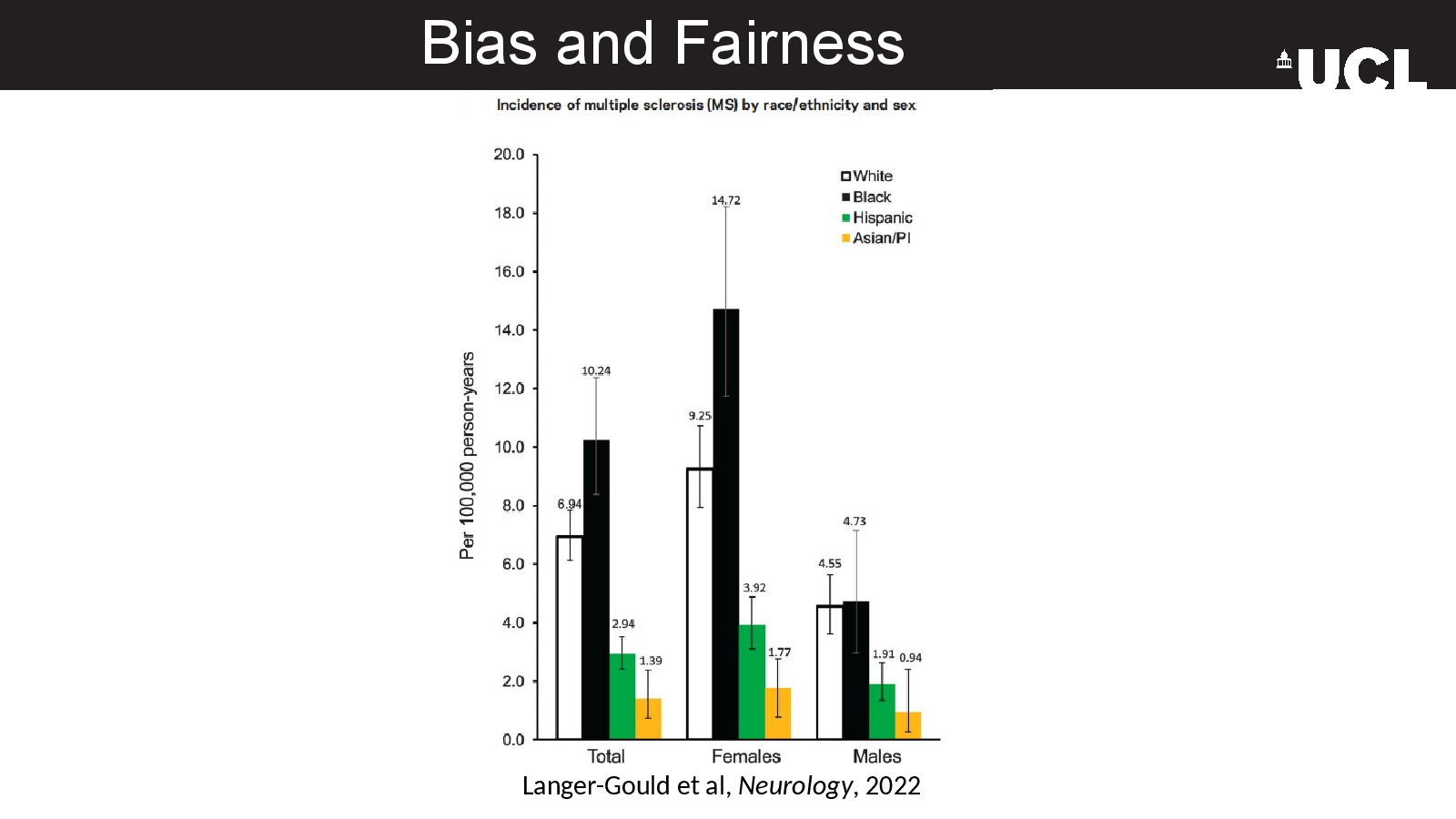
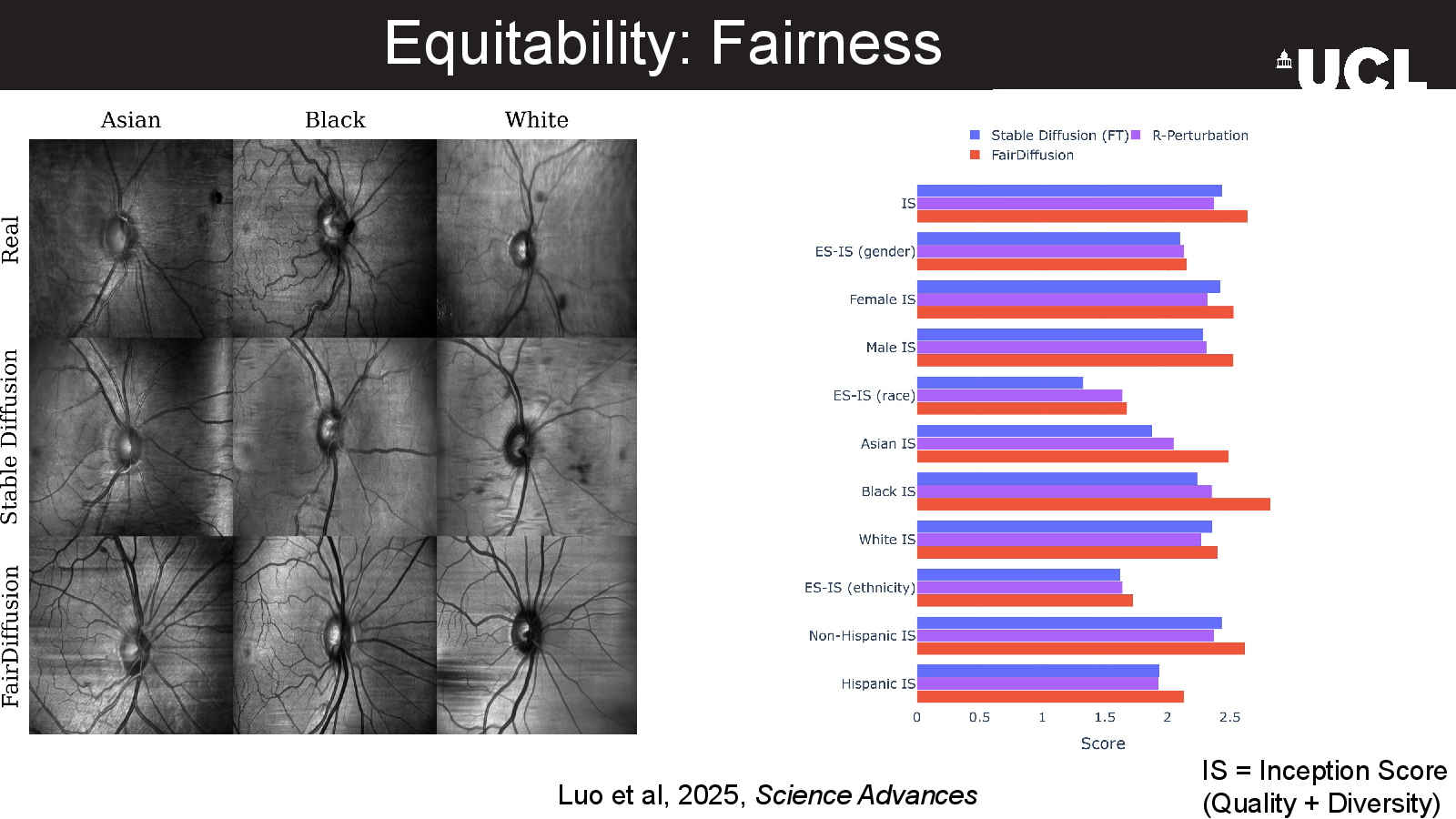
  • Bias, fairness and equitable model performance
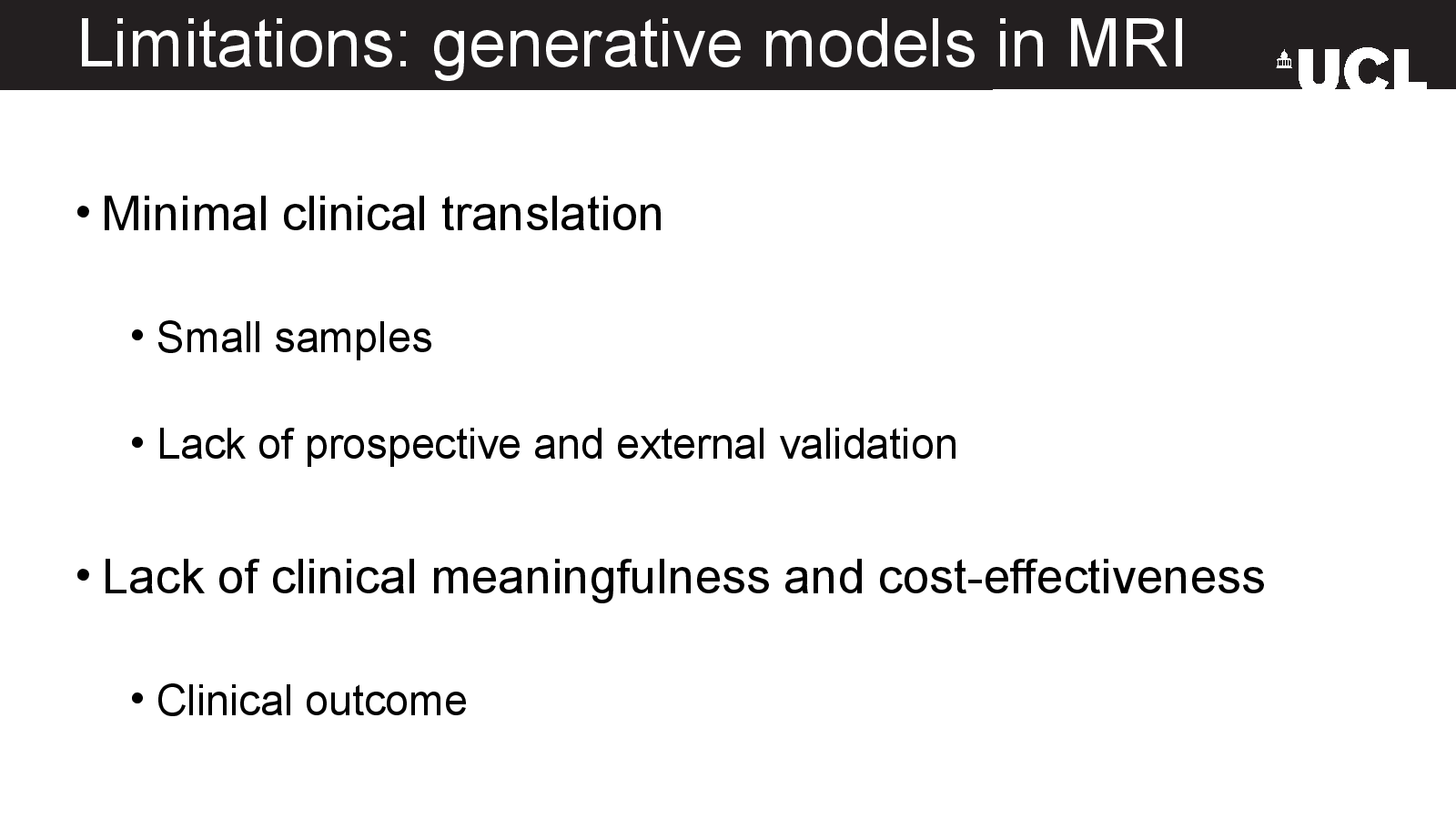
  • Small samples, limited validation and the gap to clinical impact

Take-away

Generative AI is versatile, but clinical value still depends on external validation, meaningful outcomes and careful assessment of fairness.

Original deck

Slide by slide

Read the 20-slide presentation in order, or use the index to jump.

  1. Slide 01

    Generative AI in MS Neuroimaging
    Slide 1: Generative AI in MS NeuroimagingOpen full-size slide

    Arman Eshaghi, MD, PhD

    NIHR Advanced Fellow

    Queen Square Institute of Neurology

    University College London

    United Kingdom

  2. Slide 02

    Disclosures

    Slide 2: DisclosuresOpen full-size slide

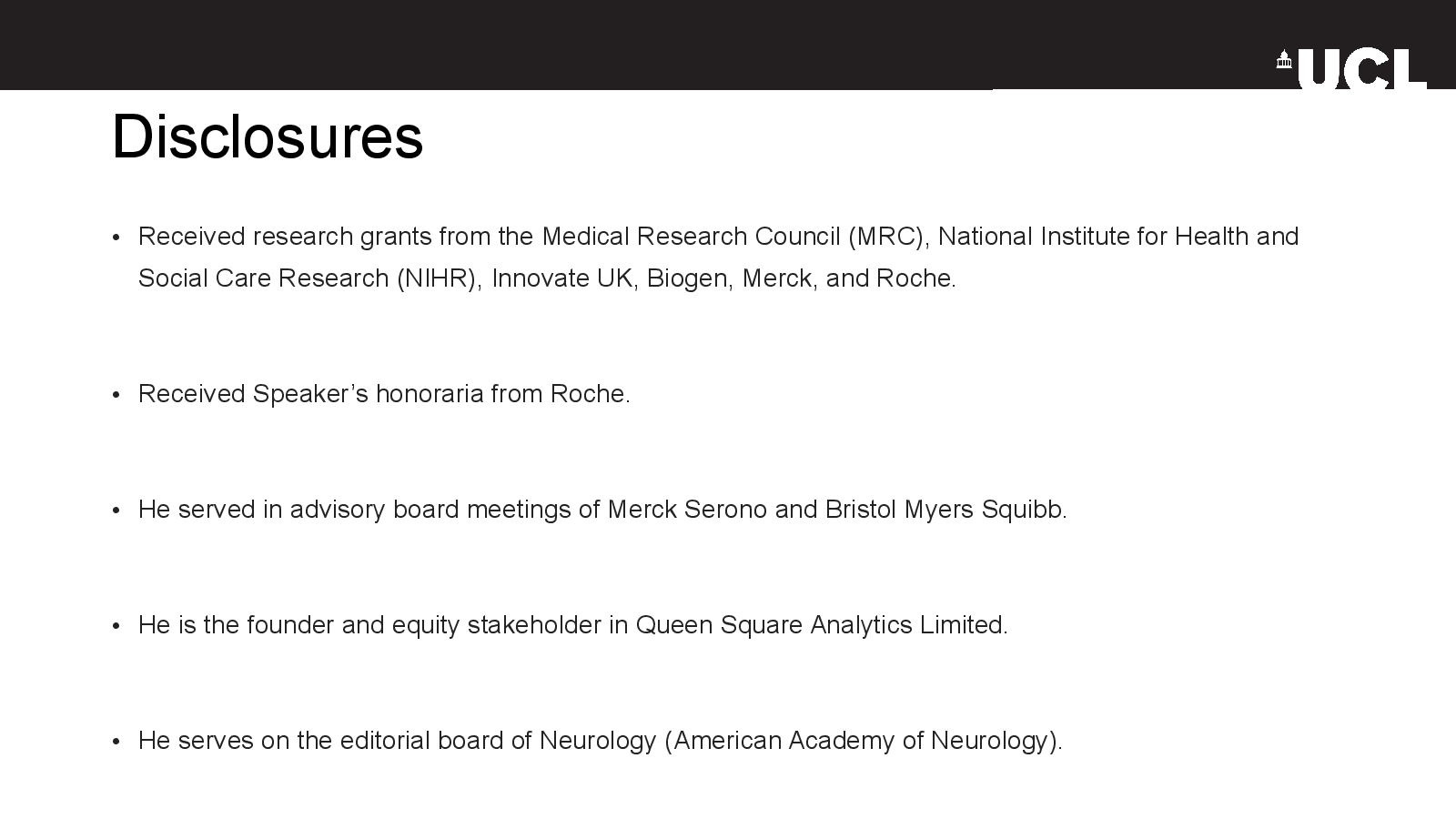
    Received research grants from the Medical Research Council (MRC), National Institute for Health and Social Care Research (NIHR), Innovate UK, Biogen, Merck, and Roche.

    Received Speaker’s honoraria from Roche.

    He served in advisory board meetings of Merck Serono and Bristol Myers Squibb.

    He is the founder and equity stakeholder in Queen Square Analytics Limited.

    He serves on the editorial board of Neurology (American Academy of Neurology).

  3. Slide 03

    Outline

    Slide 3: OutlineOpen full-size slide

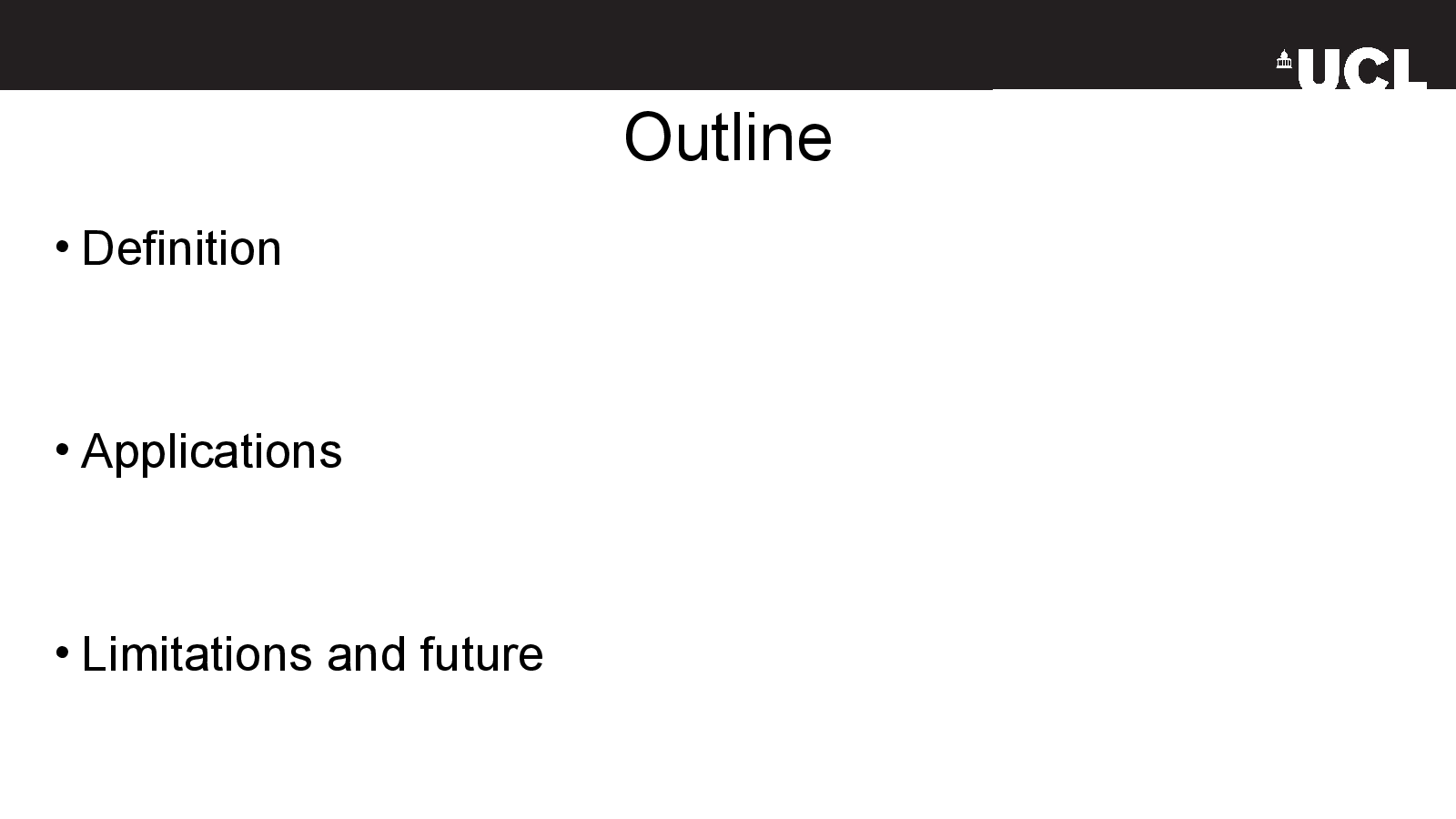
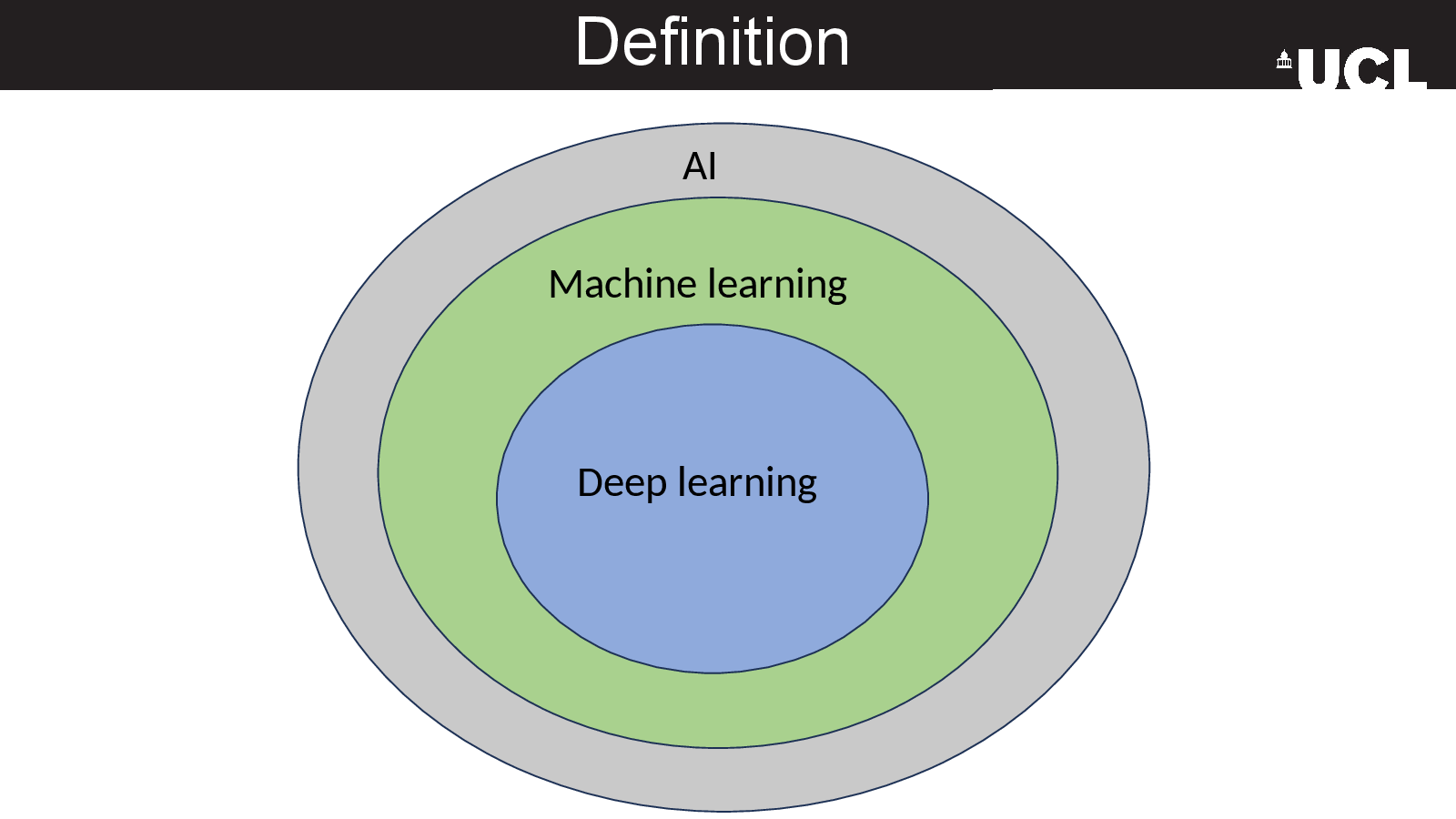
    Definition

    Applications

    Limitations and future

    Speaker notes

    Routine-care MRI and advanced MRI

  4. Slide 05

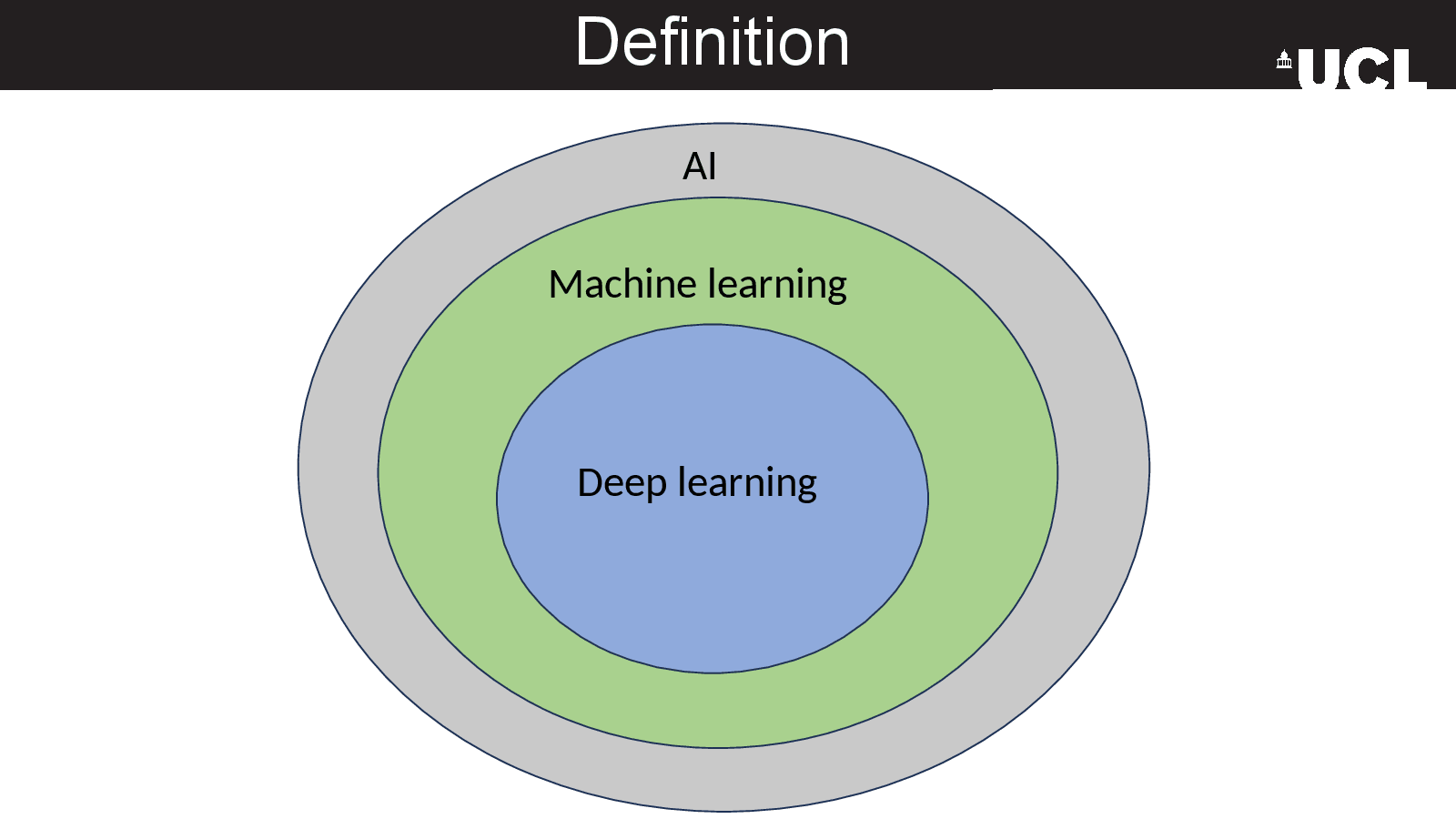
    Definition

    Slide 5: DefinitionOpen full-size slide

    Discriminative

    Generative

    Speaker notes

    Discriminative: “We learn a boundary.” Generative: “We learn the world of the data:”

  5. Slide 07

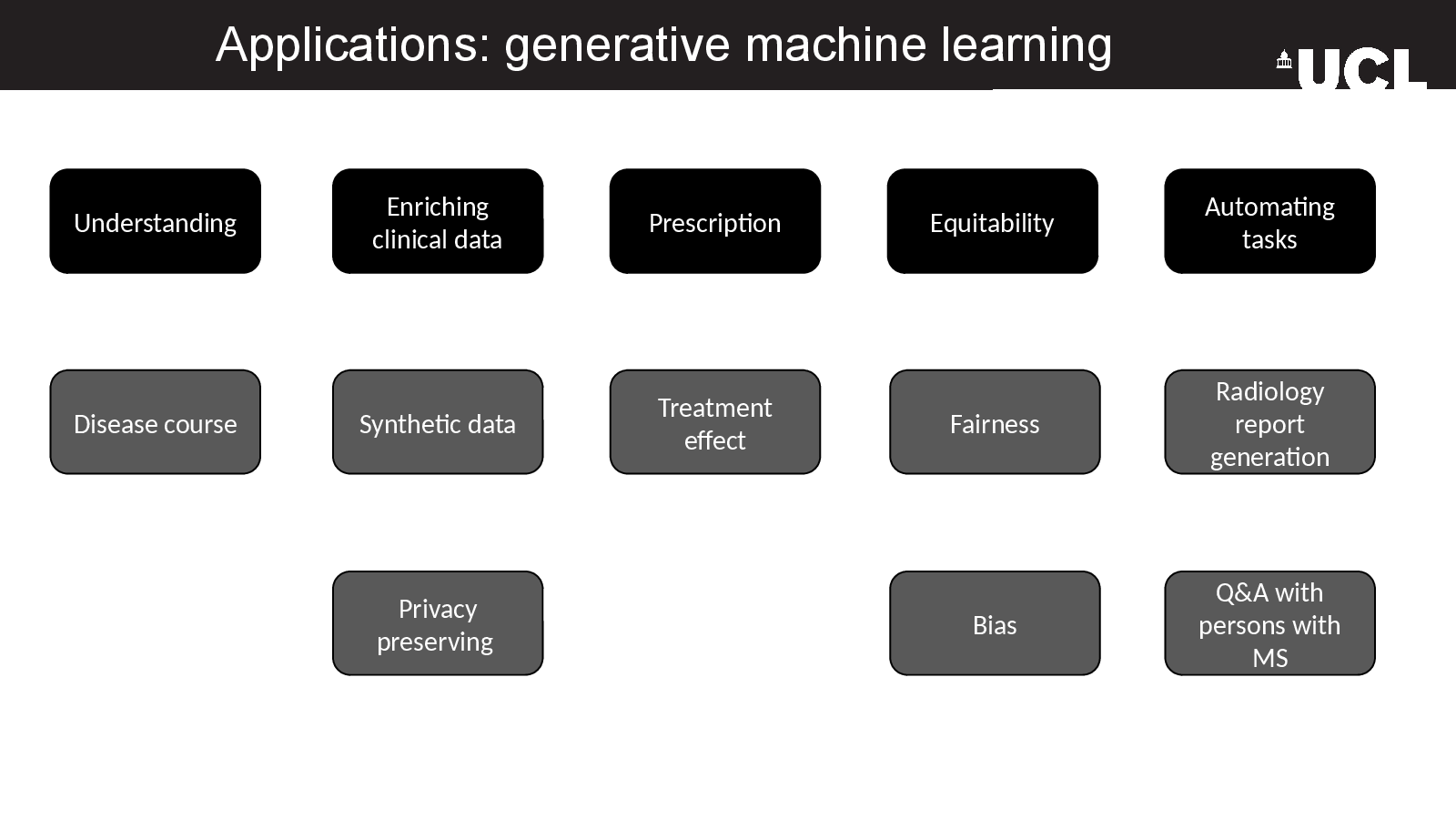
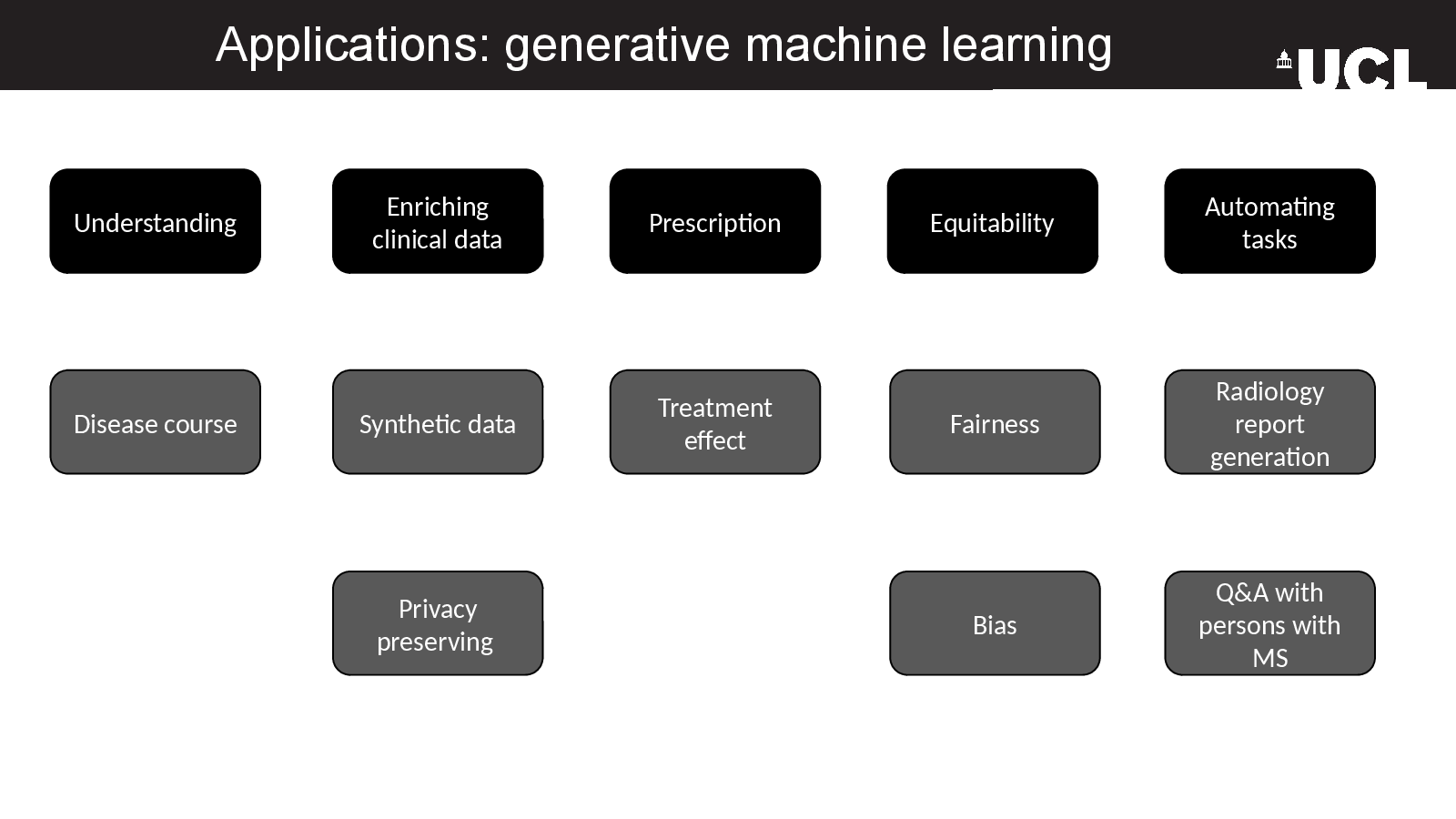
    Applications: generative machine learning
    Slide 7: Applications: generative machine learningOpen full-size slide

    Understanding

    Enriching clinical data

    Prescription

    Equitability

    Automating tasks

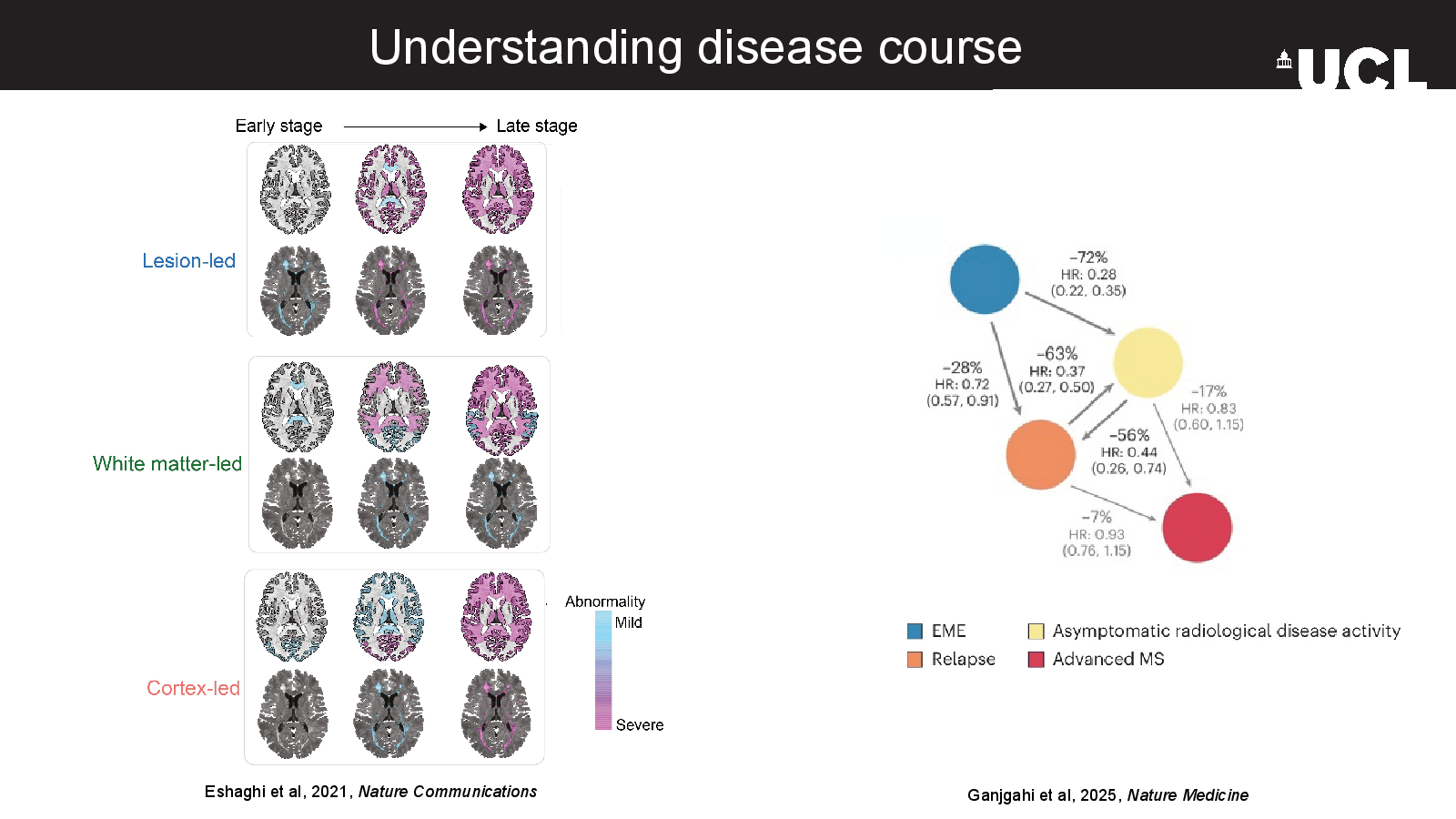
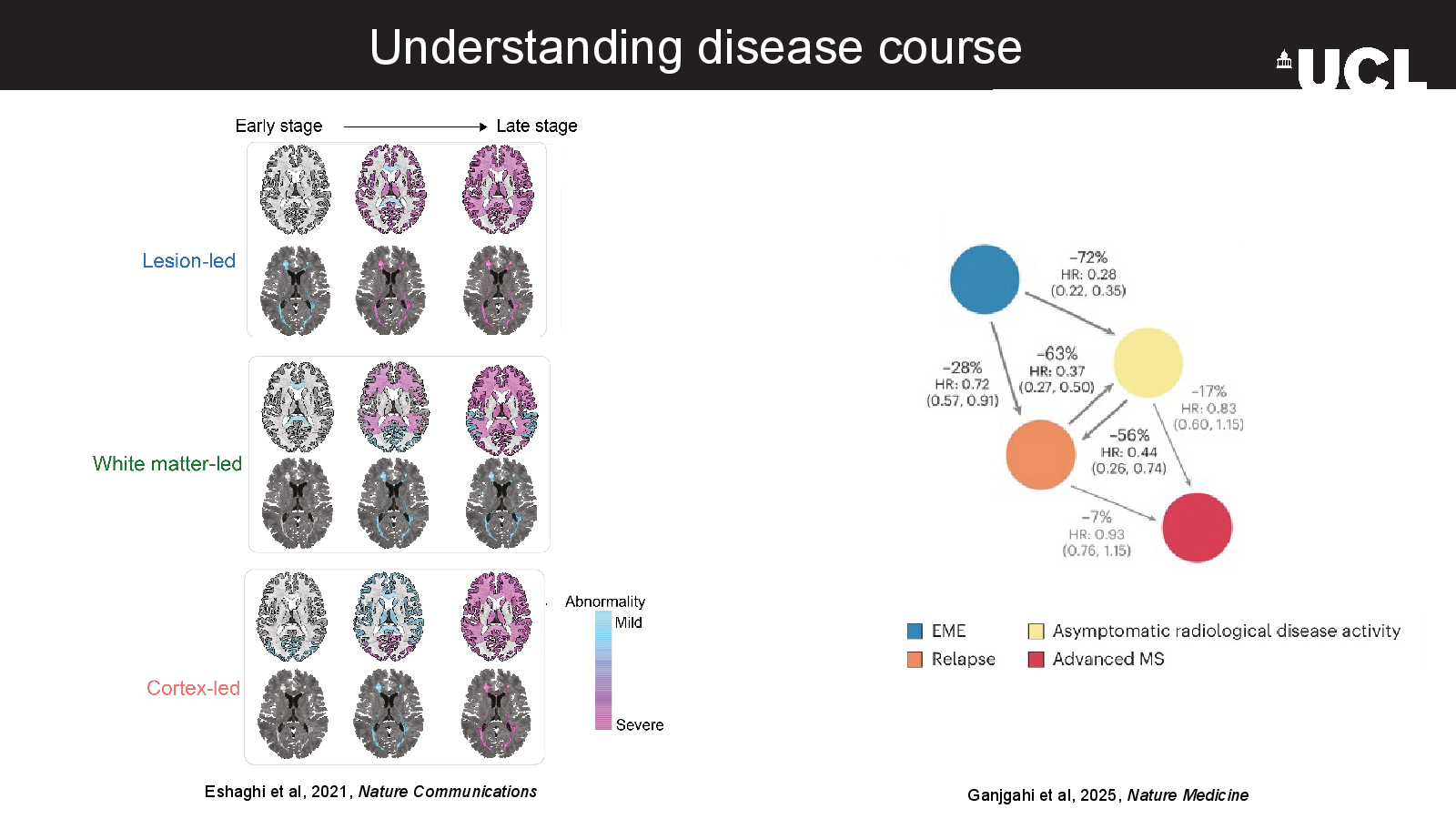
    Disease course

    Synthetic data

    Treatment effect

    Fairness

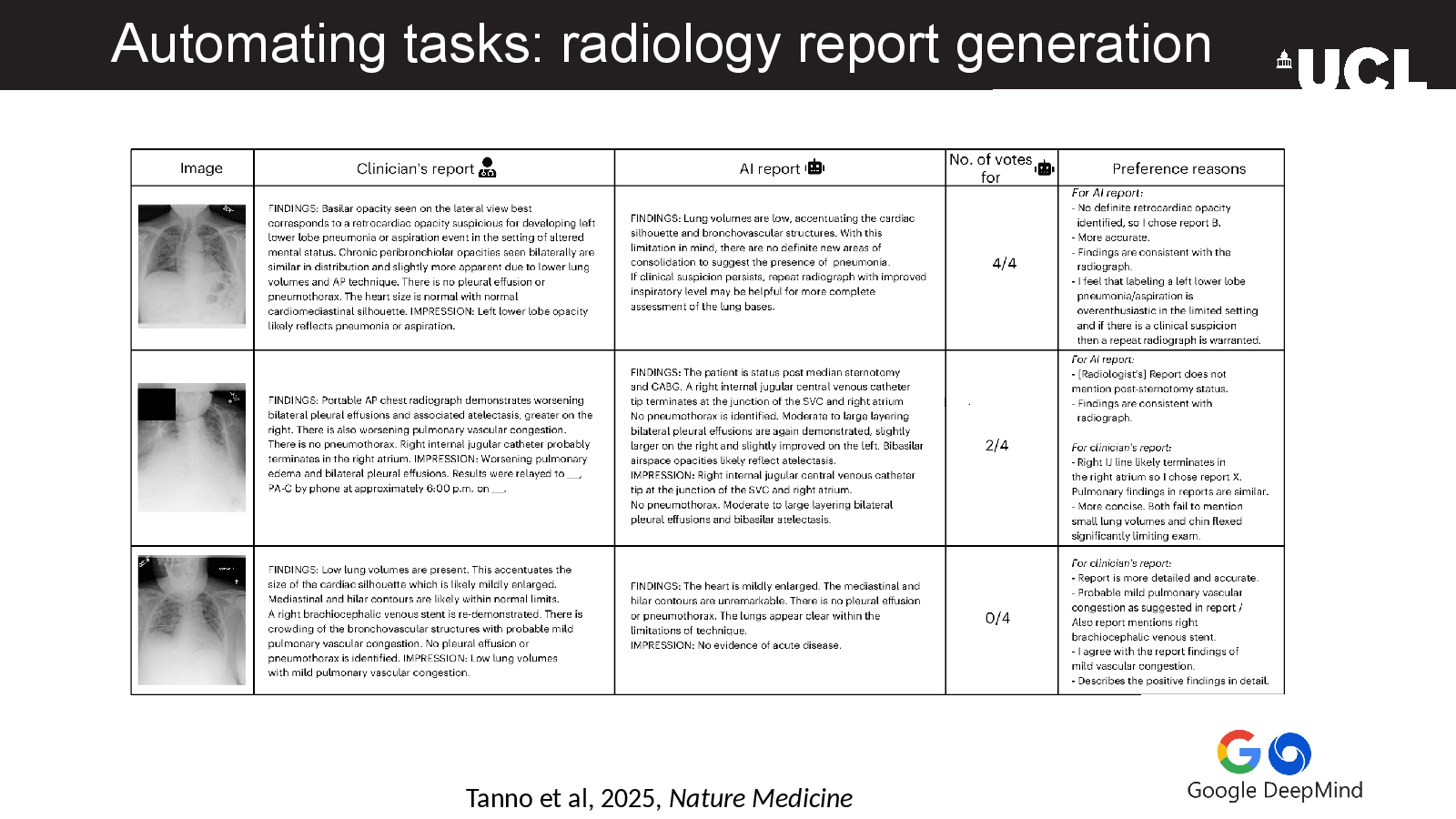
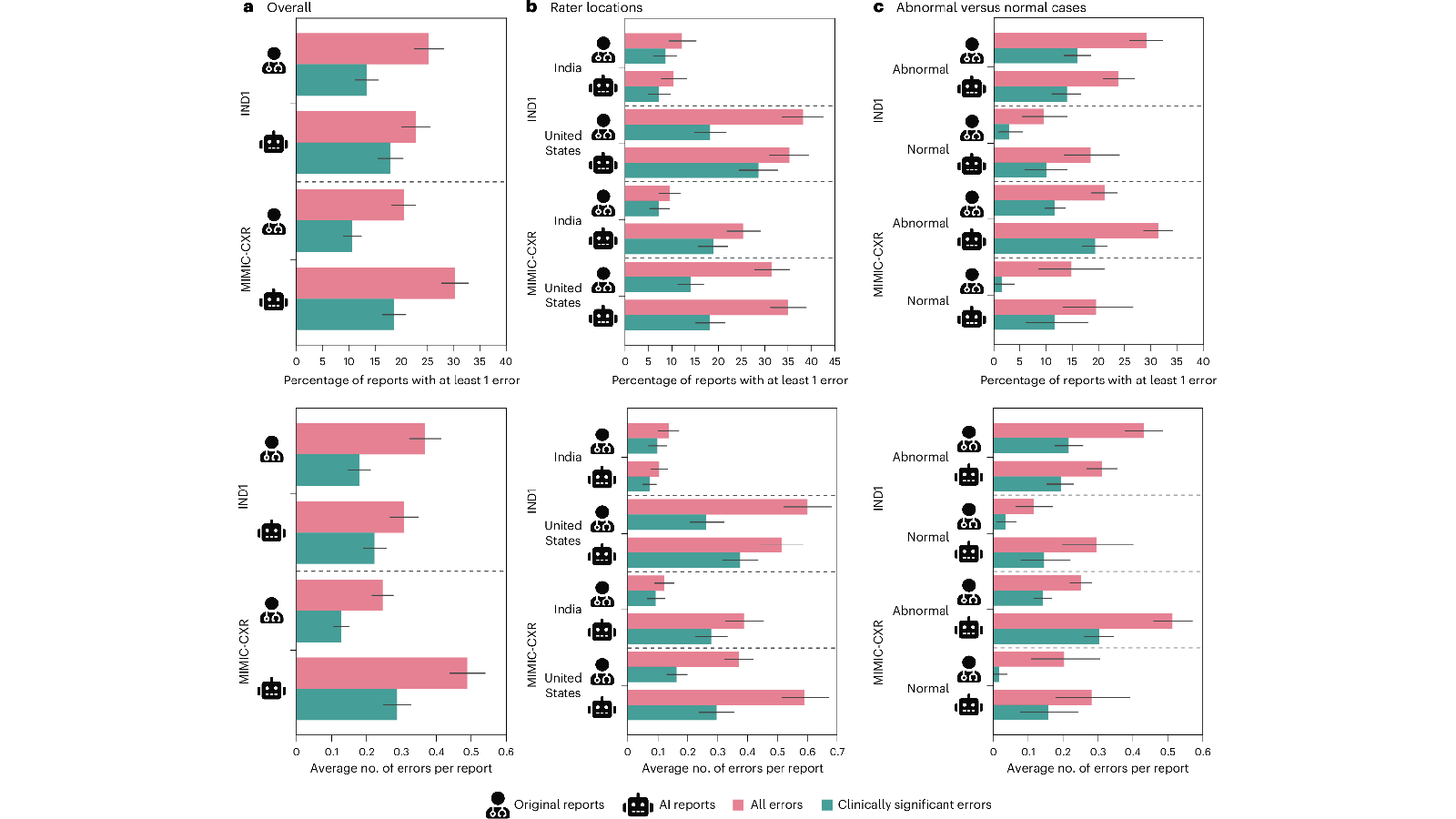
    Radiology report generation

    Privacy preserving

    Bias

    Q&A with persons with MS

  6. Slide 13

    Bias and Fairness

    Slide 13: Bias and FairnessOpen full-size slide

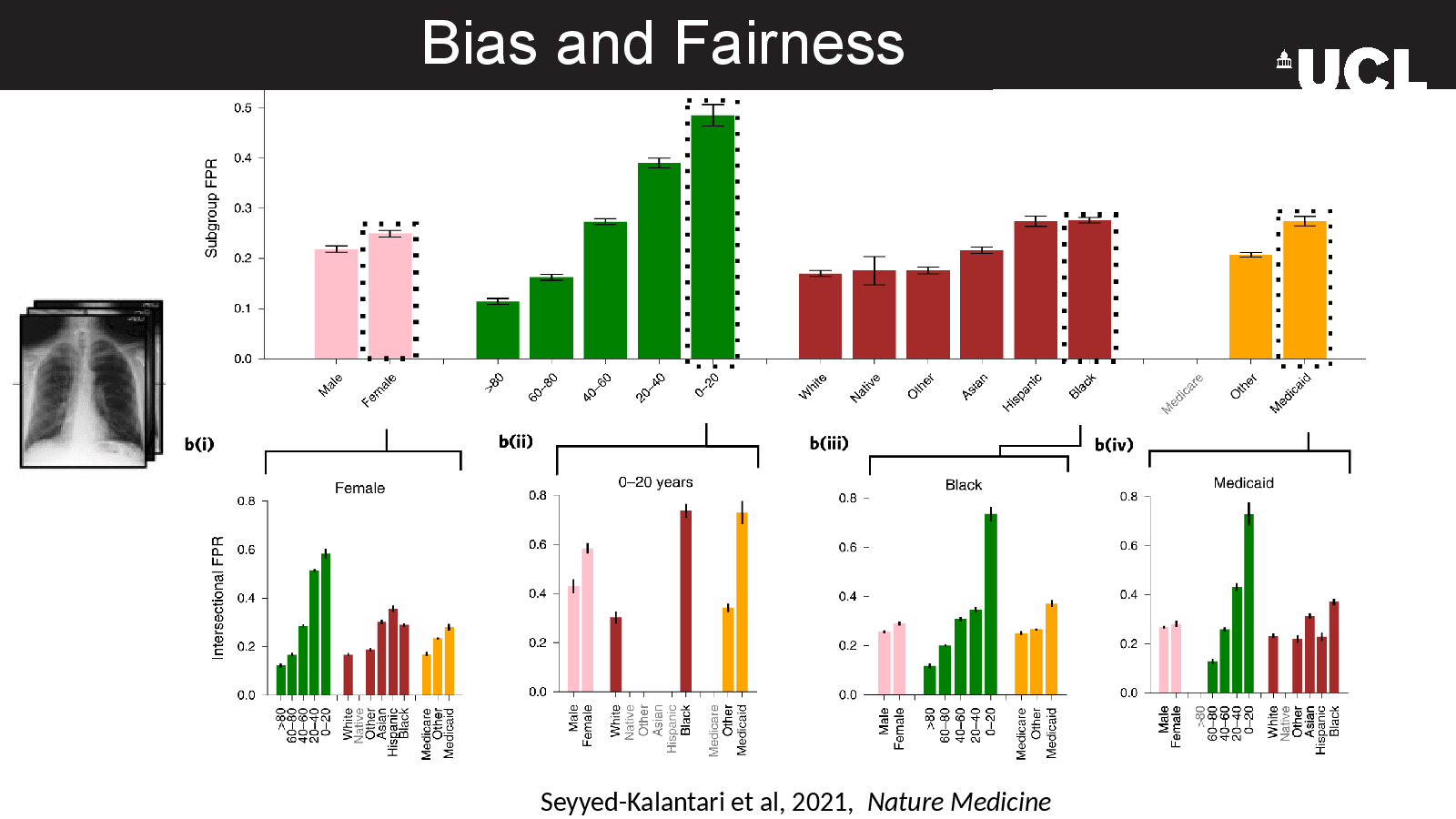
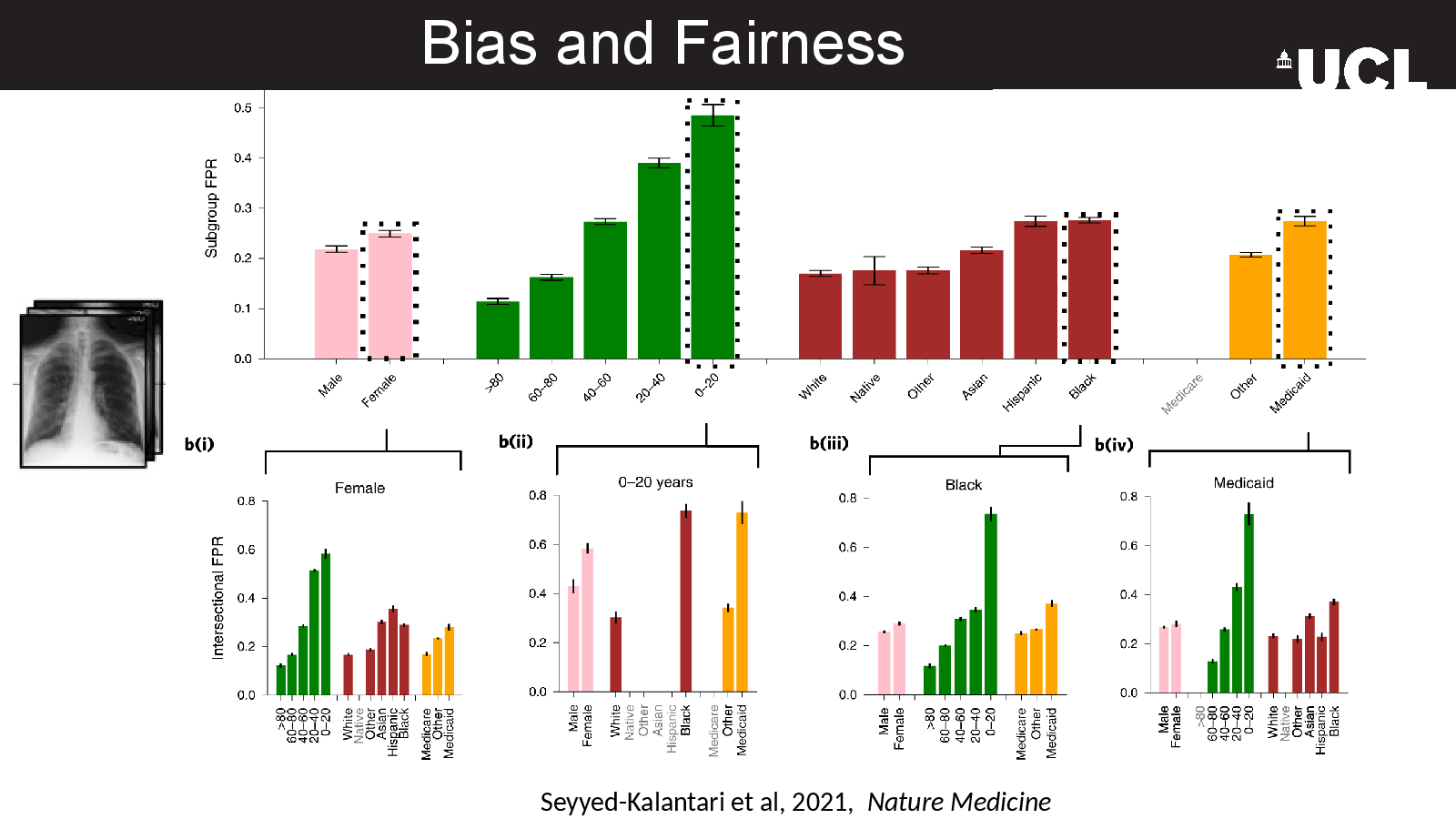
    Seyyed-Kalantari et al, 2021, Nature Medicine

    Speaker notes

    a, The underdiagnosis rate, as measured by the no finding FPR, in the indicated patient subpopulations. b, Intersectional underdiagnosis rates for female patients (b(i)), patients aged 0–20 years (b(ii)), Black patients (b(iii)), and patients with Medicaid (b(iv)). c,d, The overdiagnosis rate, as measured by the no finding FNR in the same patient subpopulations as in a and b. The results are averaged over five trained models with different random seeds on the same train–validation–test splits. 95% confidence intervals are shown. Subgroups with too few members to be studied reliably (≤15) are labeled in gray text and the results for these subgroups are omitted. Data for the Medicare subgroup are also omitted, given that data for this subgroup are highly confounded by patient age. The “no finding” FPR (underdiagnosis rate) is highest for female, younger (0–20), Black, Hispanic, and Medicaid-insured patients—and it worsens at intersections (e.g., Black female, female + 0–20, 0–20 + Medicaid). In short: the groups already at risk in care are the most likely to be told “nothing is wrong.”

    References

  7. Slide 18

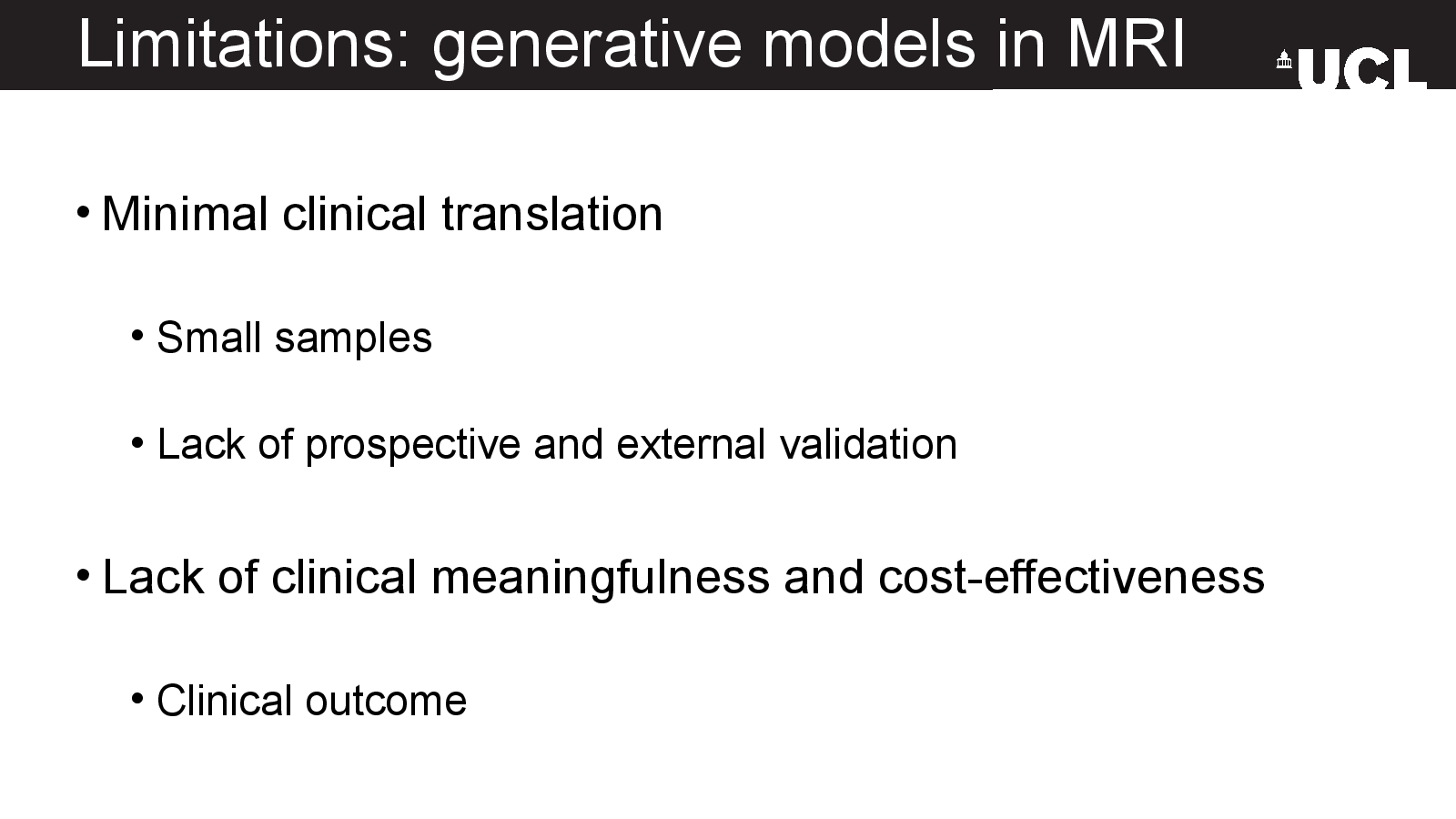
    Limitations: generative models in MRI
    Slide 18: Limitations: generative models in MRIOpen full-size slide

    Minimal clinical translation

    • Small samples
    • Lack of prospective and external validation

    Lack of clinical meaningfulness and cost-effectiveness

    • Clinical outcome
  8. Slide 19

    Summary

    Slide 19: SummaryOpen full-size slide

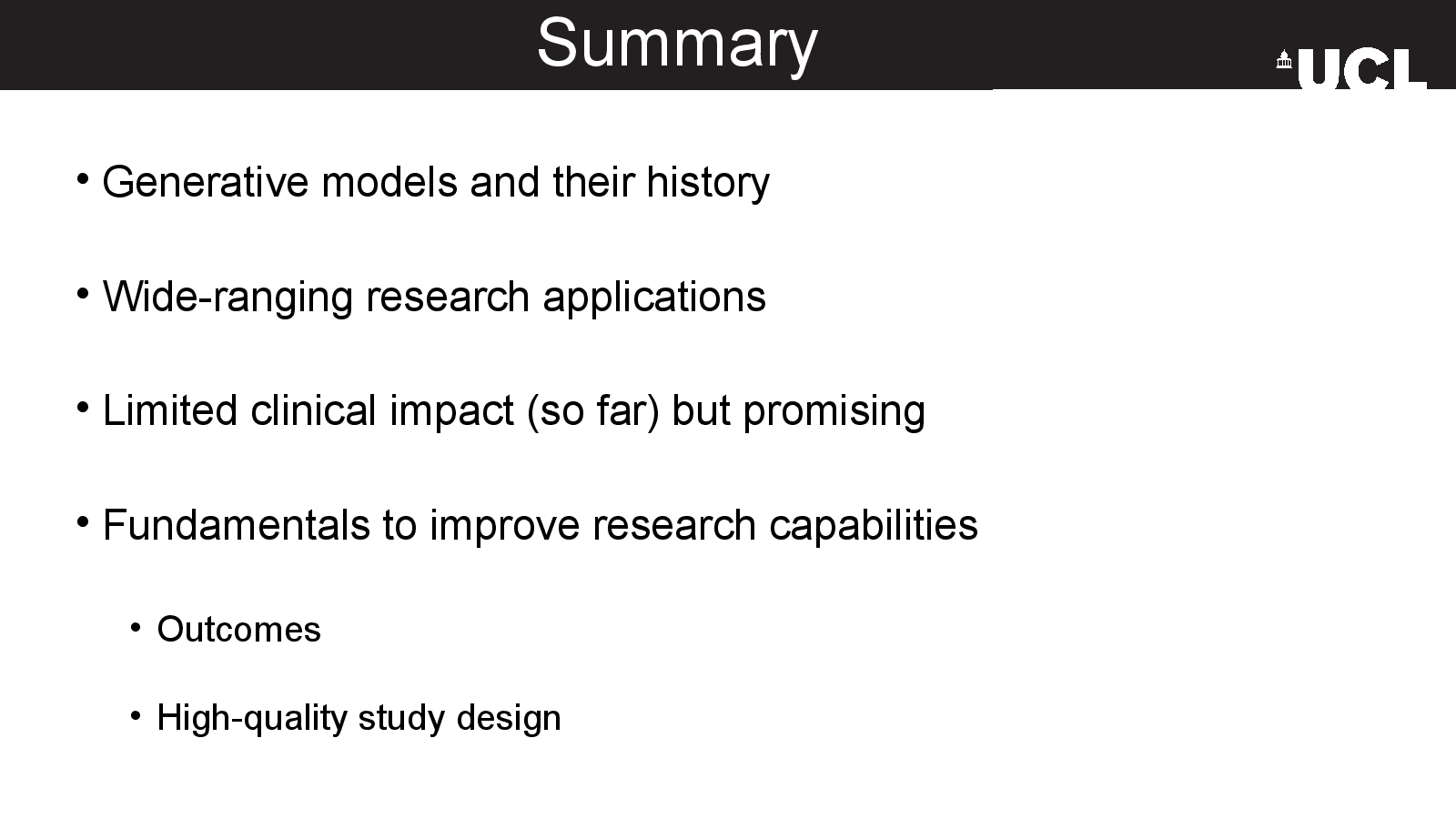
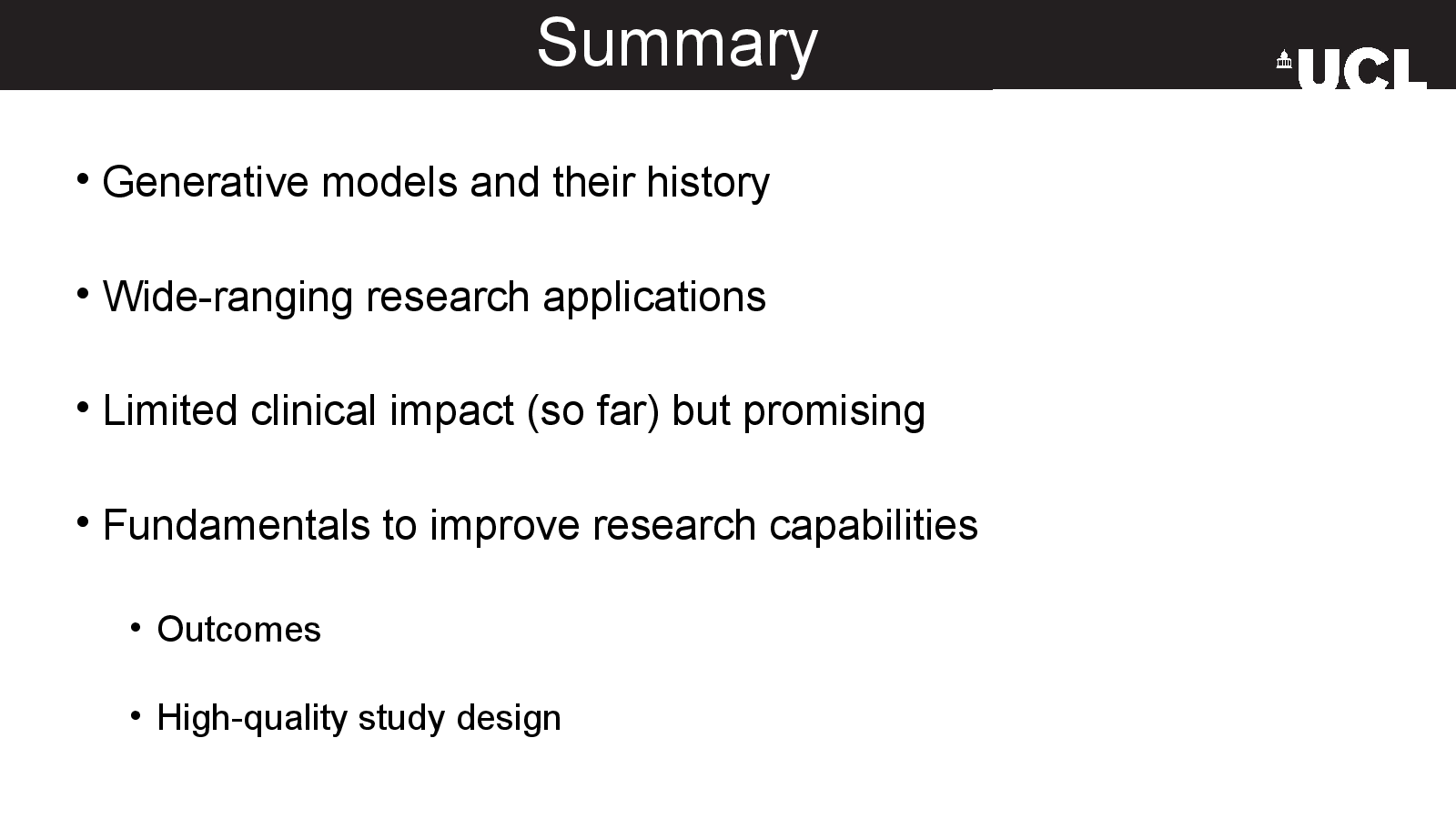
    Generative models and their history

    Wide-ranging research applications

    Limited clinical impact (so far) but promising

    Fundamentals to improve research capabilities

    • Outcomes
    • High-quality study design