All talks & lectures
Teaching ·
Self-supervised Modelling of Neuroimaging Data
A summer-school project comparing self-supervised and supervised models for MRI motion-artefact detection.
Hawkes Institute Summer School
- Delivered
- Event
- Hawkes Institute Summer School
- Format
- Teaching
- Published deck
- 6 slides
From the slides
Deck notes
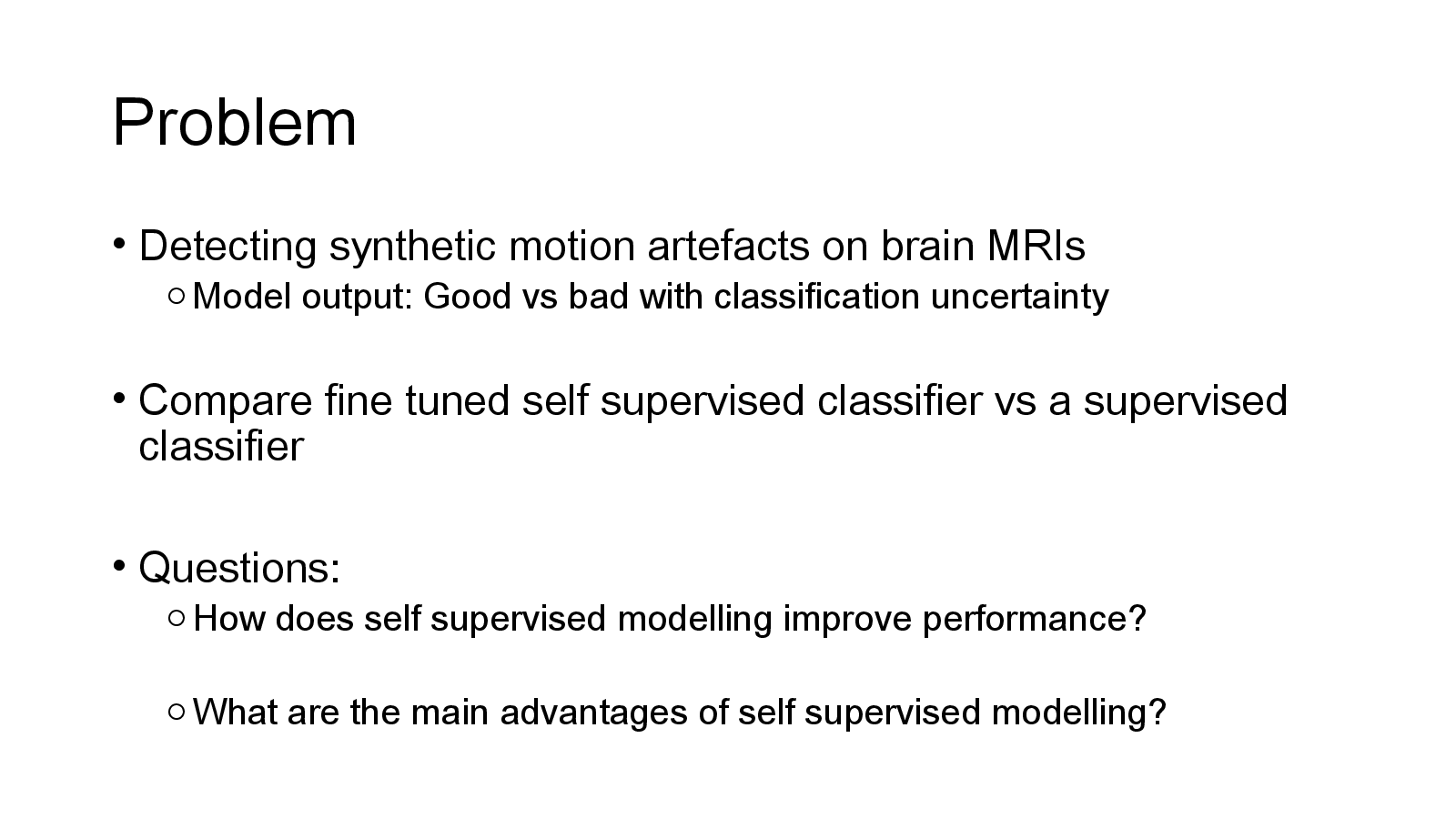
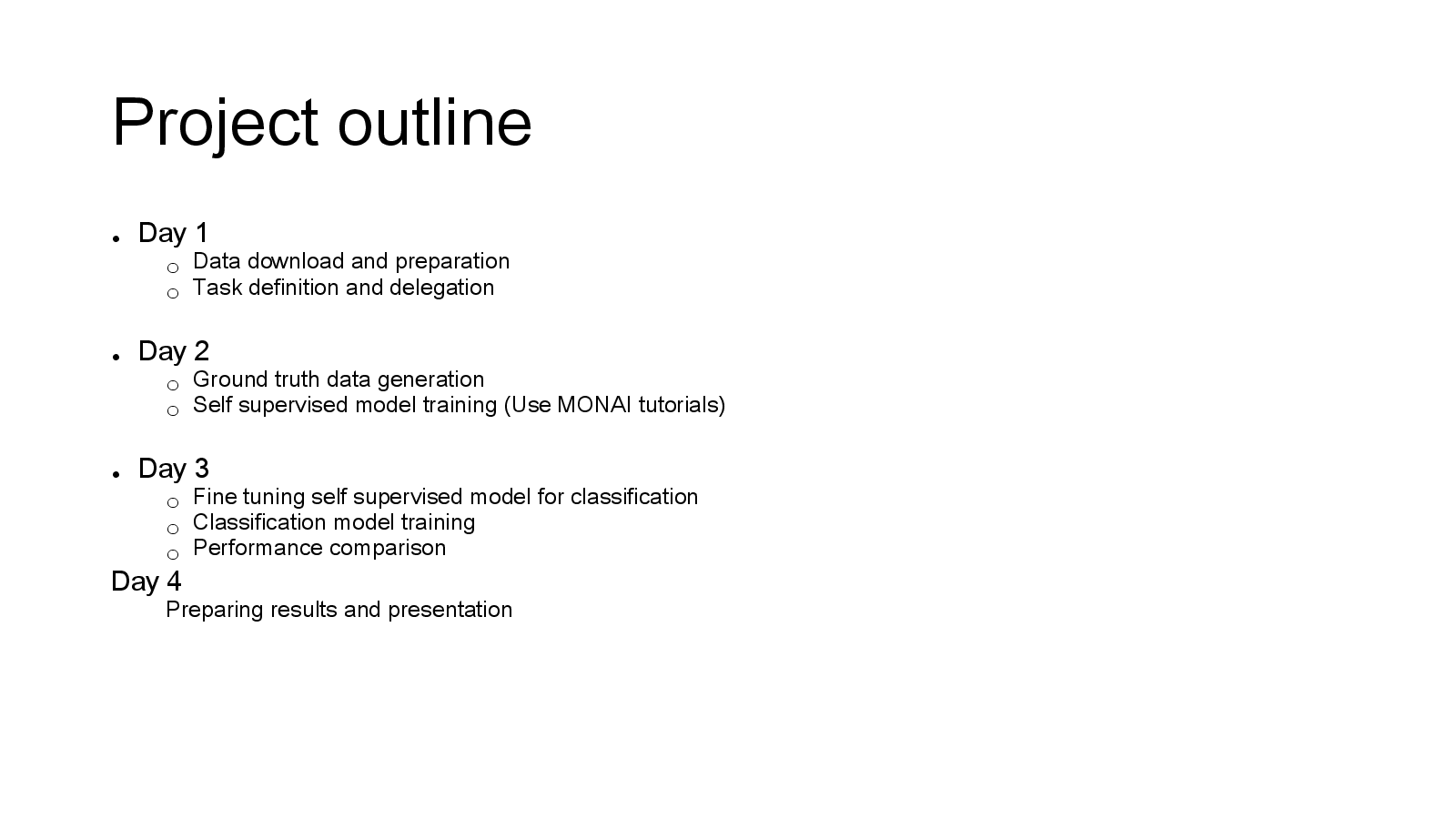
This teaching session set out a four-day project on detecting synthetic motion artefacts in brain MRI. Philipp Goebl and Arman Eshaghi framed it as a direct comparison between a fine-tuned self-supervised classifier and a supervised baseline.
The question
Does self-supervised pretraining improve motion-artefact classification when compared with a supervised model on the same task?
Deck outline
- Classifying brain MRI as good or bad, with uncertainty
- Generating ground-truth examples of synthetic motion artefacts
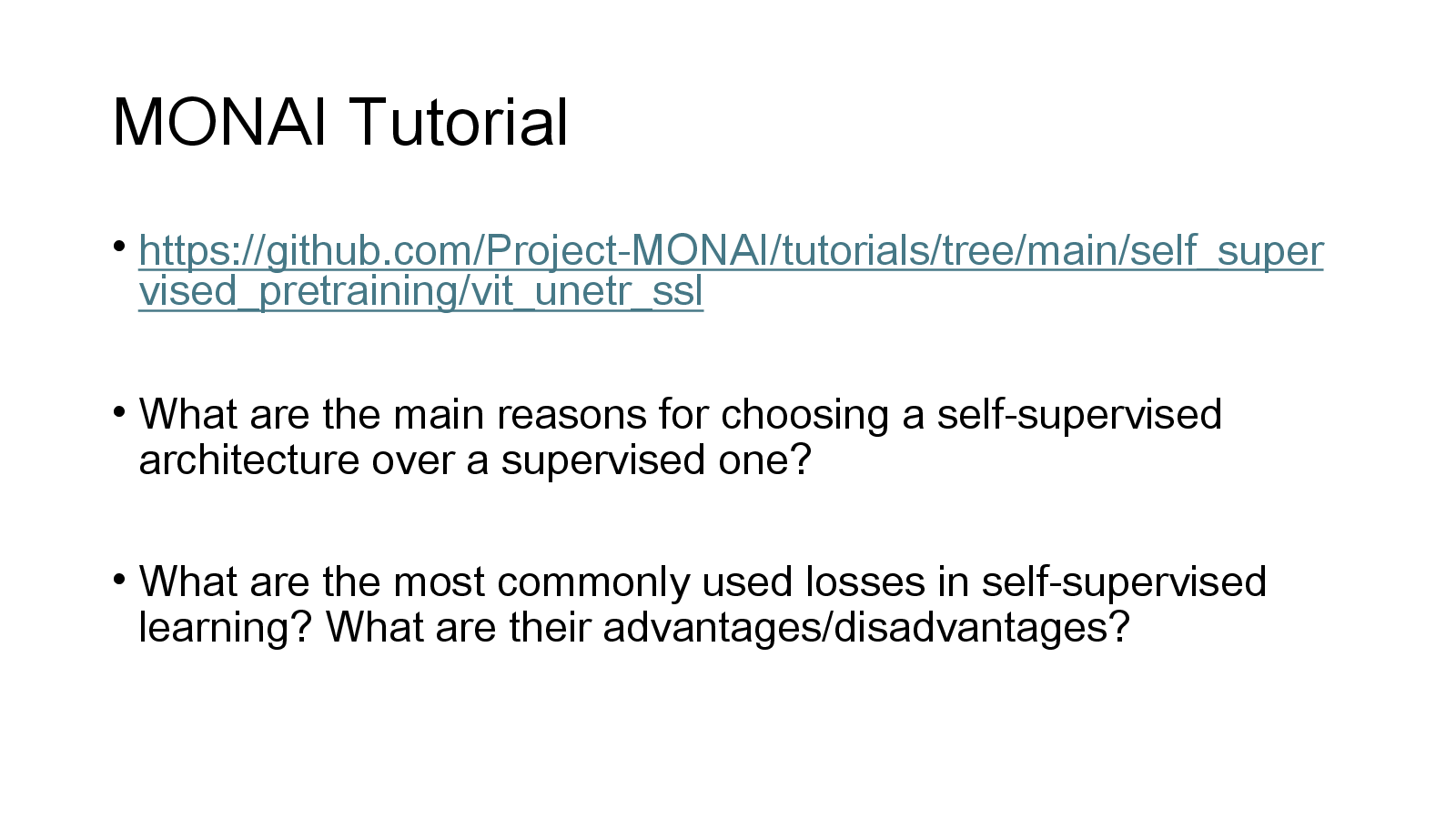
- Self-supervised pretraining with MONAI
- Fine-tuning the pretrained model for classification
- Training a supervised comparison model
- Comparing performance and presenting the results
Take-away
The exercise treats self-supervision as a testable modelling choice: keep the task fixed, then compare performance and uncertainty.