All talks & lectures

Teaching ·

Artificial Intelligence Methodology

An ECTRIMS Summer School introduction to machine-learning paradigms, validation and translation in multiple sclerosis.

ECTRIMS Summer School

A web sketch of the deck’s central idea
Delivered
Event
ECTRIMS Summer School
Format
Teaching
Source deck
29 slides

From the slides

Deck notes

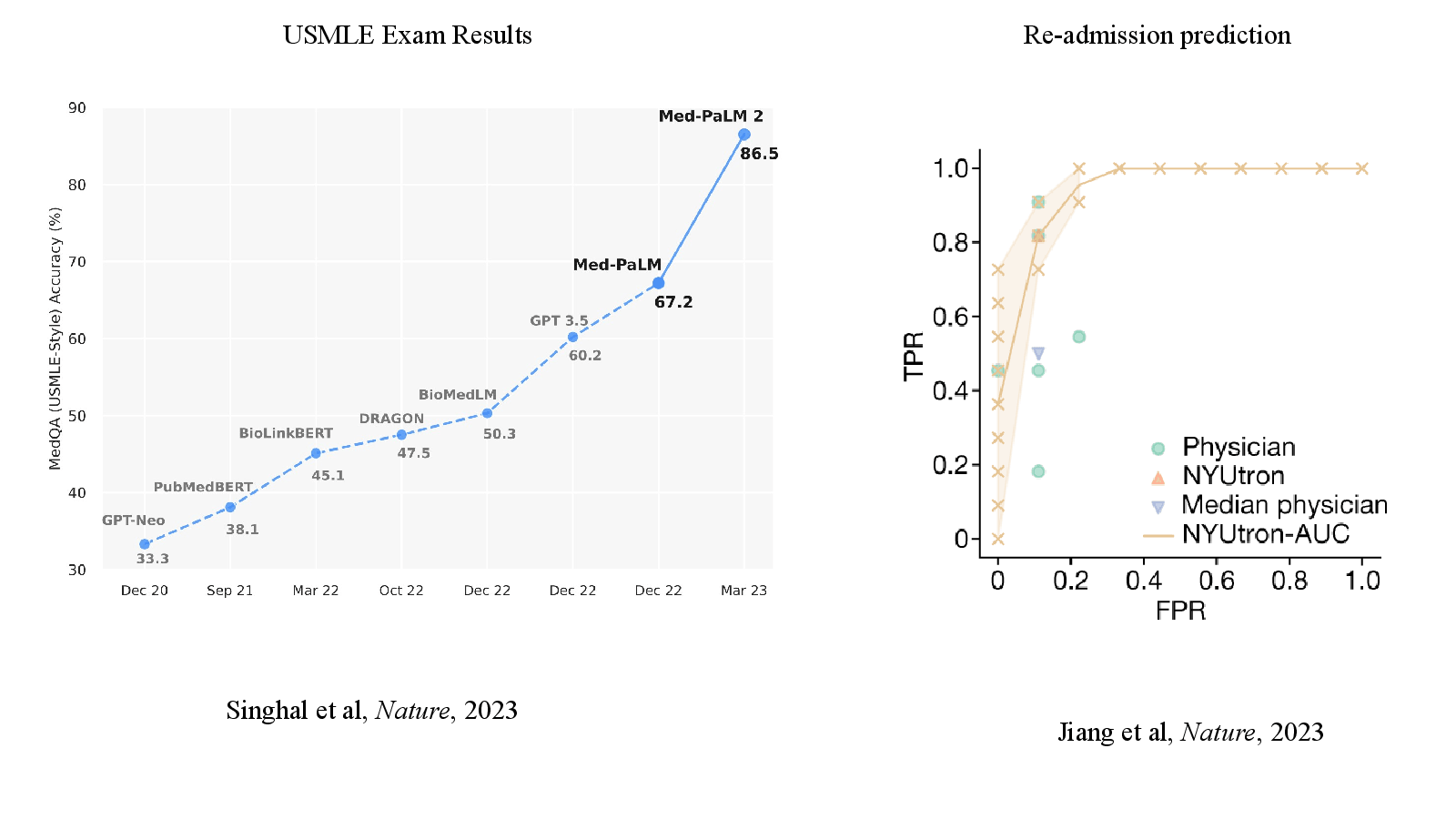
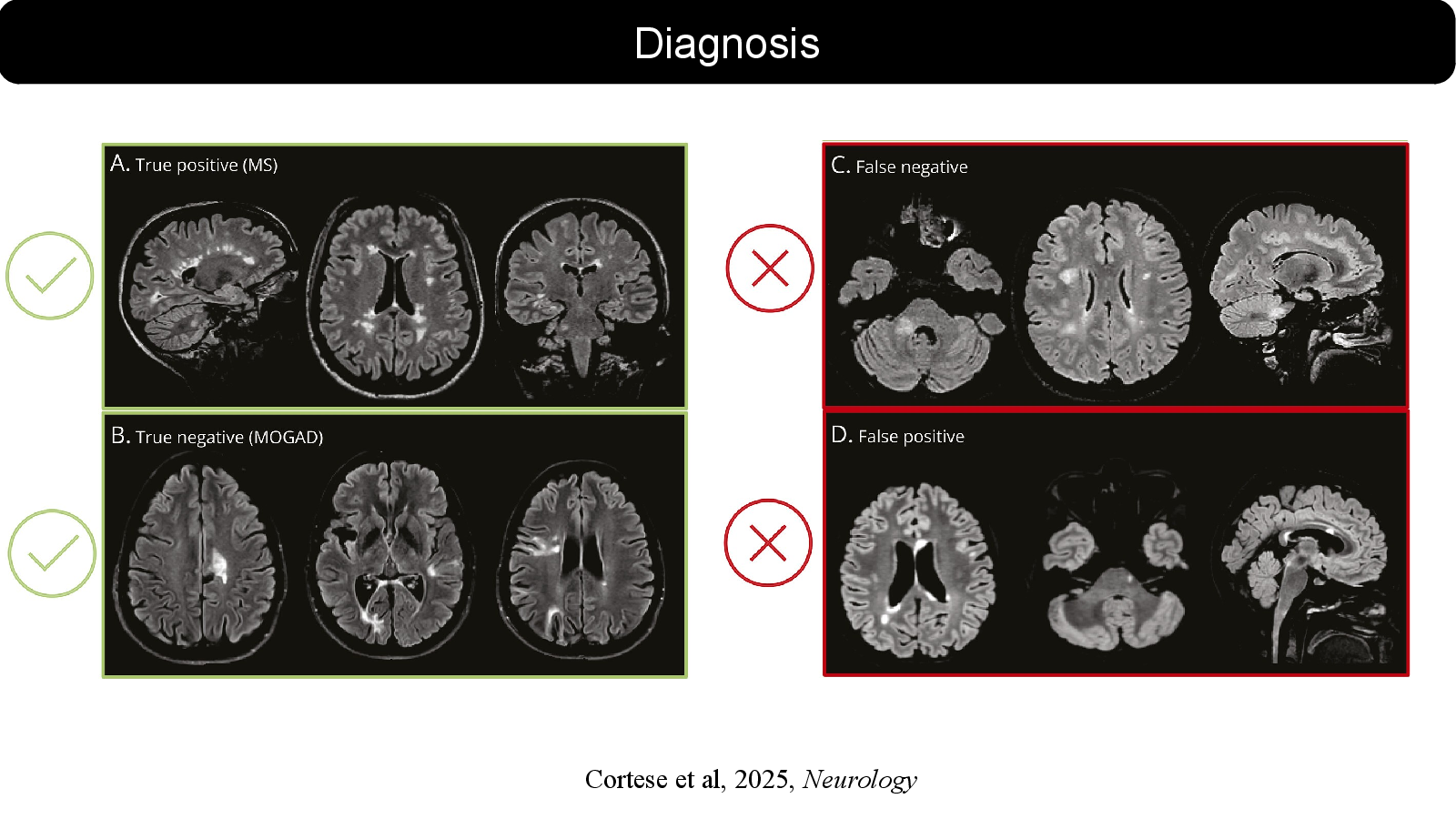
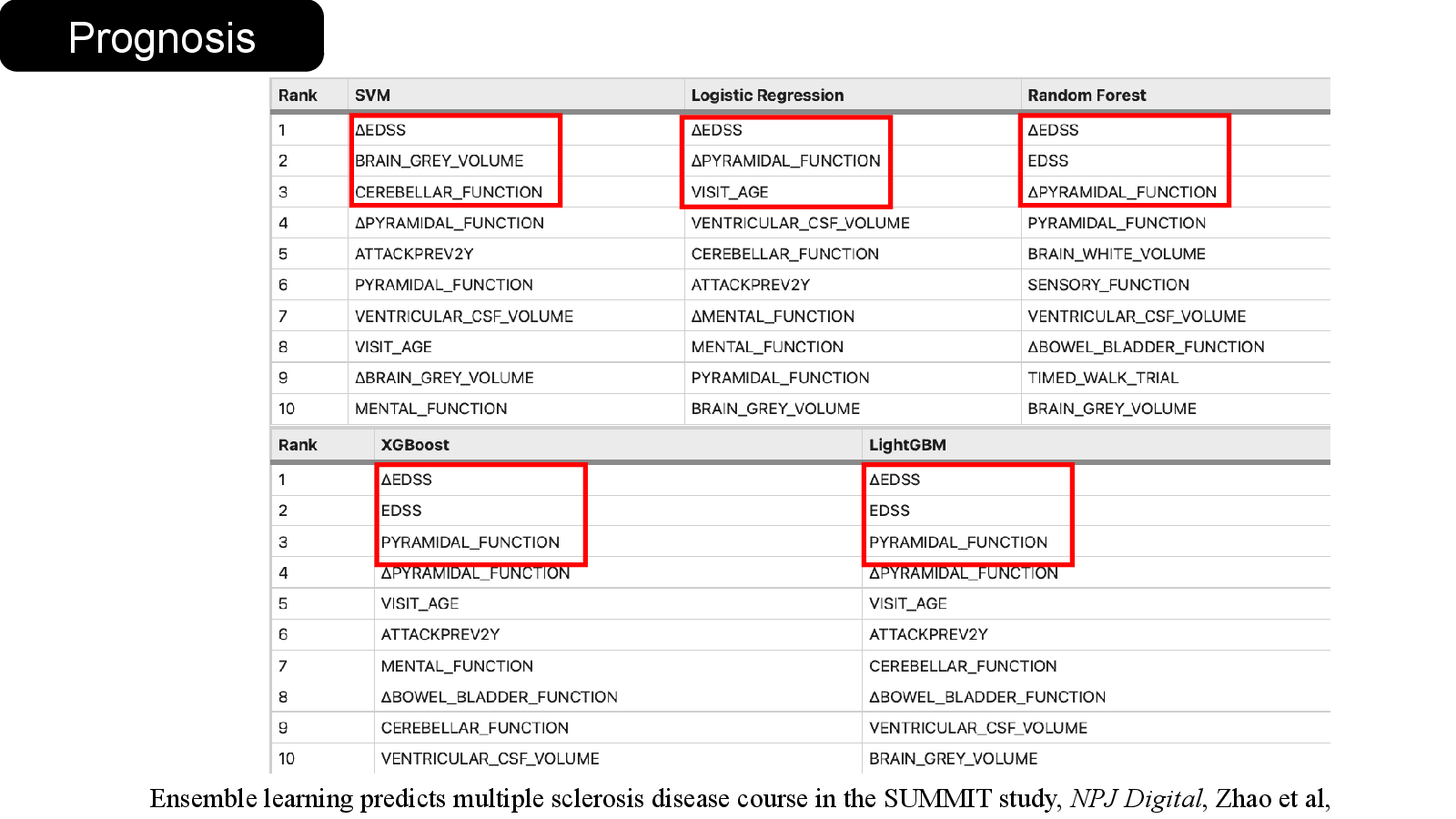
This teaching session introduced the main machine-learning paradigms before following a medical model from training to external validation. MS examples covered diagnosis, monitoring, prognosis, subtyping and clinical text.

The question

What makes a medical AI model credible beyond the dataset on which it was developed?

Deck outline

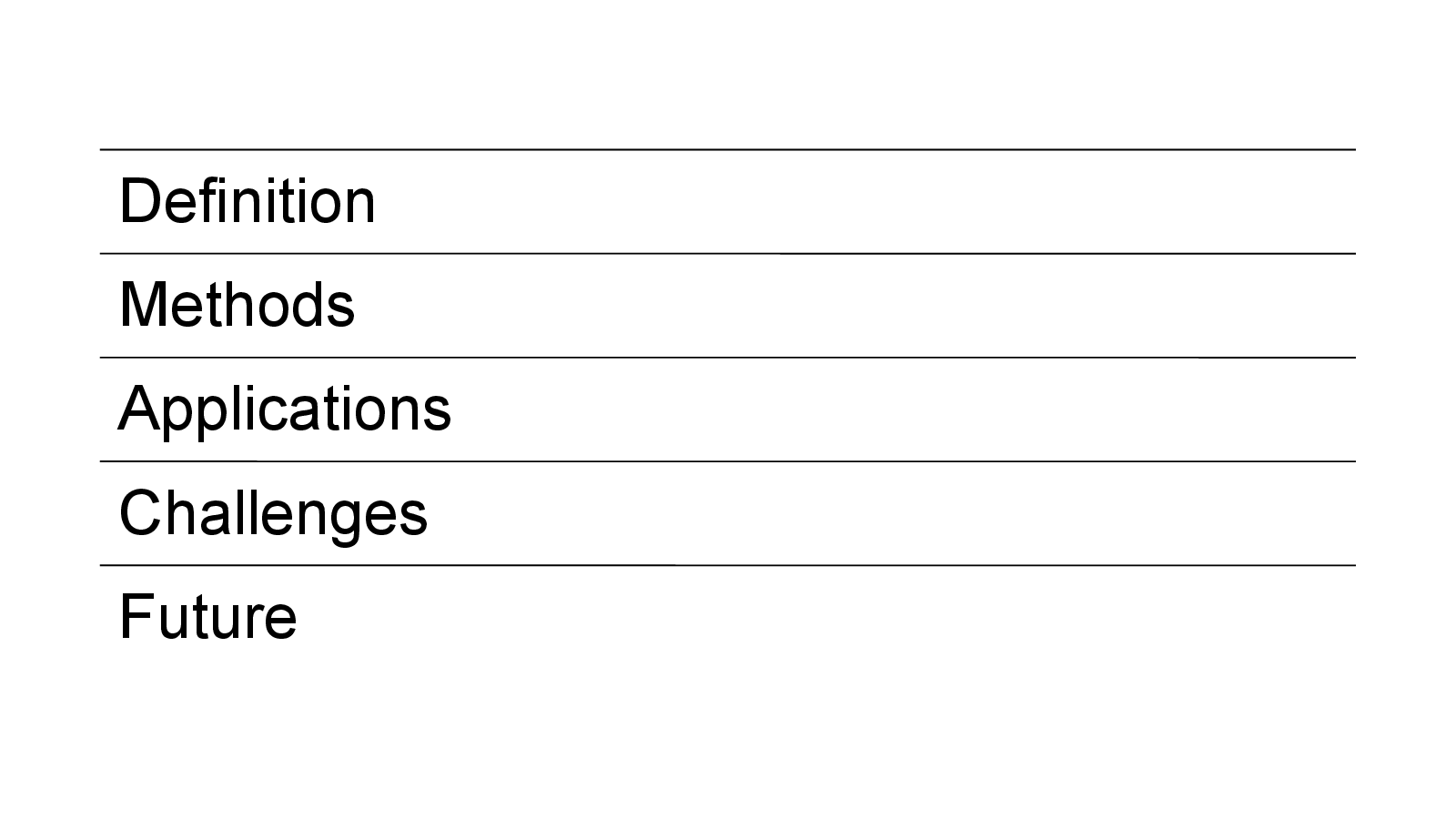
  • Supervised, unsupervised, self-supervised and reinforcement learning
  • Matching model types to clinical questions and outcomes
  • Training and cross-validation on development data
  • Locked external validation on an independent cohort
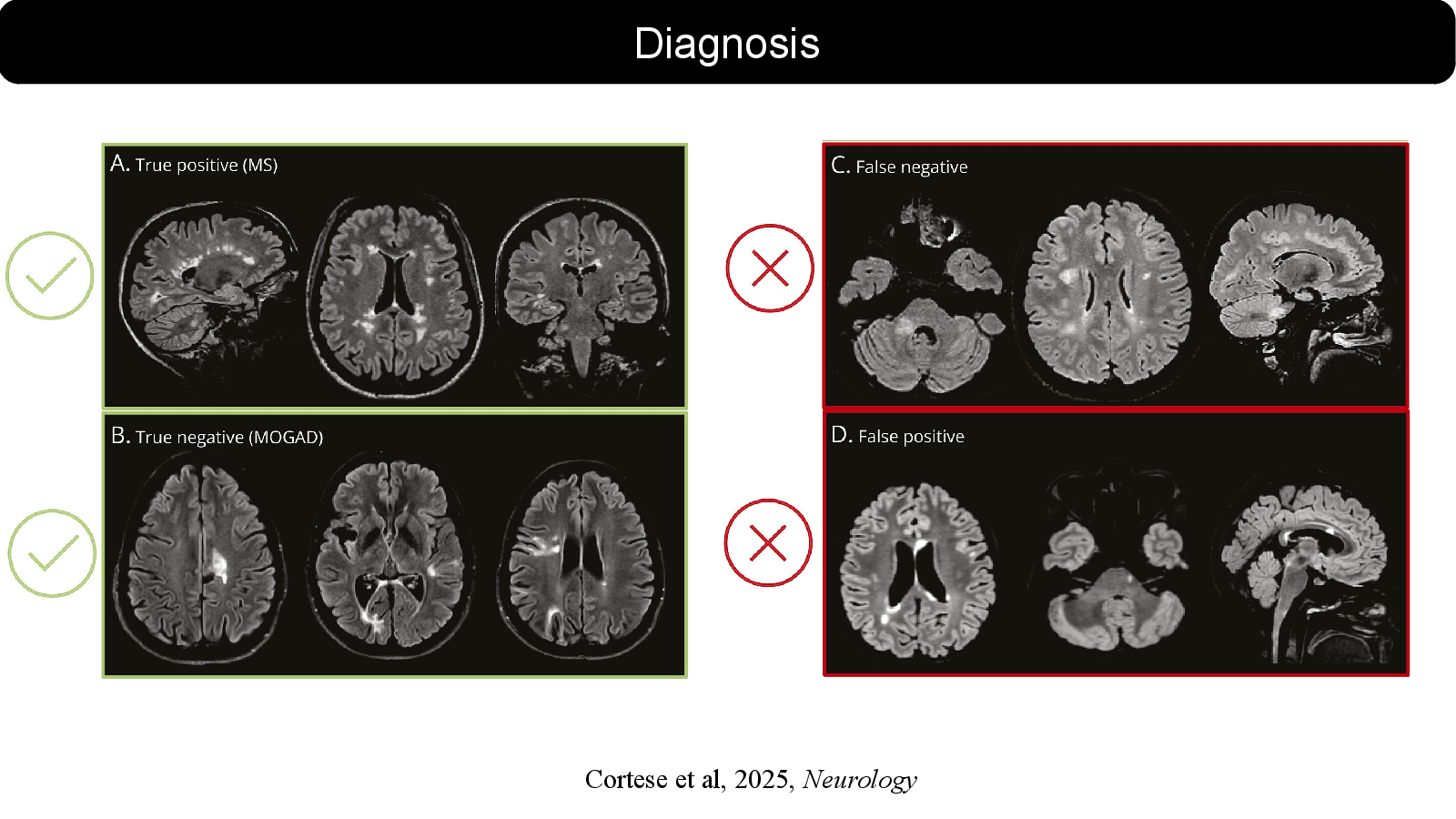
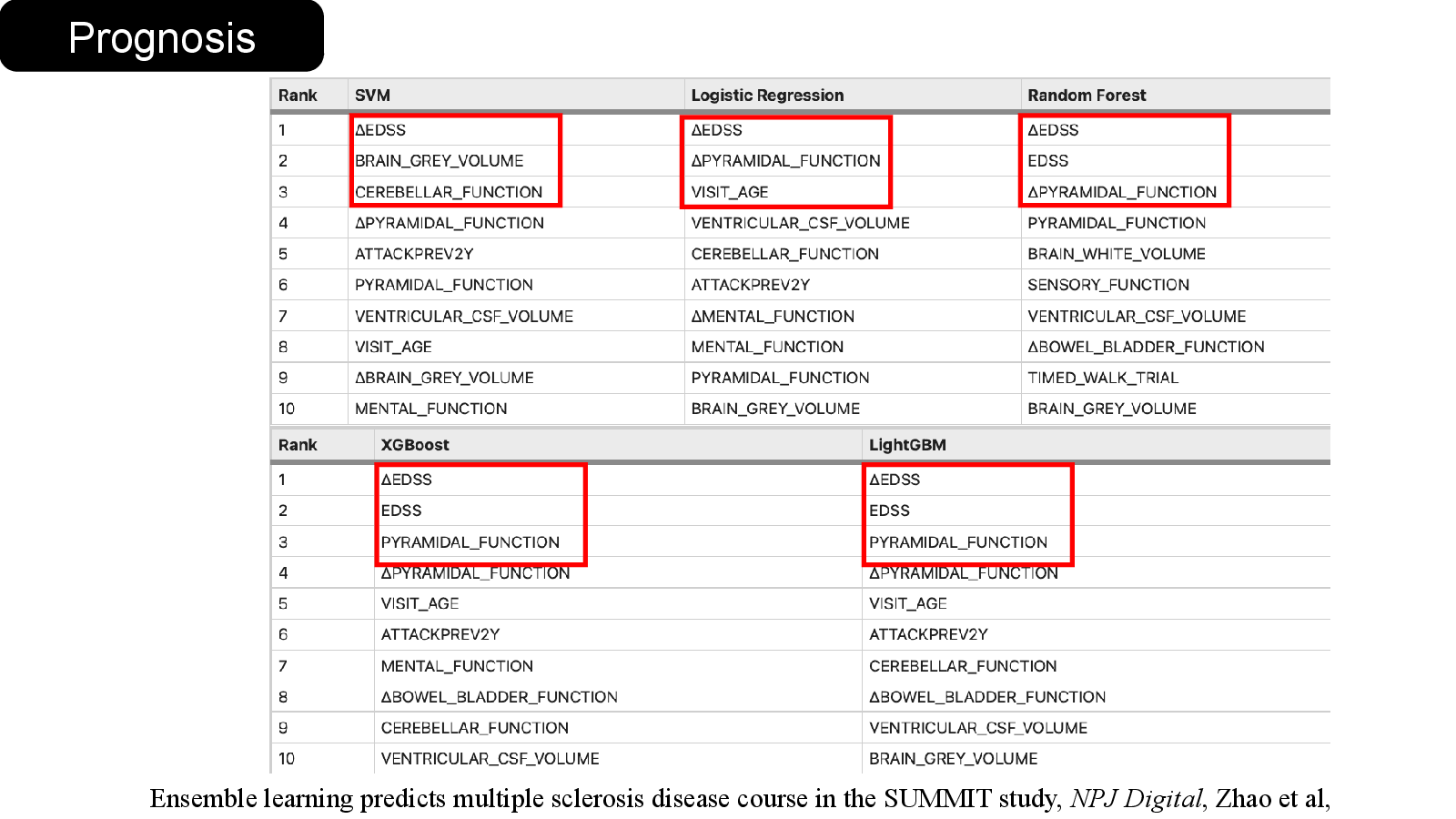
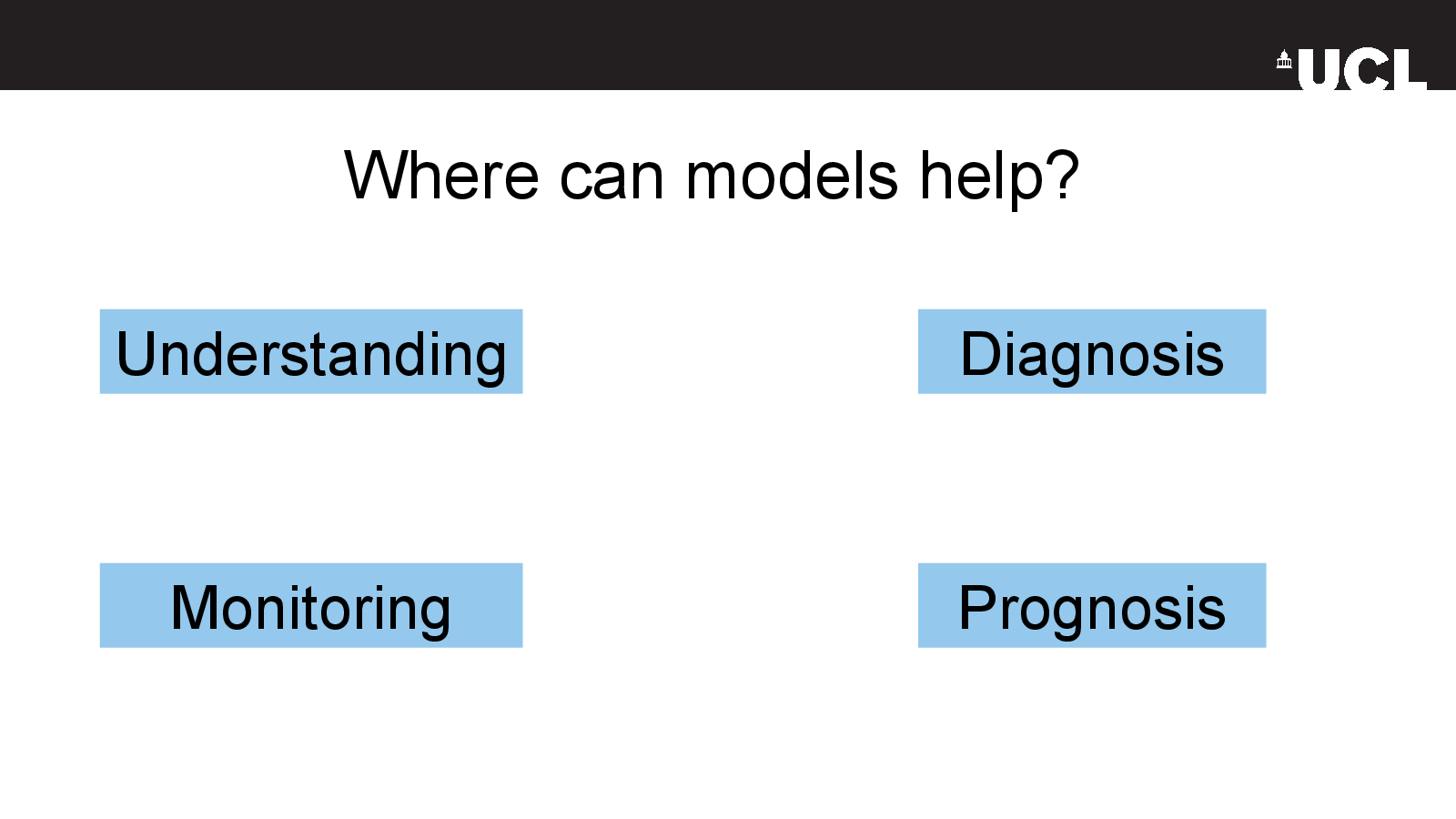
  • MS diagnosis, monitoring, prognosis and subtyping
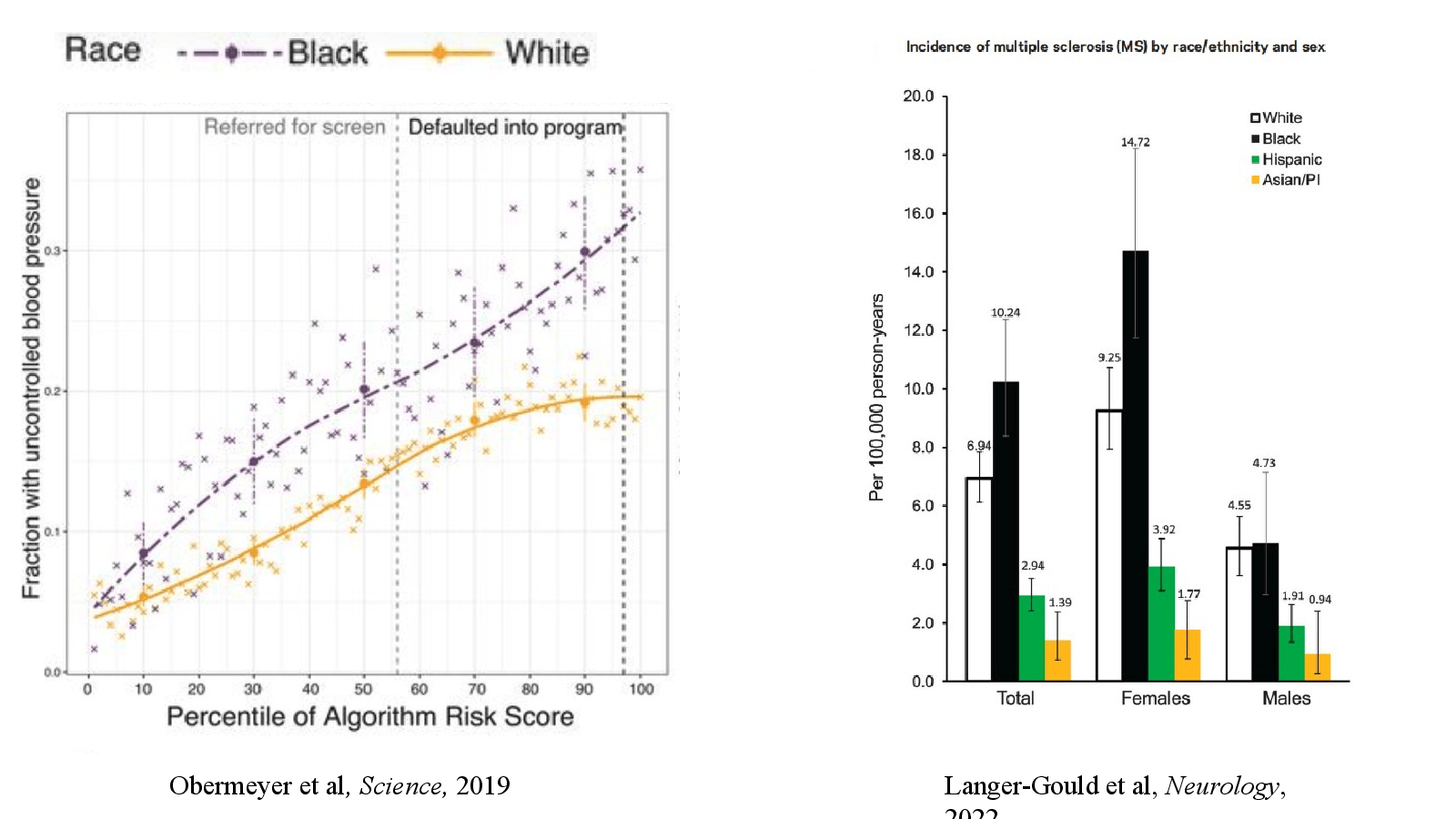
  • Bias, fairness and the route from bench to bedside

Take-away

Cross-validation supports model selection; external validation tests whether performance, calibration and fairness hold in a genuinely independent setting.

Original deck

Slide by slide

Read the 29-slide presentation in order, or use the index to jump.

  1. Slide 01

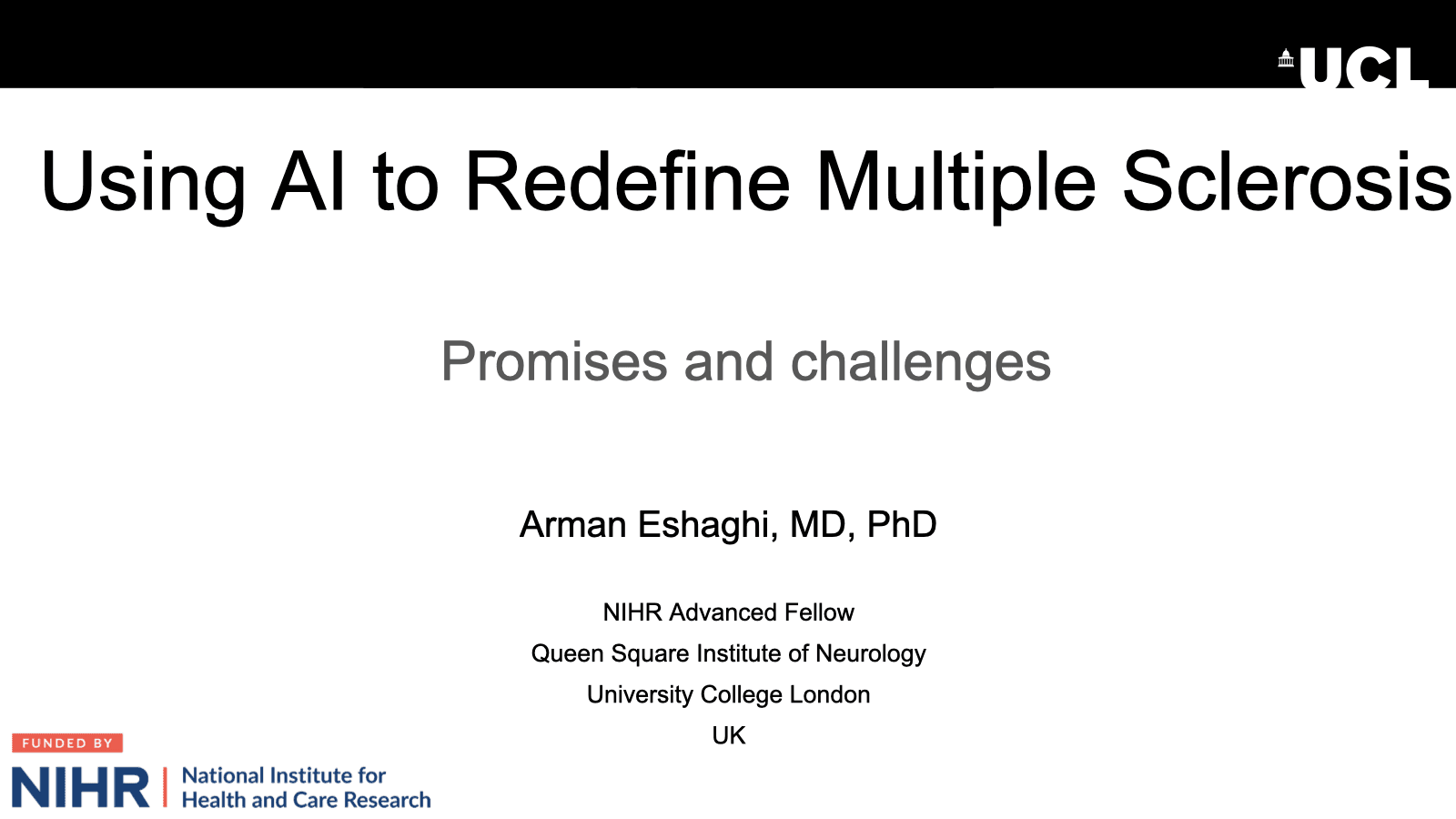
    Artificial Intelligence Methodology
    Slide 1: Artificial Intelligence MethodologyOpen full-size slide

    Arman Eshaghi, MD, PhD

    Queen Square Institute of Neurology

    University College London

    UK

  2. Slide 02

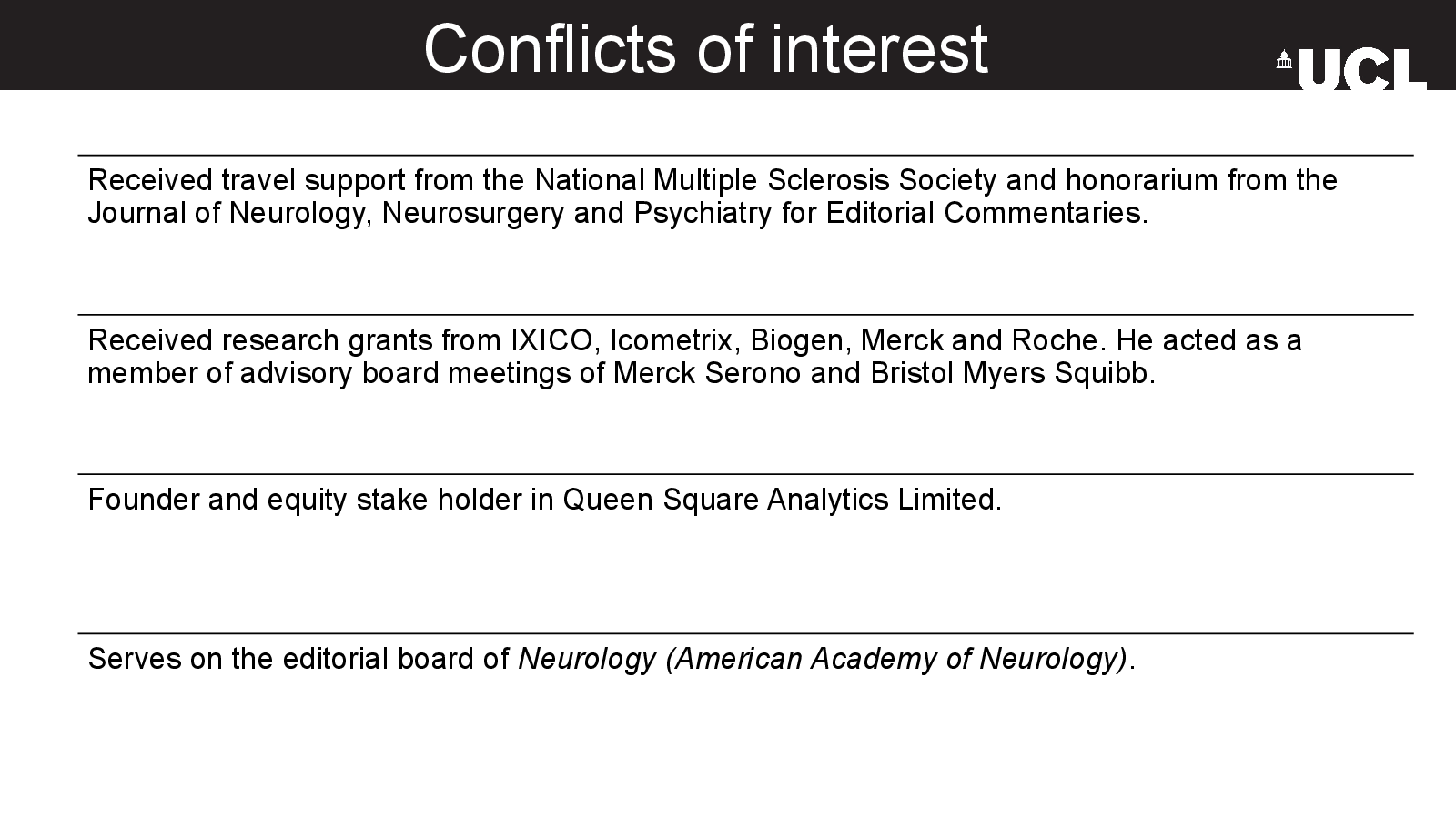
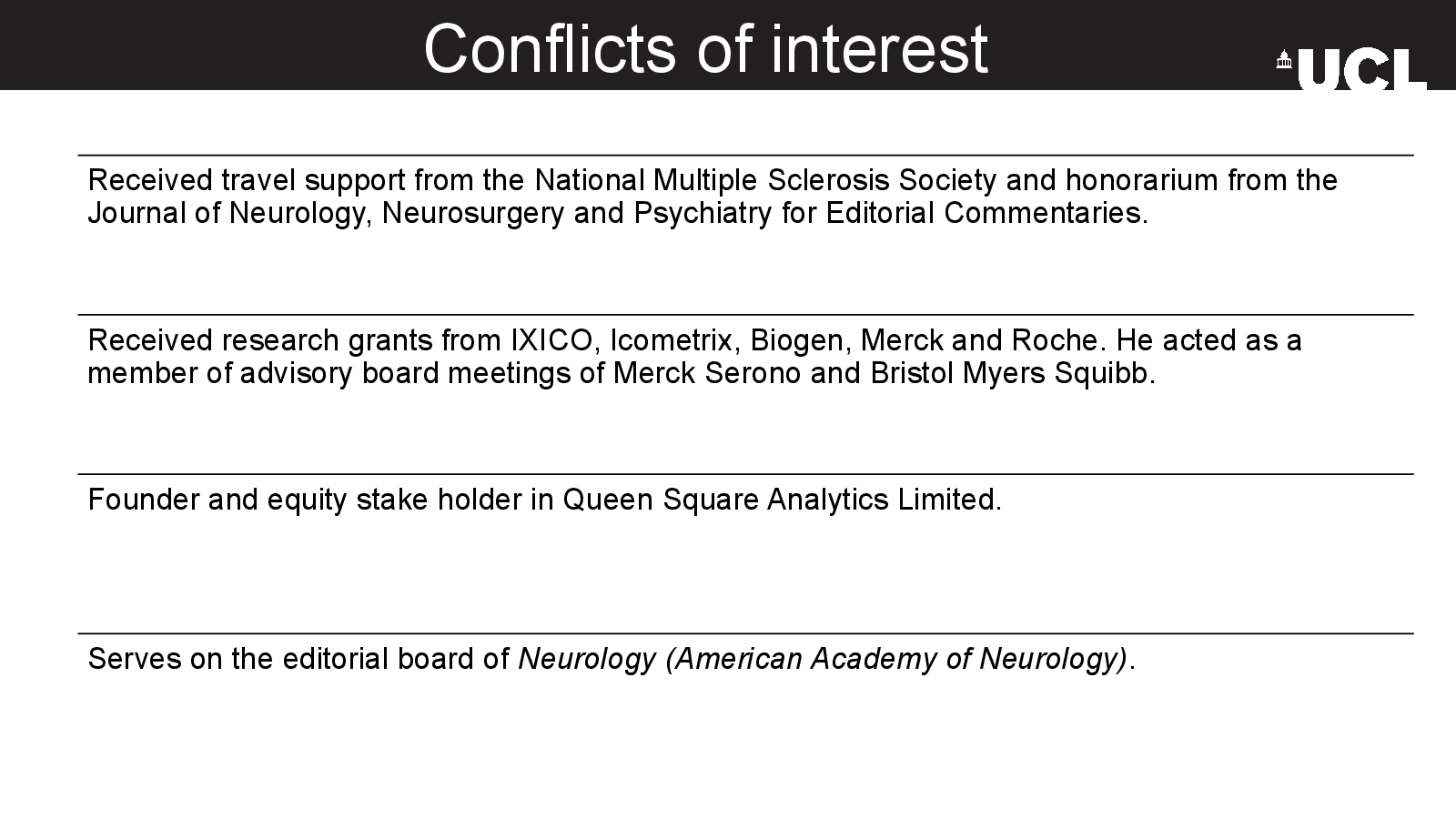
    Conflicts of interest

    Slide 2: Conflicts of interestOpen full-size slide
    • Received travel support from the National Multiple Sclerosis Society and honorarium from the Journal of Neurology, Neurosurgery and Psychiatry for Editorial Commentaries.
    • Received research grants from IXICO, Icometrix, Biogen, Merck and Roche. He acted as a member of advisory board meetings of Merck Serono and Bristol Myers Squibb.
    • Founder and equity stake holder in Queen Square Analytics Limited.
    • Serves on the editorial board of Neurology (American Academy of Neurology).
  3. Slide 06

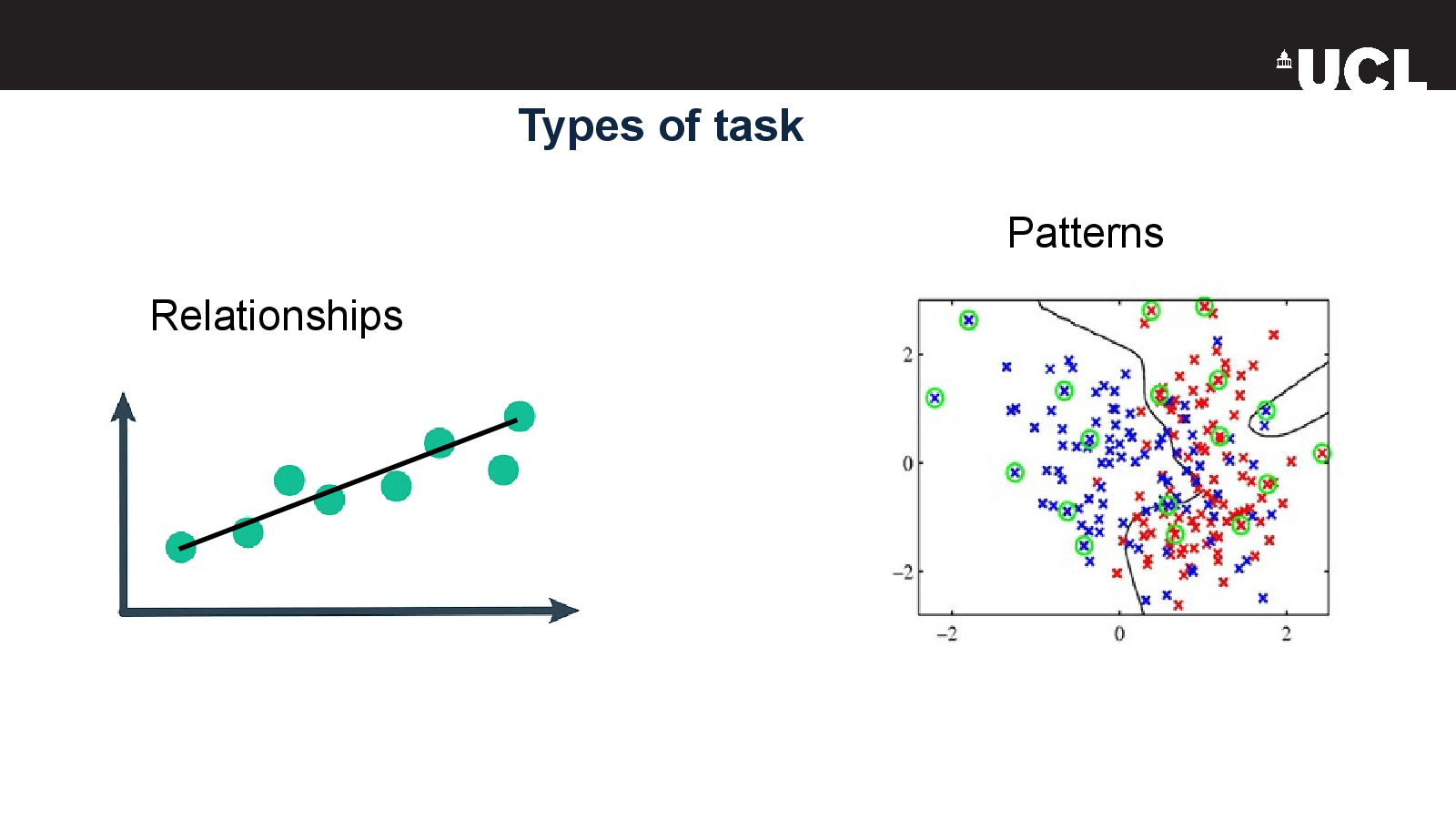
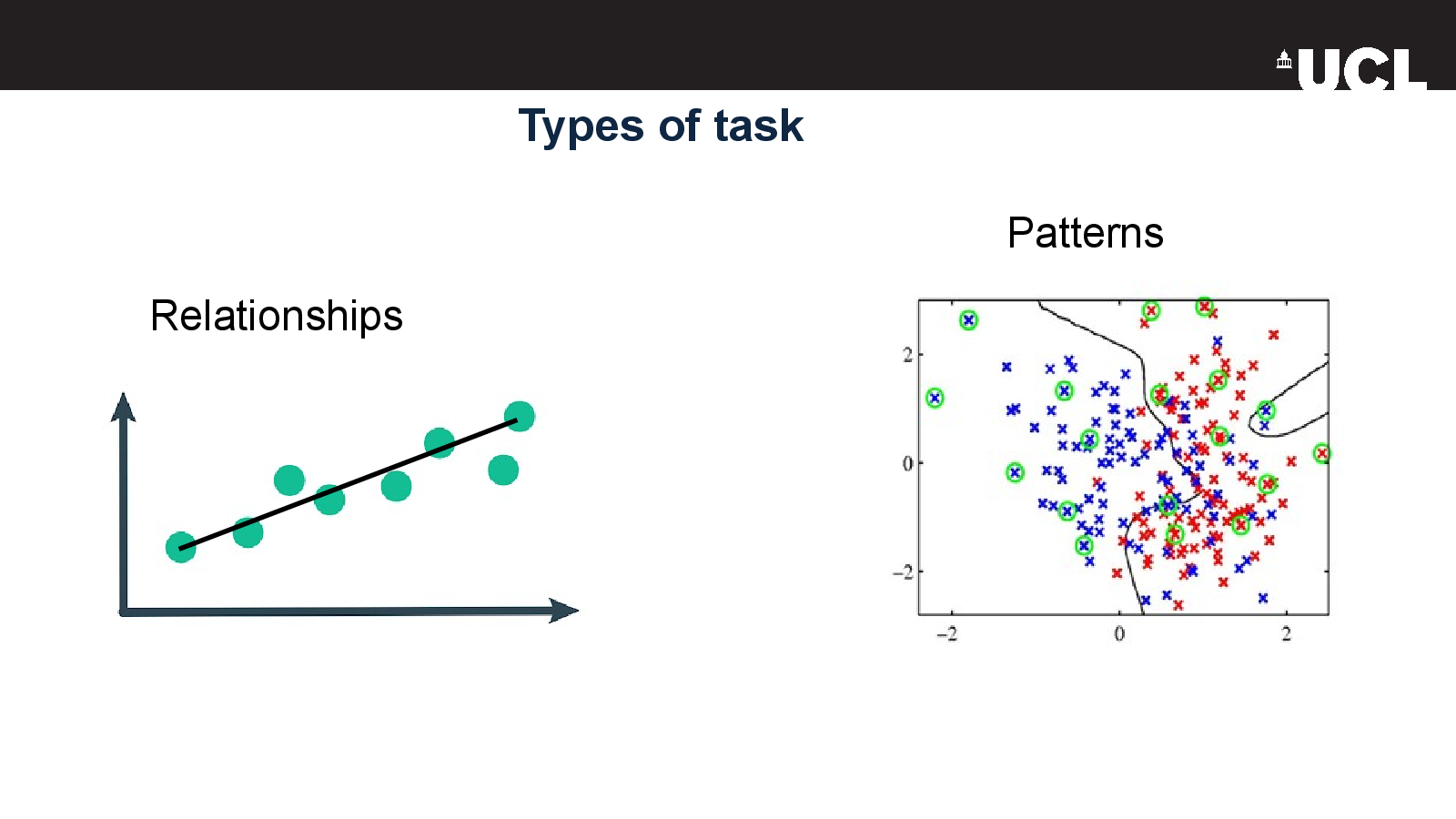
    Types of task

    Slide 6: Types of taskOpen full-size slide

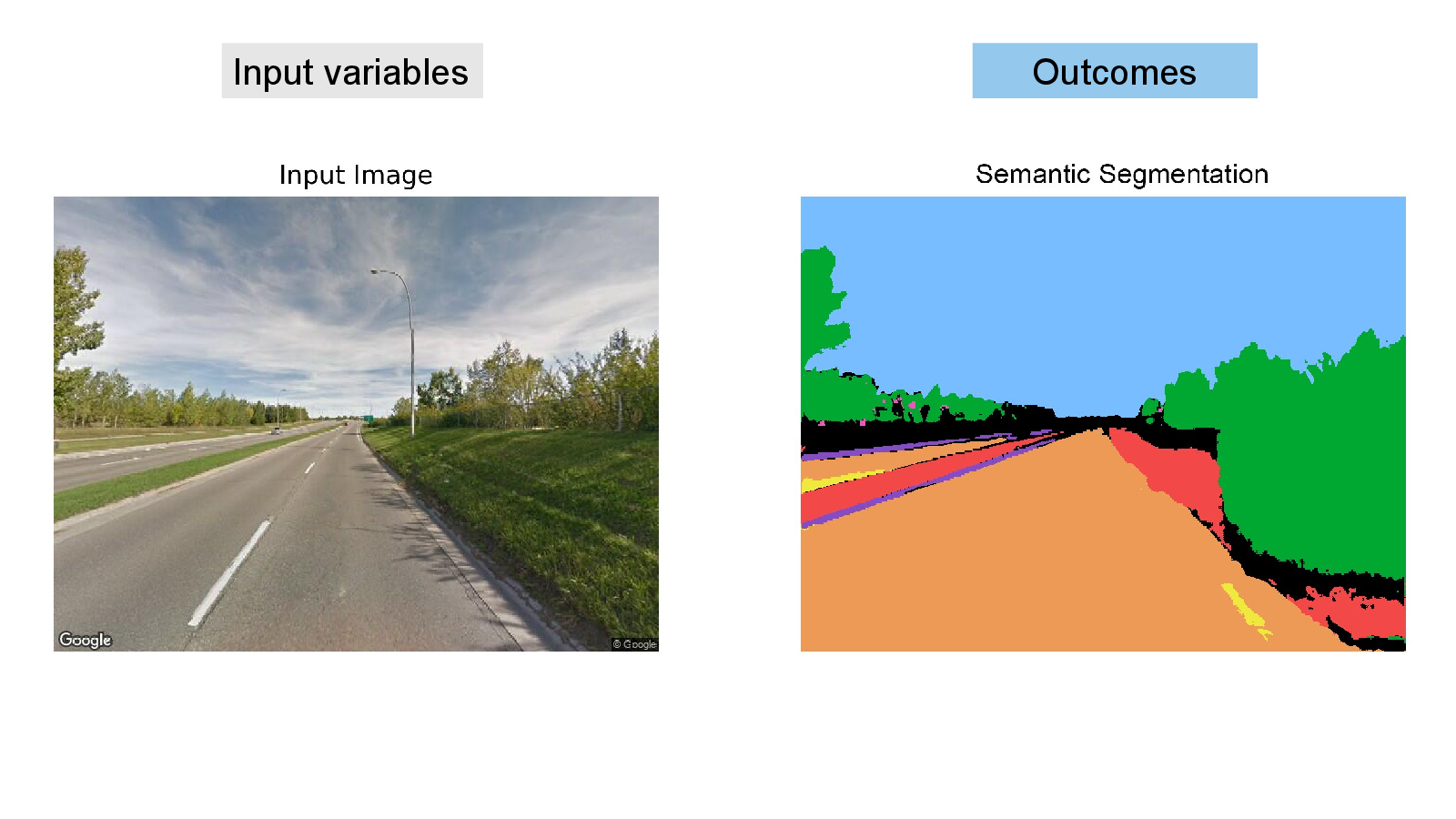
    Patterns

    Relationships

    Speaker notes

    Mathematical description of how things work.

  4. Slide 07

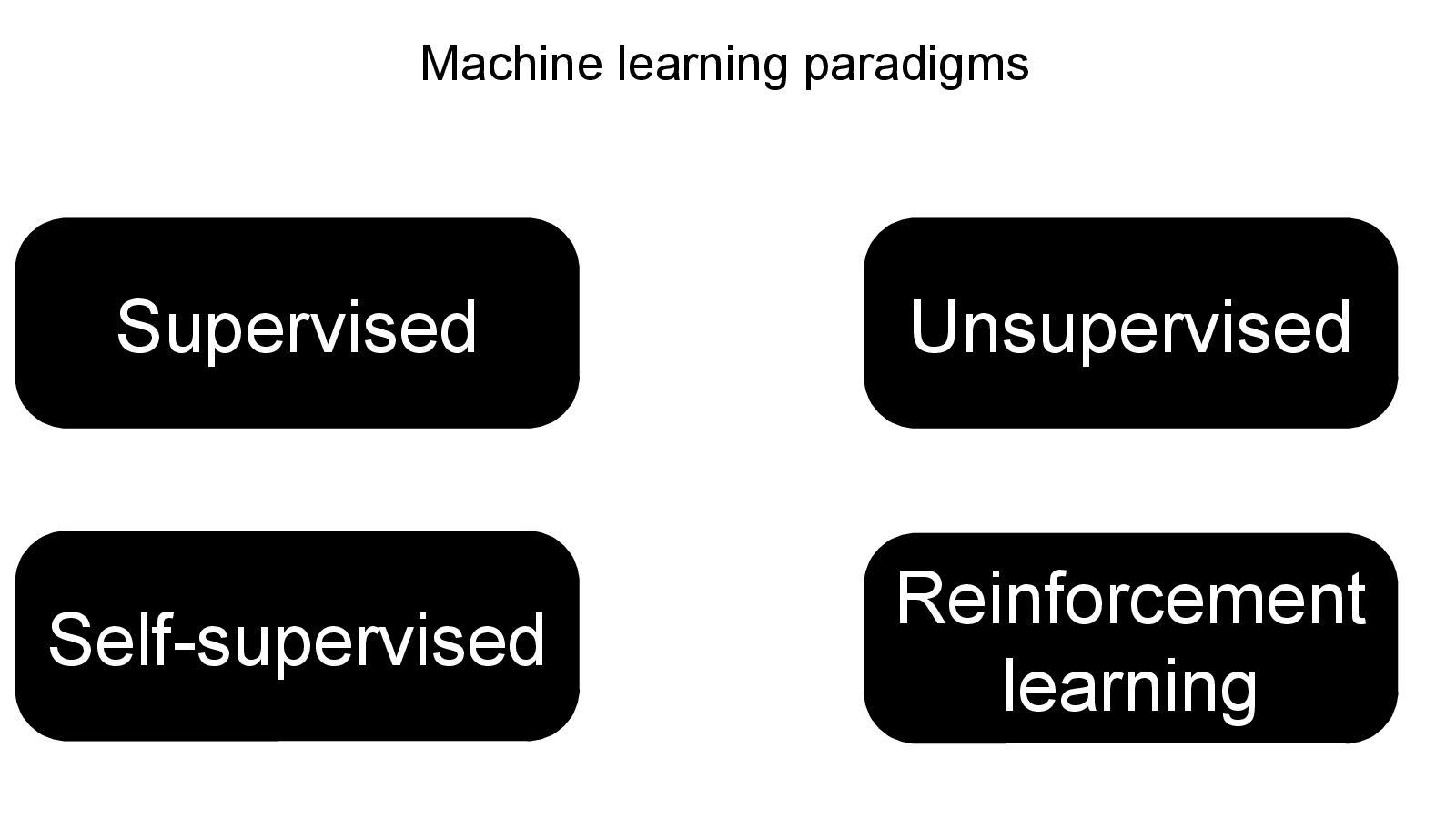
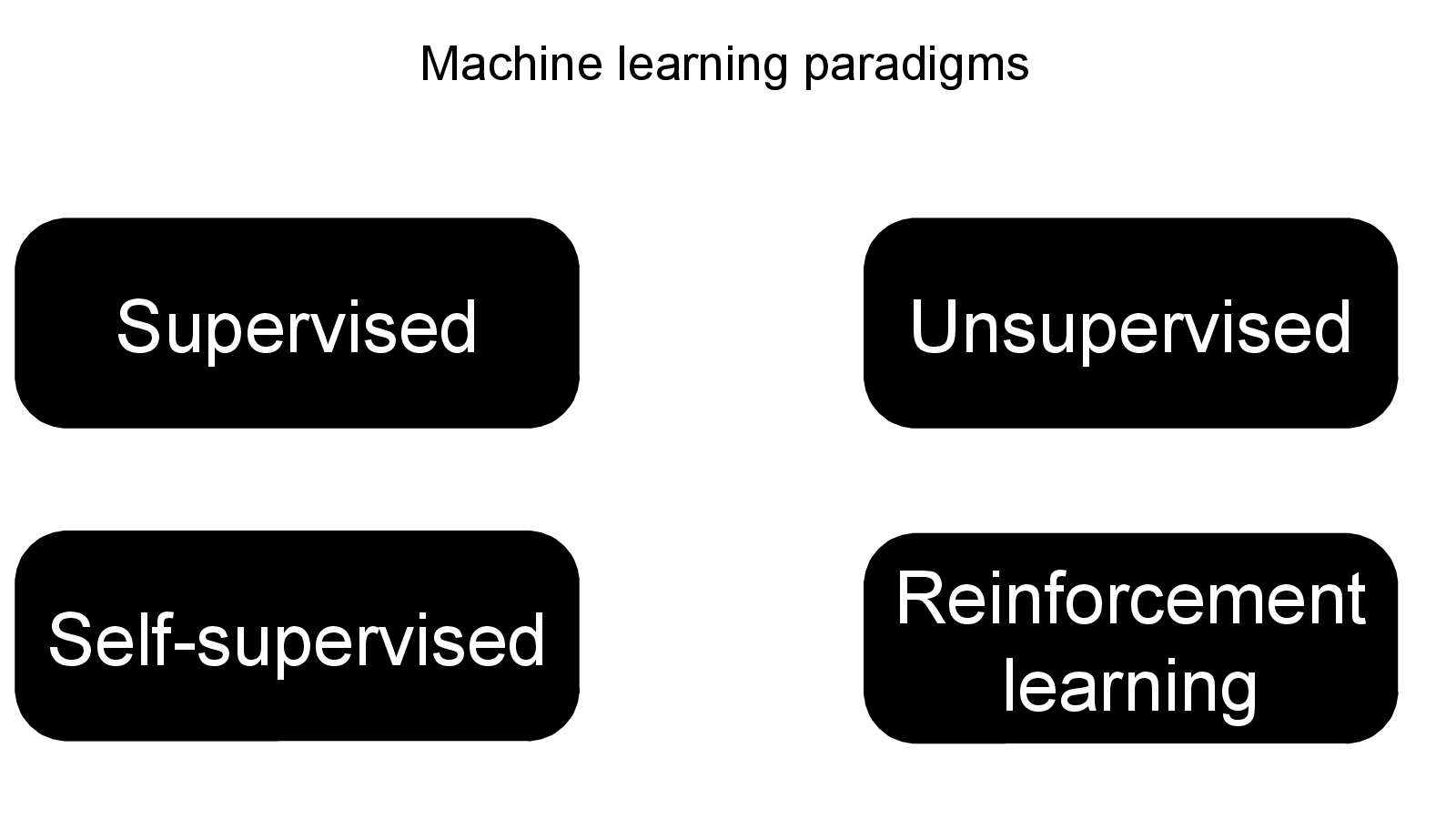
    Machine learning paradigms

    Slide 7: Machine learning paradigmsOpen full-size slide

    Supervised

    Unsupervised

    Self-supervised

    Reinforcement learning

  5. Slide 08

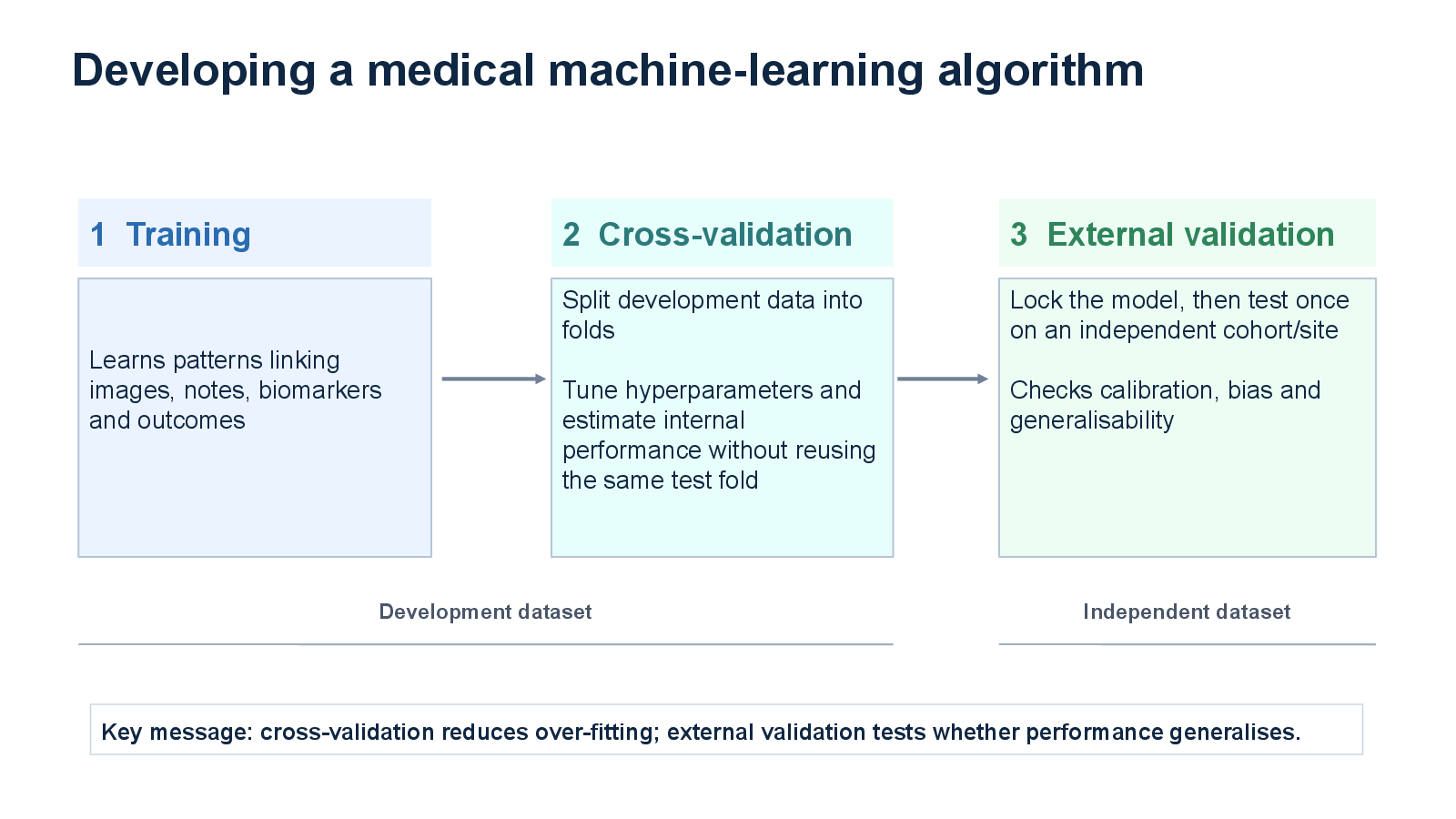
    Tune hyperparameters and estimate internal performance without reusing the same test fold
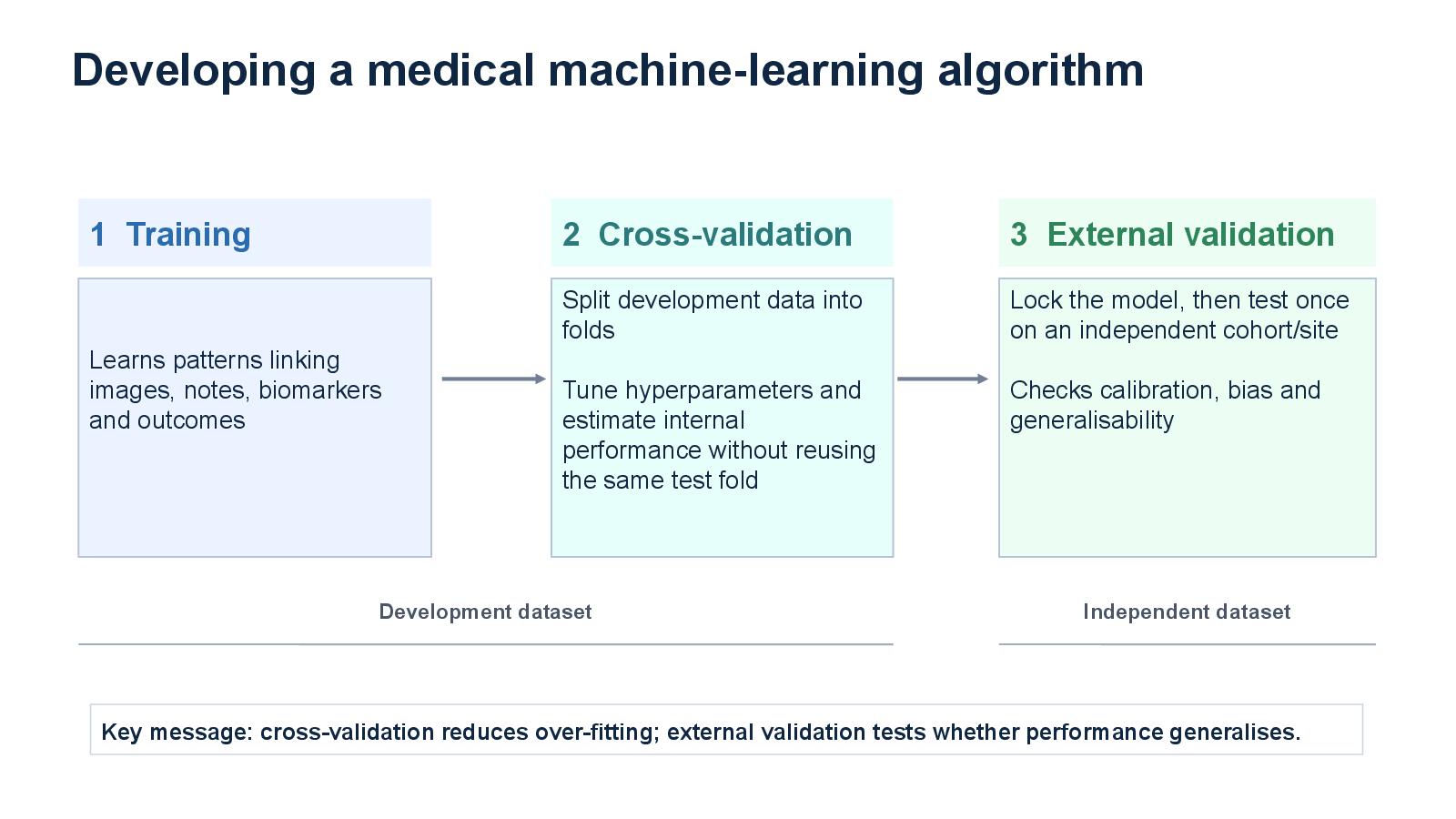
    Slide 8: Tune hyperparameters and estimate internal performance without reusing the same test foldOpen full-size slide

    Developing a medical machine-learning algorithm

    1 Training

    2 Cross-validation

    3 External validation

    Learns patterns linking images, notes, biomarkers and outcomes

    Split development data into folds

    Lock the model, then test once on an independent cohort/site

    Checks calibration, bias and generalisability

    Development dataset

    Independent dataset

    Key message: cross-validation reduces over-fitting; external validation tests whether performance generalises.

    Speaker notes

    A simple stage diagram: train on development data, use cross-validation for internal model selection, then perform a locked external validation on independent data before considering clinical deployment.

  6. Slide 14

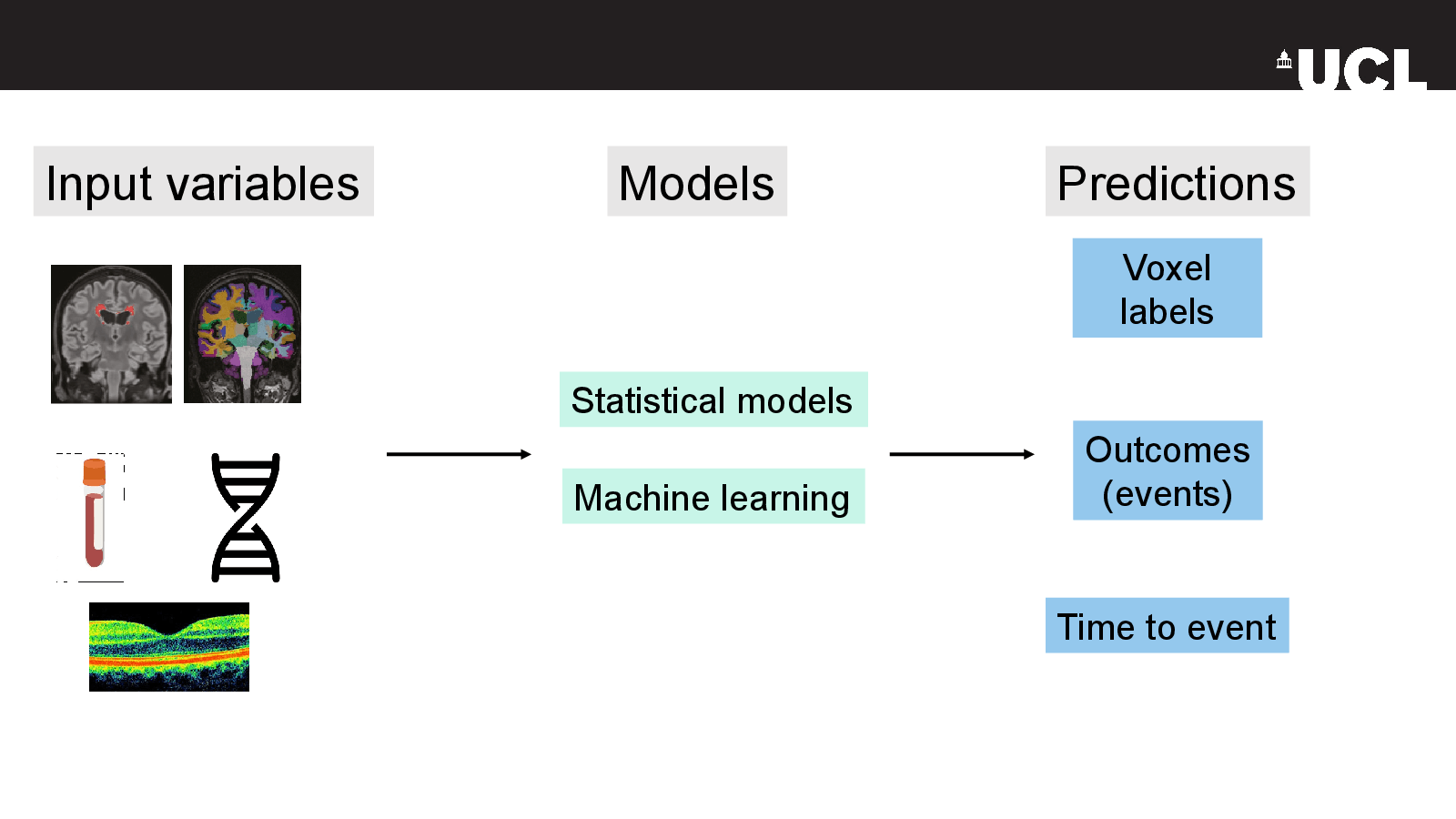
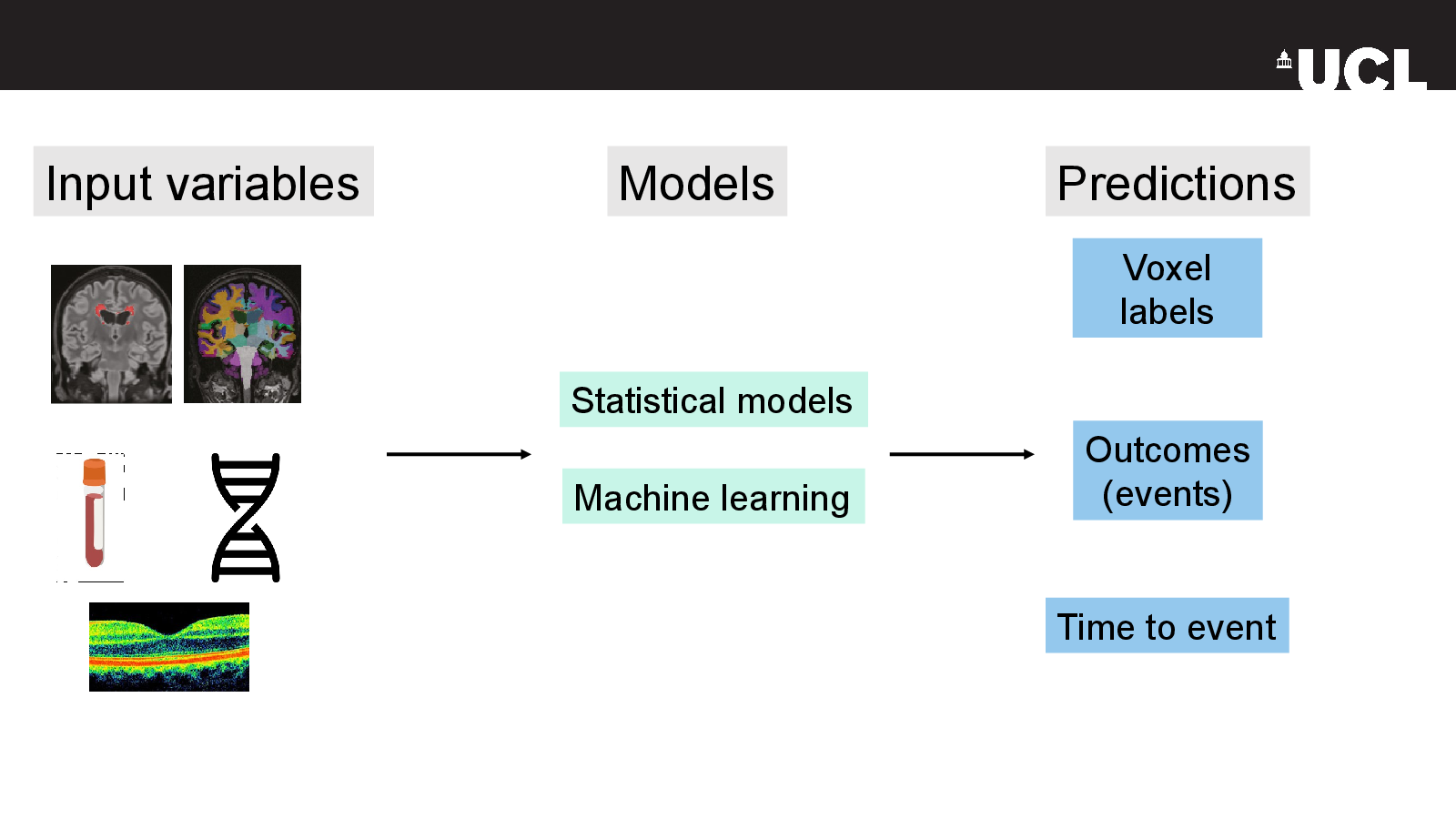
    Time to event

    Slide 14: Time to eventOpen full-size slide

    Input variables

    Models

    Predictions

    Voxel labels

    Statistical models

    Outcomes

    (events)

    Machine learning

  7. Slide 15

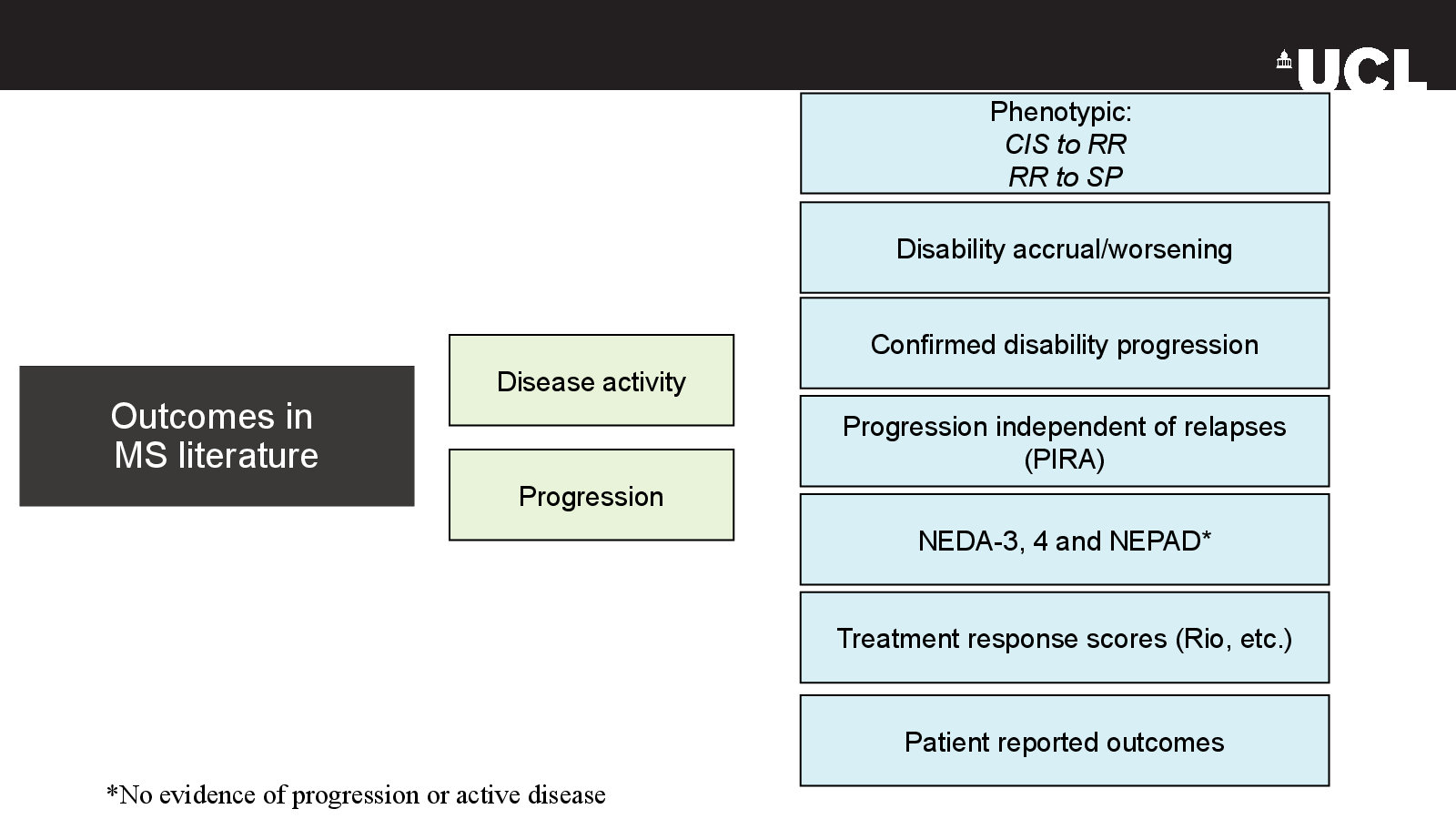
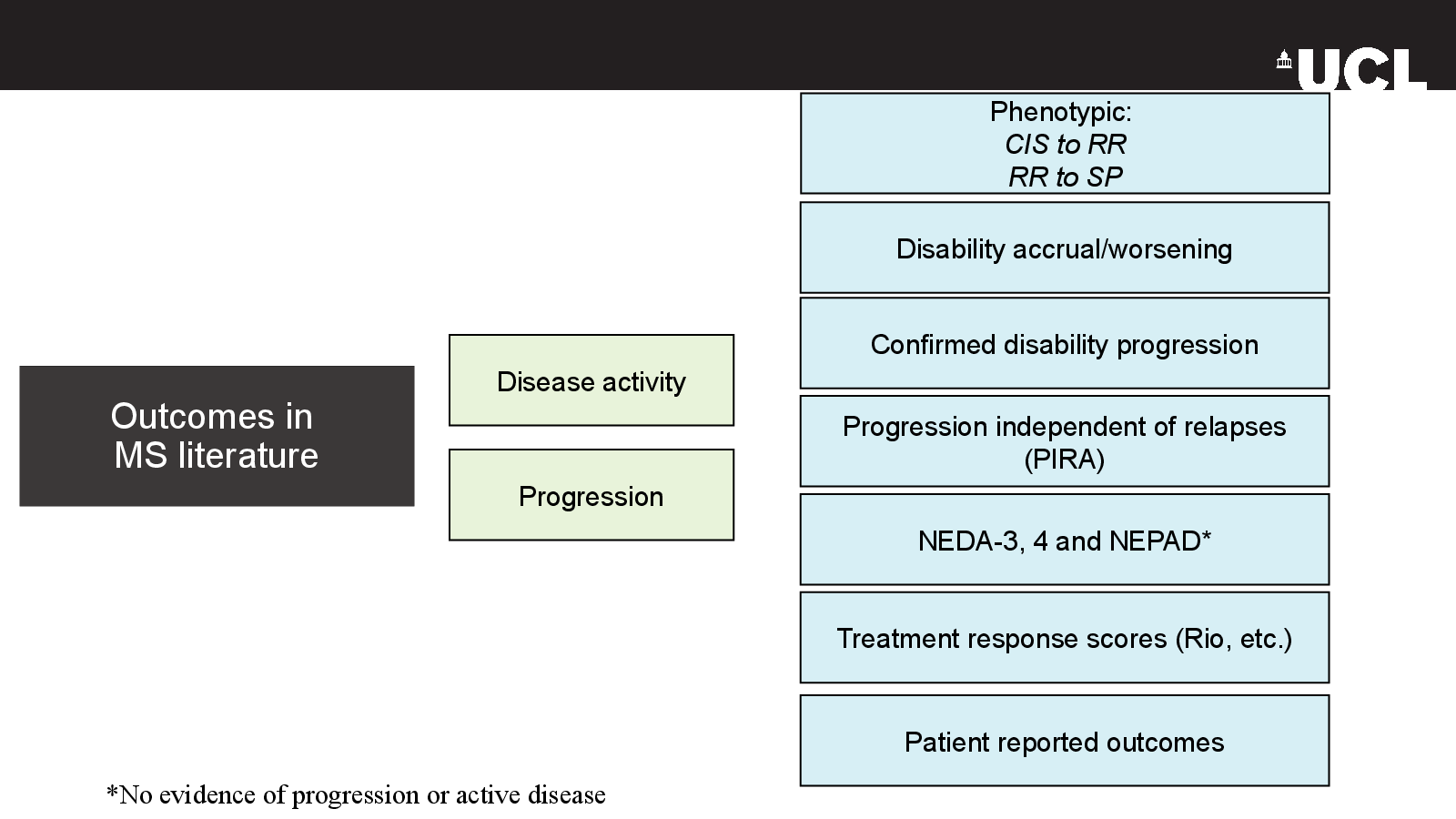
    Outcomes in

    Slide 15: Outcomes inOpen full-size slide

    MS literature

    Phenotypic:

    CIS to RR

    RR to SP

    Disability accrual/worsening

    Confirmed disability progression

    Disease activity

    Progression independent of relapses

    (PIRA)

    Progression

    NEDA-3, 4 and NEPAD*

    Treatment response scores (Rio, etc.)

    Patient reported outcomes

    *No evidence of progression or active disease

    Speaker notes

    https://www.uptodate.com/contents/indications-for-switching-or-stopping-disease-modifying-therapy-for-multiple-sclerosis

  8. Slide 18

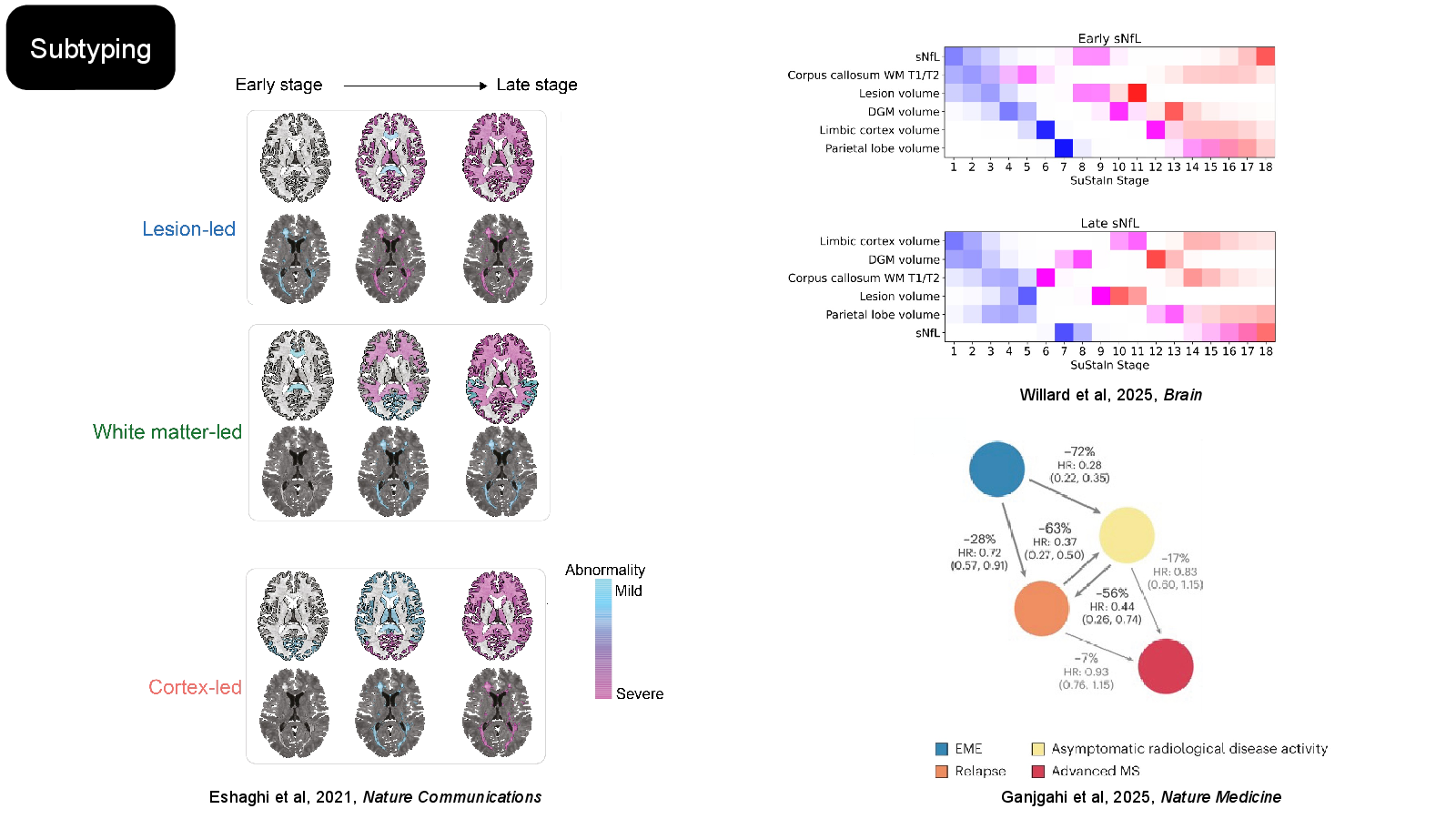
    Eshaghi et al, 2021, Nature Communications
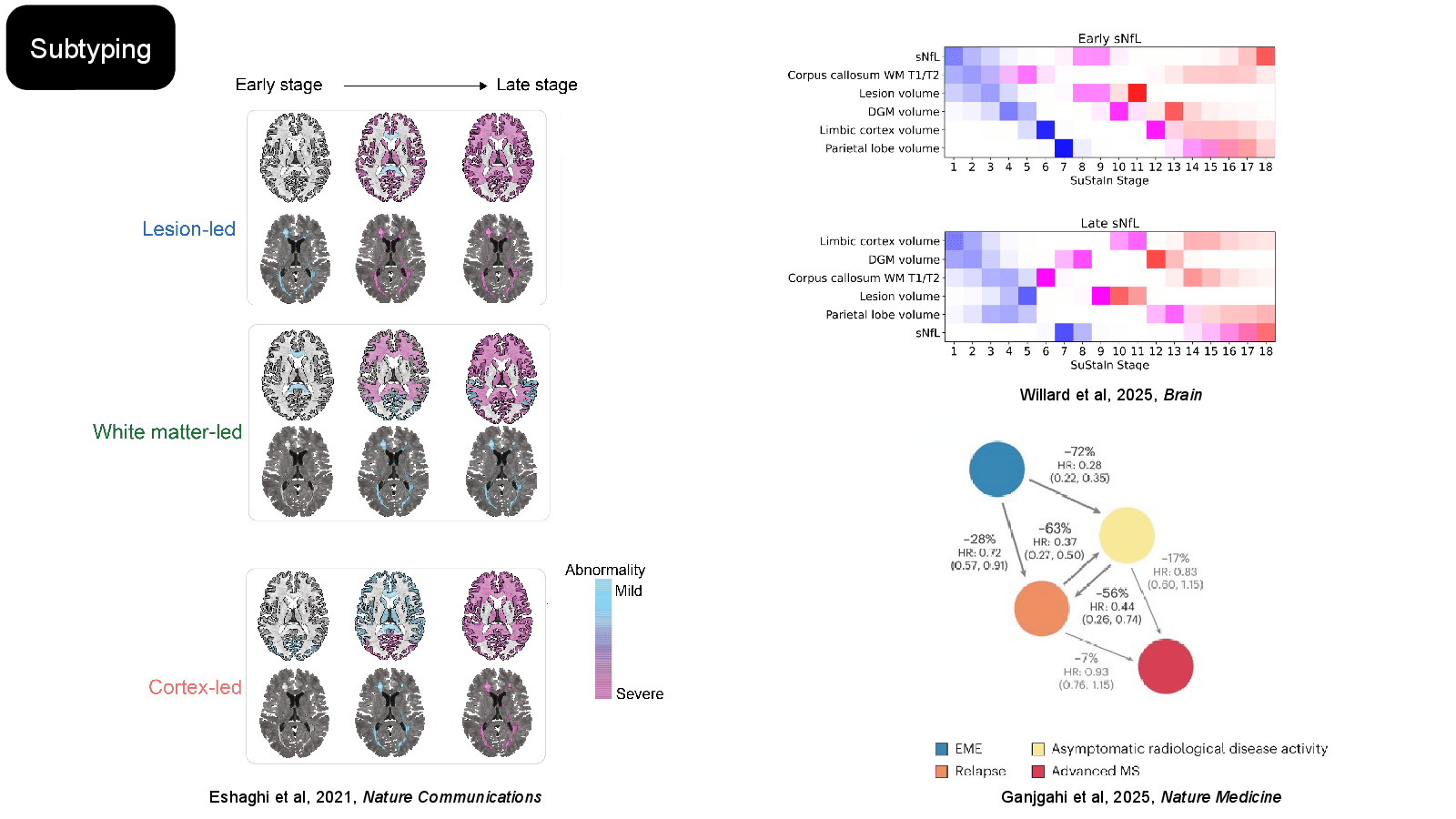
    Slide 18: Eshaghi et al, 2021, Nature CommunicationsOpen full-size slide

    Subtyping

    Willard et al, 2025, Brain

    Ganjgahi et al, 2025, Nature Medicine

    Speaker notes

    Gross et al. employed this method to uncover three groups based on immune cell markers in early MS, with different patterns in CD4, CD8 T cells, natural killer cell compartments, and cytokines[25]. These endotypes showed subtle variations in disease course and treatment response, suggesting potential future clinical applications

    References

  9. Slide 20

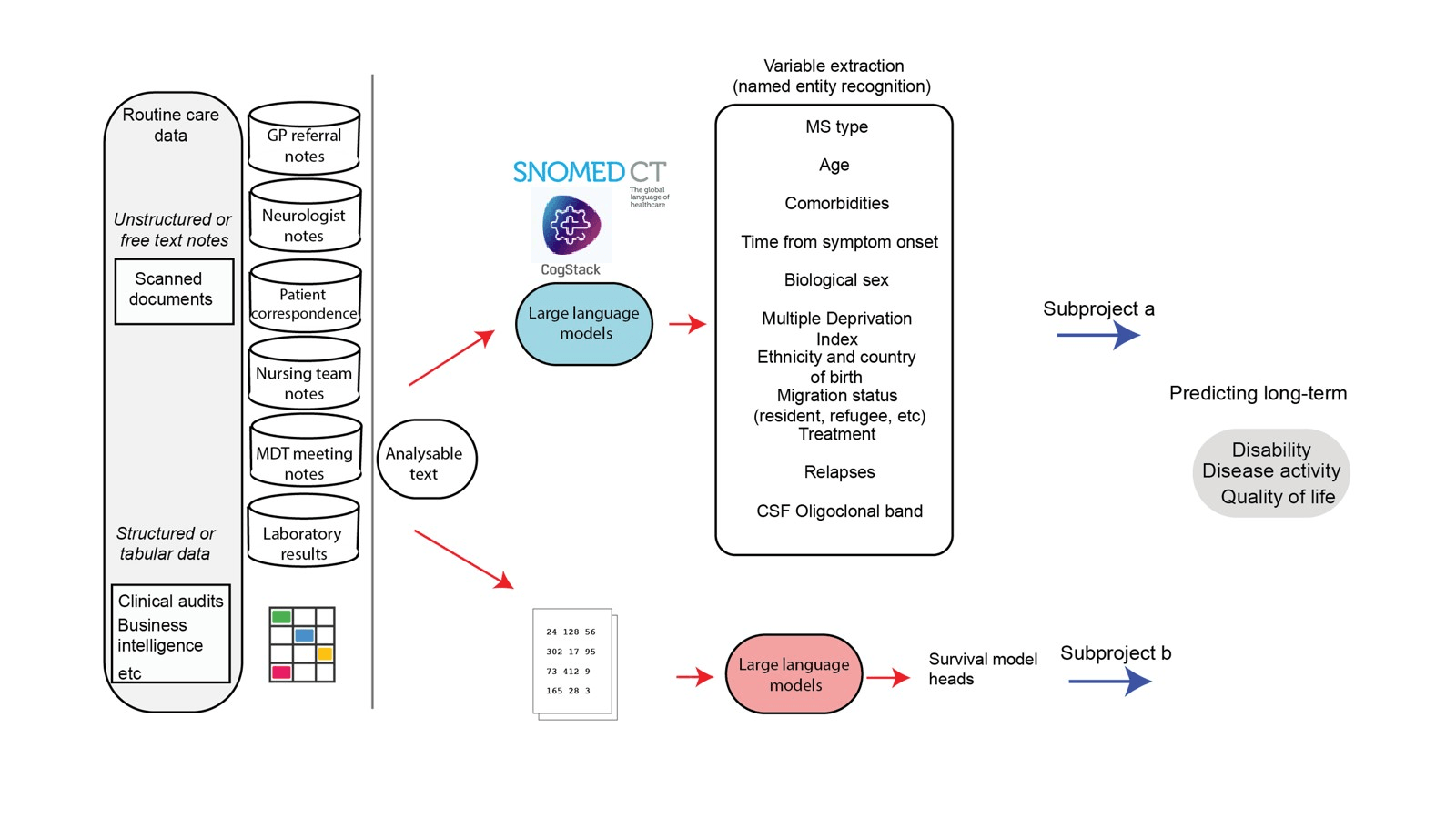
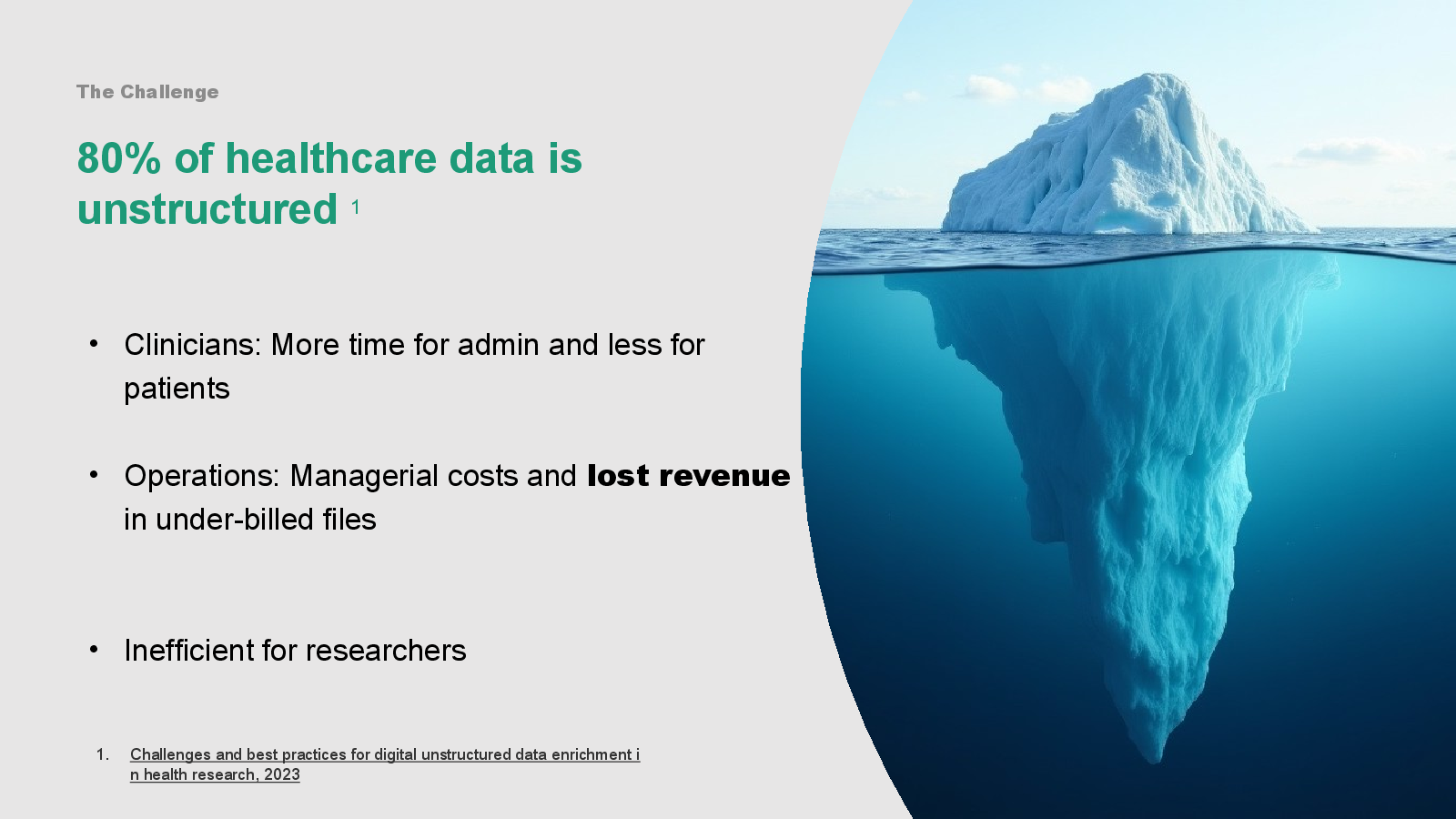
    80% of healthcare data is unstructured 1
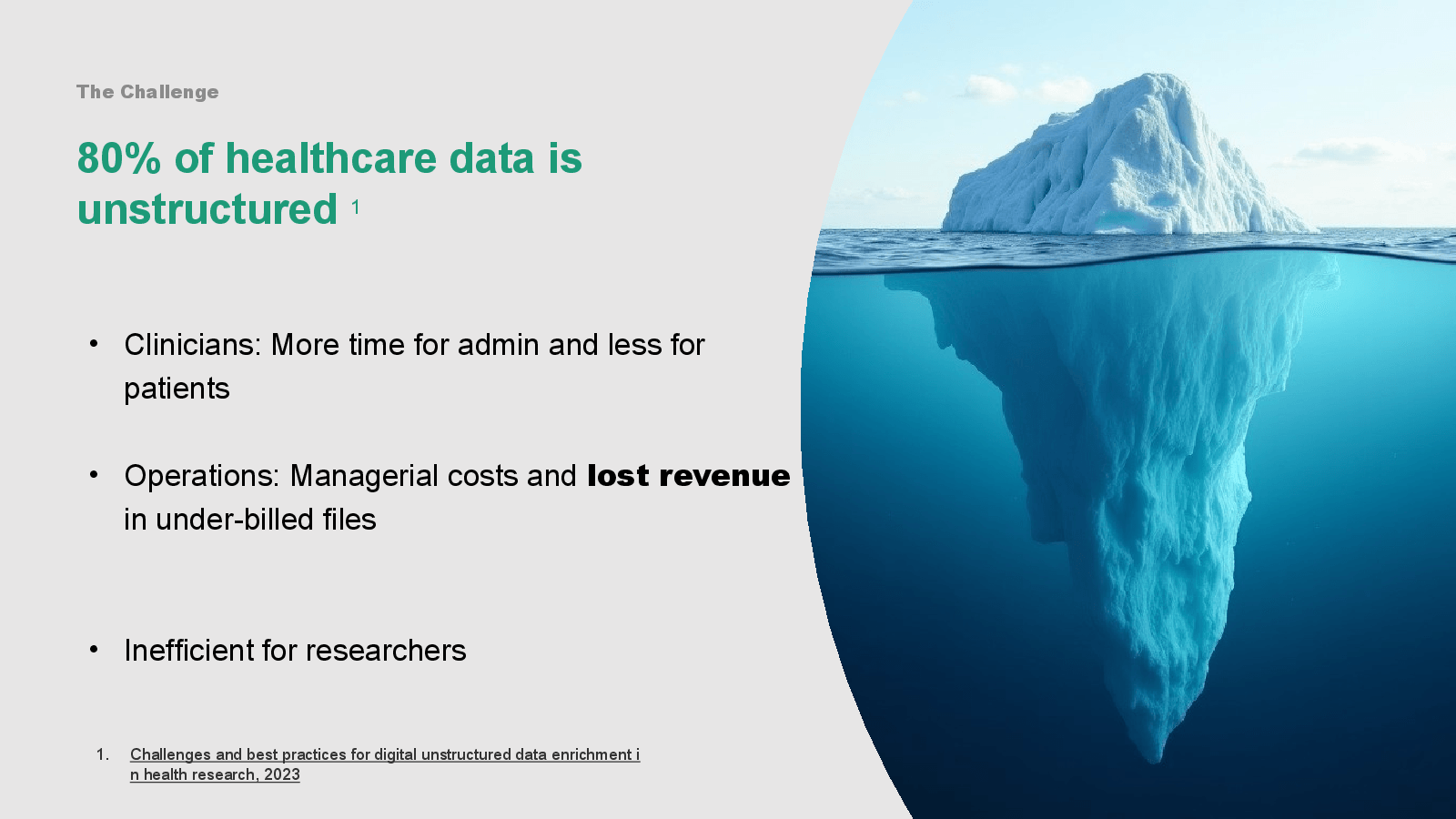
    Slide 20: 80% of healthcare data is unstructured 1Open full-size slide

    The Challenge

    Speaker notes

    So, its complex. But zooming back in on the data itself. 80% of healthcare data is unstructured clinical narrative. If we only look at structured data which is most of the data analysed in these previous data flows. We’re only seeing tip of the iceberg. So why is this unstructured data not utilised. Well, its lack of structure makes it difficult to store, standardise, integrate and deliver actionable insights. This affects the all parts of the healthcare delivery. Clinicians lack context, ops can’t optimise a process, and even finance can’t bill correctly.

  10. Slide 27

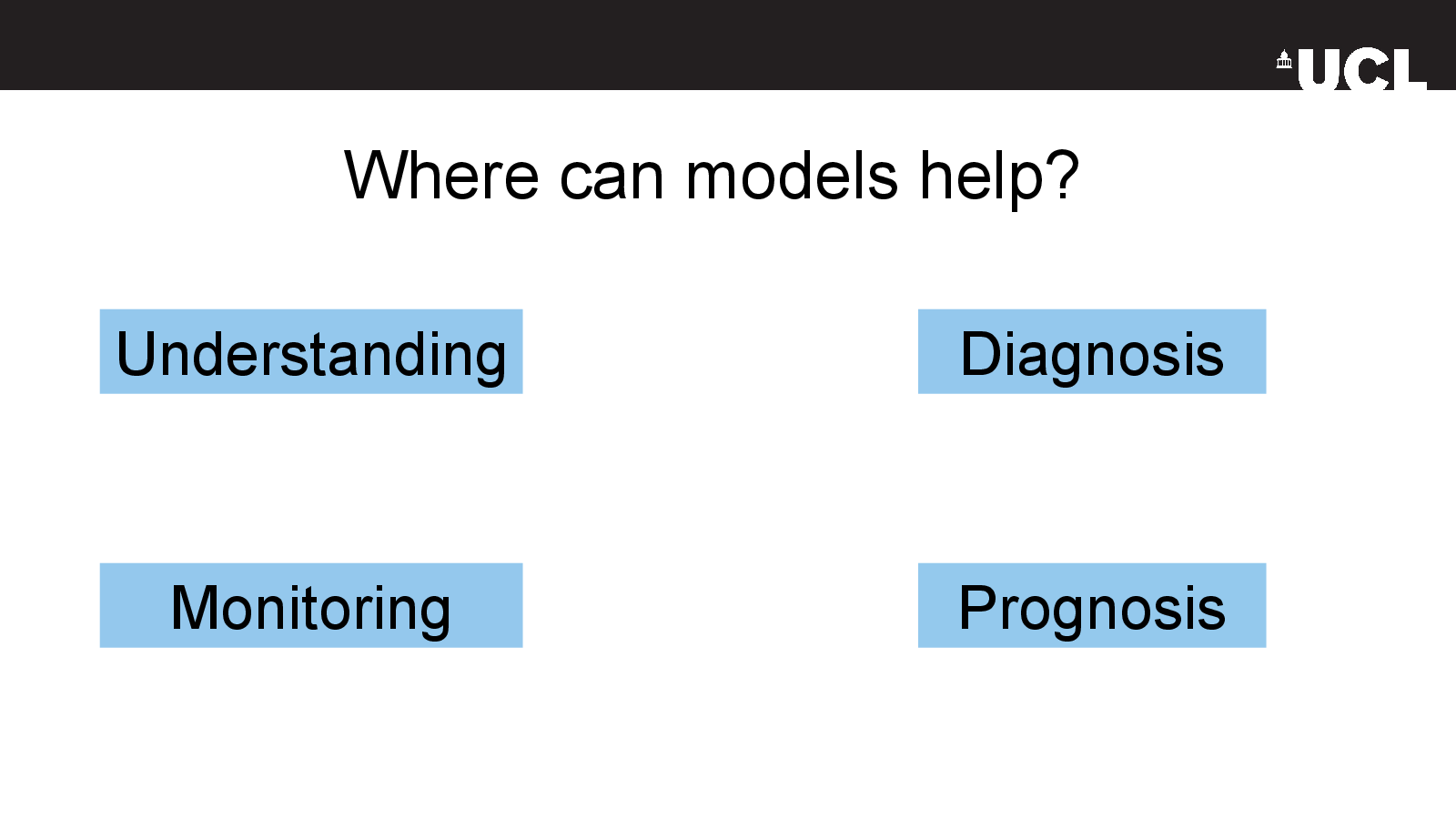
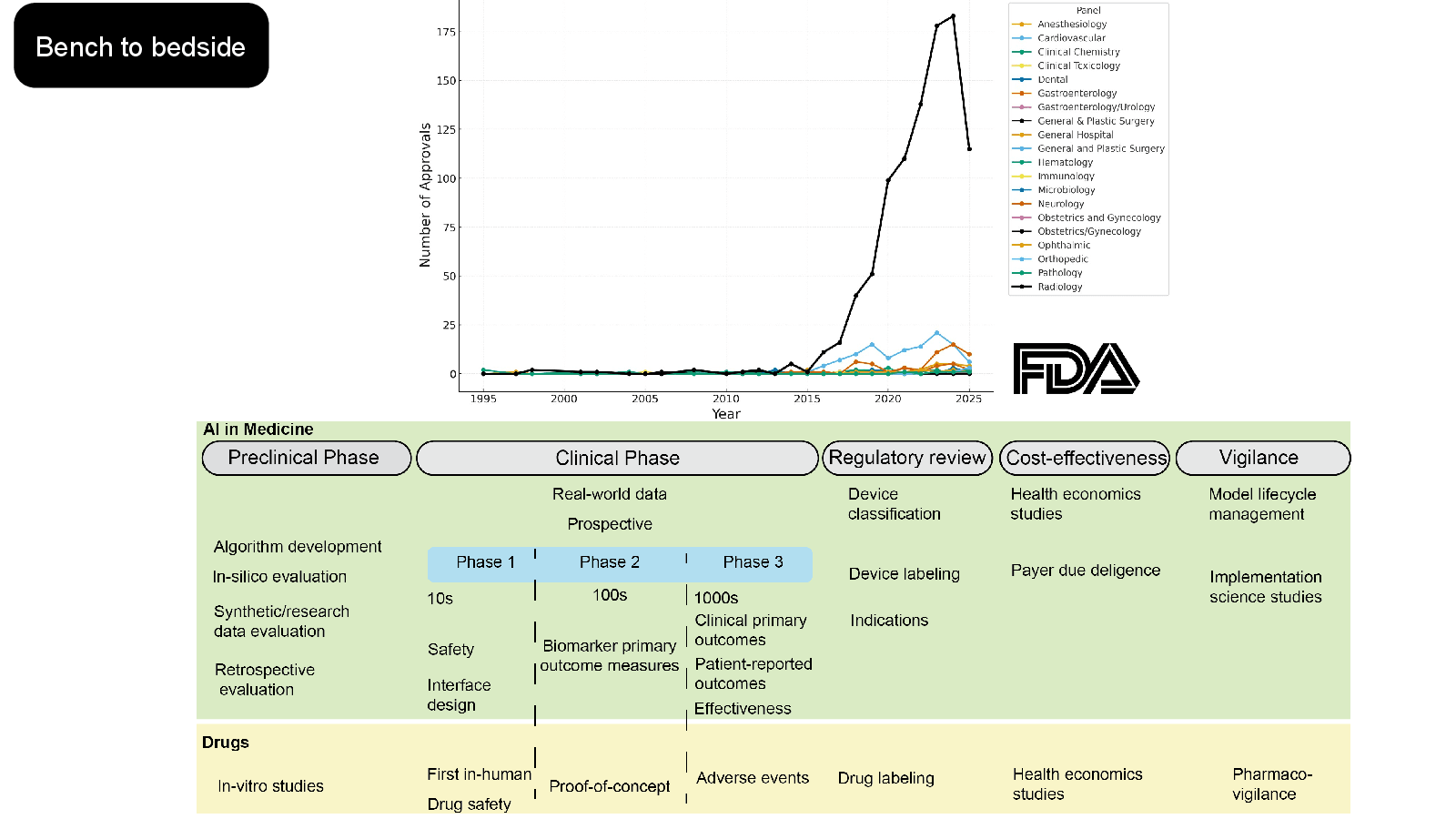
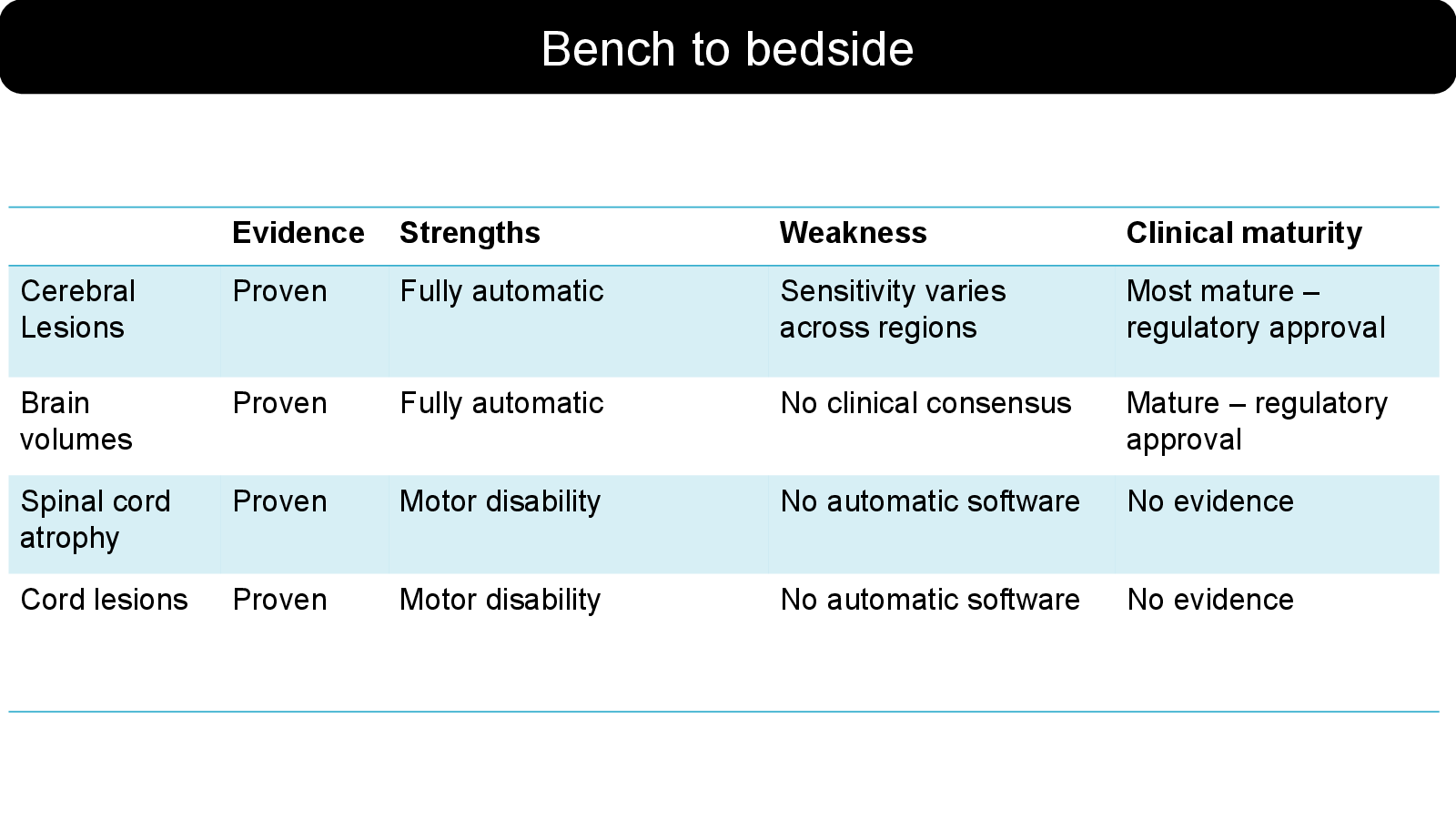
    Bench to bedside

    Slide 27: Bench to bedsideOpen full-size slide
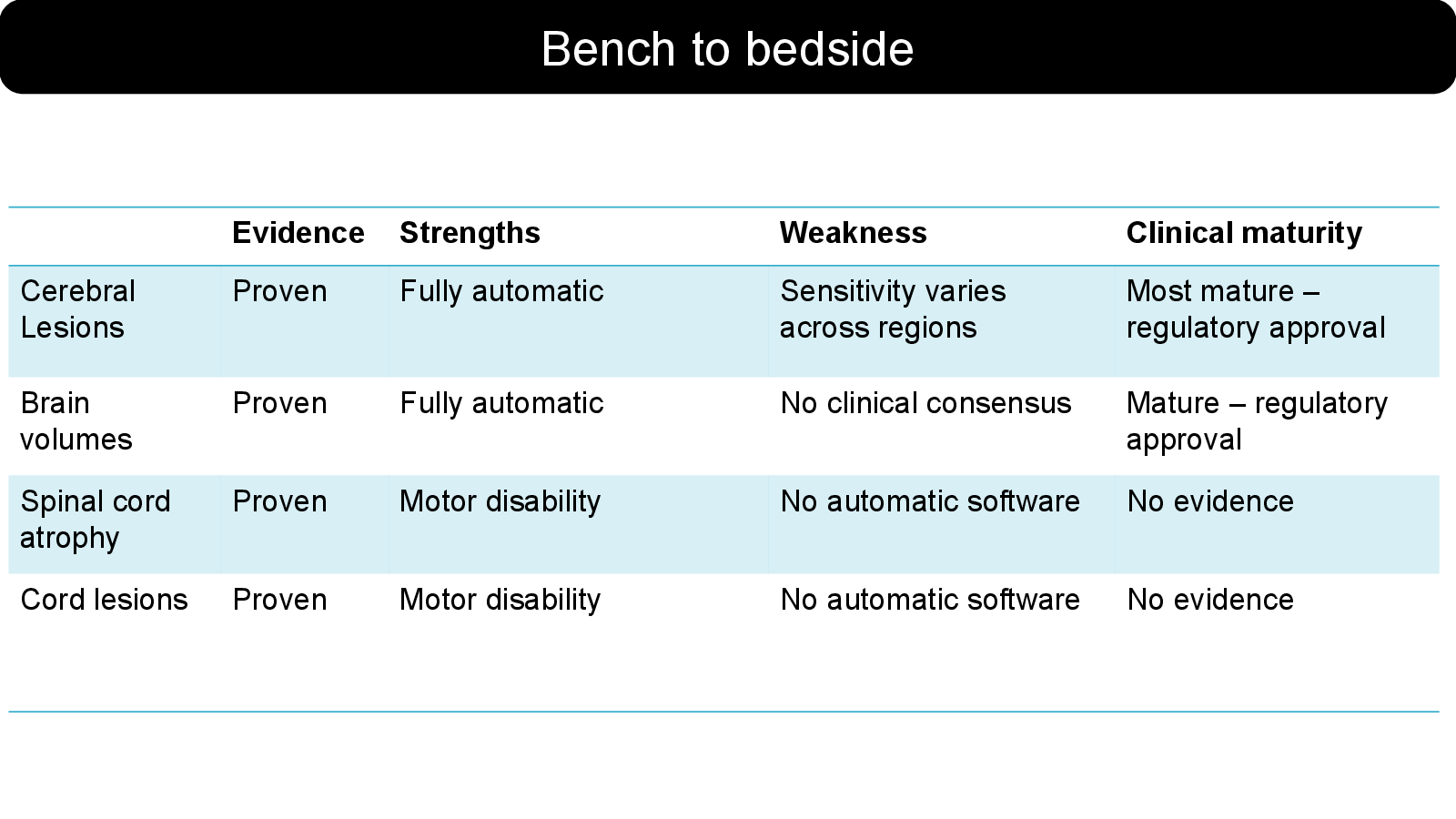
    • Evidence — Strengths — Weakness — Clinical maturity
    • Cerebral Lesions — Proven — Fully automatic — Sensitivity varies across regions — Most mature – regulatory approval
    • Brain volumes — Proven — Fully automatic — No clinical consensus — Mature – regulatory approval
    • Spinal cord atrophy — Proven — Motor disability — No automatic software — No evidence
    • Cord lesions — Proven — Motor disability — No automatic software — No evidence
  11. Slide 28

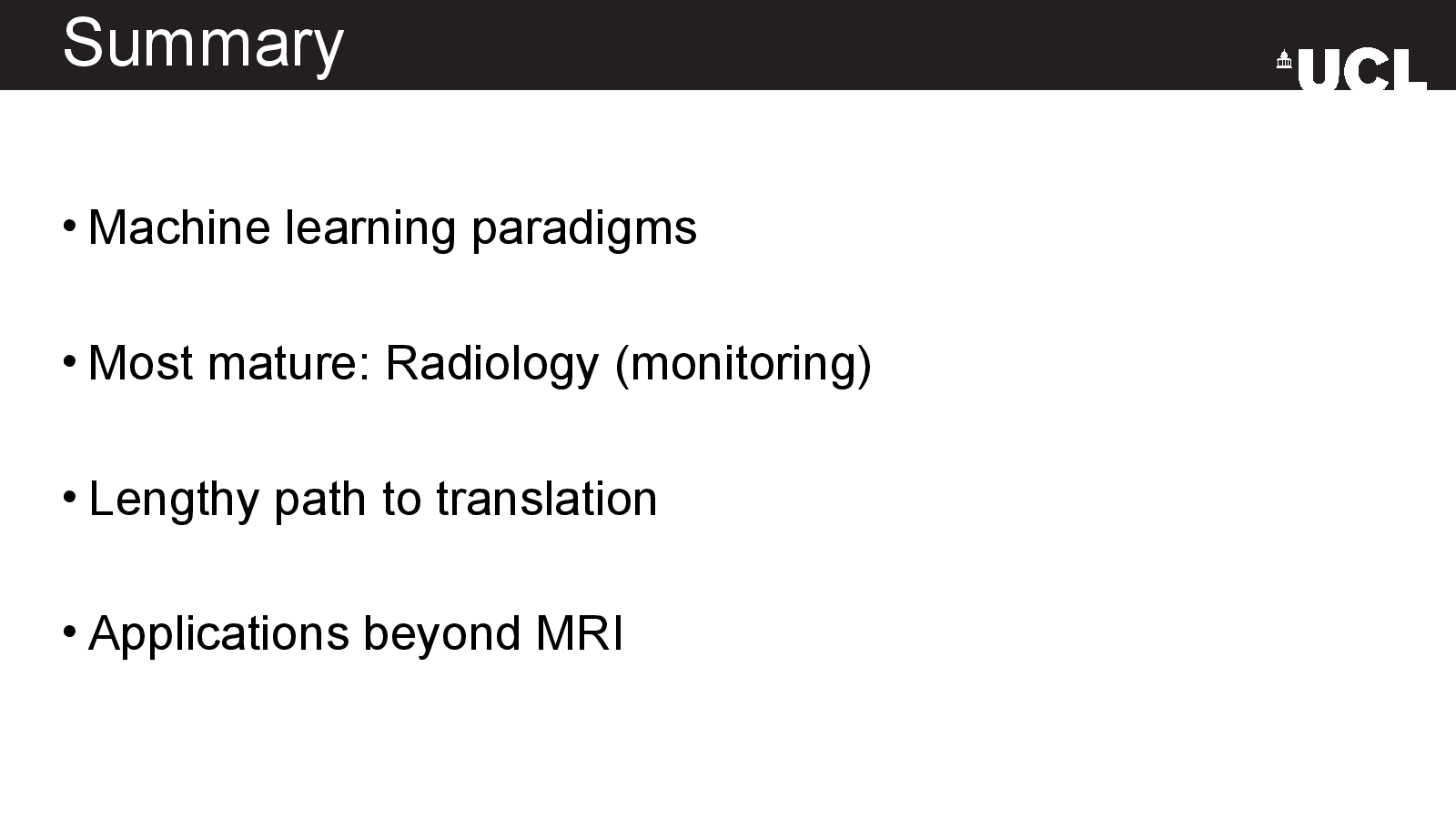
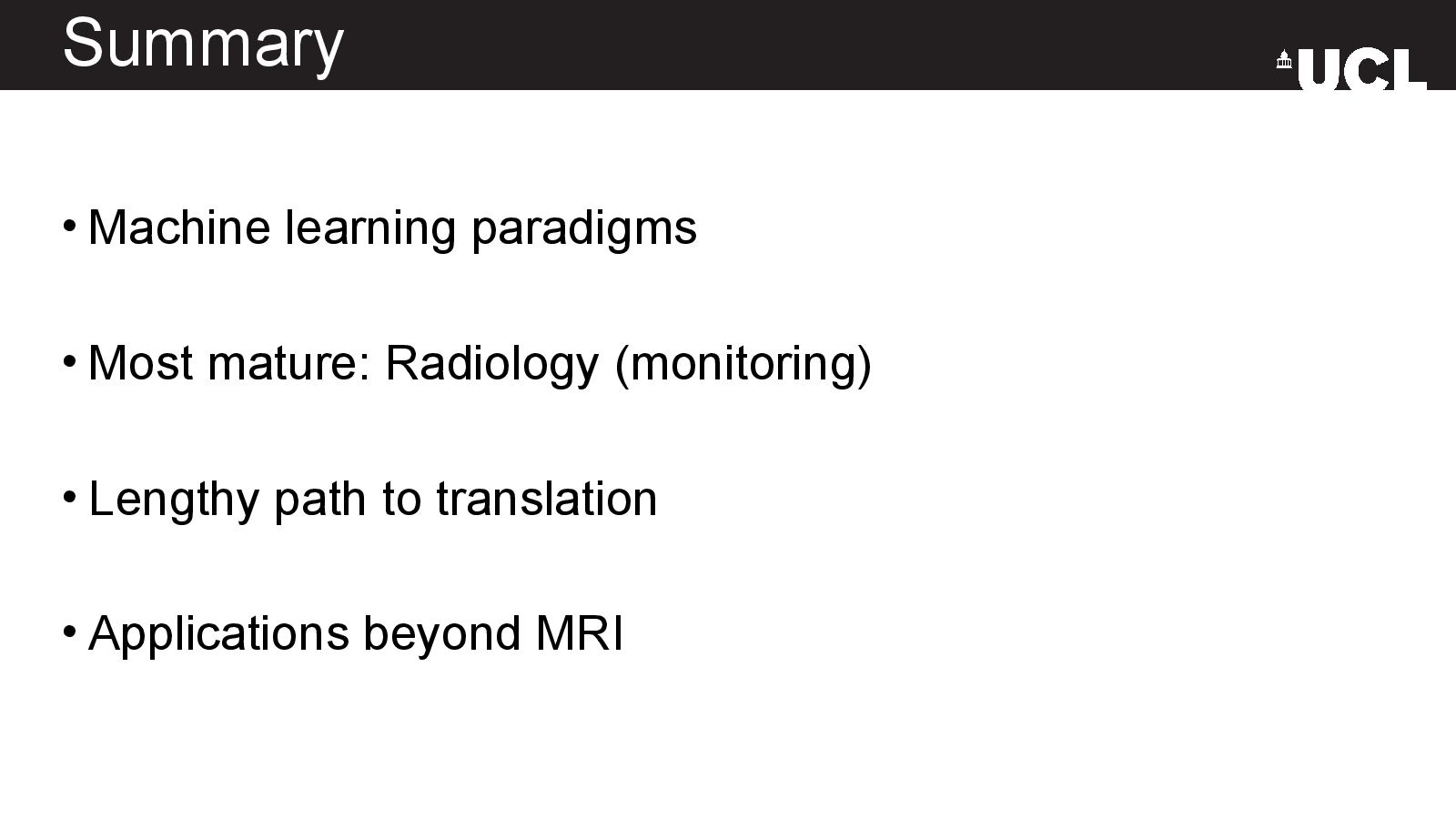
    Summary

    Slide 28: SummaryOpen full-size slide

    Machine learning paradigms

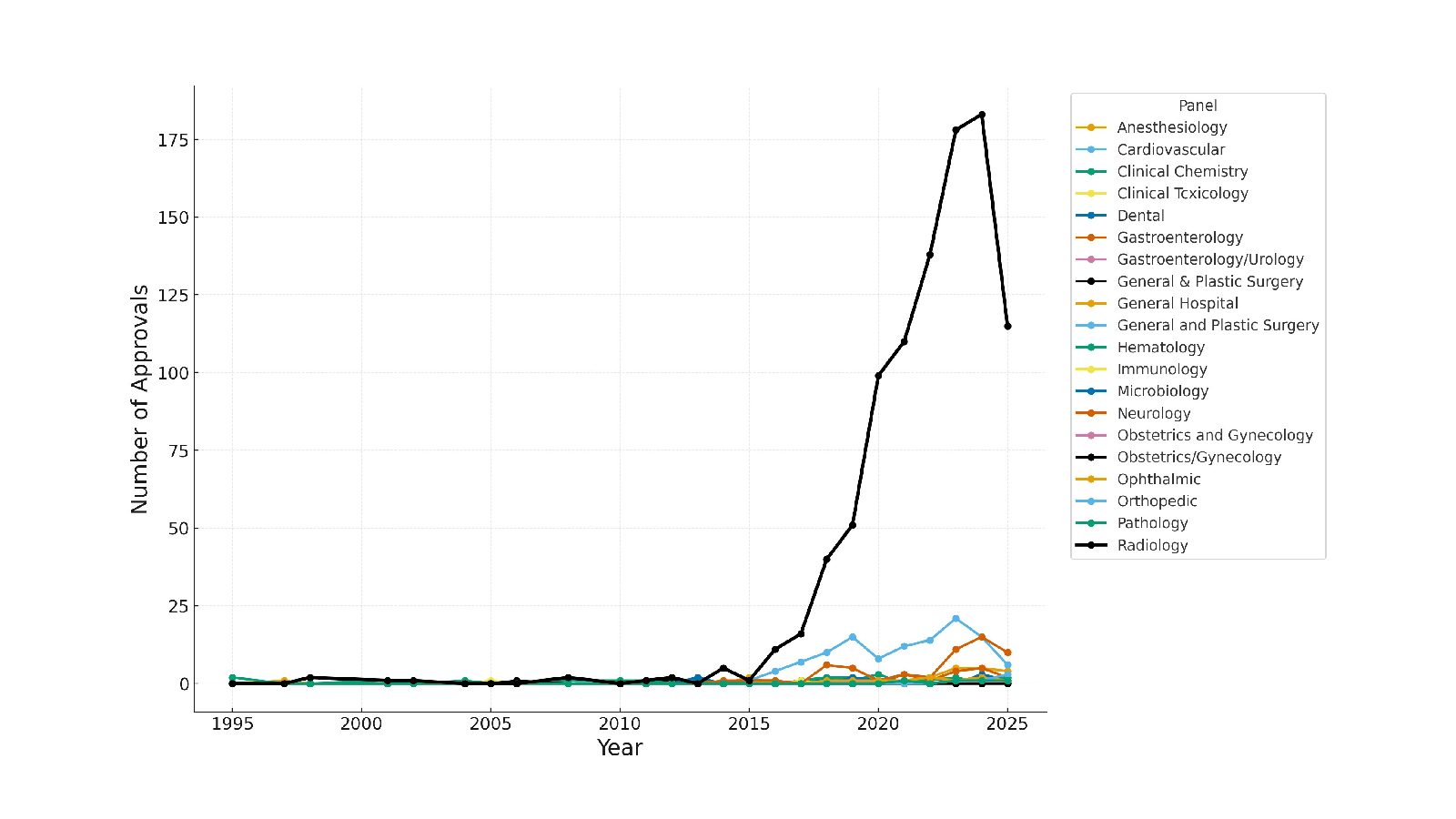
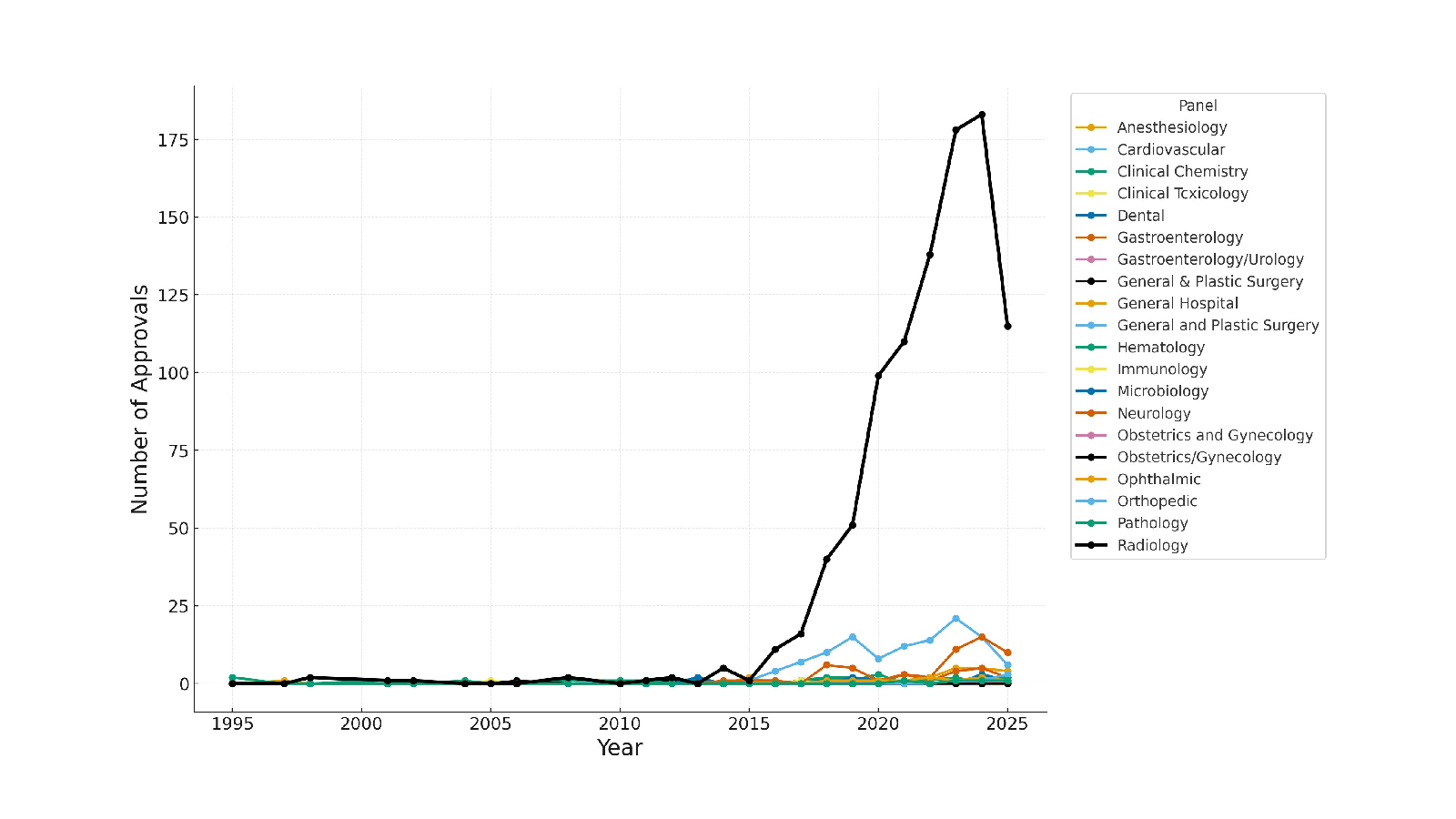
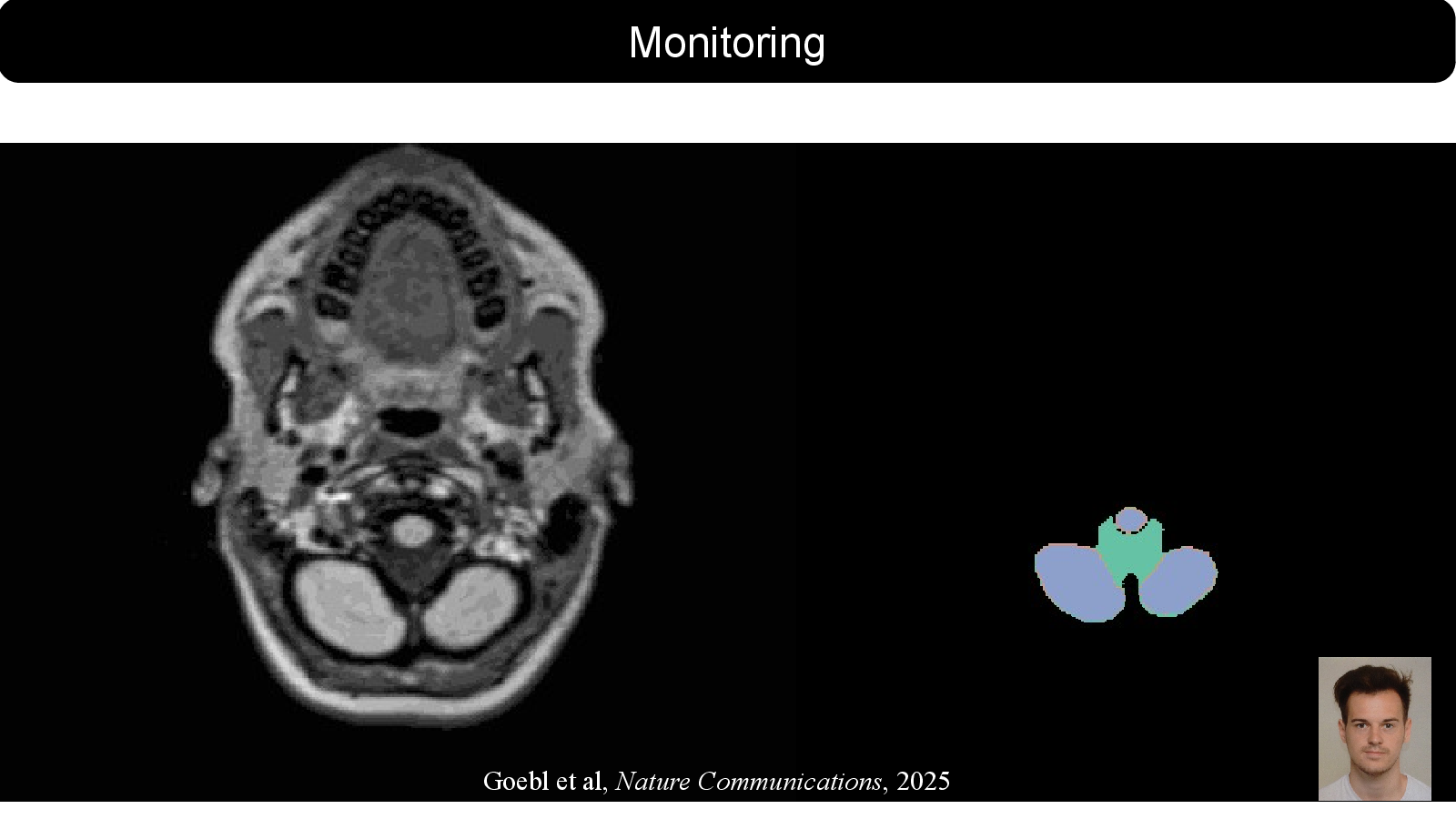
    Most mature: Radiology (monitoring)

    Lengthy path to translation

    Applications beyond MRI