Conference ·
Impacts of AI-enabled neuroimaging on MS treatment plans
A treatment-planning view of AI neuroimaging, spanning mechanism, prognosis, response and monitoring.
38th Annual Meeting of the Consortium of Multiple Sclerosis Centers · Nashville, Tennessee

- Delivered
- Event
- 38th Annual Meeting of the Consortium of Multiple Sclerosis Centers
- Place
- Nashville, Tennessee
- Format
- Conference
- Published deck
- 29 slides
From the slides
Deck notes
This talk followed the treatment pathway from selecting a therapy to monitoring its effects. It asked where AI-enabled neuroimaging might add information at each point, and where important gaps remain.
The question
How could quantitative imaging support treatment planning without reducing a complex clinical decision to a single model output?
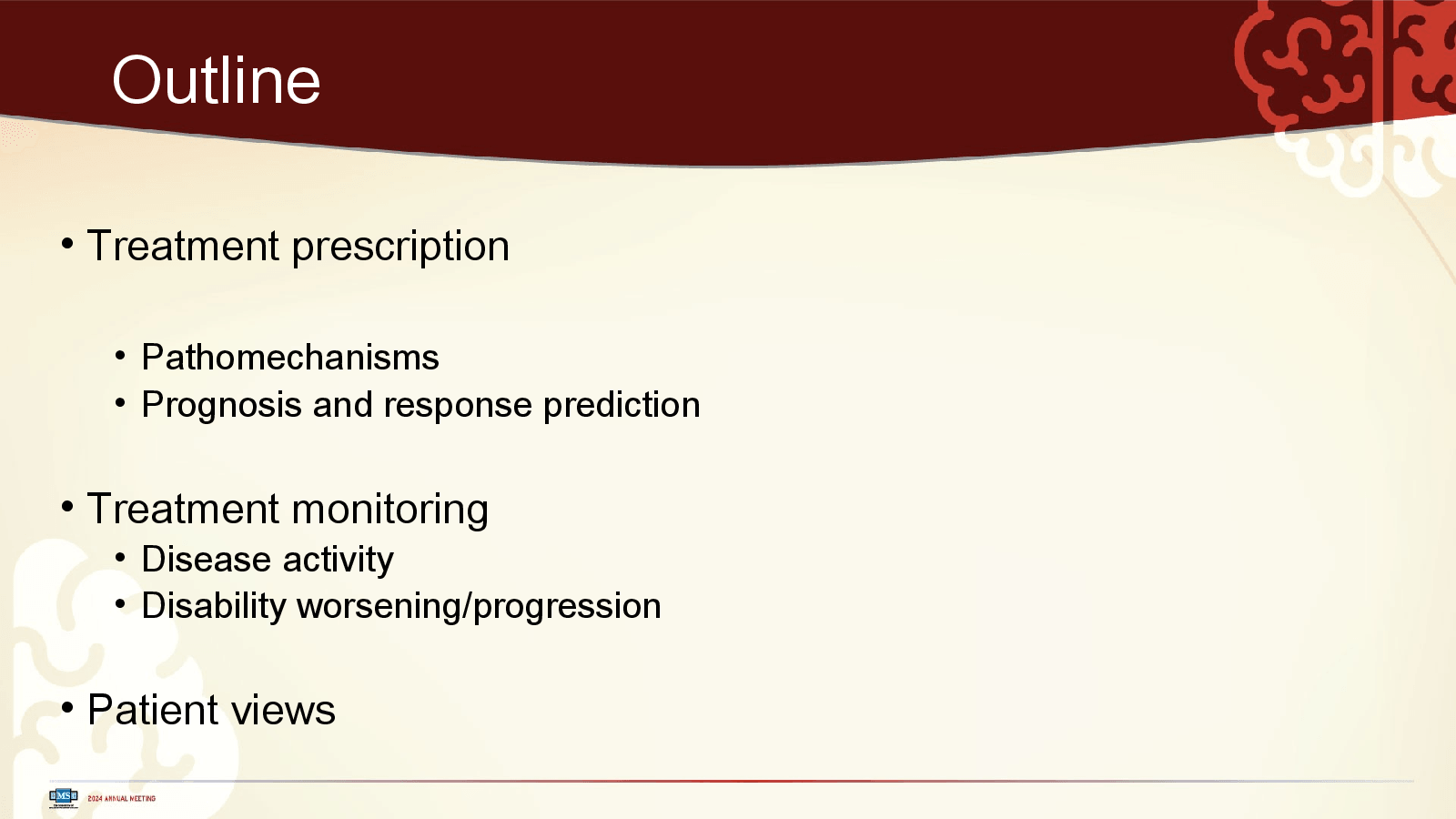
Deck outline
- Artificial intelligence, machine learning and deep learning in clinical imaging
- Linking disease mechanisms to treatment selection
- Prognosis and prediction of treatment response
- Monitoring new lesions, brain volume change and progression
- Analysis of heterogeneous, single-sequence clinical MRI
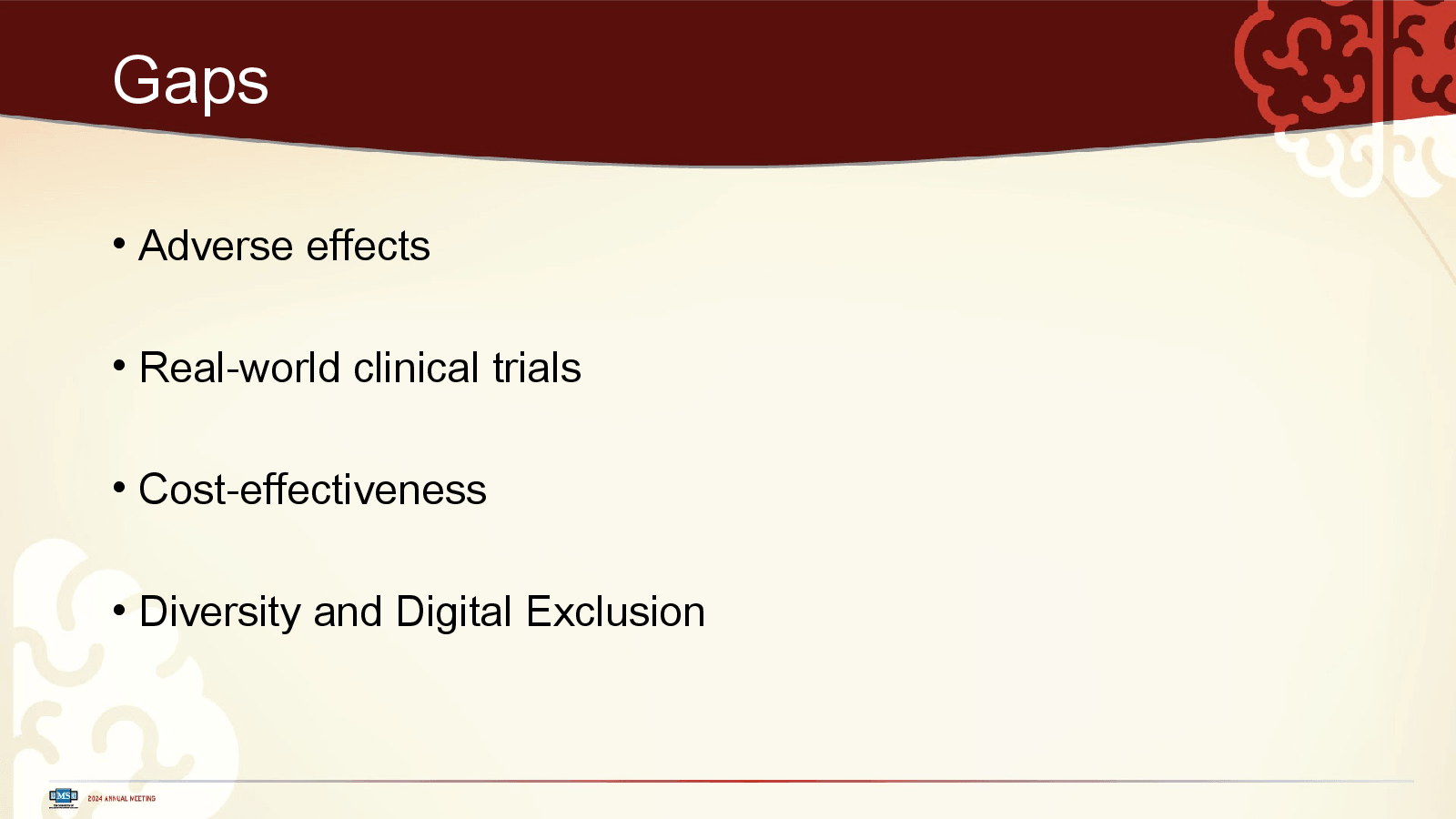
- Patient views, adverse effects, cost, diversity and digital exclusion
Take-away
AI neuroimaging may support several parts of a treatment decision, but no one measure captures the full problem. Clinical usefulness also depends on patient priorities, safety, cost and representative evidence.
Original deck
Slide by slide
Read the 29-slide presentation in order, or use the index to jump.
Slide 01
Impacts of AI-Enabled Neuroimaging on MS Treatment Plans

Slide 02
Disclosures
Slide 03
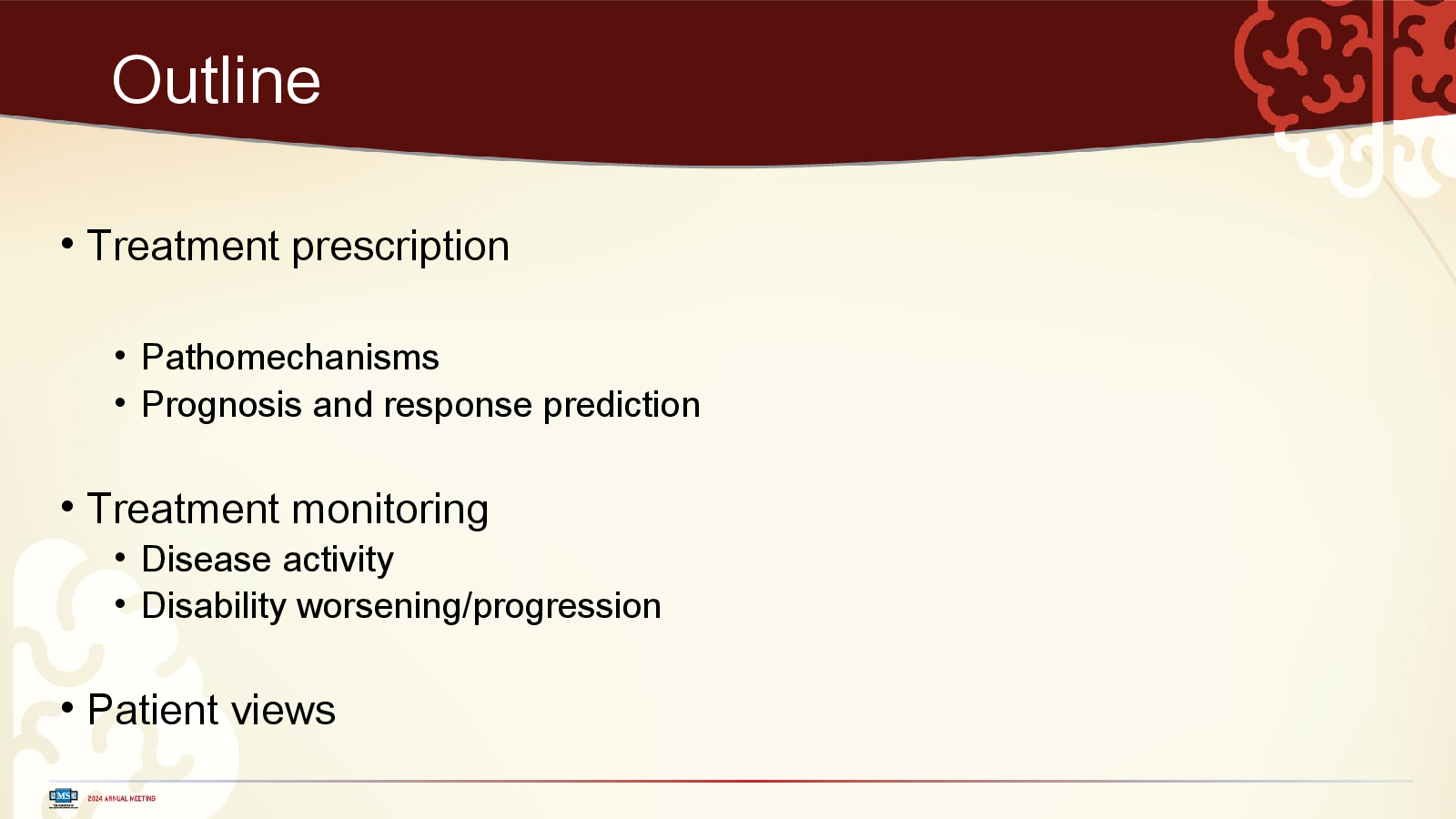
Outline
Slide 04
Definitions

Slide 05
Treatment selection: pathomechanisms

Slide 06
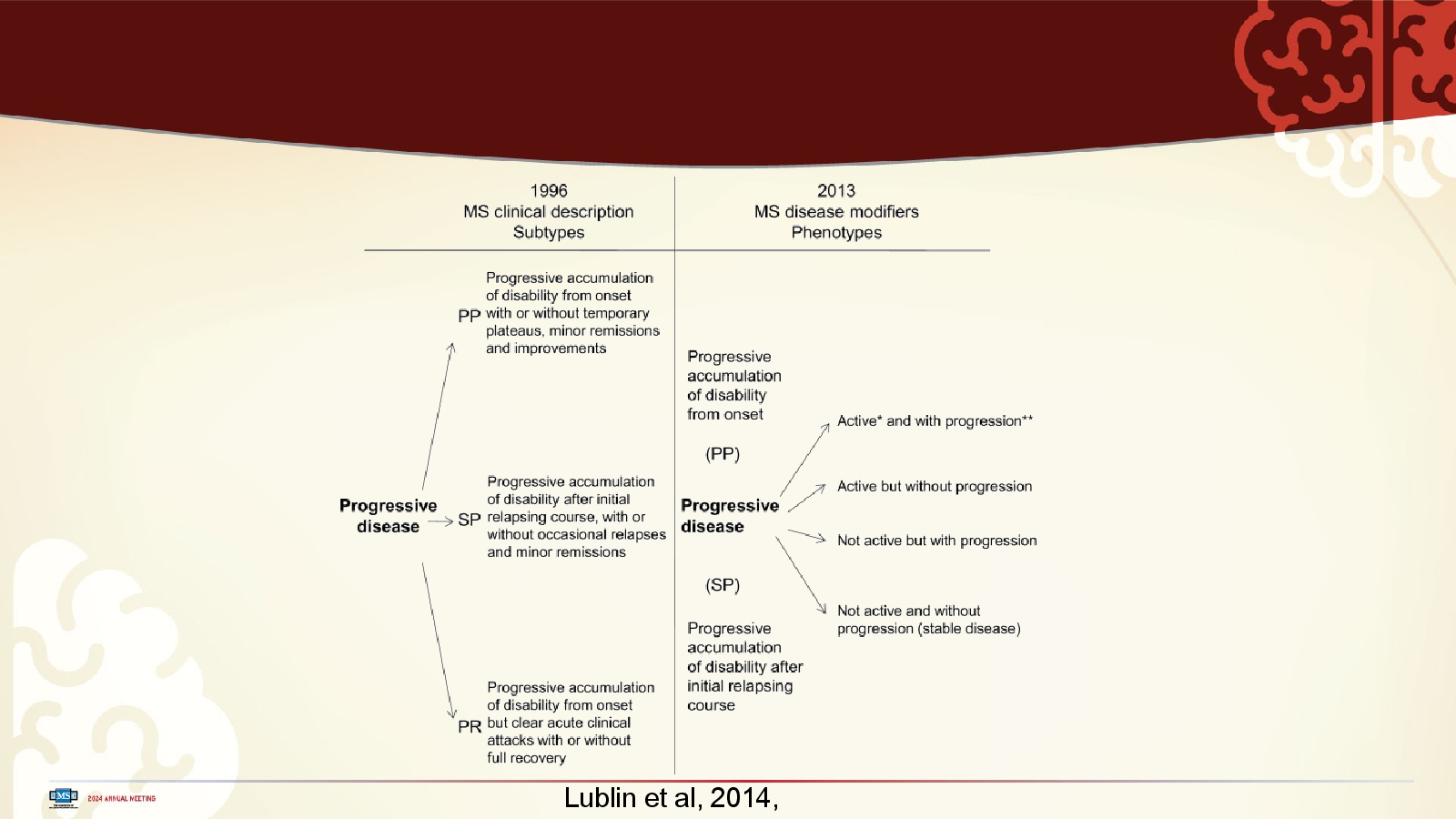
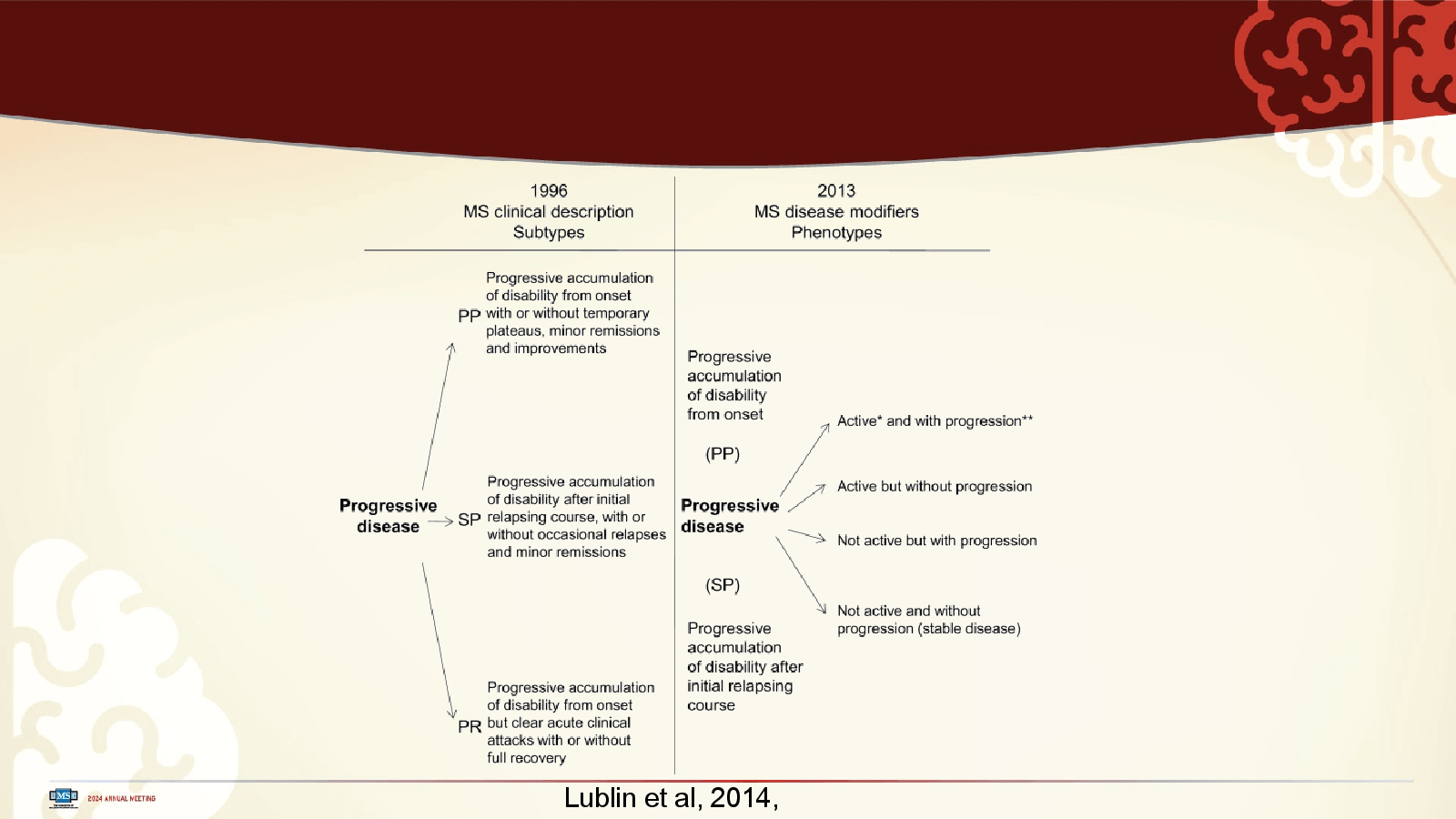
Lublin et al, 2014, Neurology
Slide 07
Kuhlmann et al, The Lancet Neurology, 2022

Slide 08
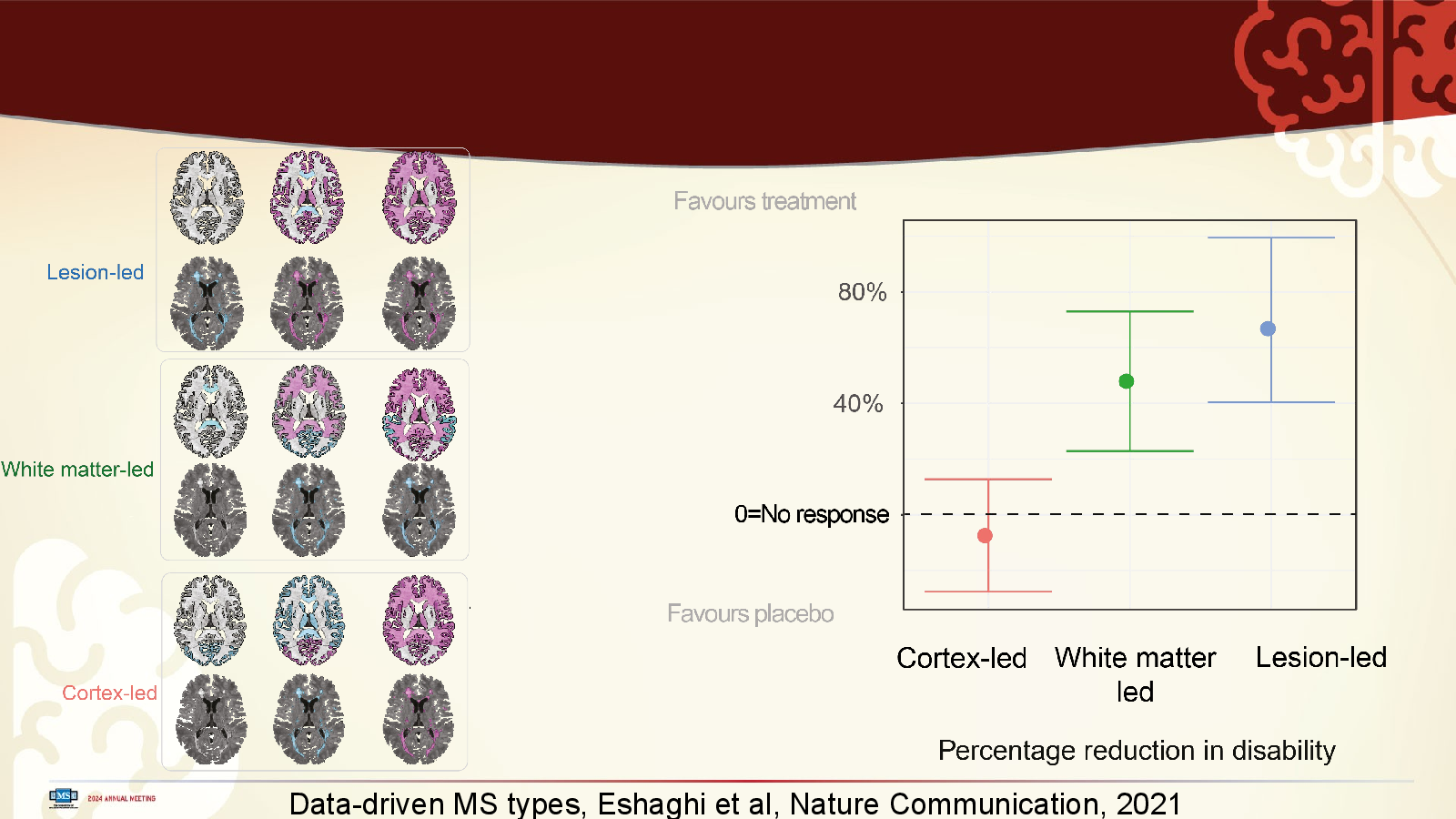
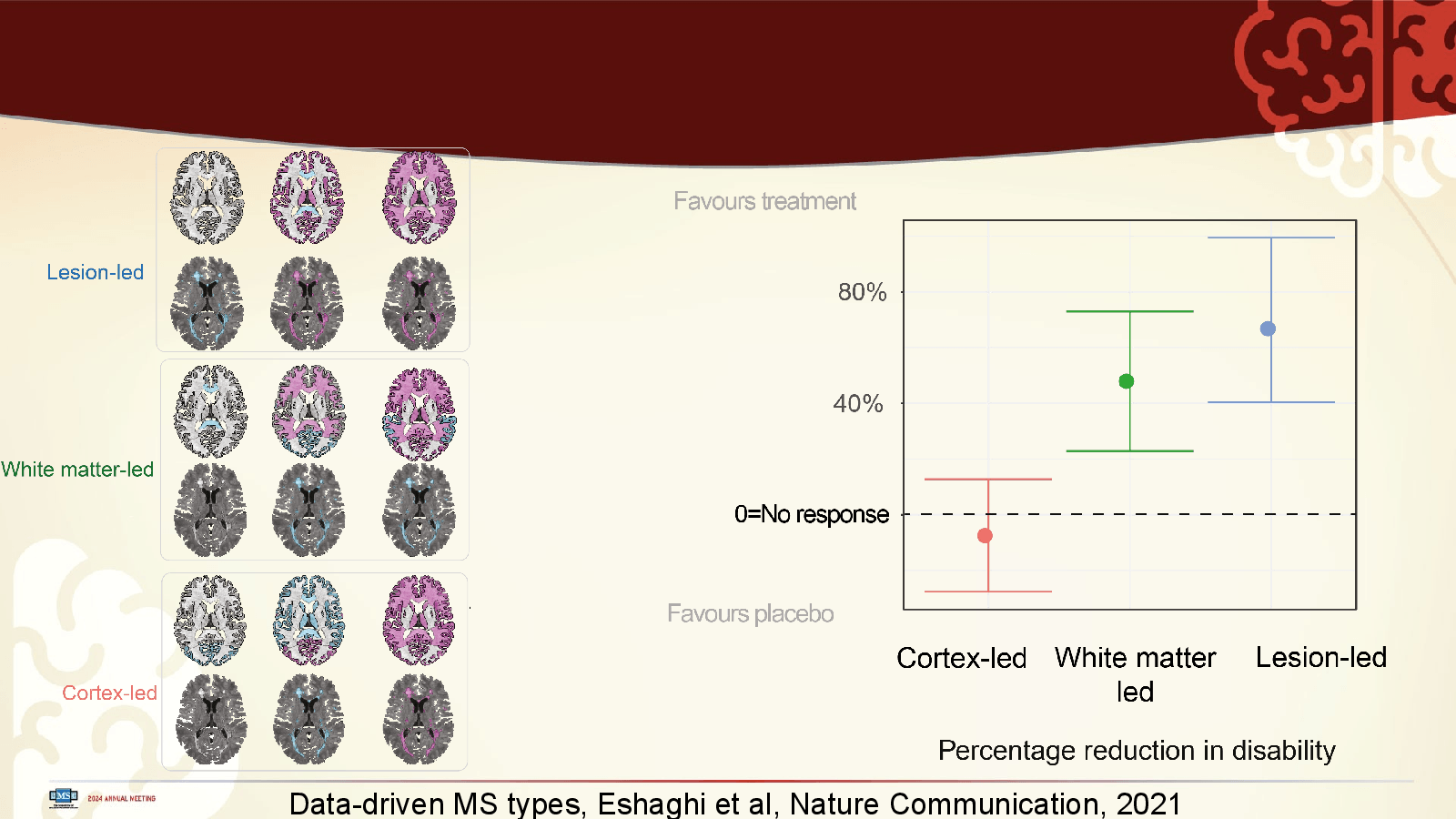
Data-driven MS types, Eshaghi et al, Nature Communication, 2021
Slide 09
Treatment selection: prognosis
Slide 10
Zhao et al, Nature Digital Medicine, 2020

Slide 11
Gros et al., Neuroimage, 2019

Slide 12
Treatment selection: response prediction

Slide 13
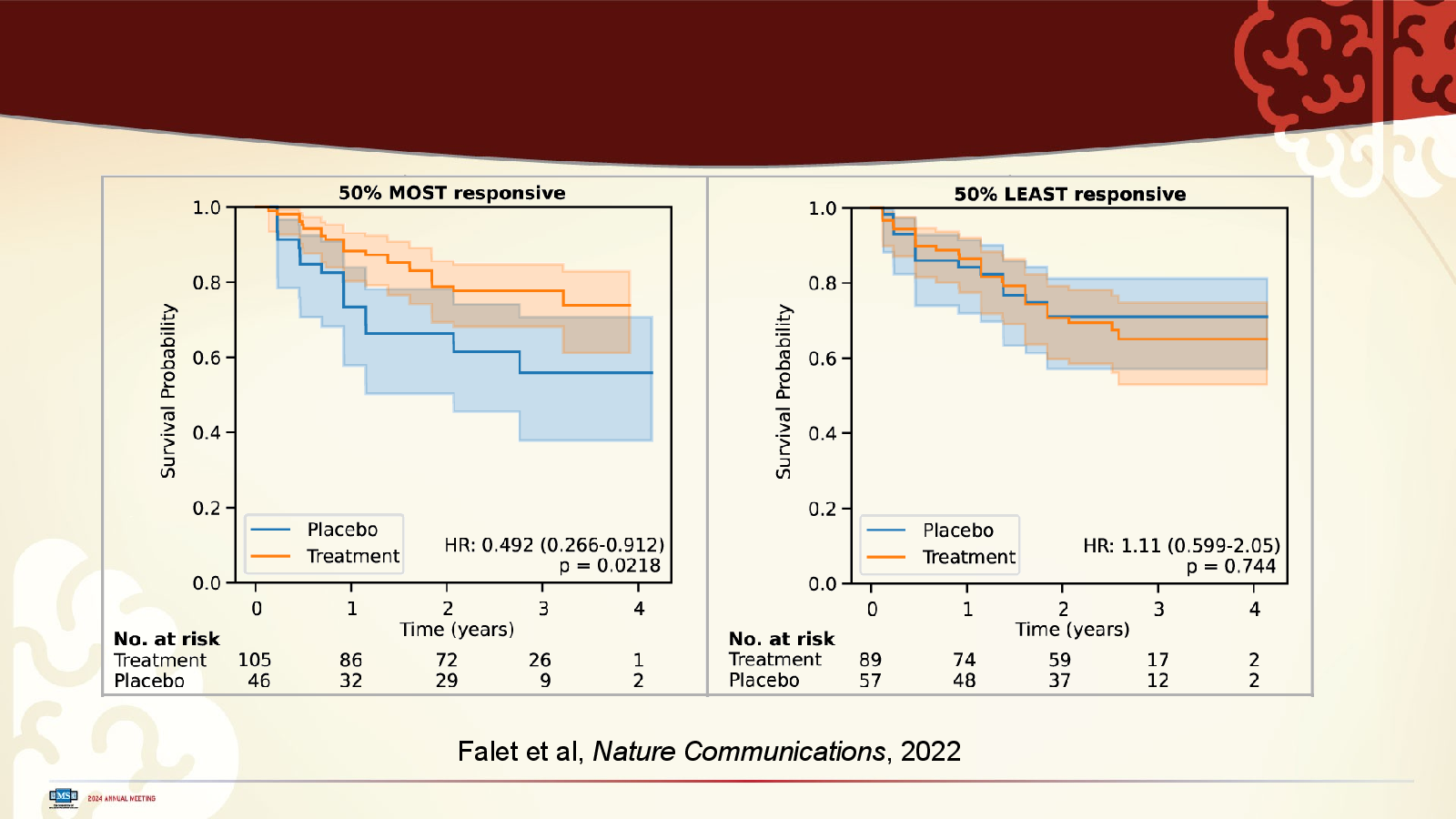
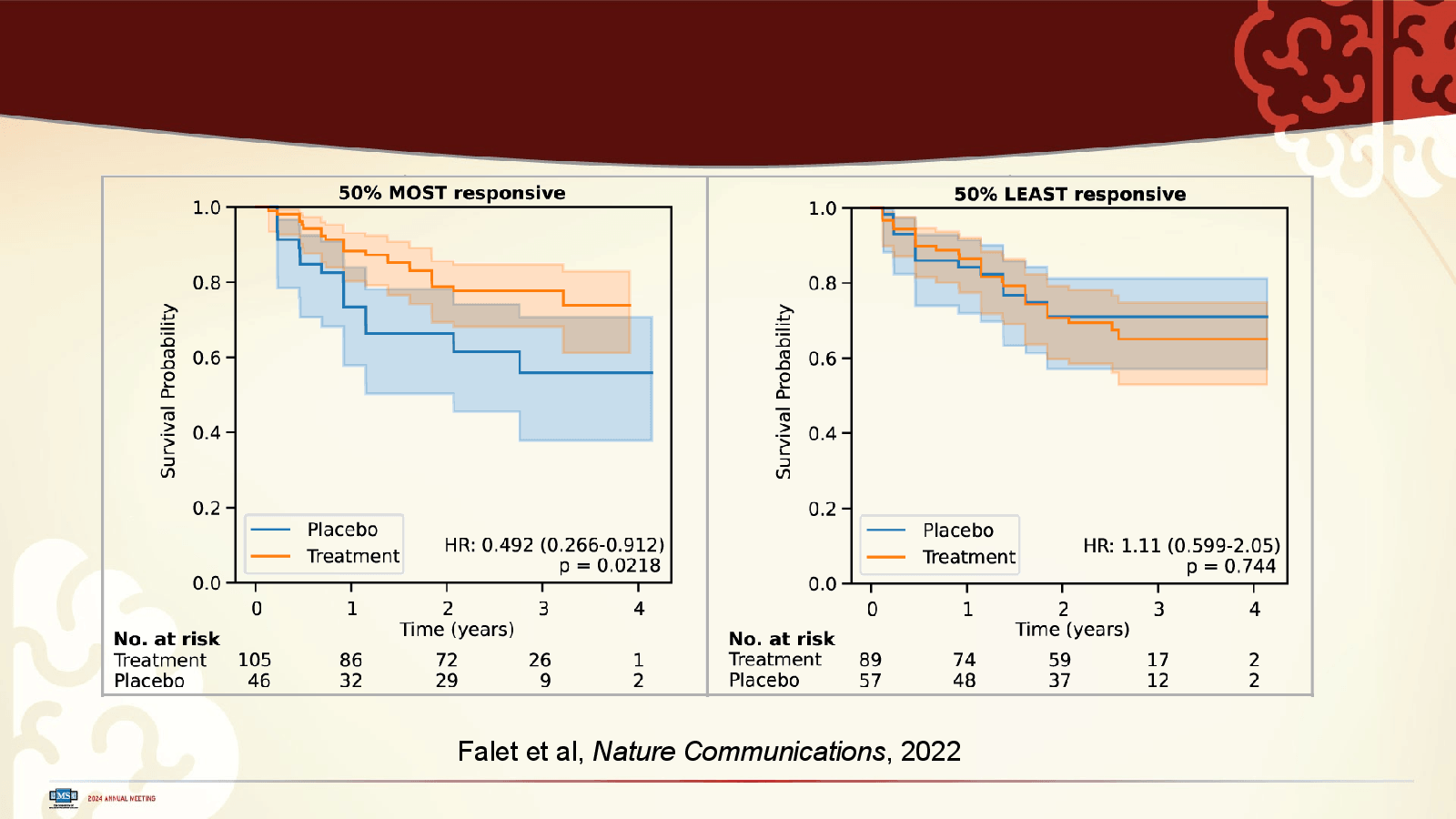
Falet et al, Nature Communications, 2022
Slide 14
Treatment Monitoring: disease activity
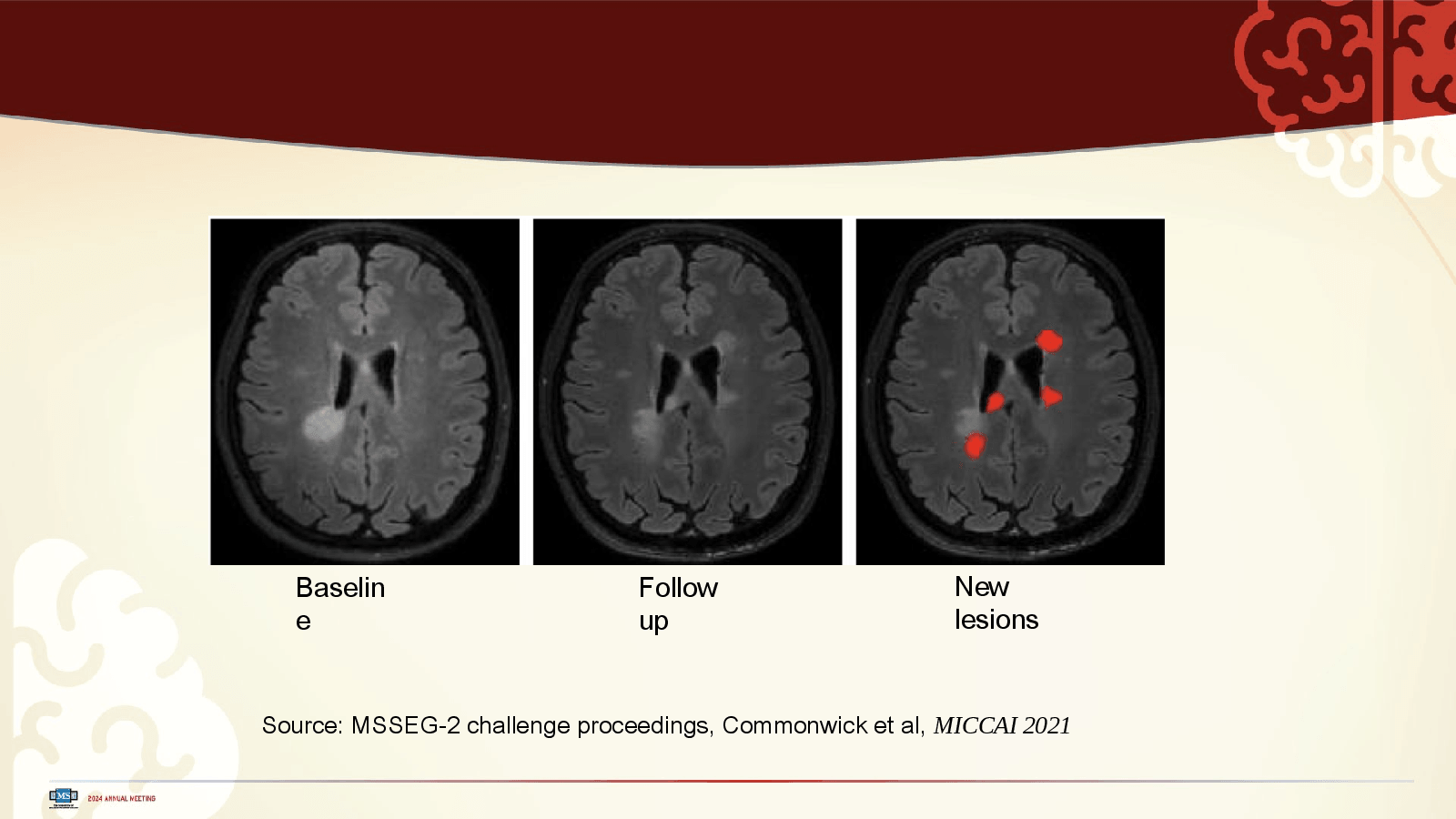
Slide 15
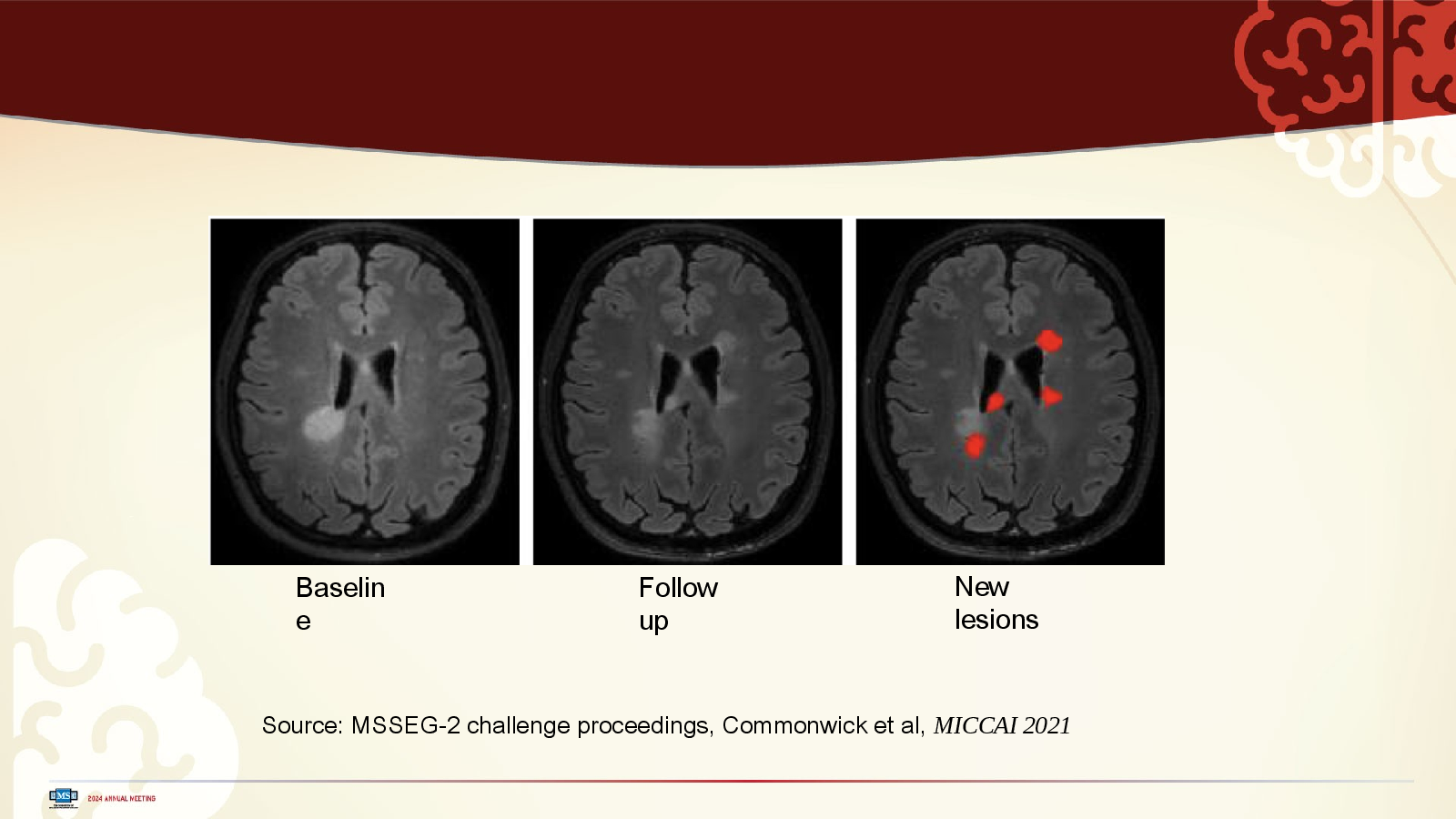
Source: MSSEG-2 challenge proceedings, Commonwick et al, MICCAI 2021
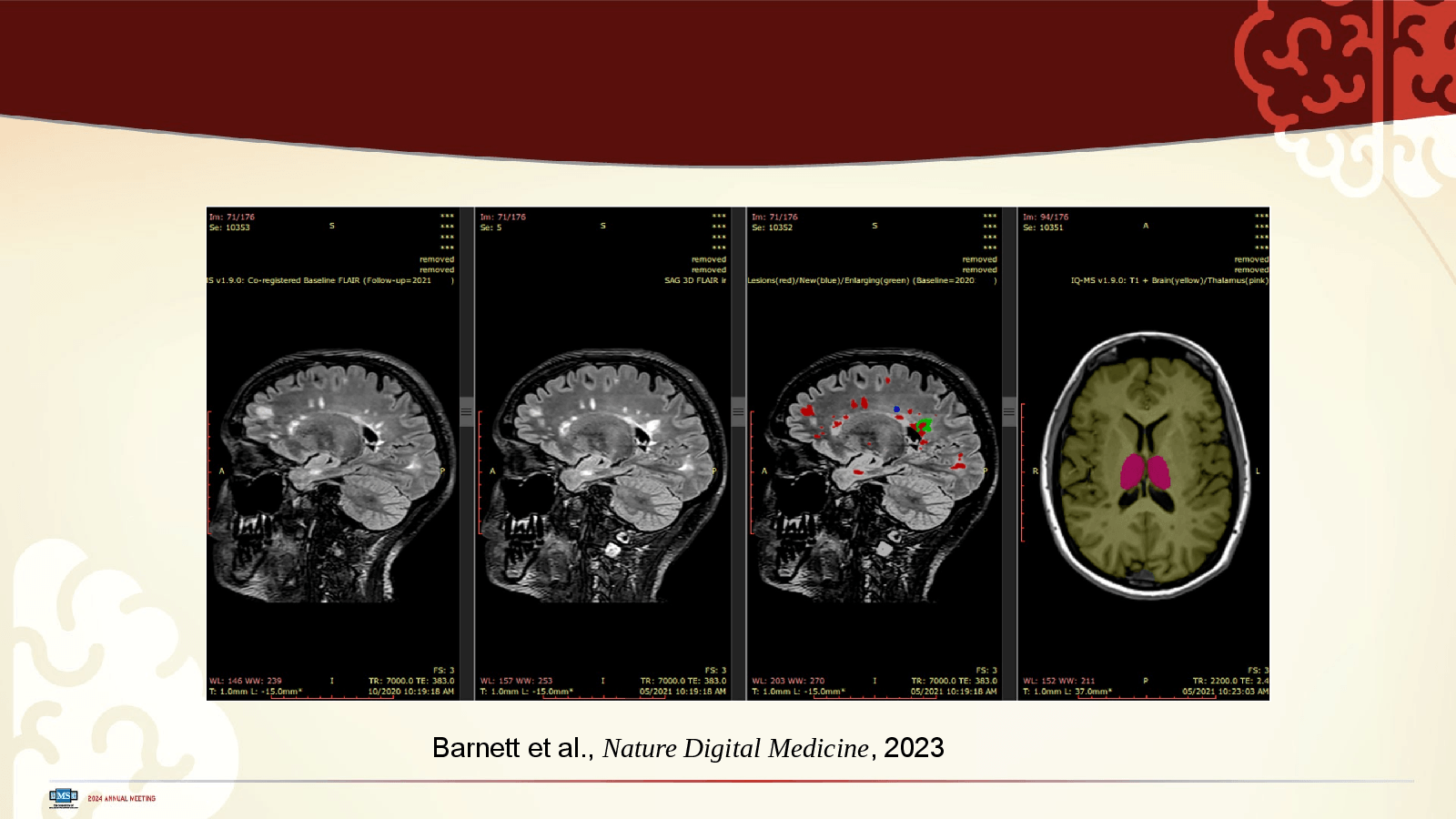
Slide 16
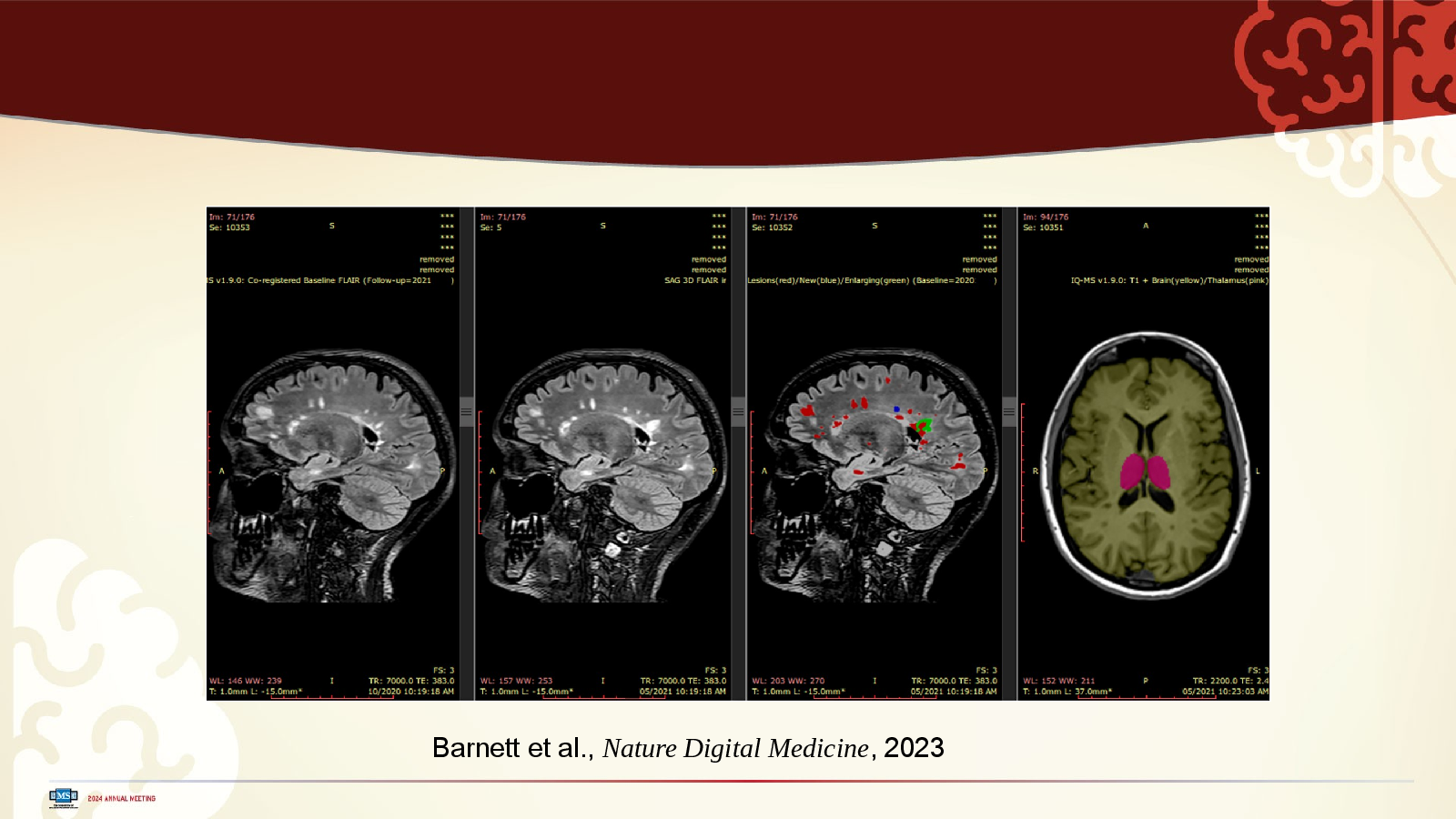
Barnett et al., Nature Digital Medicine, 2023
Slide 17
Treatment Monitoring: progression independent of relapse and disease activity
Slide 18
Cagol et al, JAMA Neurology, 2022
Slide 19
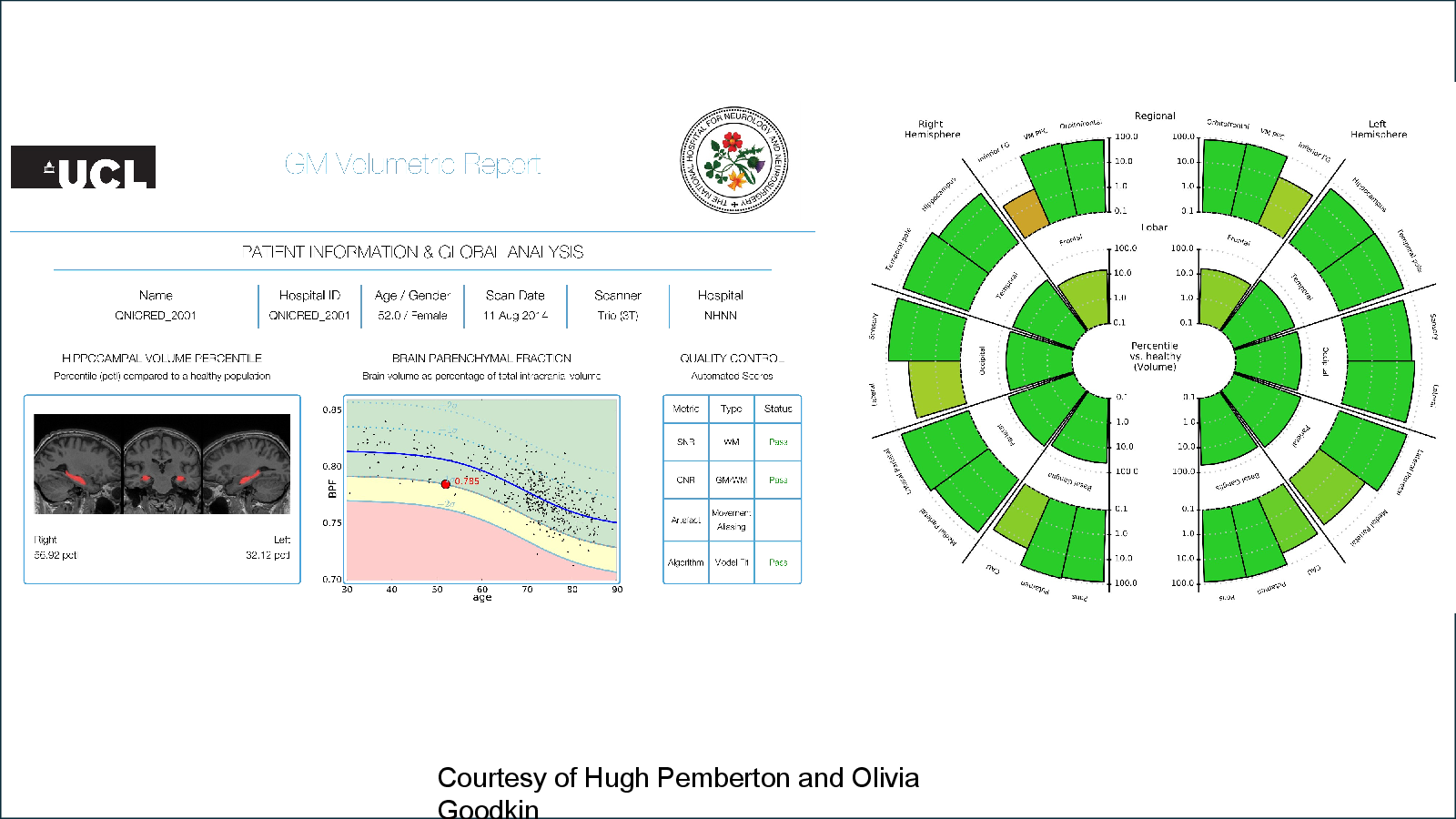
Percentage brain volume change
Slide 20
Montalban et al, 2017

Slide 21
Kappos et al, Lancet, 2018

Slide 22
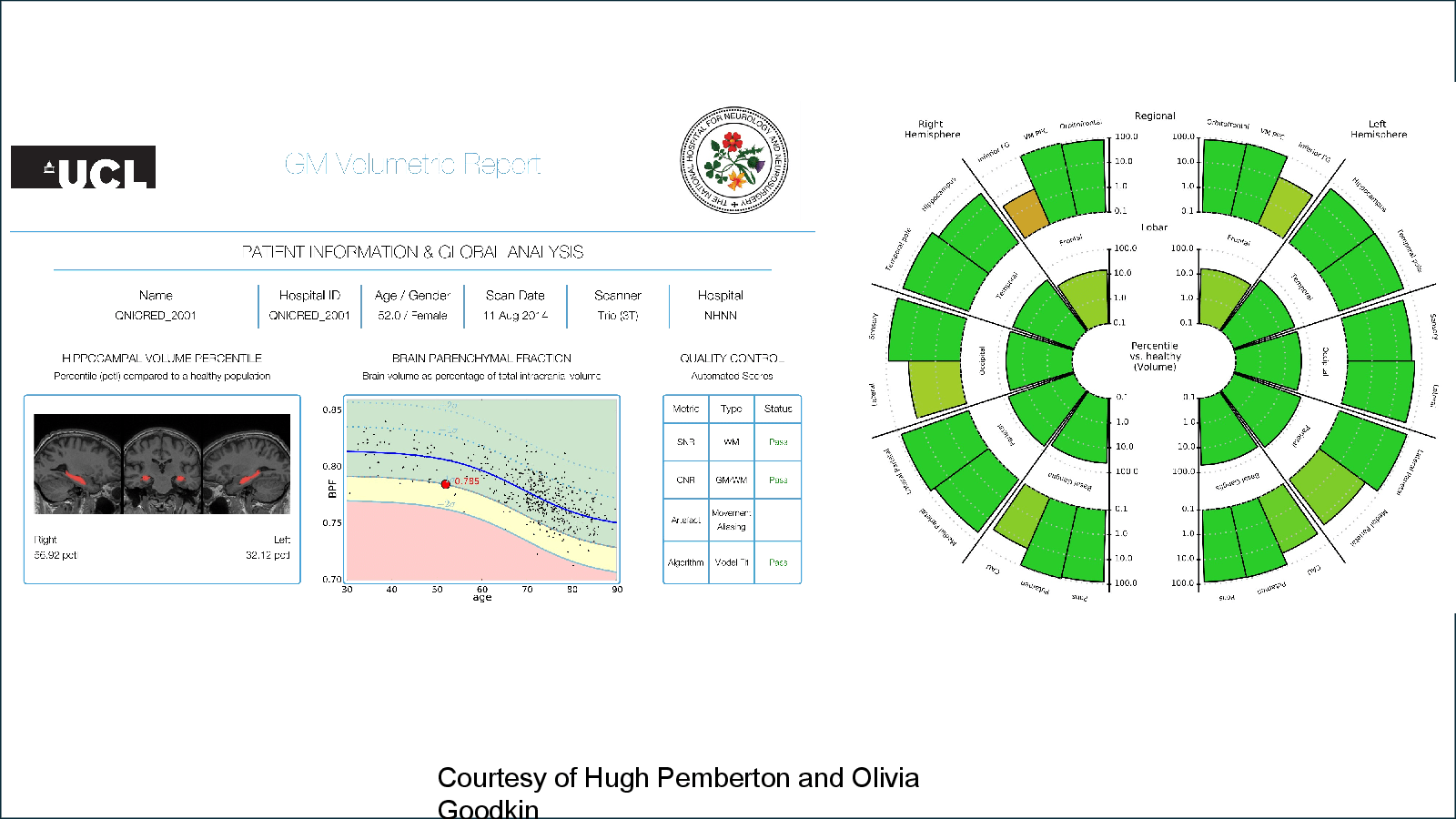
Clinical utility
Slide 23
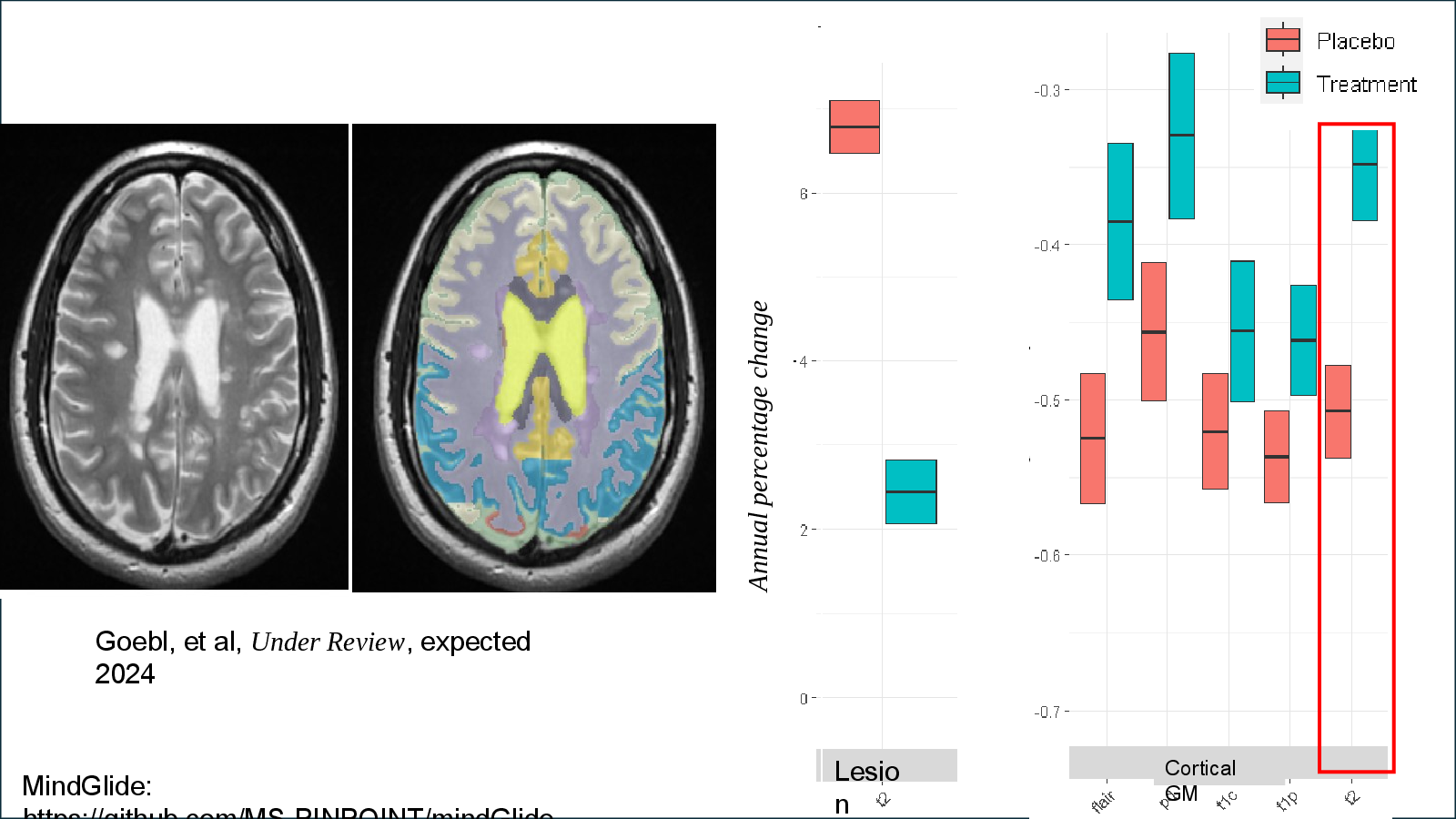
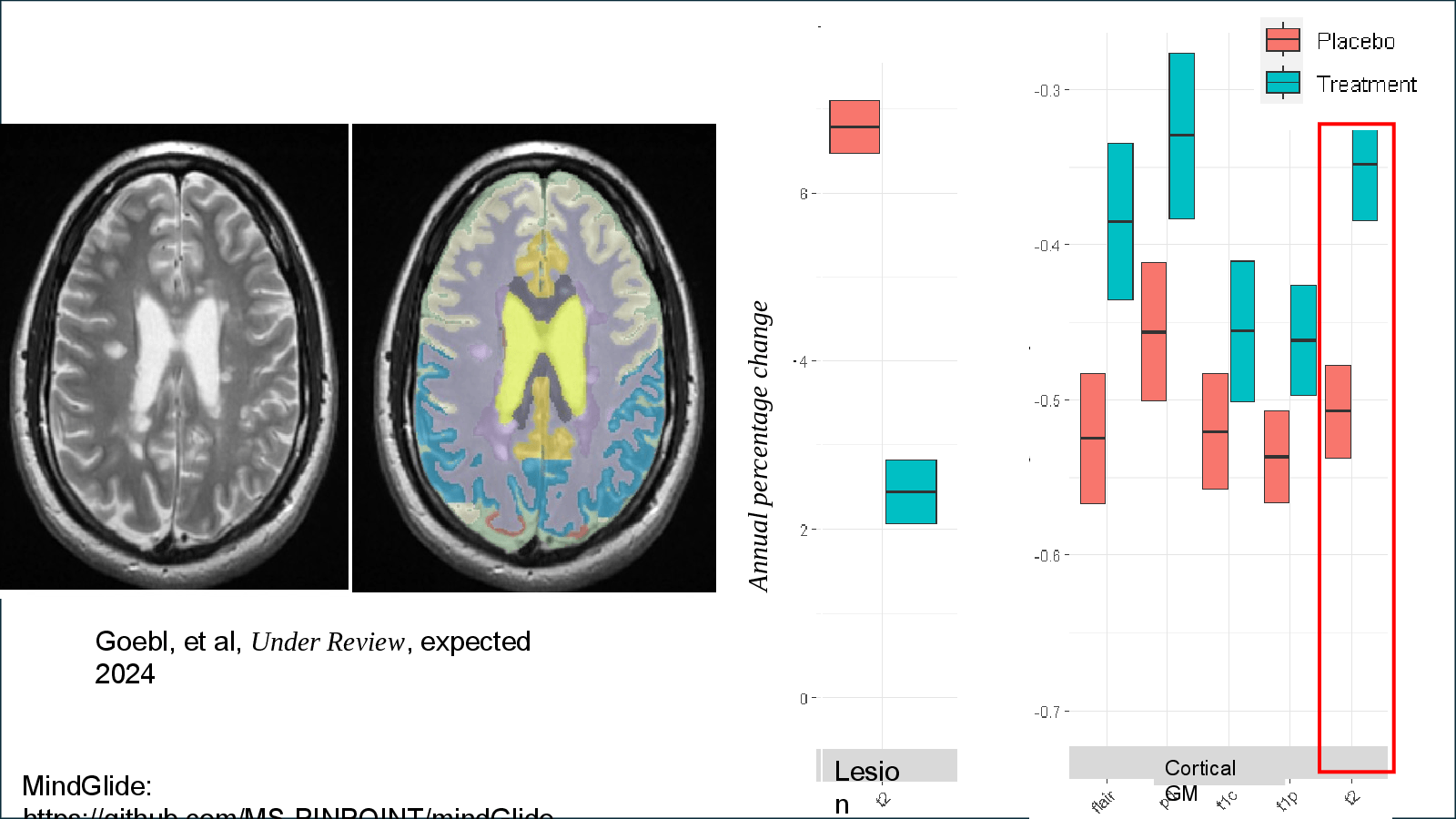
MindGlide: https://github.com/MS-PINPOINT/mindGlide
Slide 24
Zivadinov et al., JNNP, 2022

Slide 25
Treatment Planning: Patient Views

Slide 26
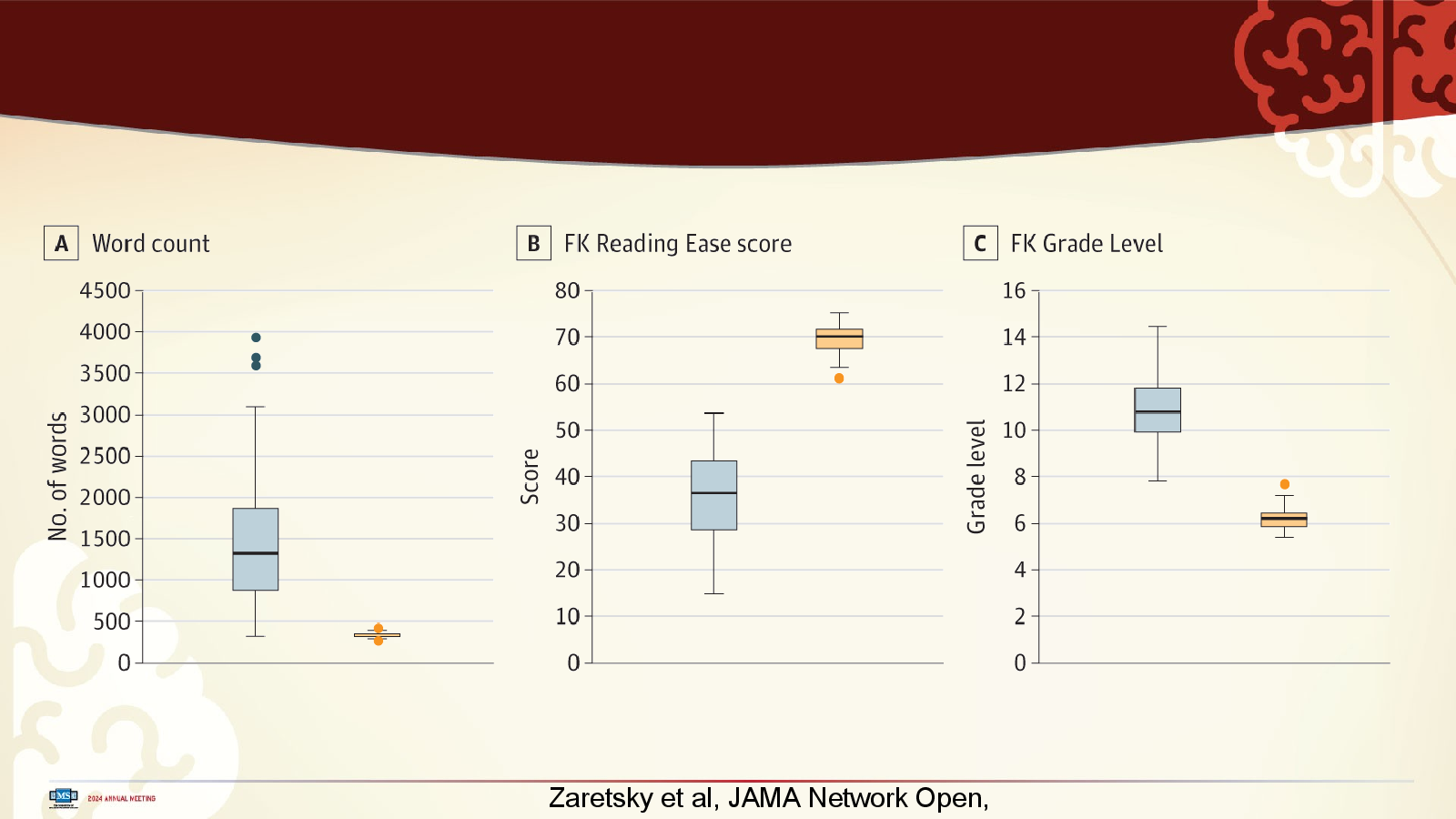
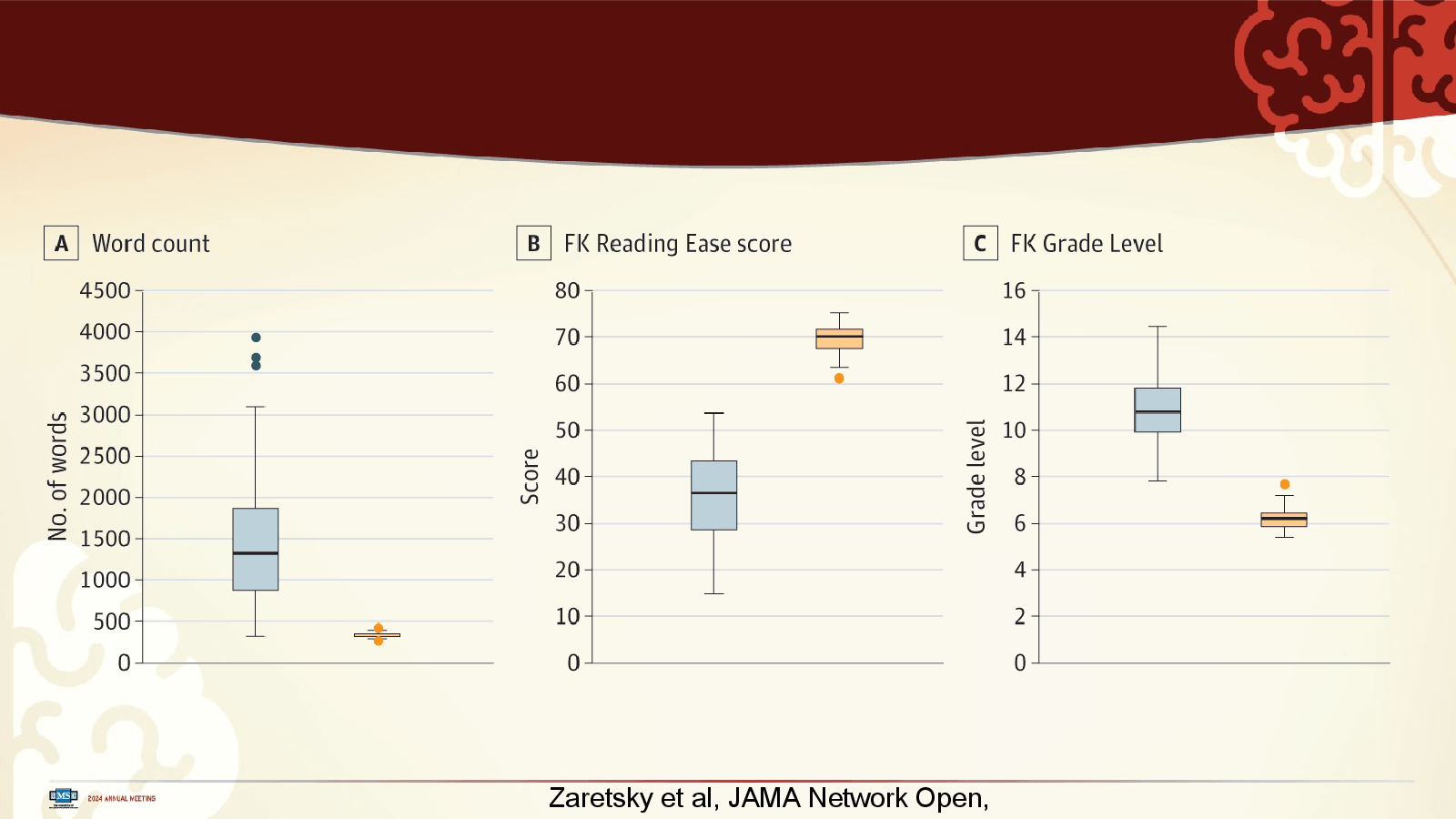
Zaretsky et al, JAMA Network Open, 2024
Slide 27
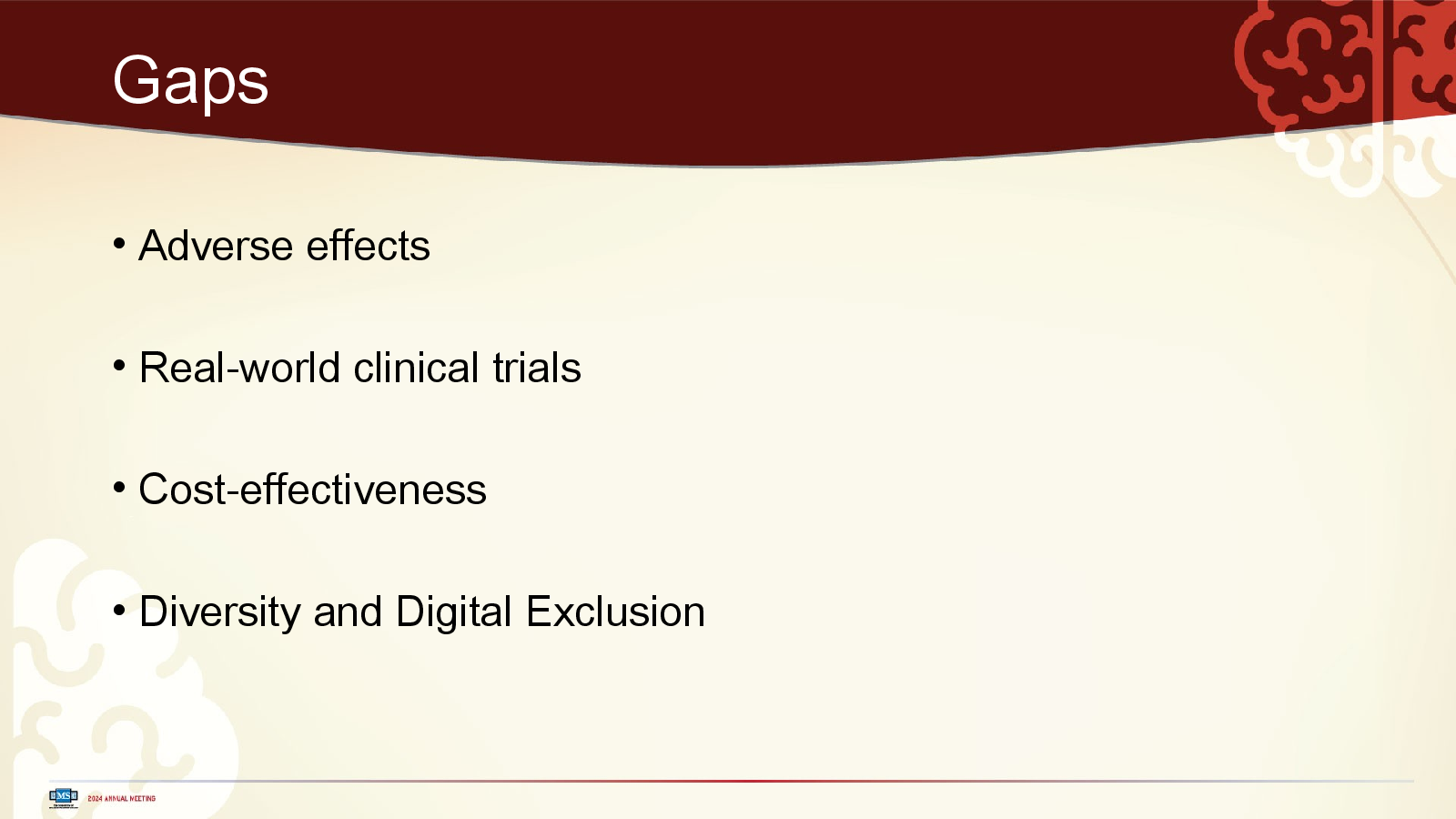
Gaps
Slide 28
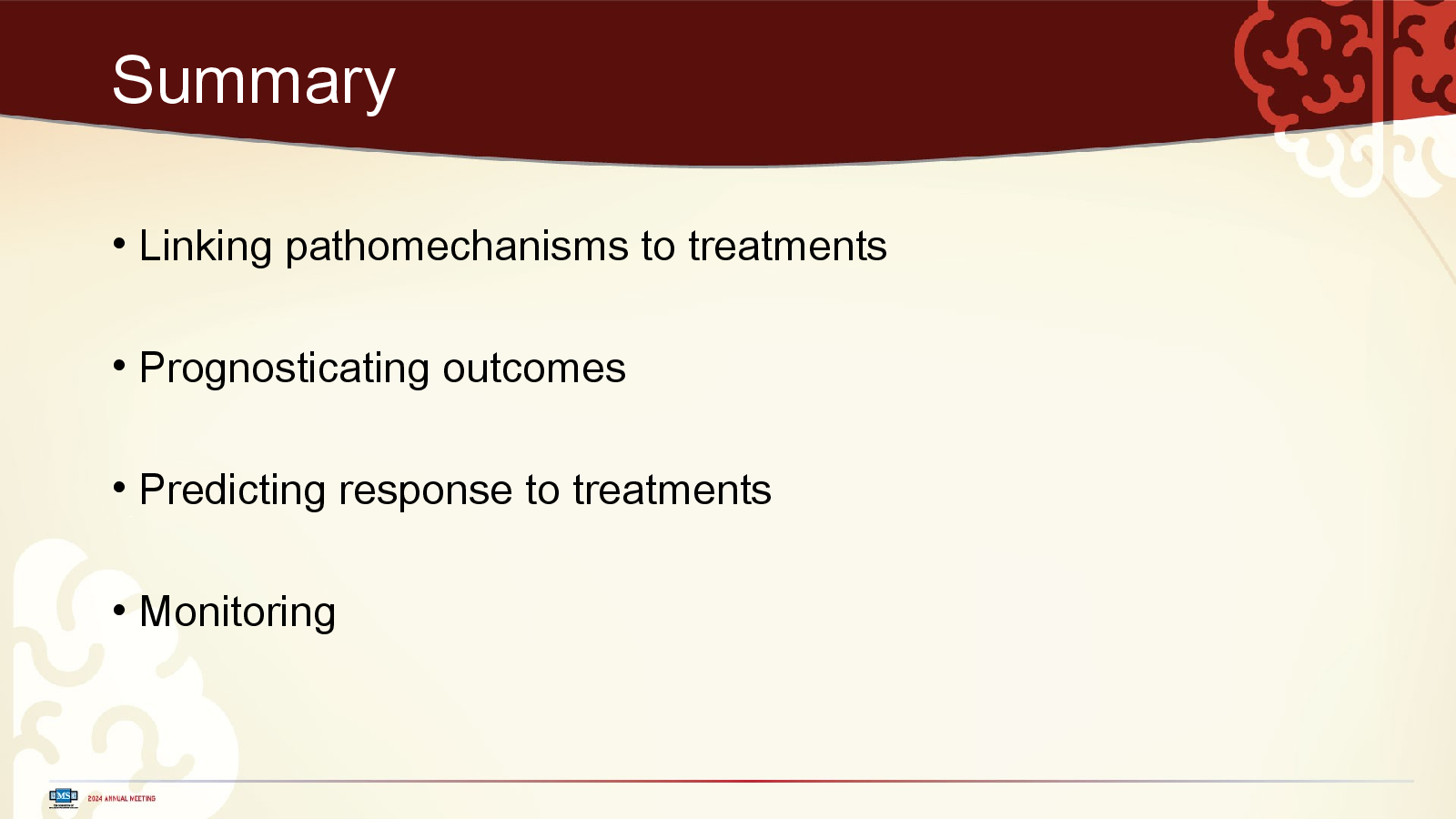
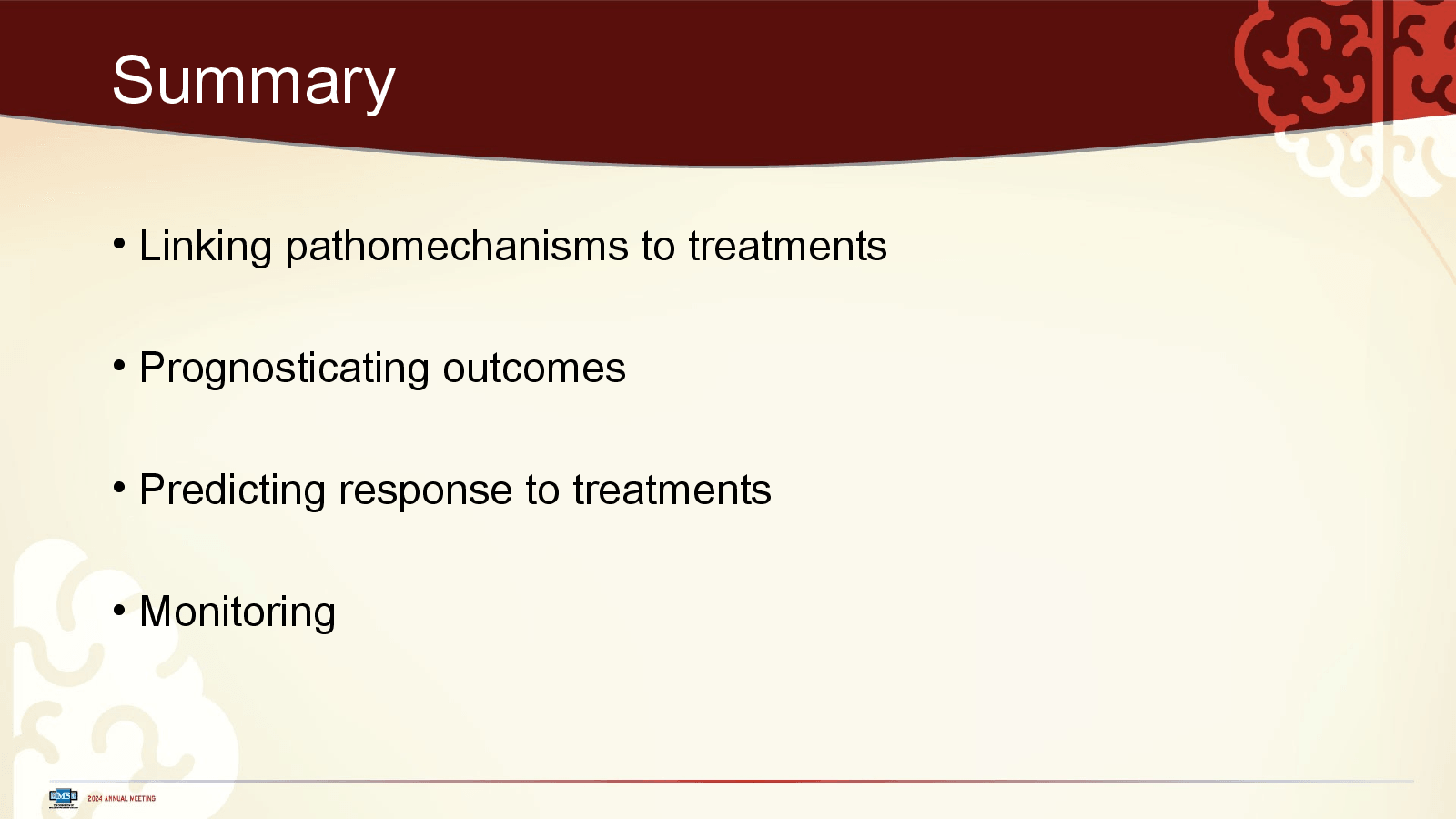
Summary
Slide 29
Slide 29