Debate ·
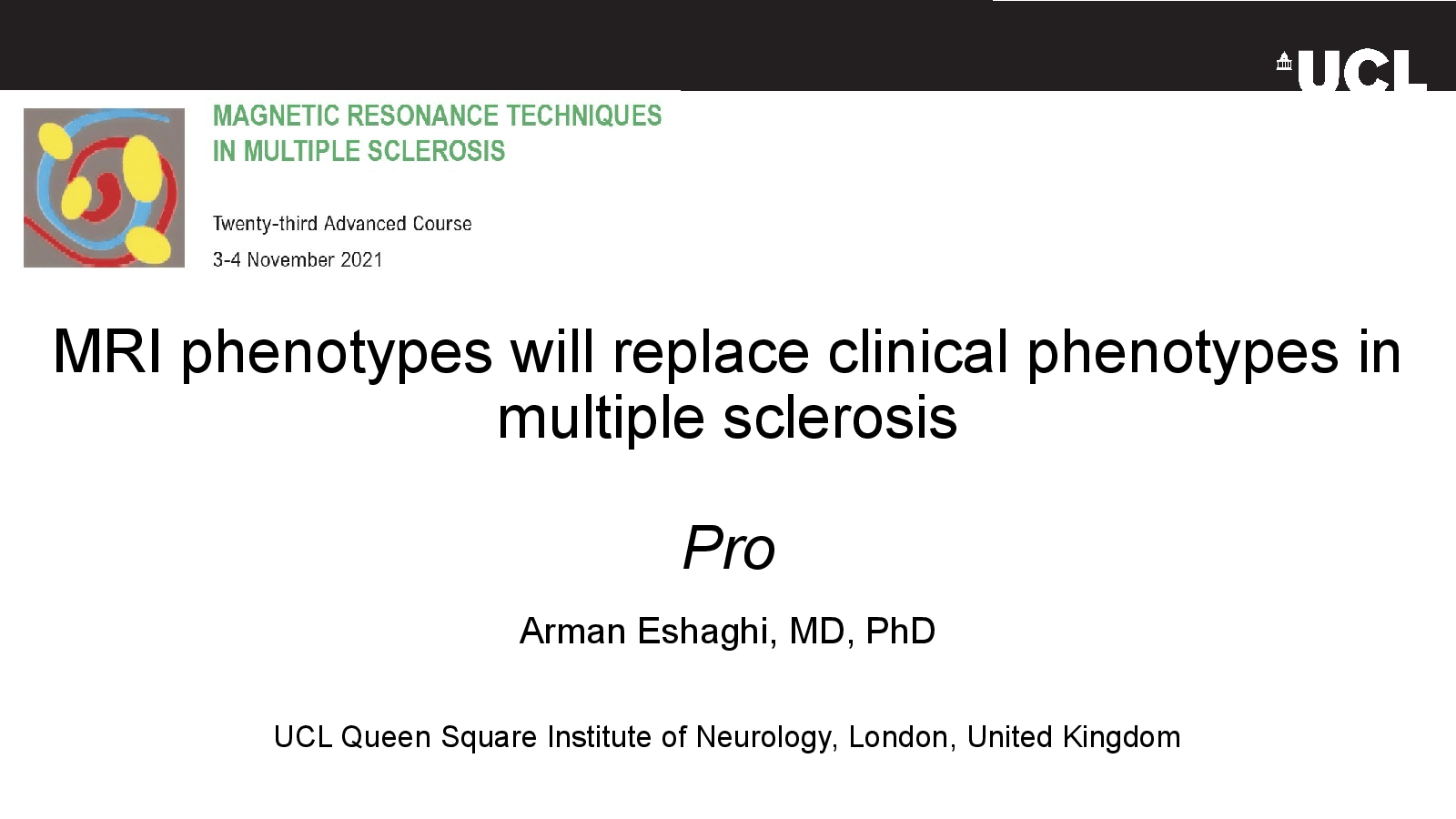
MRI phenotypes will replace clinical phenotypes in multiple sclerosis — Pro
A debate case for using MRI-derived patterns to describe multiple sclerosis beyond conventional clinical labels.
Advanced MRI Milan · Milan, Italy
- Delivered
- Event
- Advanced MRI Milan
- Place
- Milan, Italy
- Format
- Debate
- Published deck
- 19 slides
From the slides
Deck notes
This debate contribution made the case for MRI-derived phenotypes in multiple sclerosis. It set conventional clinical labels against spatial patterns of atrophy and data-driven disease subtypes.
The question
Can MRI reveal clinically useful disease structure that is hidden by relapse- and progression-based labels?
Deck outline
- Heterogeneity within multiple sclerosis
- The limits of conventional disease classification
- Regional patterns of grey-matter atrophy
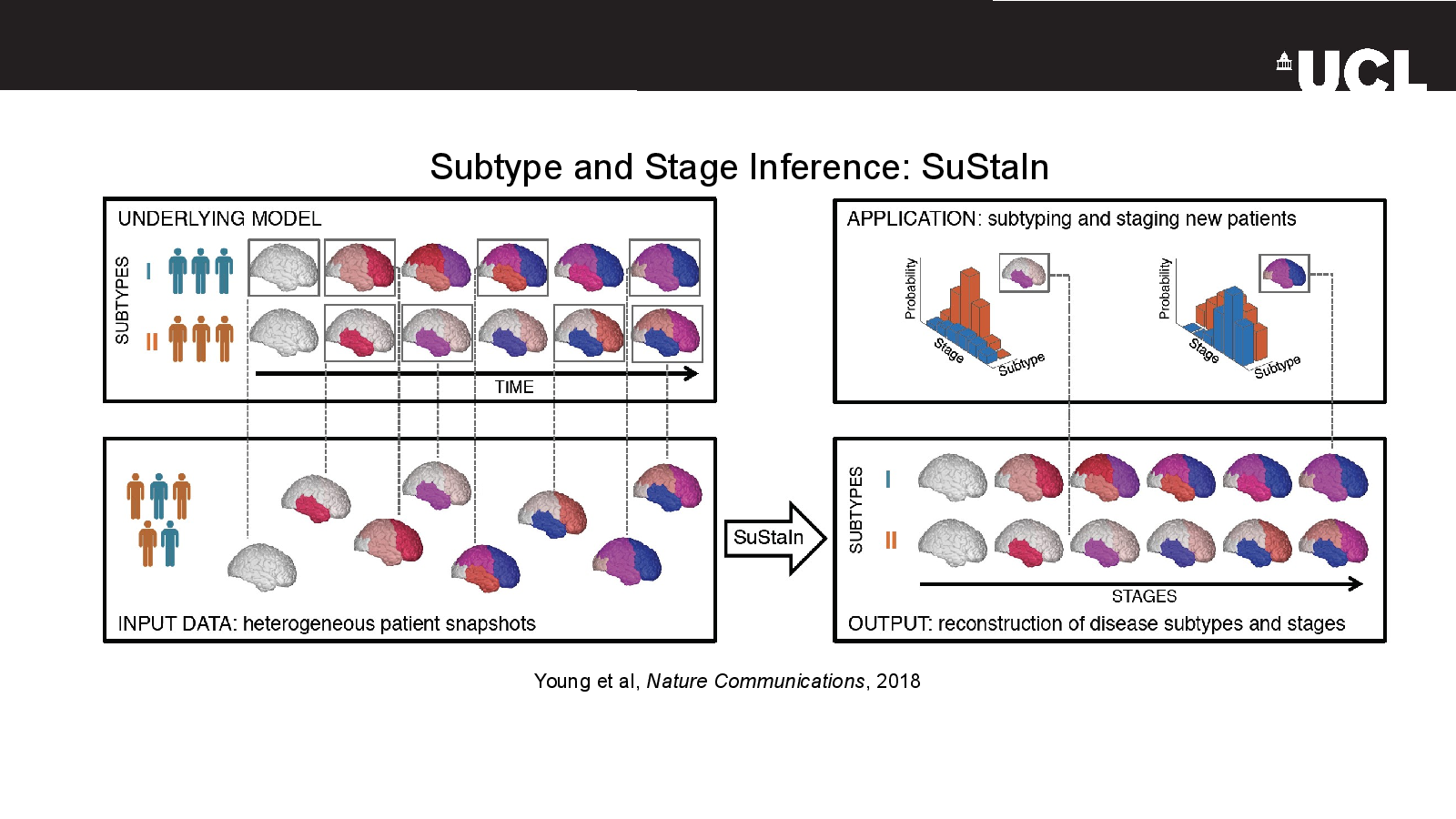
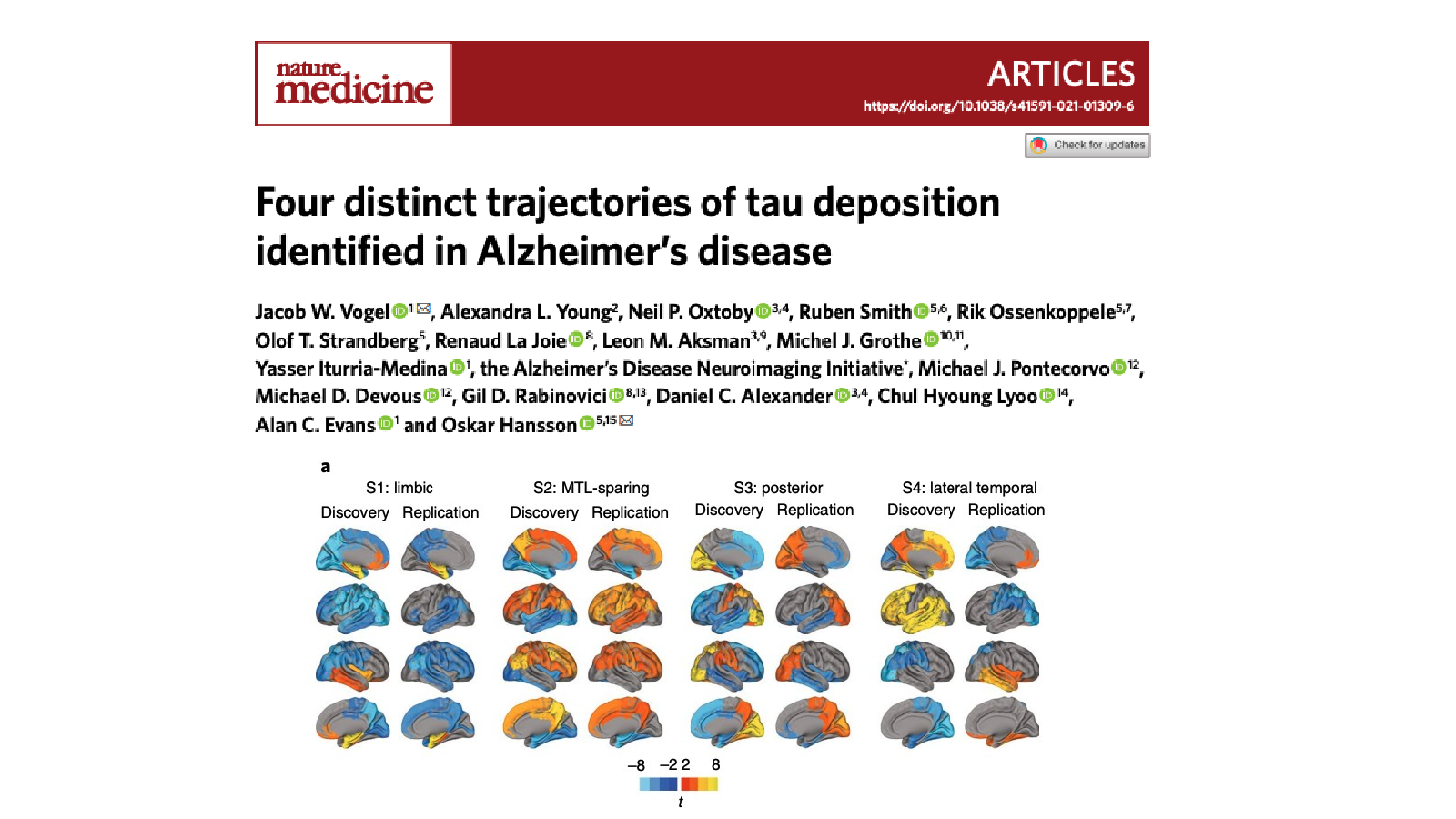
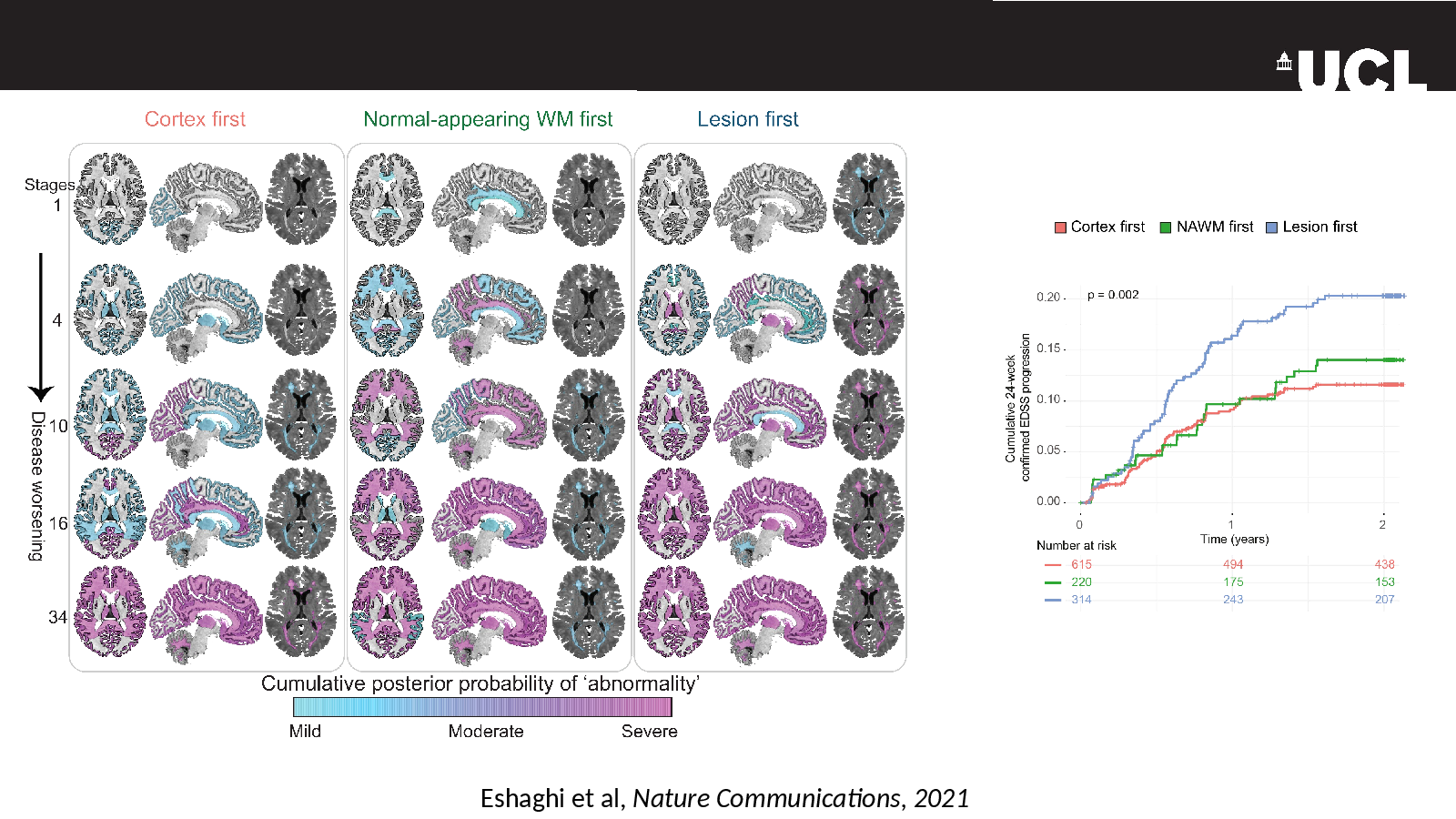
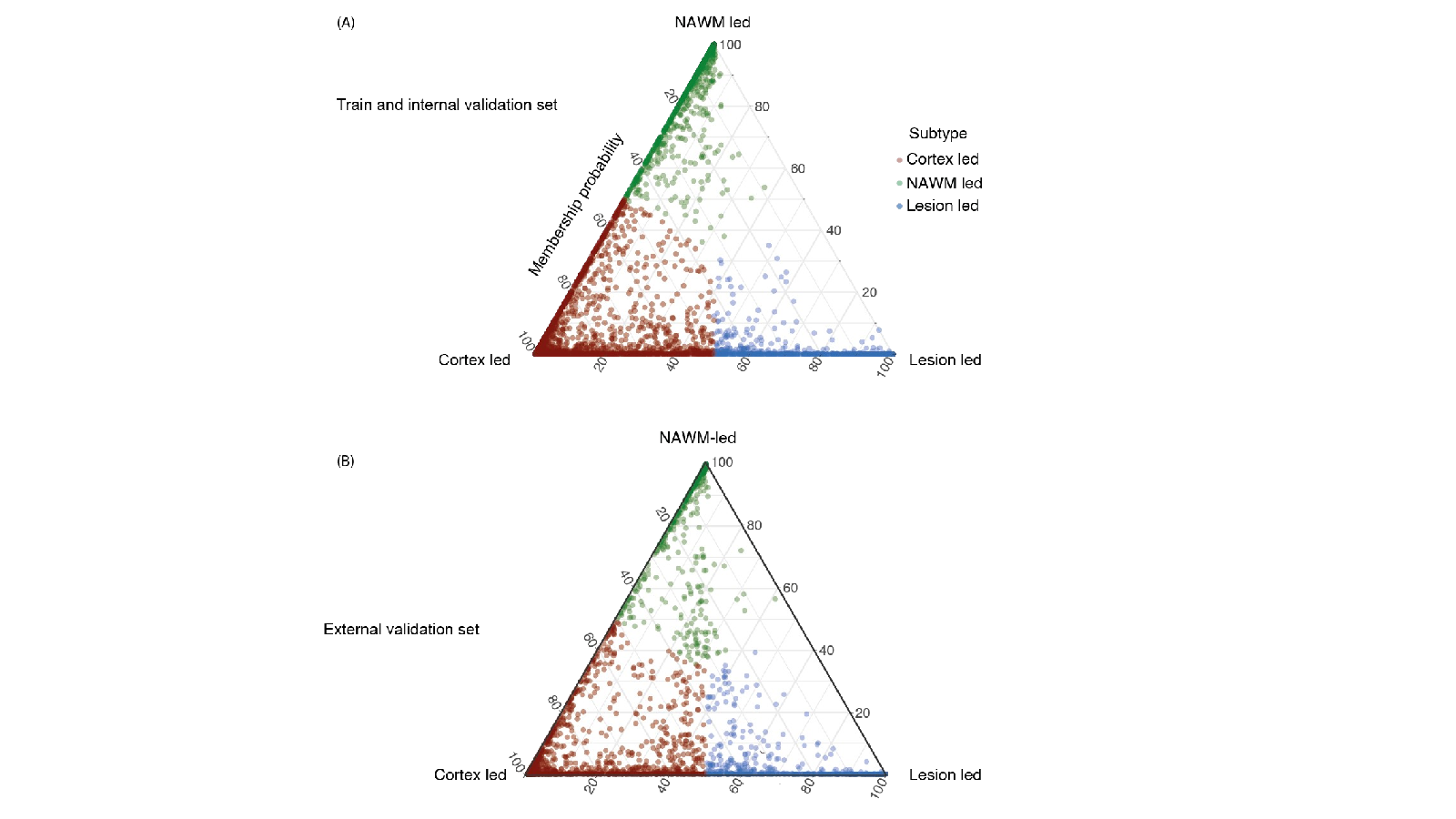
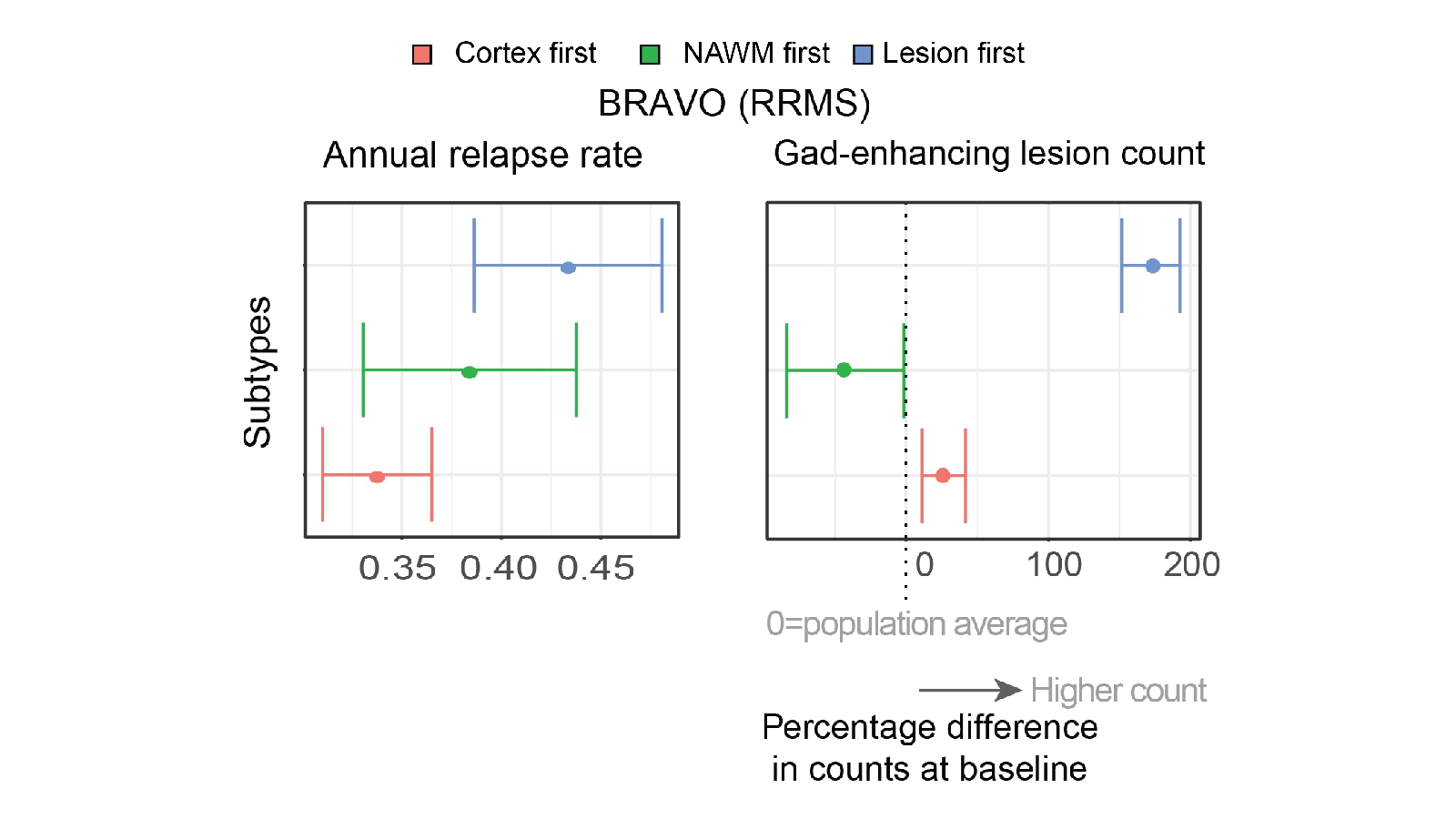
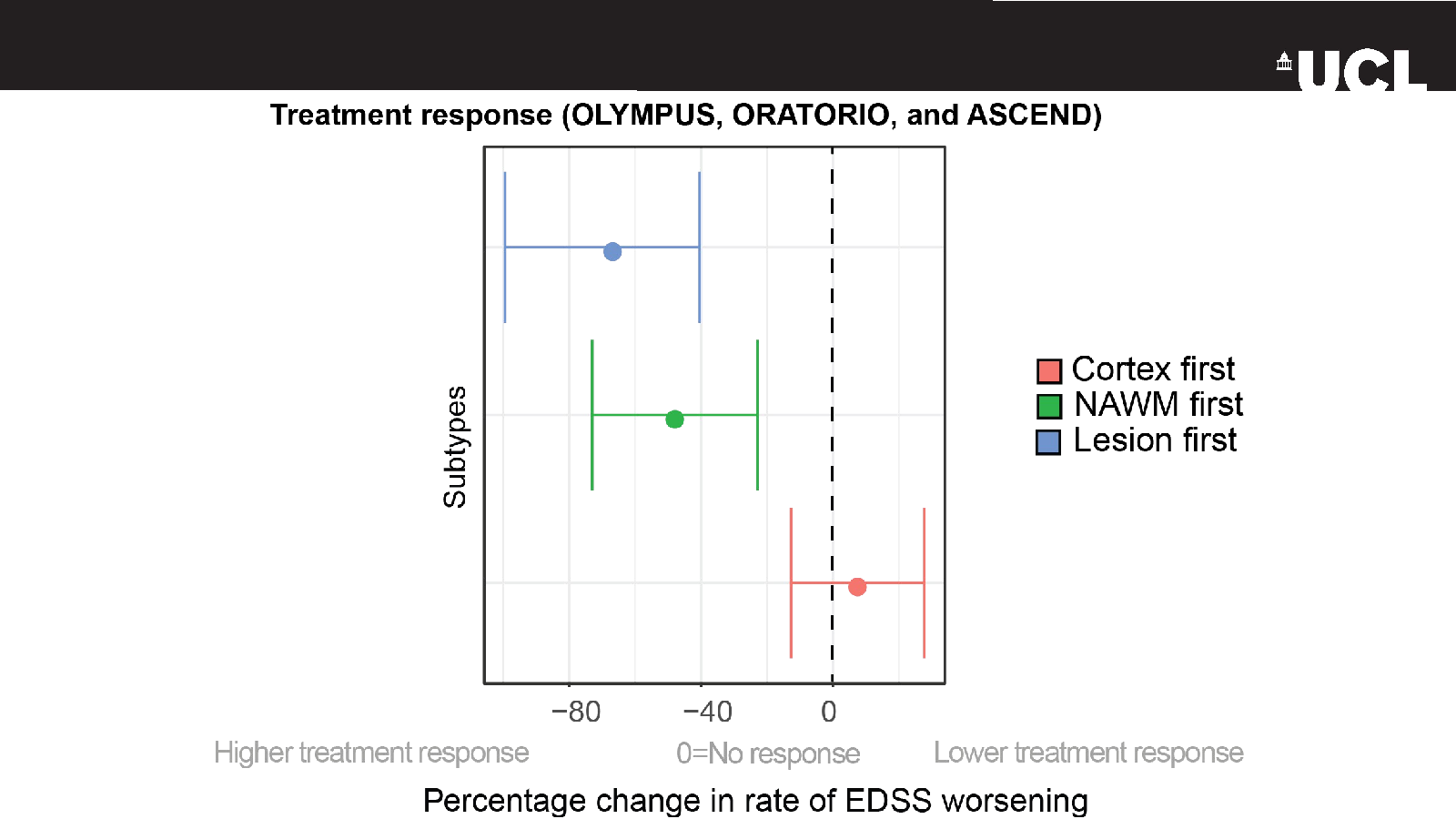
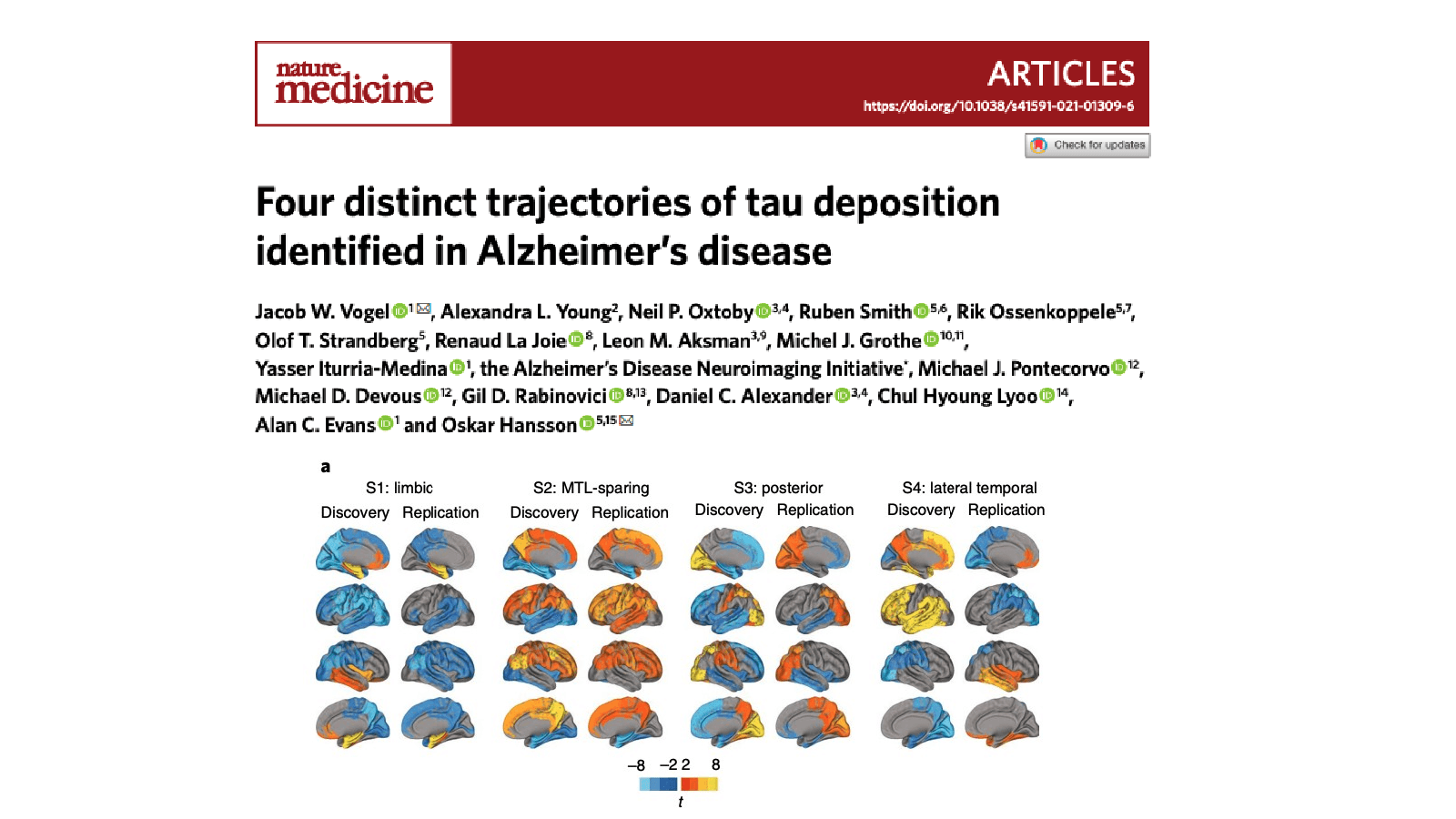
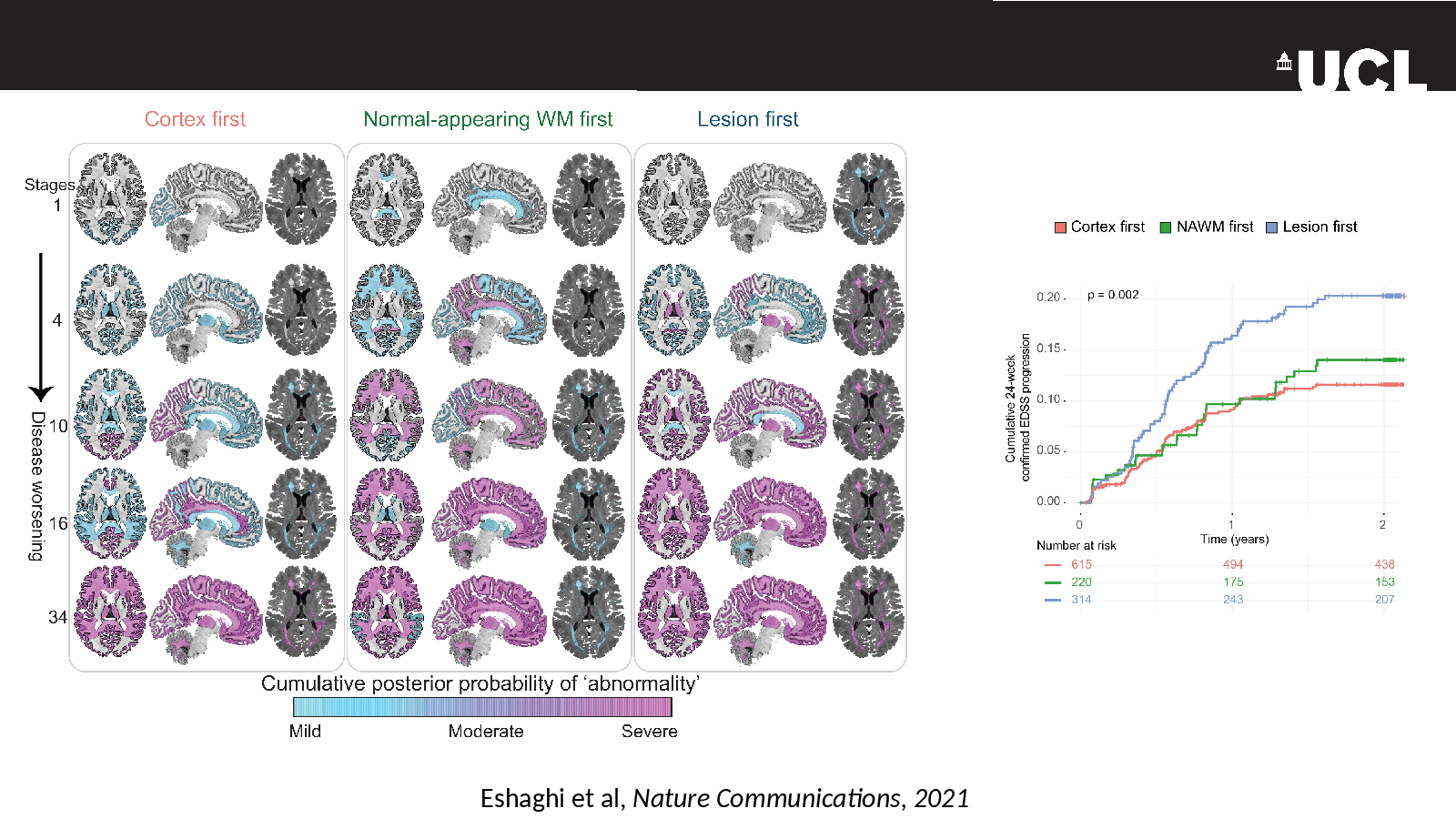
- Data-driven MRI subtypes and their evolution
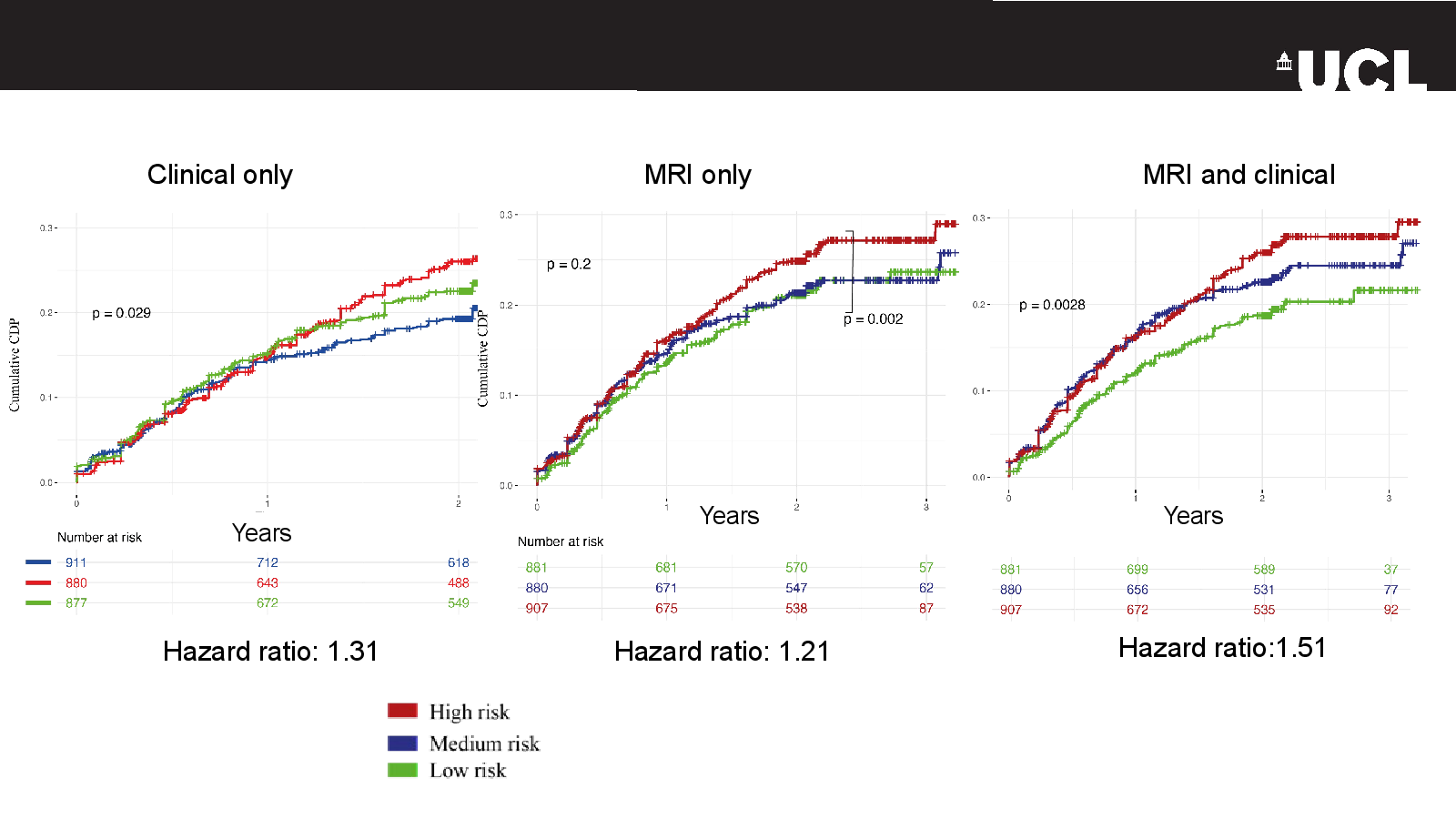
- Associations between MRI patterns and disability risk
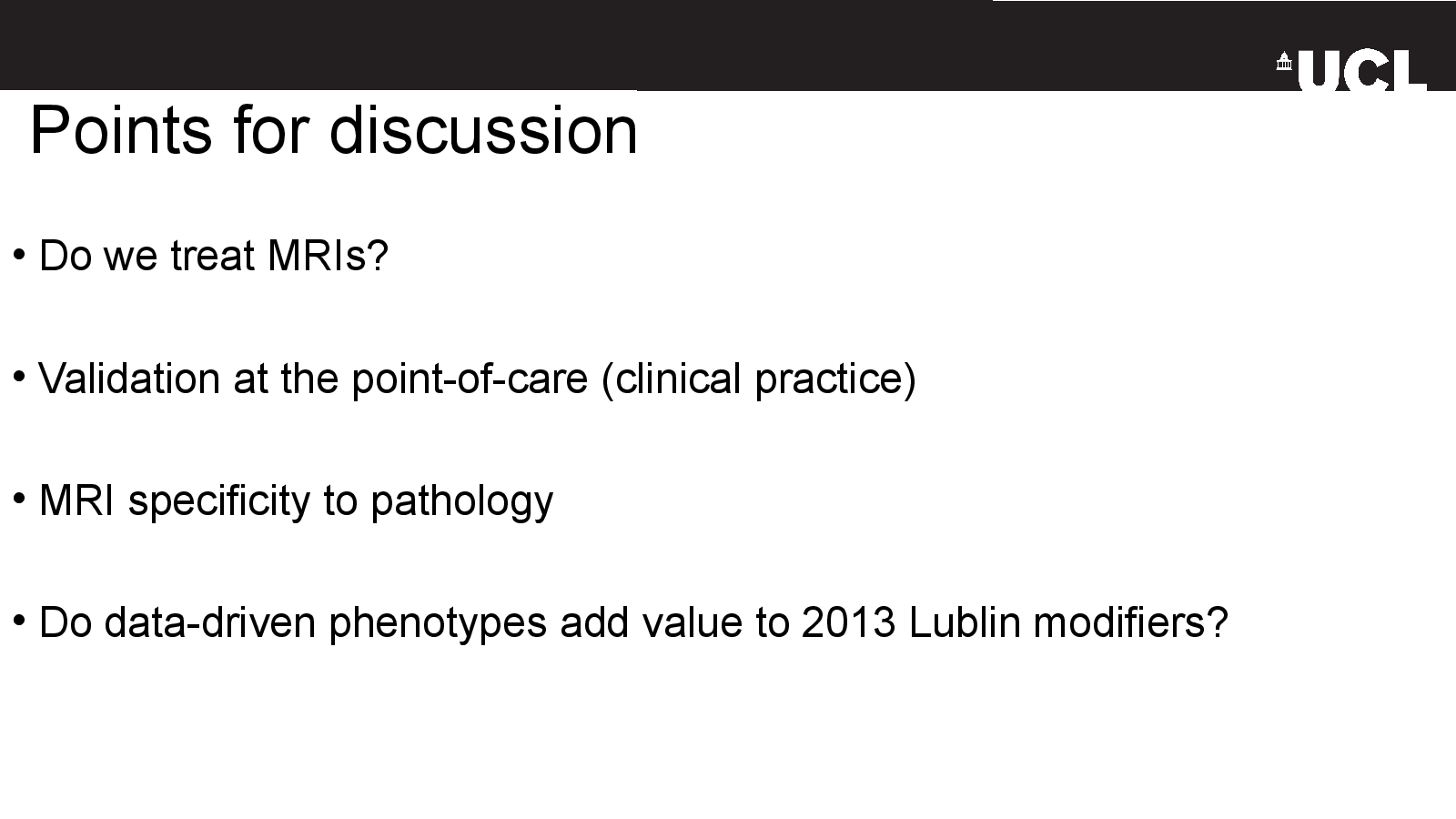
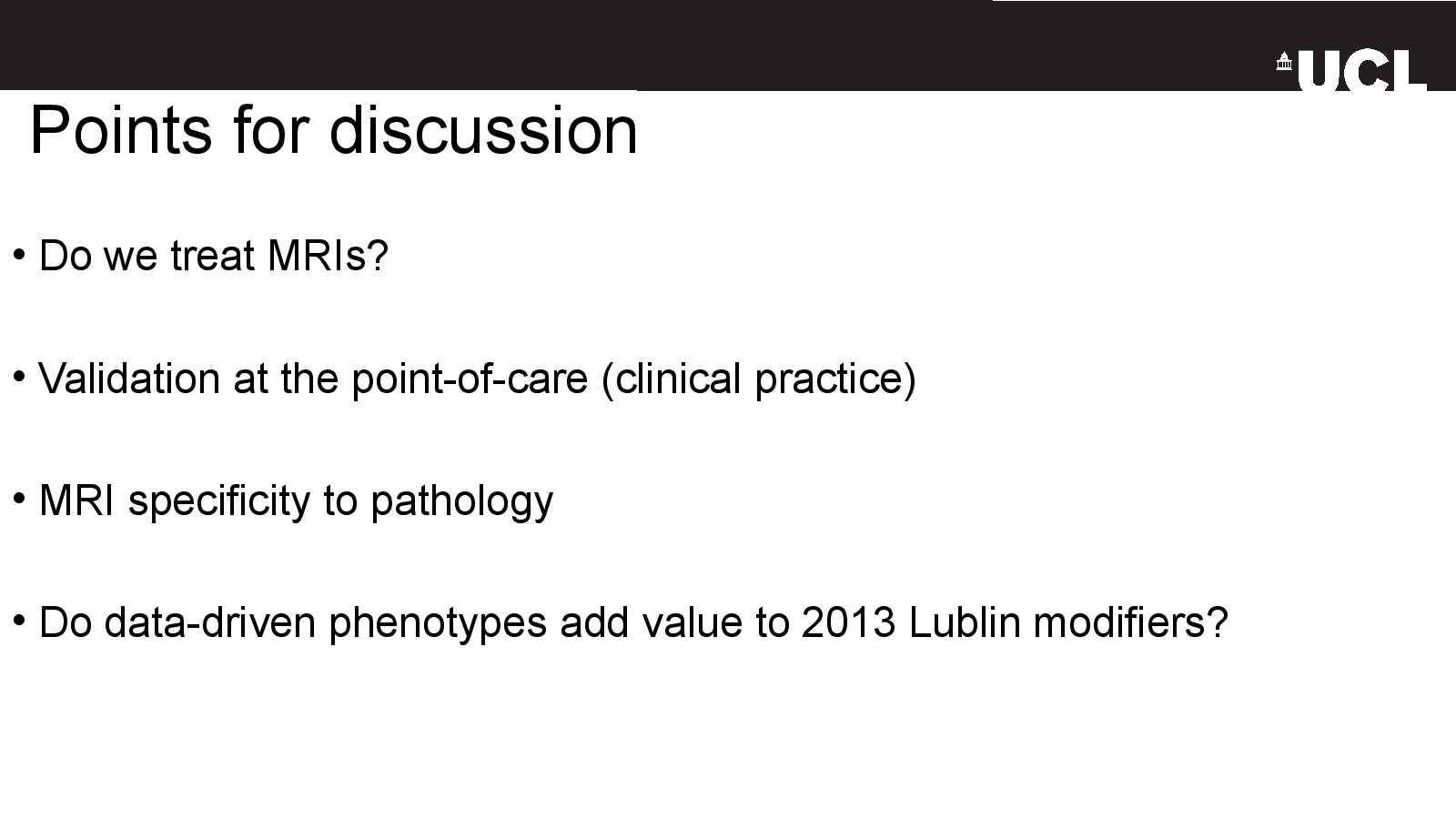
- Points for discussion
Take-away
MRI patterns can expose meaningful differences between patients that broad clinical phenotypes do not capture, making them useful for stratification.
Original deck
Slide by slide
Read the 19-slide presentation in order, or use the index to jump.
Slide 01
MRI phenotypes will replace clinical phenotypes in multiple sclerosis Pro
Slide 02
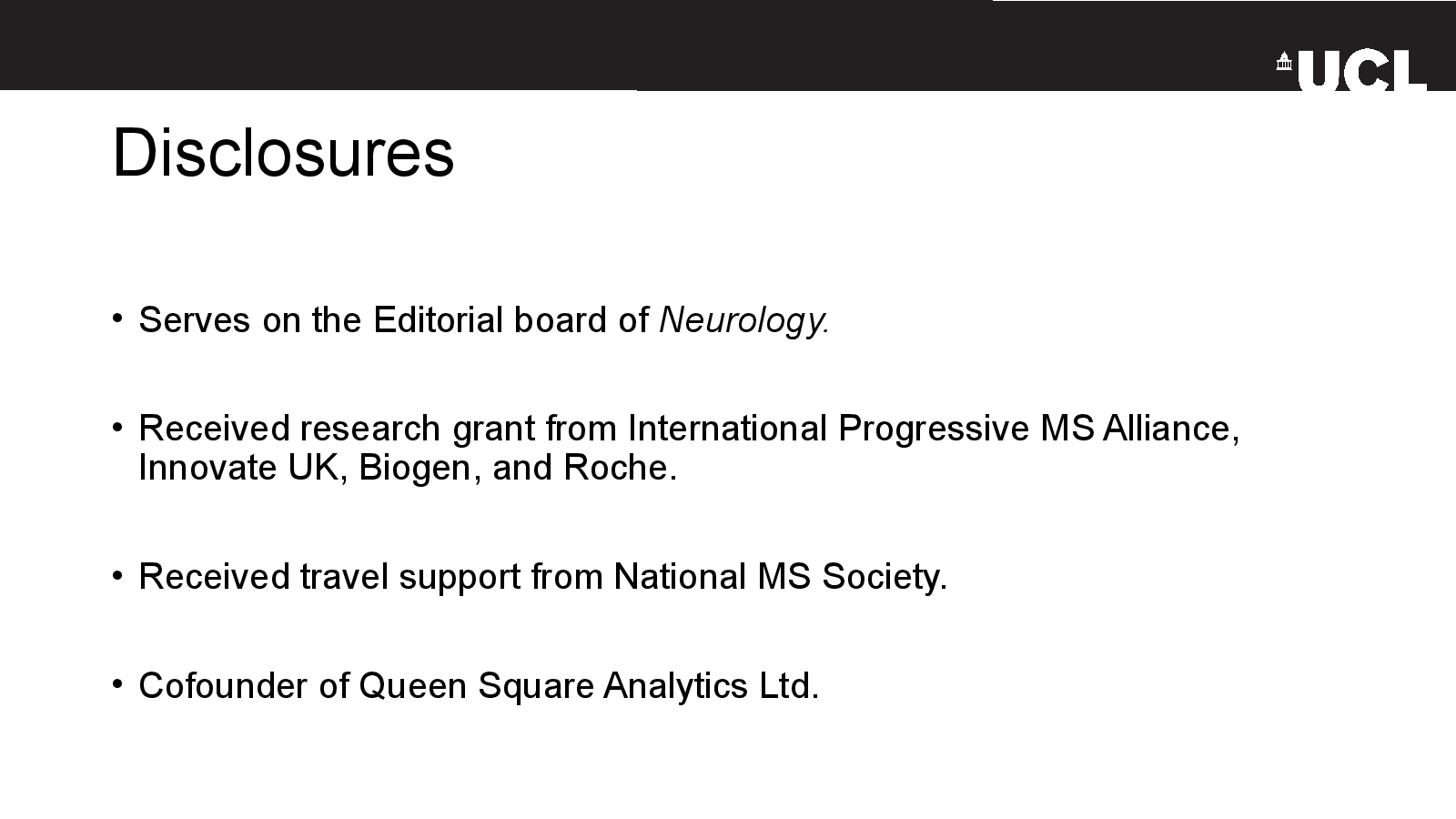
Disclosures
Slide 03
Agenda

Slide 04
Data-driven subtypes

Slide 05
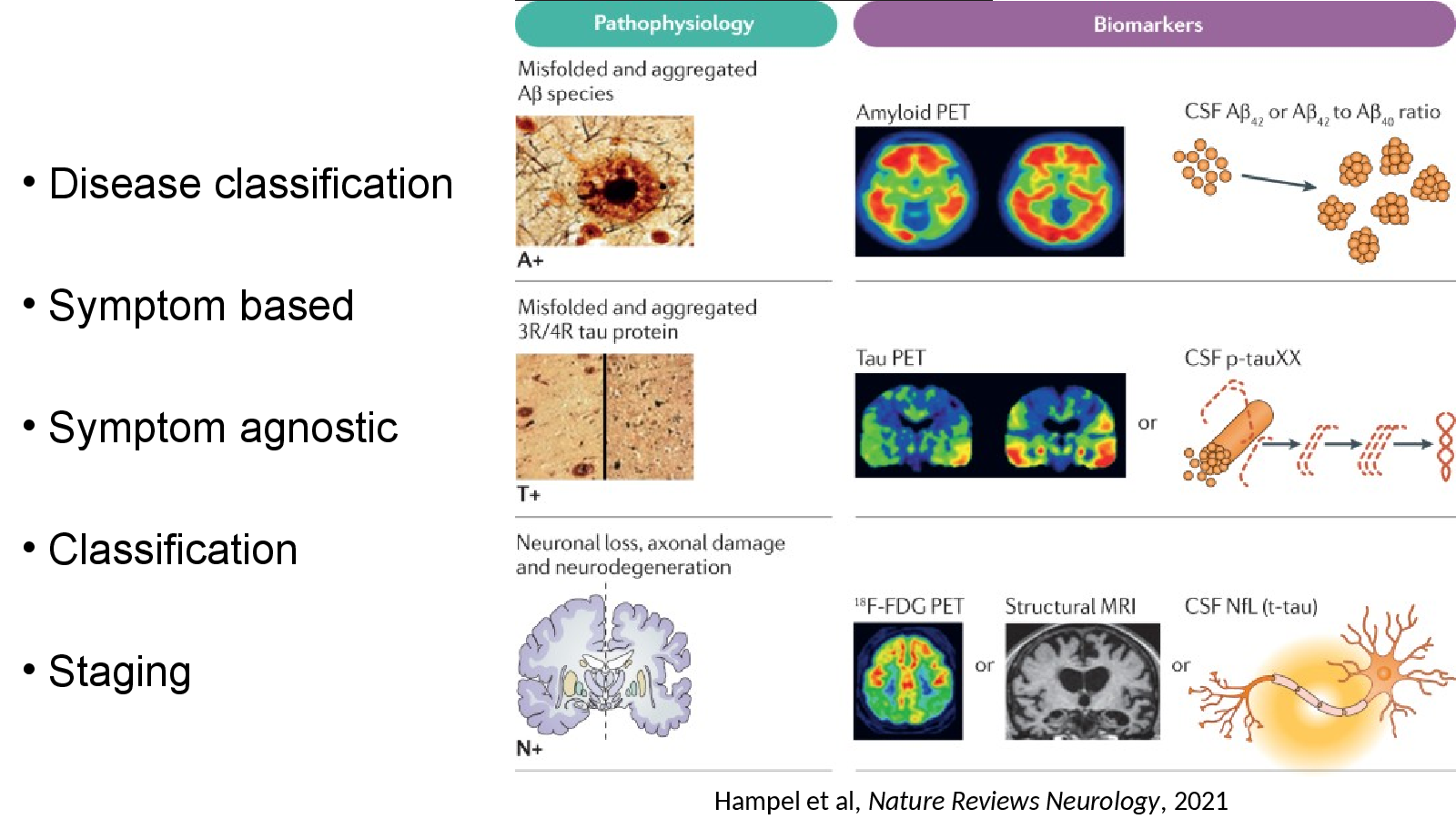
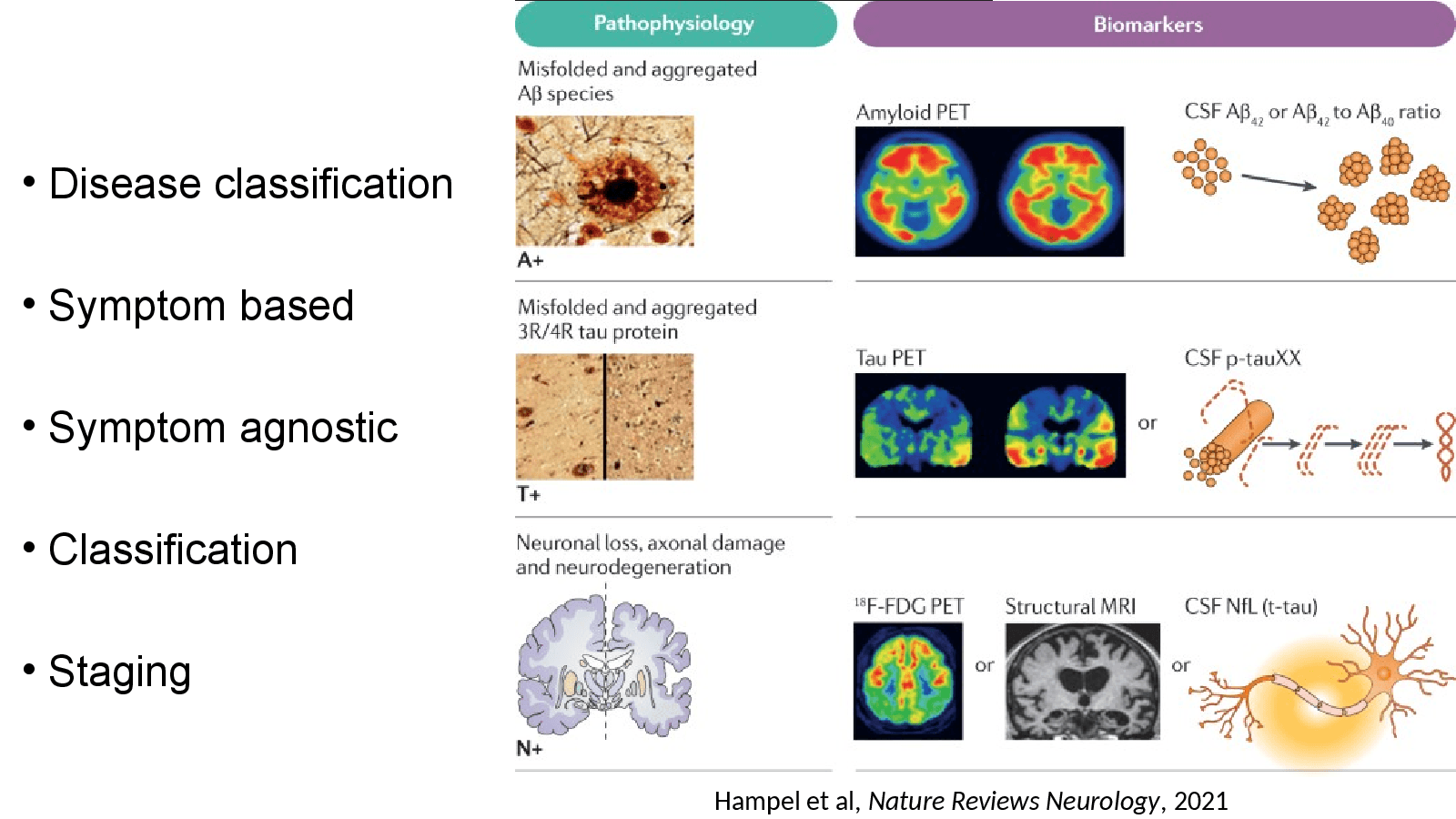
Hampel et al, Nature Reviews Neurology, 2021
Slide 06
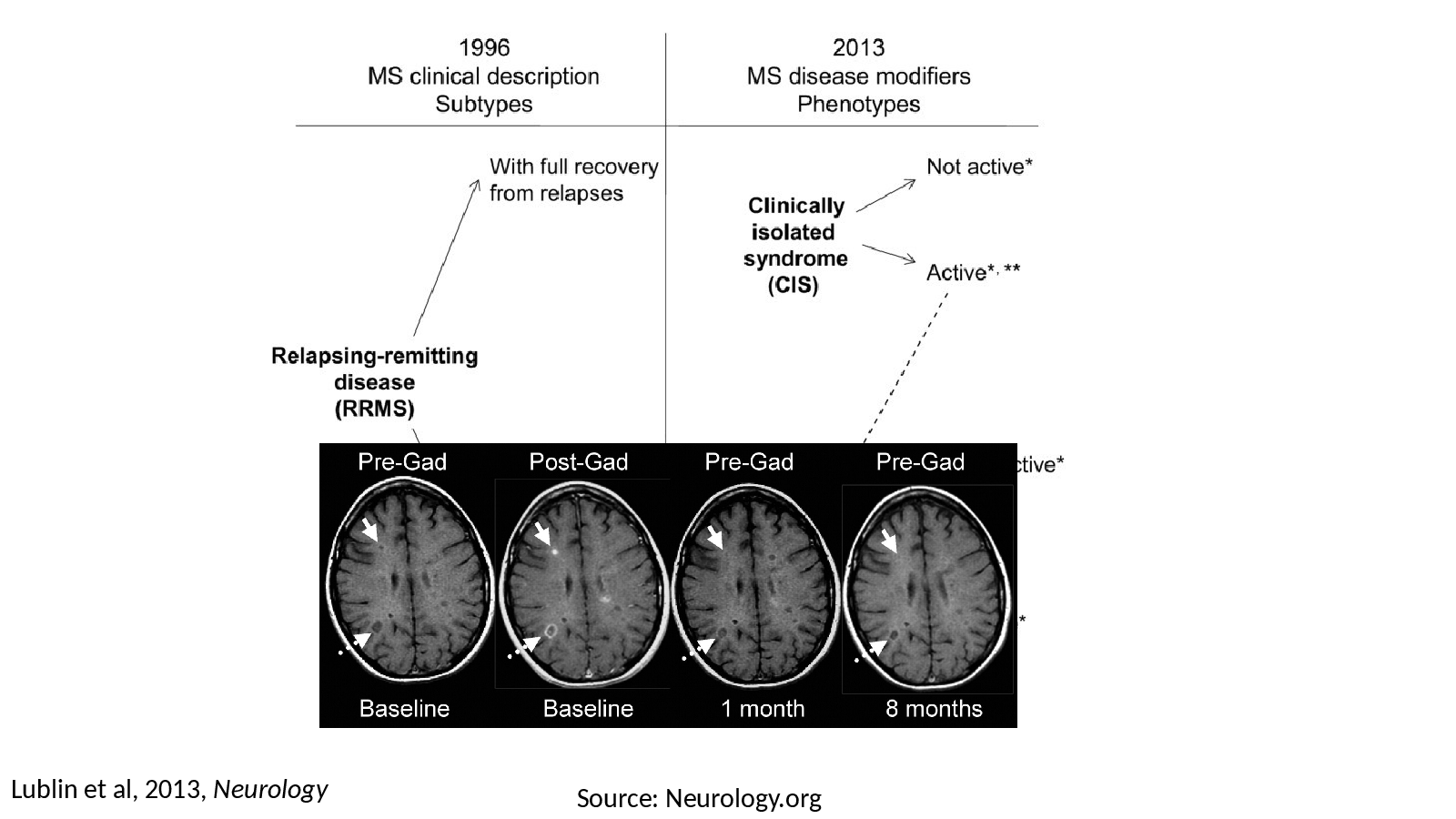
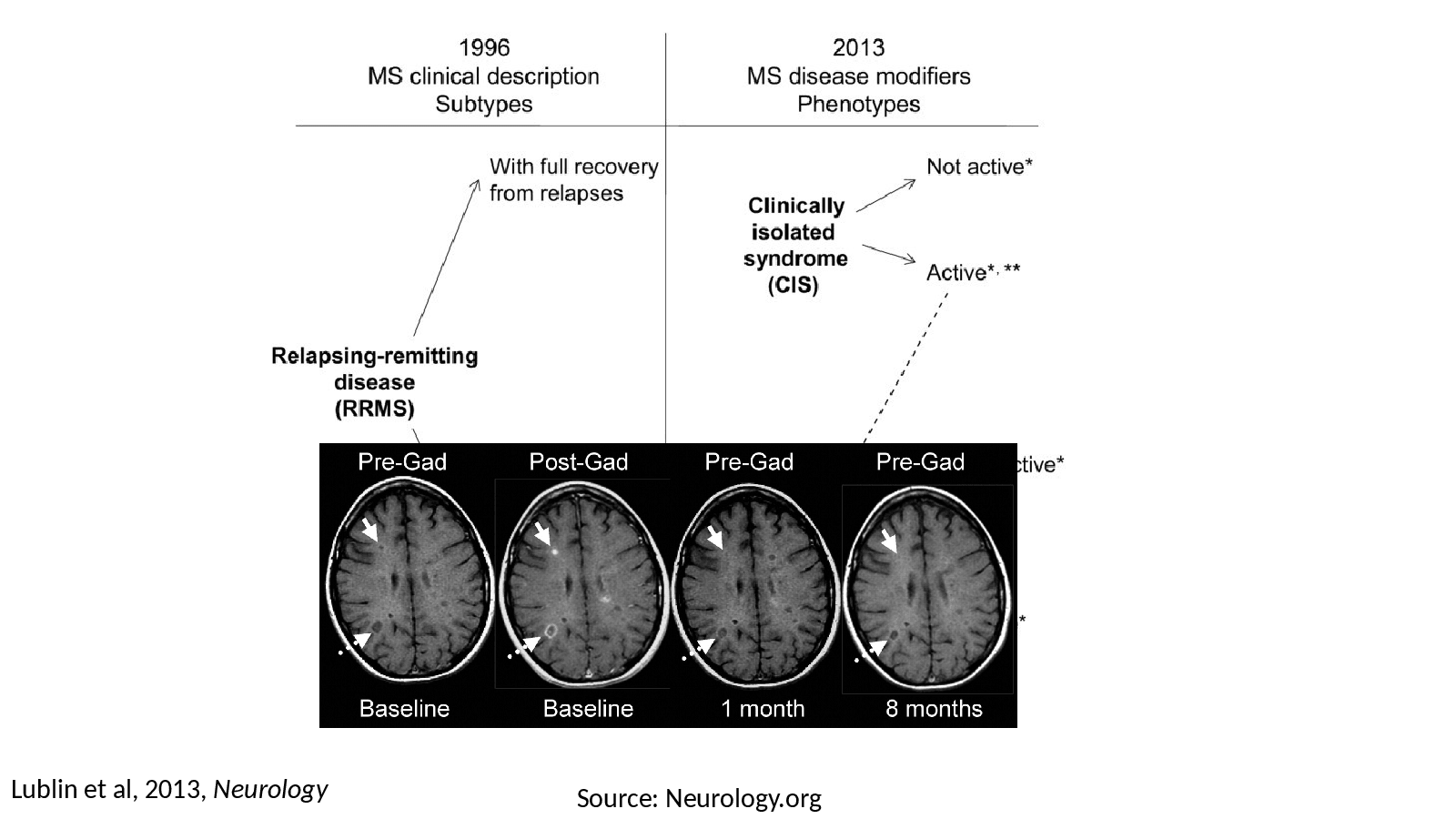
Lublin et al, 2013, Neurology
Slide 07
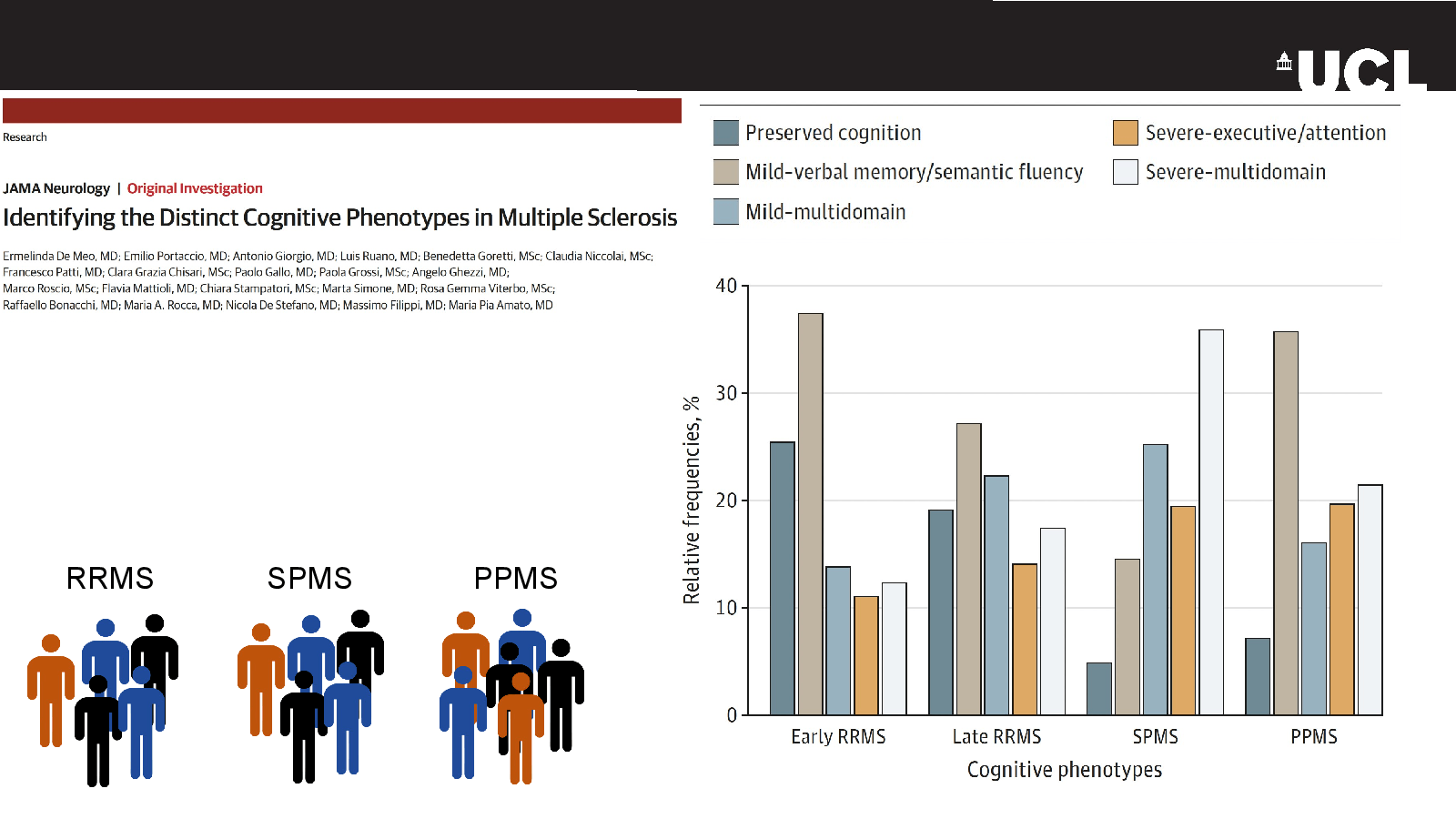
Slide 7
Slide 08
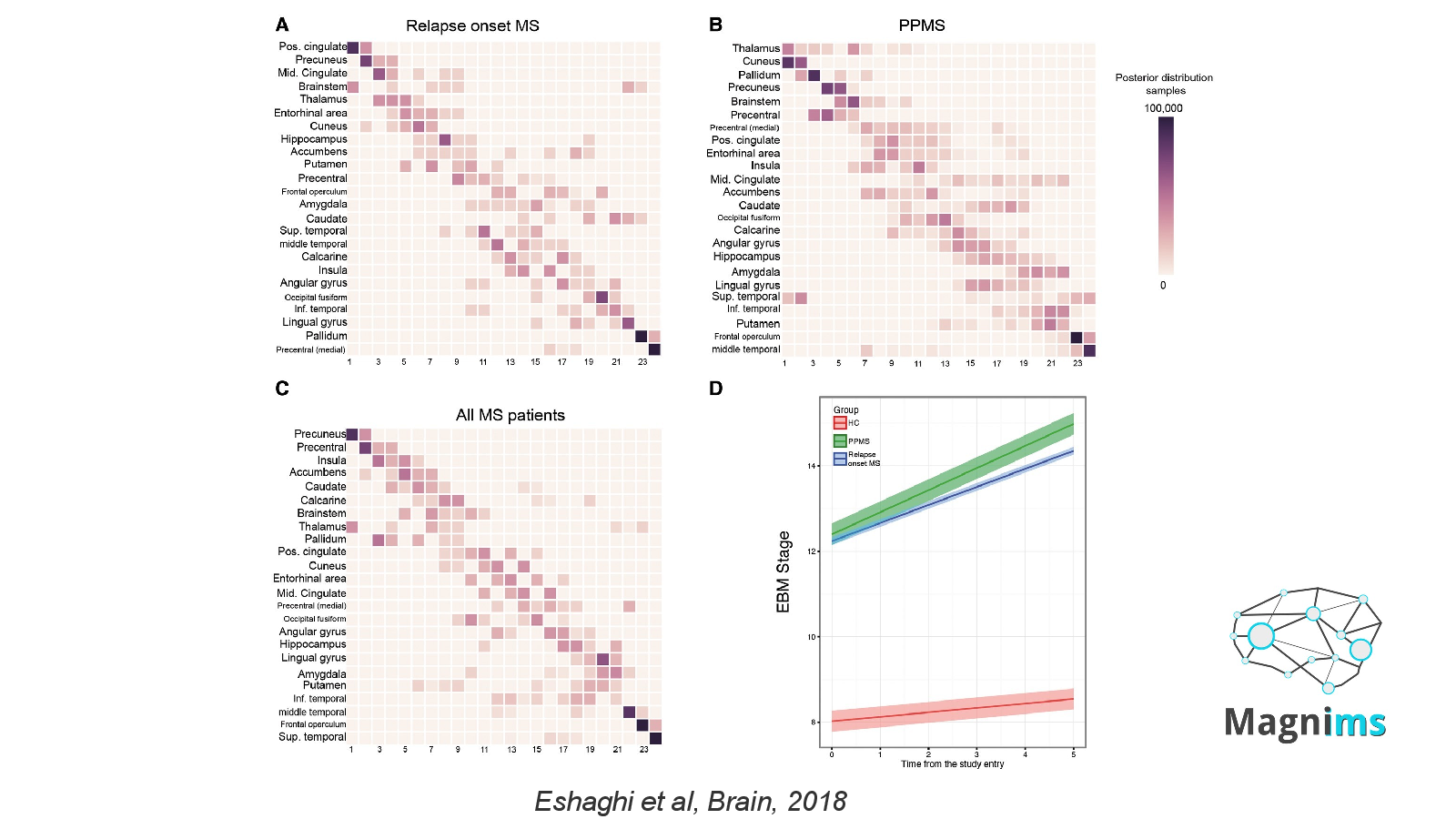
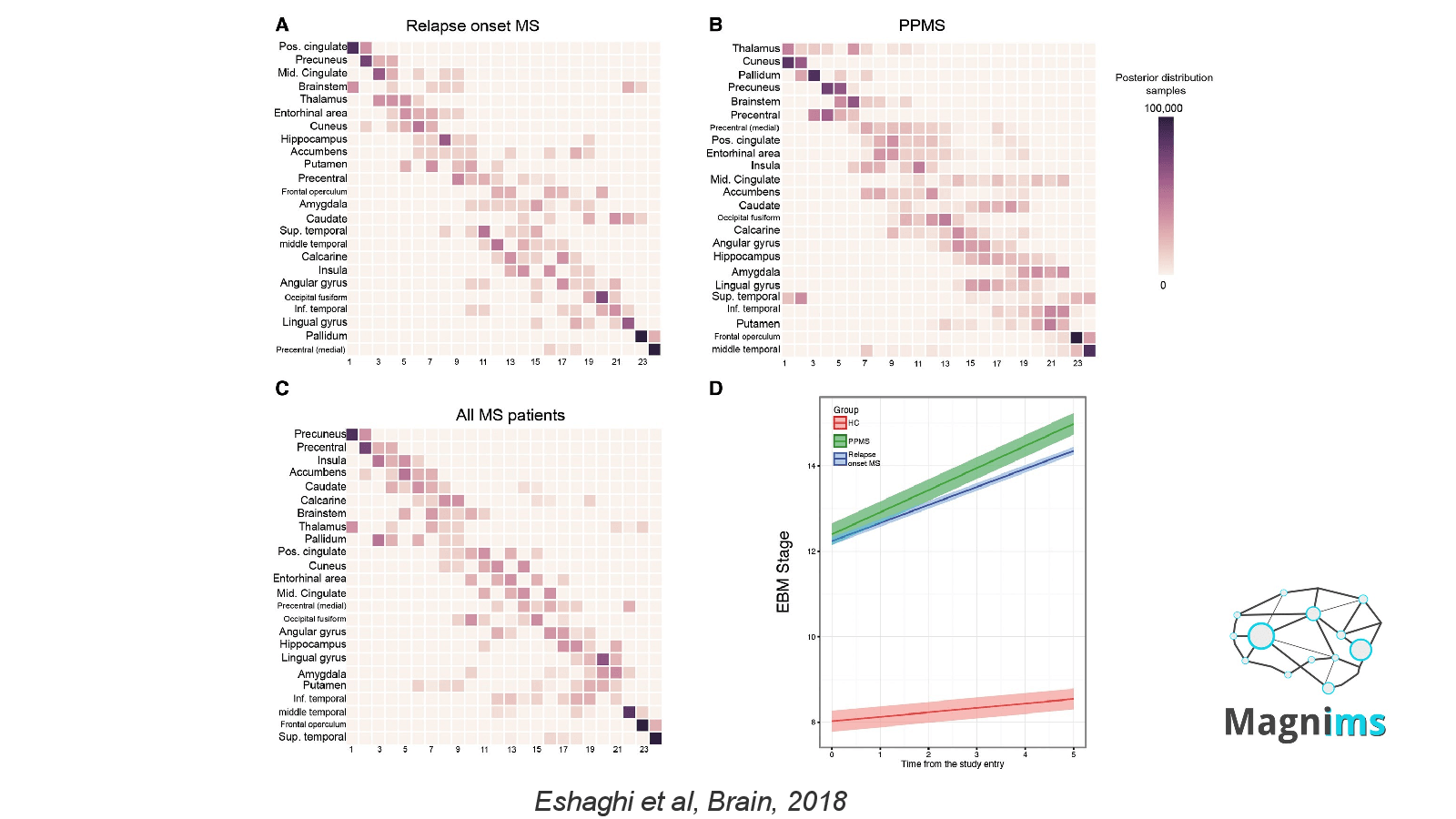
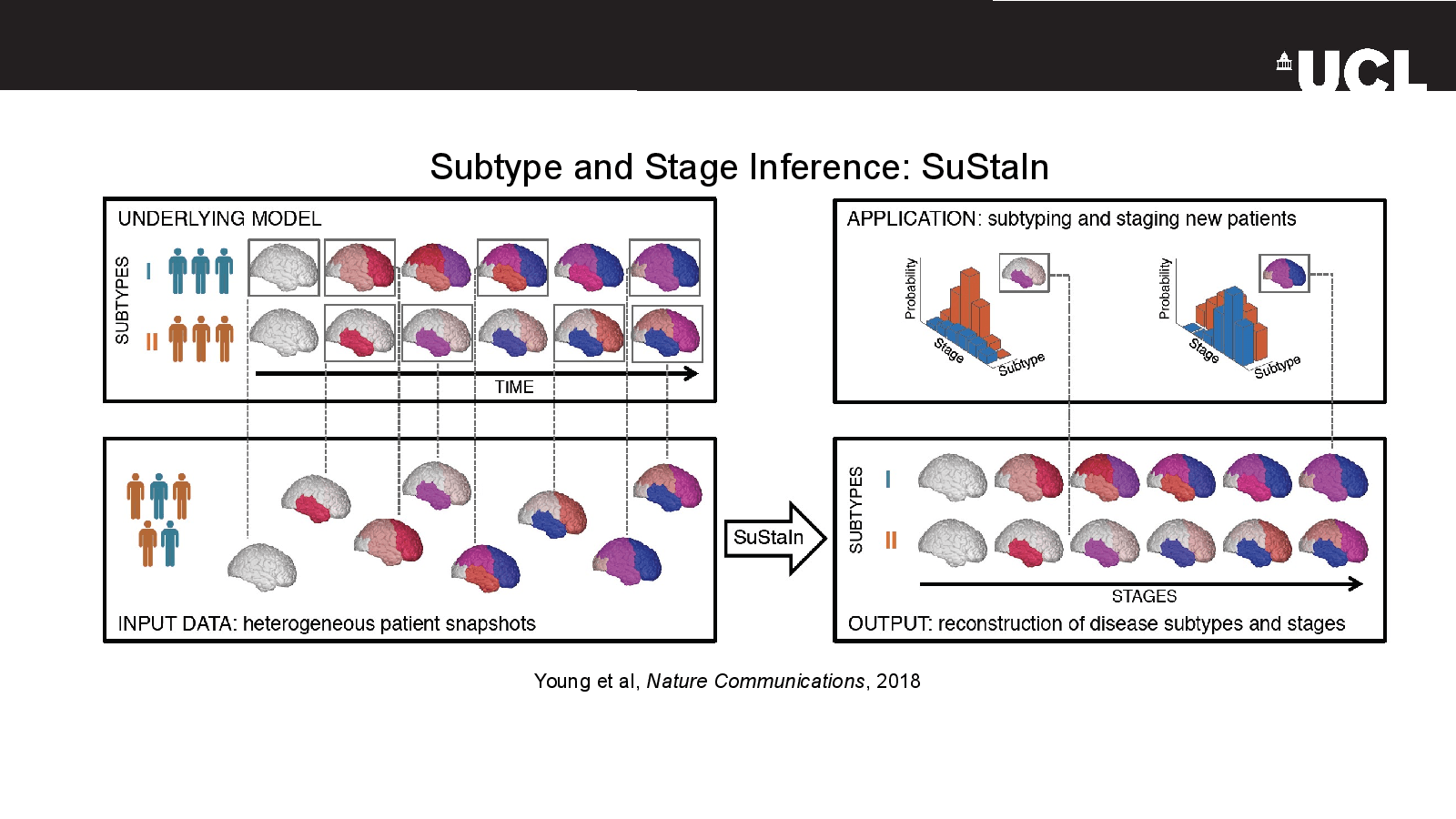
Sequences of atrophy progression and patient staging
Slide 09
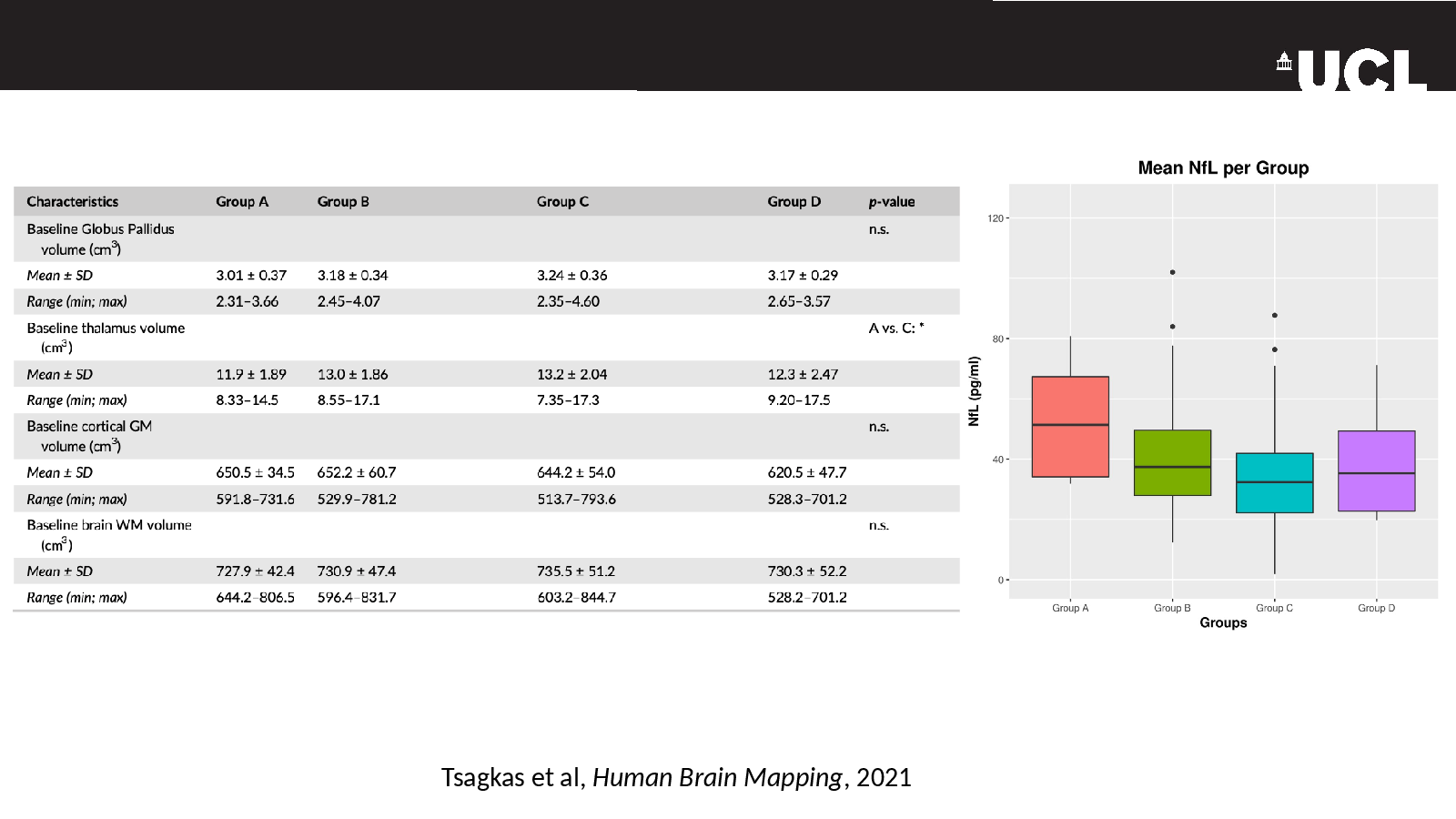
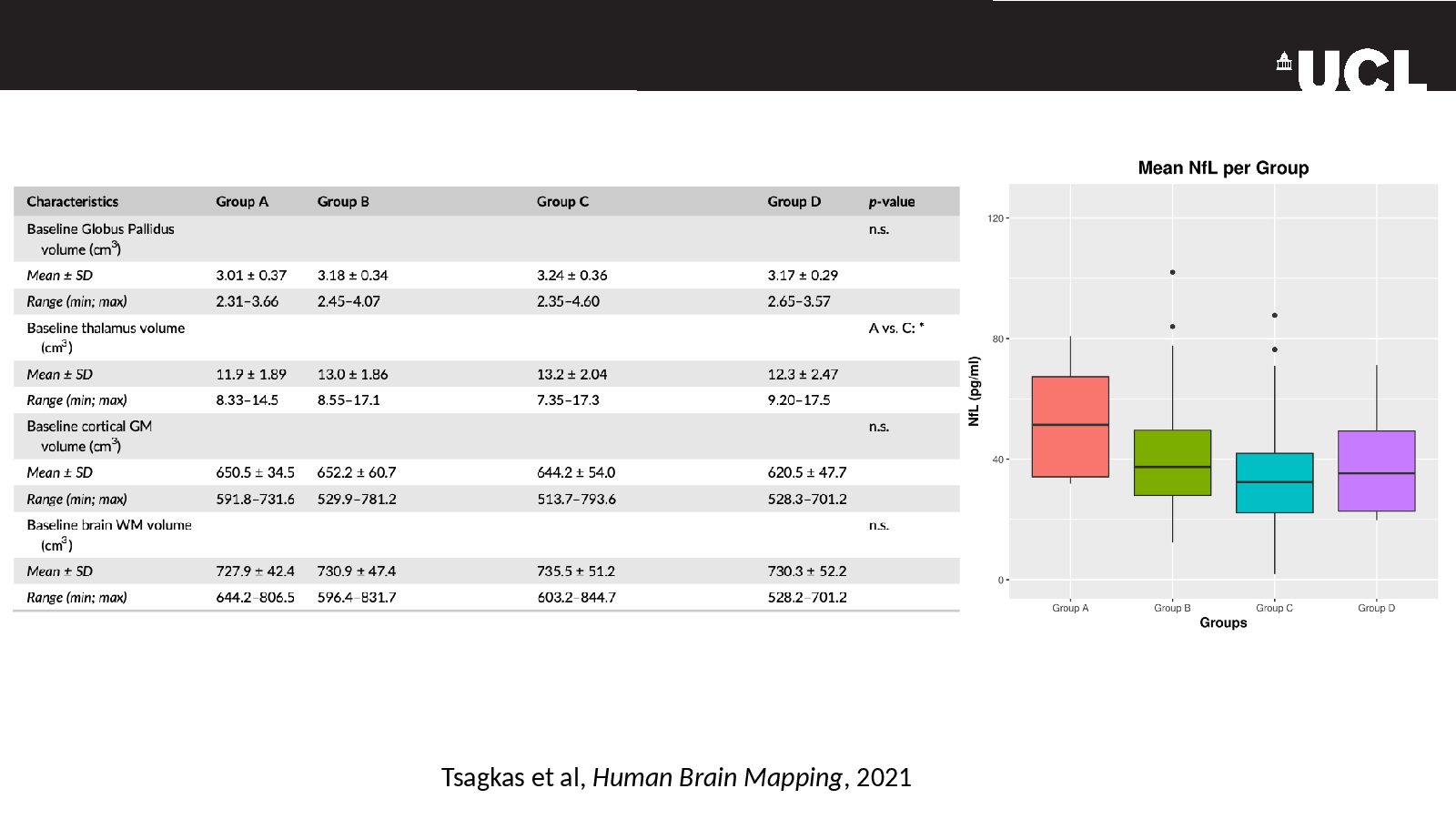
Tsagkas et al, Human Brain Mapping, 2021
Slide 10
Young et al, Nature Communications, 2018
Slide 11
Slide 11
Slide 12
Eshaghi et al, Nature Communications, 2021
Slide 13
Slide 13
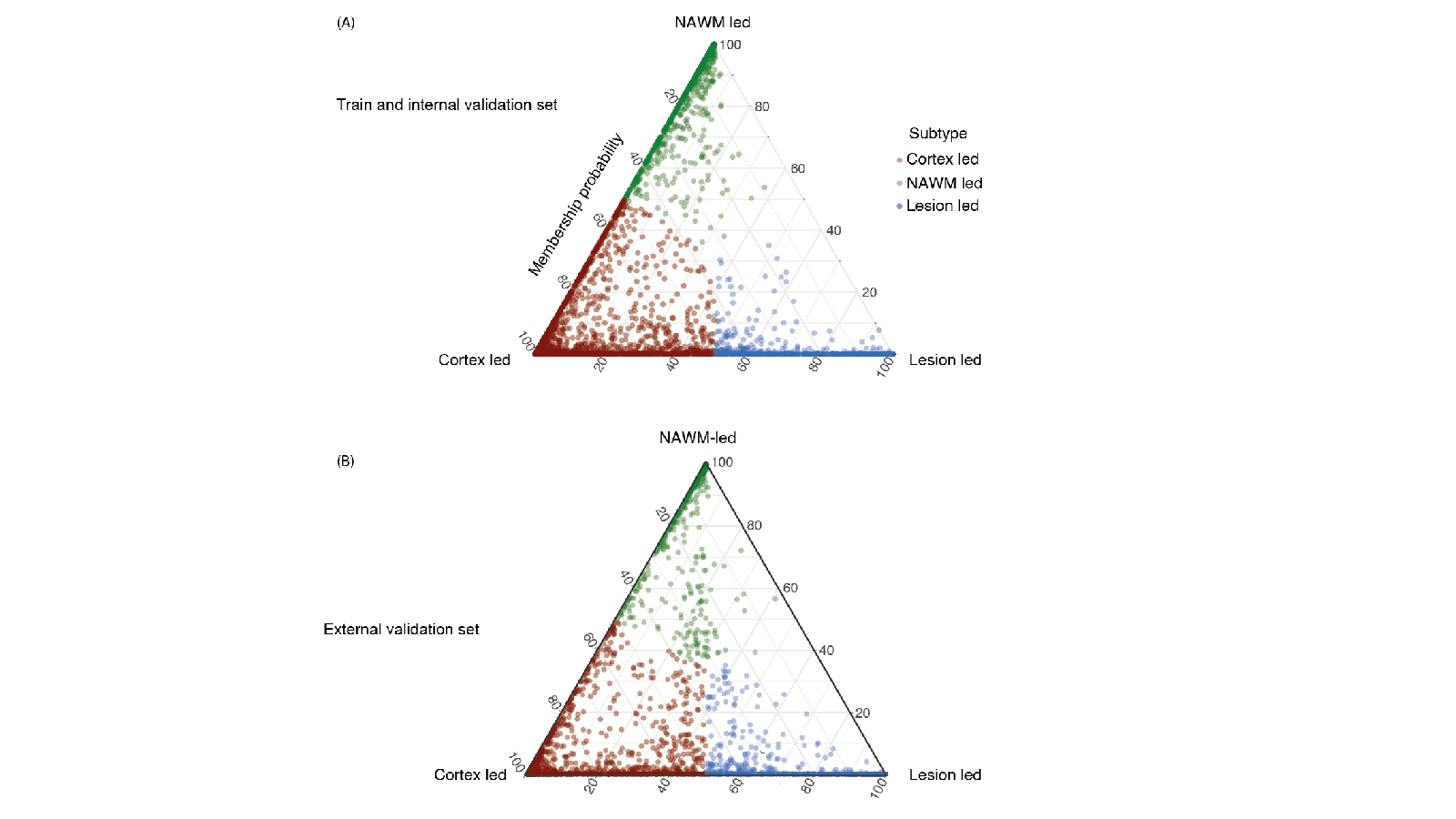
Slide 14
Slide 14
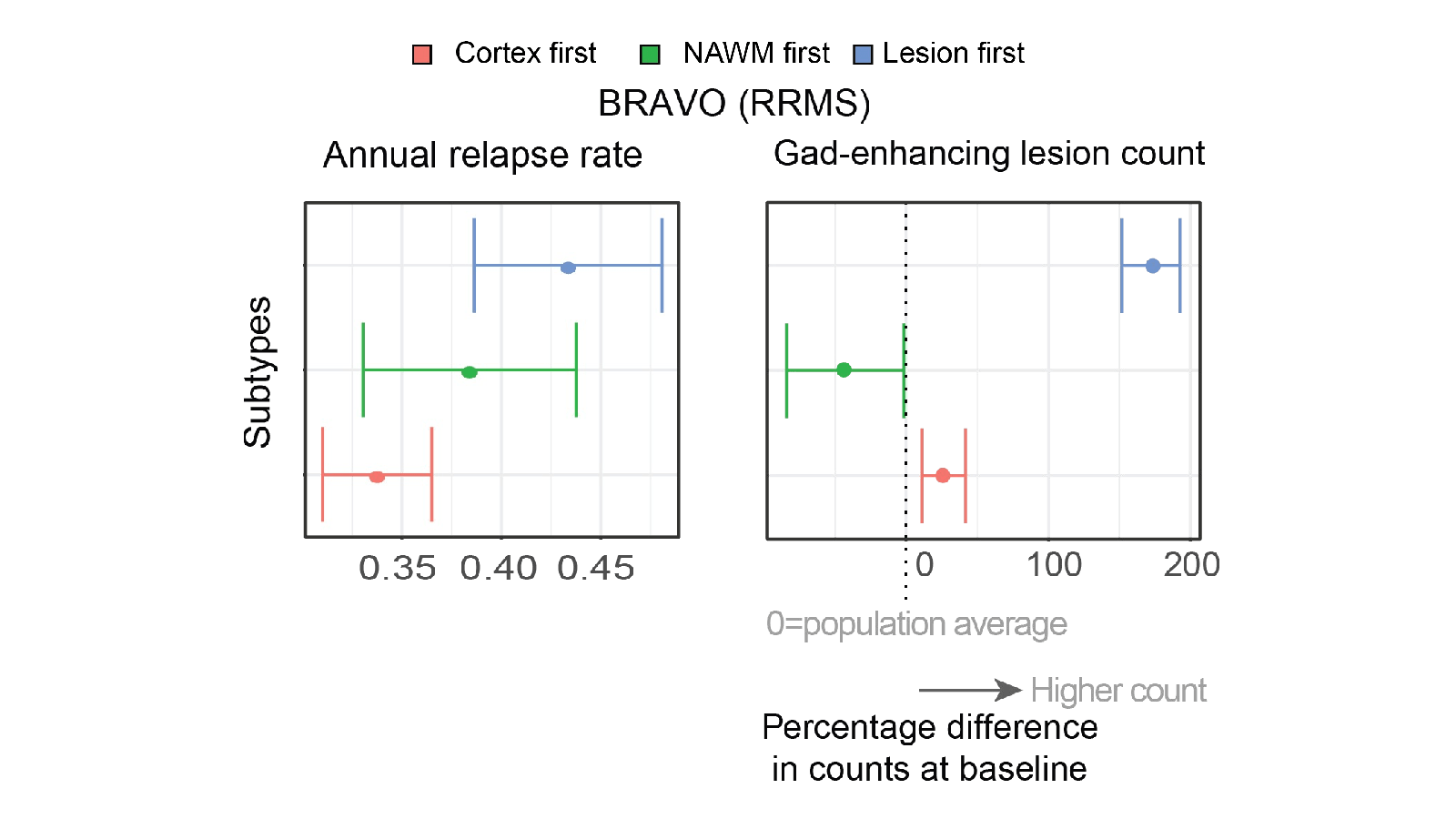
Slide 15
Slide 15
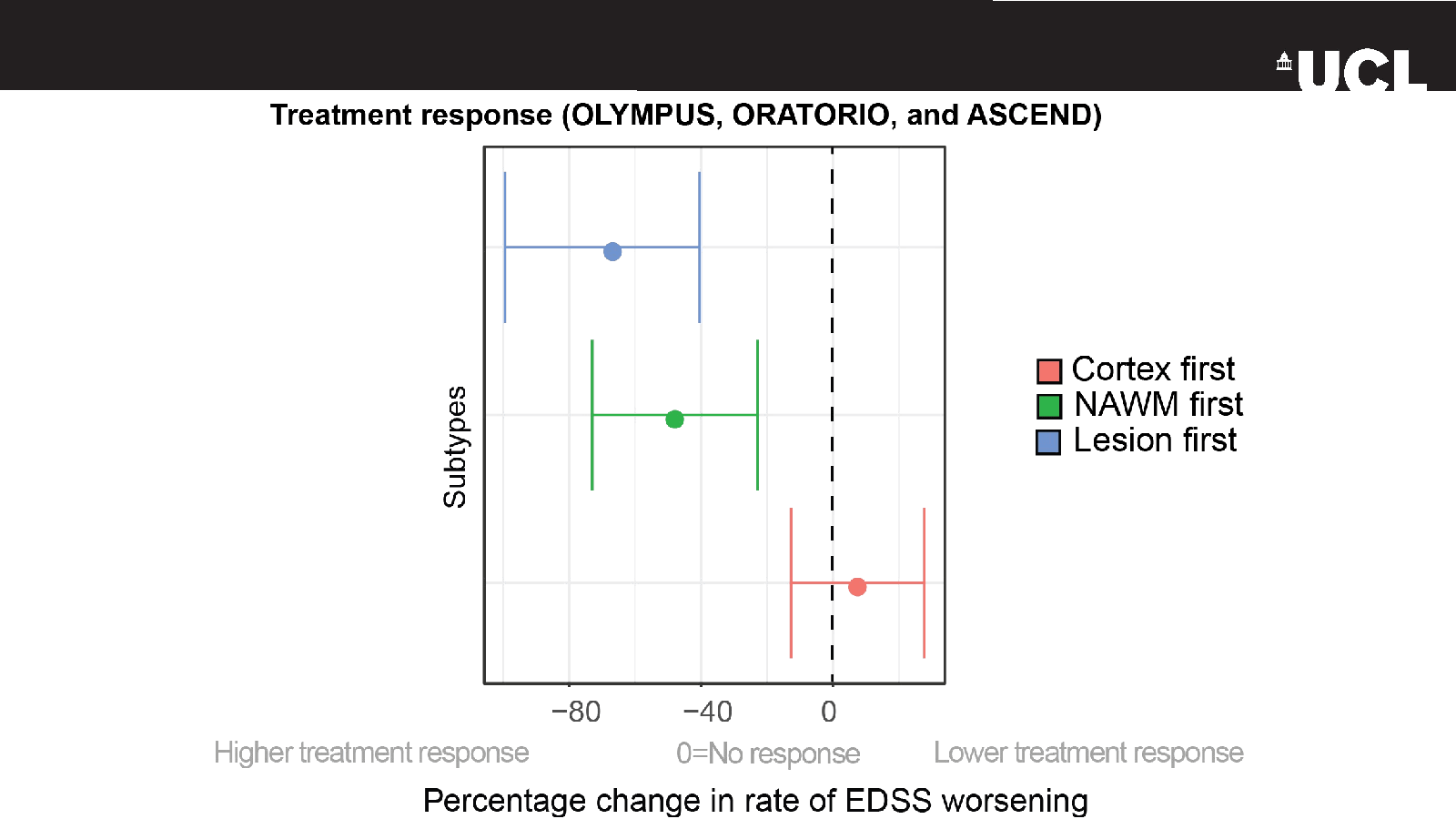
Slide 16
MRI and clinical
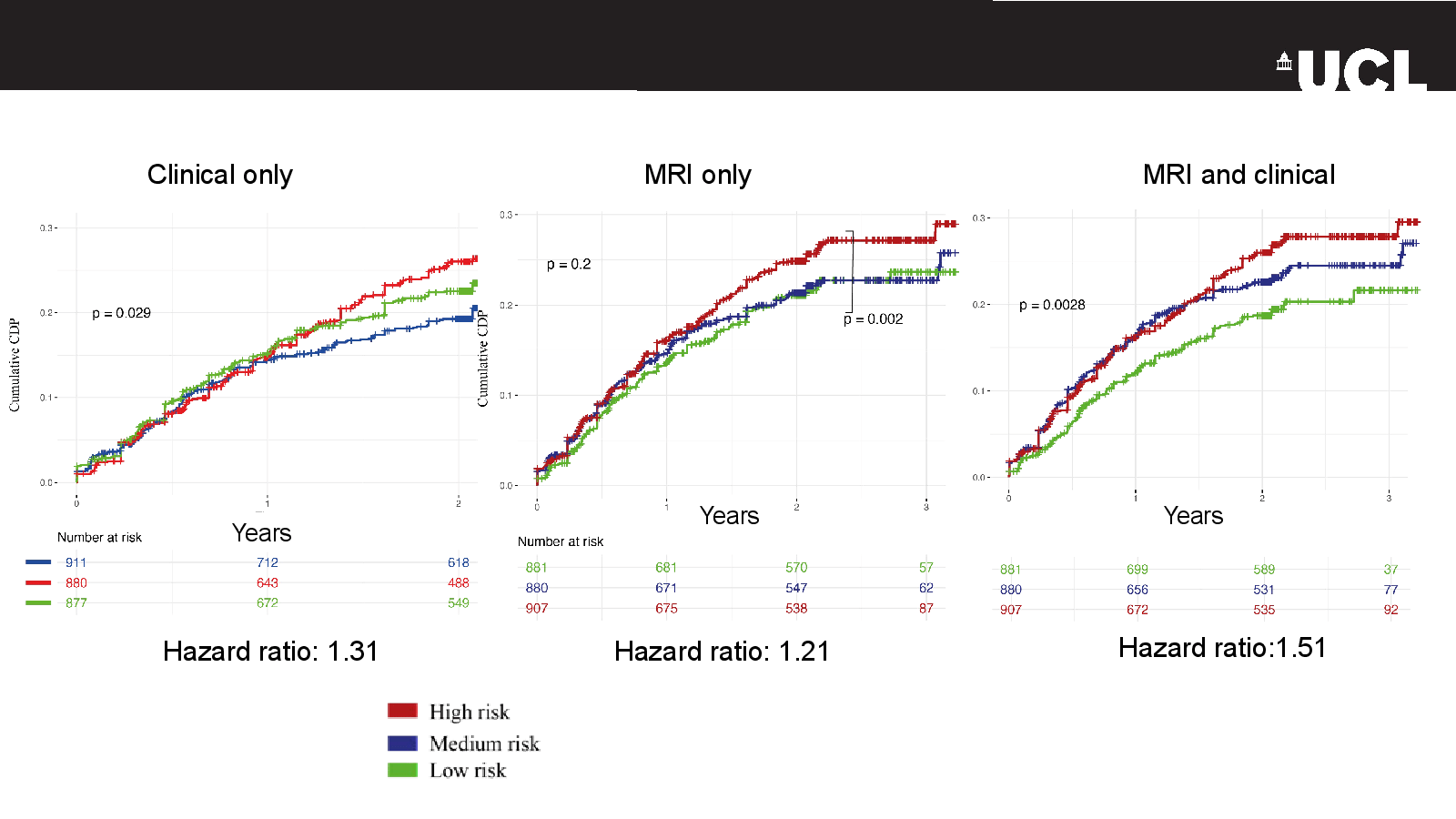
Slide 17
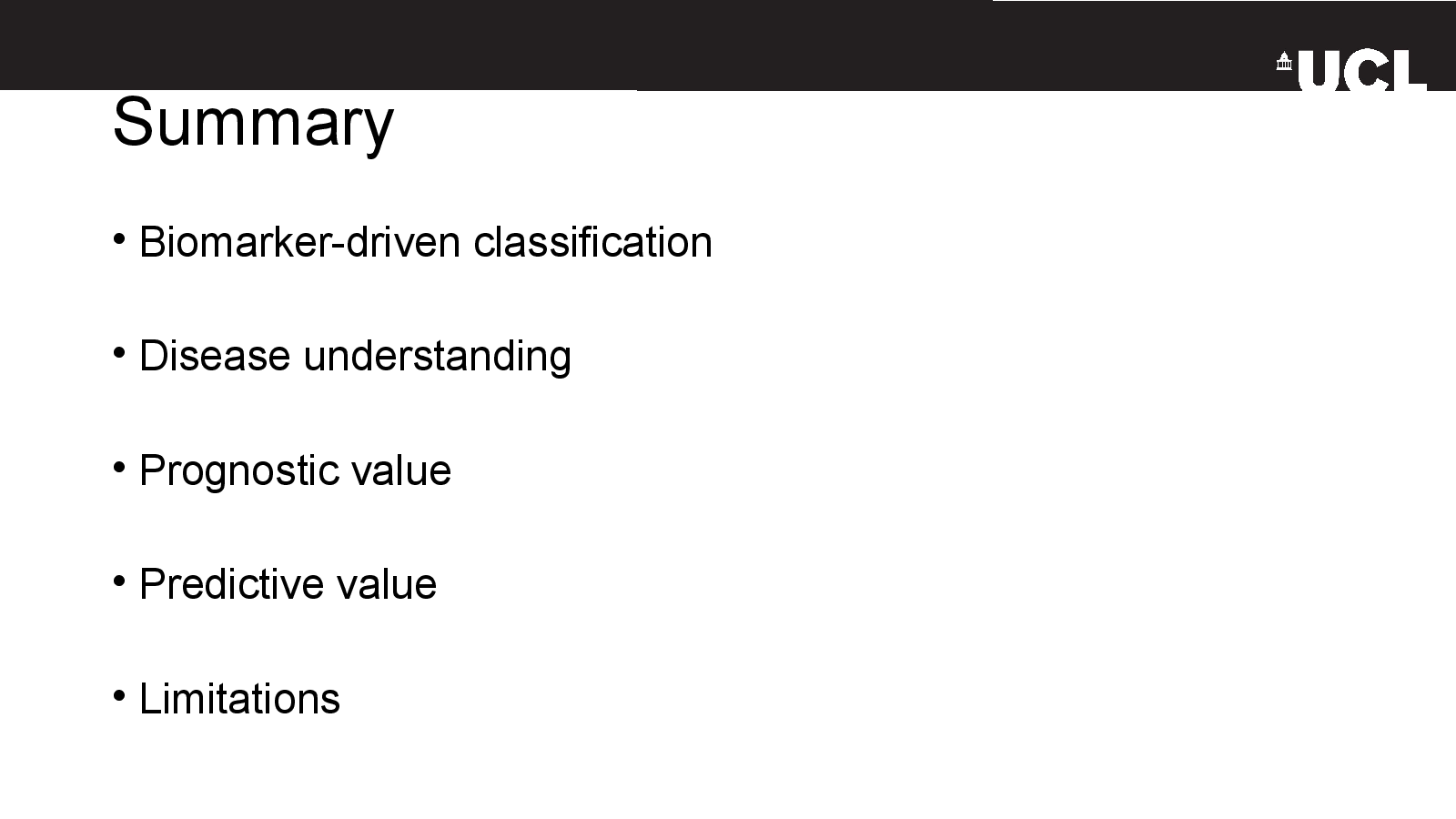
Summary
Slide 18
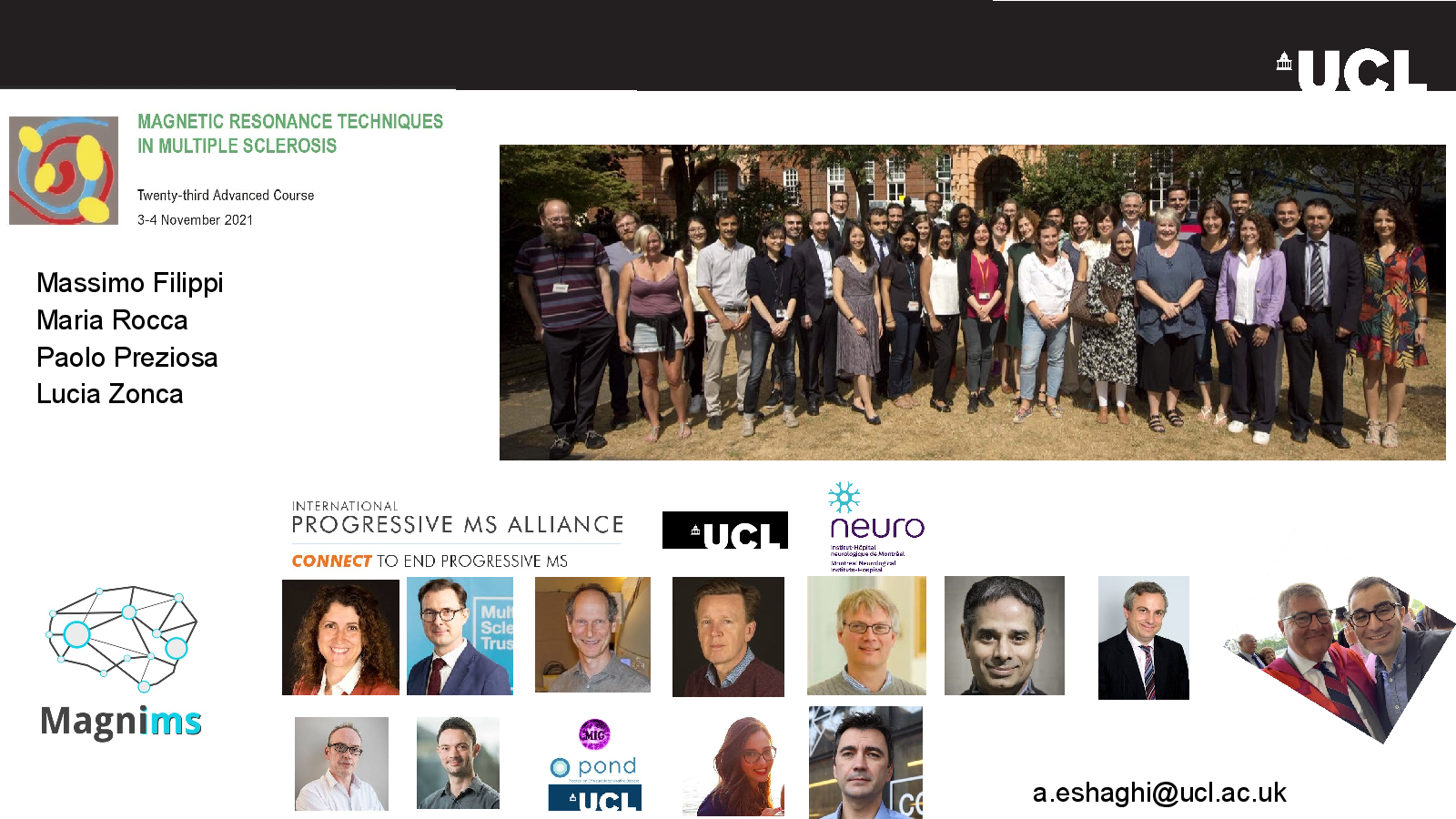
Massimo Filippi
Slide 19
Points for discussion