MS-PINPOINT · News
Novel MS trial designs and the potential role of patient-reported outcomes
A new open access paper in Neurology highlights the novel multi-arm multi-stage OCTOPUS trial design for expediting neuroprotective drug discovery in progressive MS and demonstrates the potential role of patient-reported measures within it.
 Written bySean Apap Mangion
Published
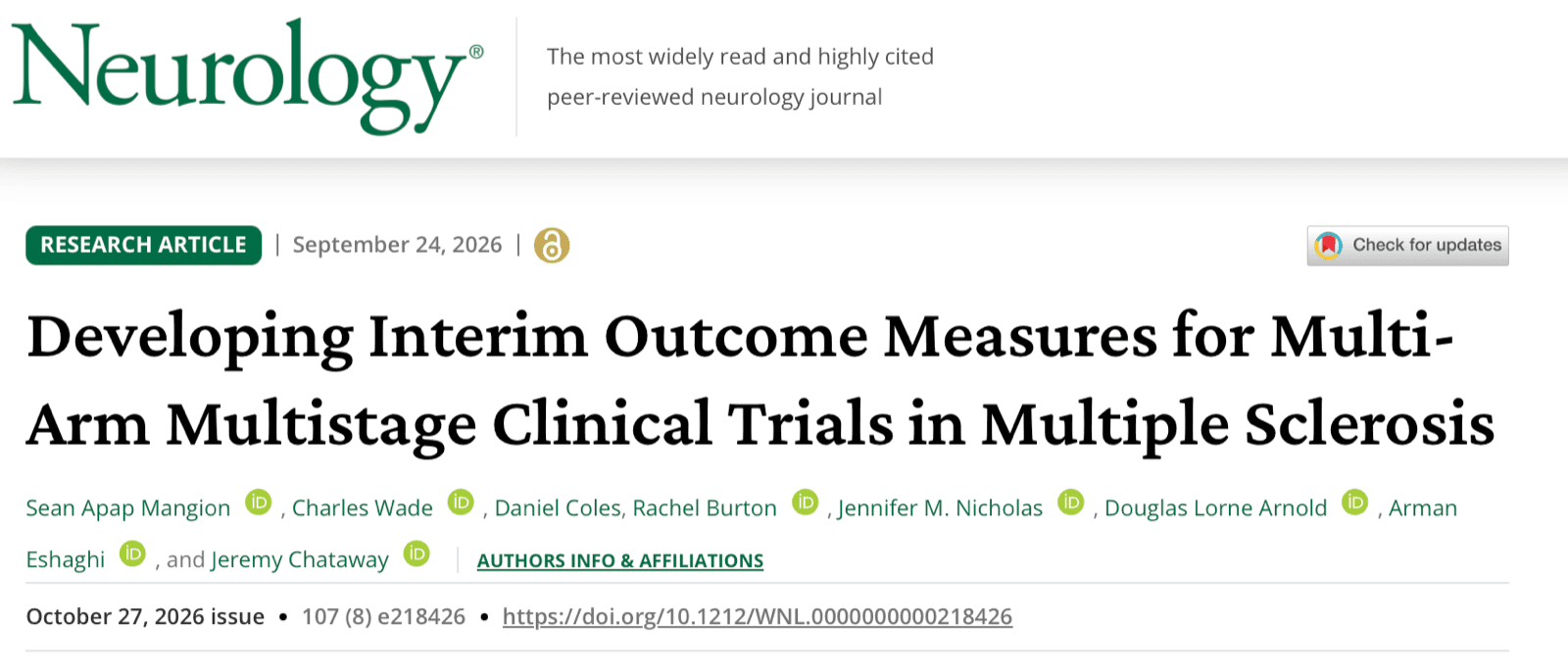
A new open access paper in Neurology highlights the novel multi-arm multi-stage OCTOPUS trial design for expediting neuroprotective drug discovery in progressive MS and demonstrates the potential role of patient-reported measures within it. (Neurology)
The OCTOPUS trial is able to test multiple drugs simultaneously and use an early go / no-go signal to identify which drugs are worth prioritising. This decision point is dynamic and can be informed by new discoveries or biomarkers. In this paper, researchers demonstrate how questionnaires gathering in-depth information about a person's MS can be used to predict the final trial result, and how they can potentially be combined in novel means to provide the early go / no-go signal for OCTOPUS.
There is a significant unmet need for neuroprotective treatments, particularly in progressive MS. The OCTOPUS trial addresses that through efficient trial designs, and this paper demonstrates the potential for measures that capture the direct patient experience of their condition. The authors highlight that further work is needed to develop our understanding of patient-reported outcomes and confirmation of findings in other studies.
The paper, Developing Interim Outcome Measures for Multi-Arm Multistage Clinical Trials in Multiple Sclerosis, is by Sean Apap Mangion, Charles Wade, Daniel Coles, Rachel Burton, Jennifer M. Nicholas, Douglas Lorne Arnold, Arman Eshaghi and Jeremy Chataway, and appears in Neurology 107(8), e218426.
Congratulations, Sean! 🎉