MS-PINPOINT · News
MindGlide unlocks routine MRI archives to accelerate MS research
A new Nature Communications paper introduces MindGlide, an AI model that quantifies key MS MRI biomarkers from a single routine MRI contrast.
 Written byMS-PINPOINT Team
Published
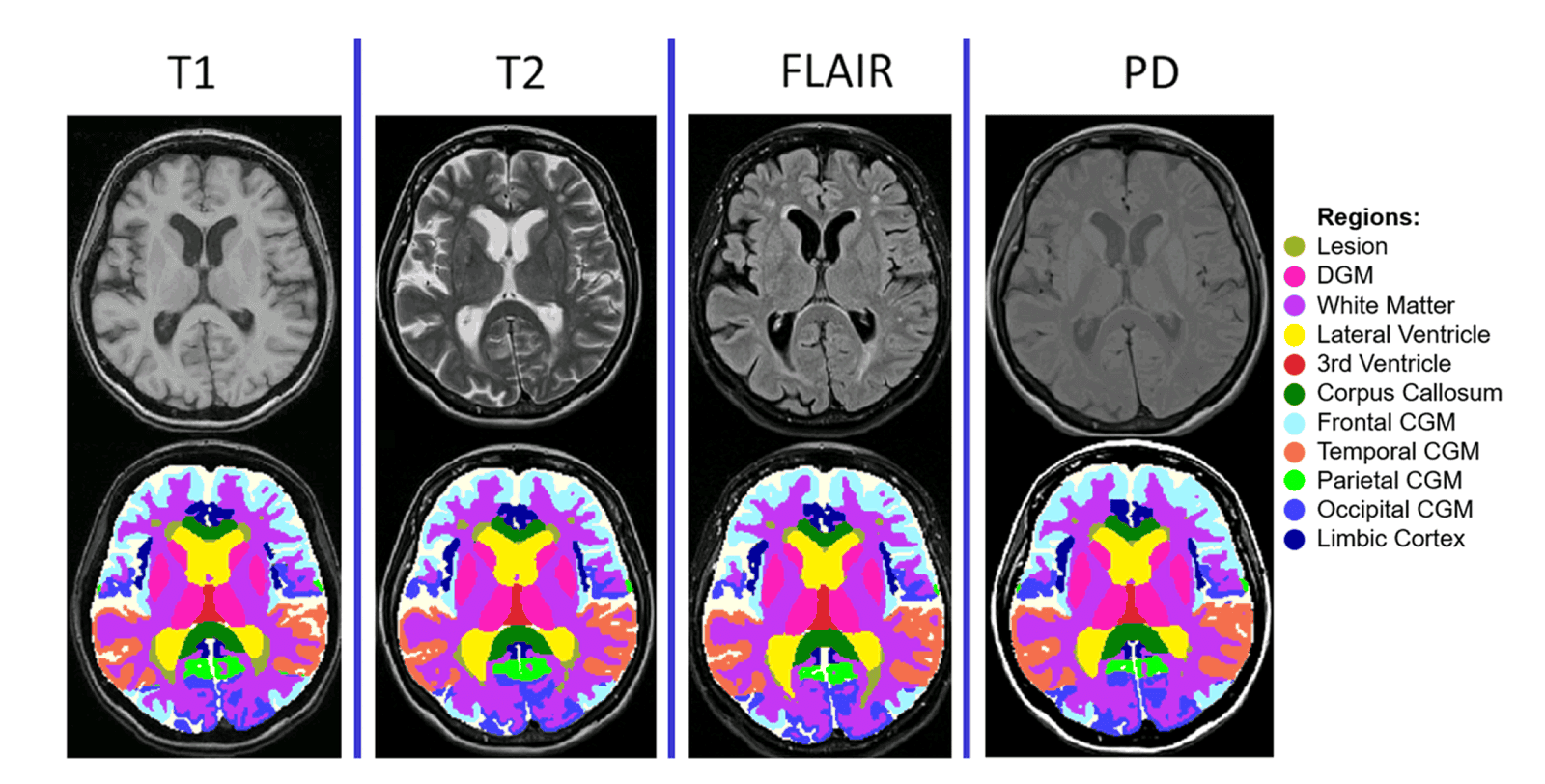
A new Nature Communications paper introduces MindGlide, an AI model that enables robust quantification of key multiple sclerosis (MS) MRI biomarkers—lesion burden and regional brain volumes—from a single routine MRI contrast. By removing the usual dependency on multi-contrast research protocols, MindGlide is designed to turn “old” and heterogeneous hospital MRI archives into analysable datasets, helping bring quantitative MRI closer to real-world care and research. (Nature)
MindGlide was trained on 4,247 MS scans from 2,934 patients across 592 scanners, then externally validated on 14,952 scans from 1,001 patients—including large progressive MS trial datasets and a routine-care cohort. The model outperformed comparator tools against expert-labelled lesion volumes and, crucially, could detect treatment effects on lesion accrual and grey-matter tissue loss in clinical trials—even using contrasts not typically used for those outcomes (e.g., T2-weighted scans). (Nature)
MindGlide is publicly released with code, trained models, and a containerised environment, supporting reproducible deployment and community reuse. For MS-PINPOINT, this is a practical step toward scalable, clinic-compatible analytics: extracting meaningful biomarkers from routine scans can reduce barriers to real-world evidence studies and broaden the impact of existing MRI data collected over decades. (GitHub)