MS-PINPOINT · News
Bringing AI from research to the clinic: MS-PINPOINT co-authors a Nature Reviews Neurology perspective
A new perspective co-authored by MS-PINPOINT's Arman Eshaghi asks why medical AI so rarely reaches patients — and what it will take to make it useful in everyday MS care.
 Written byMS-PINPOINT Team
Published
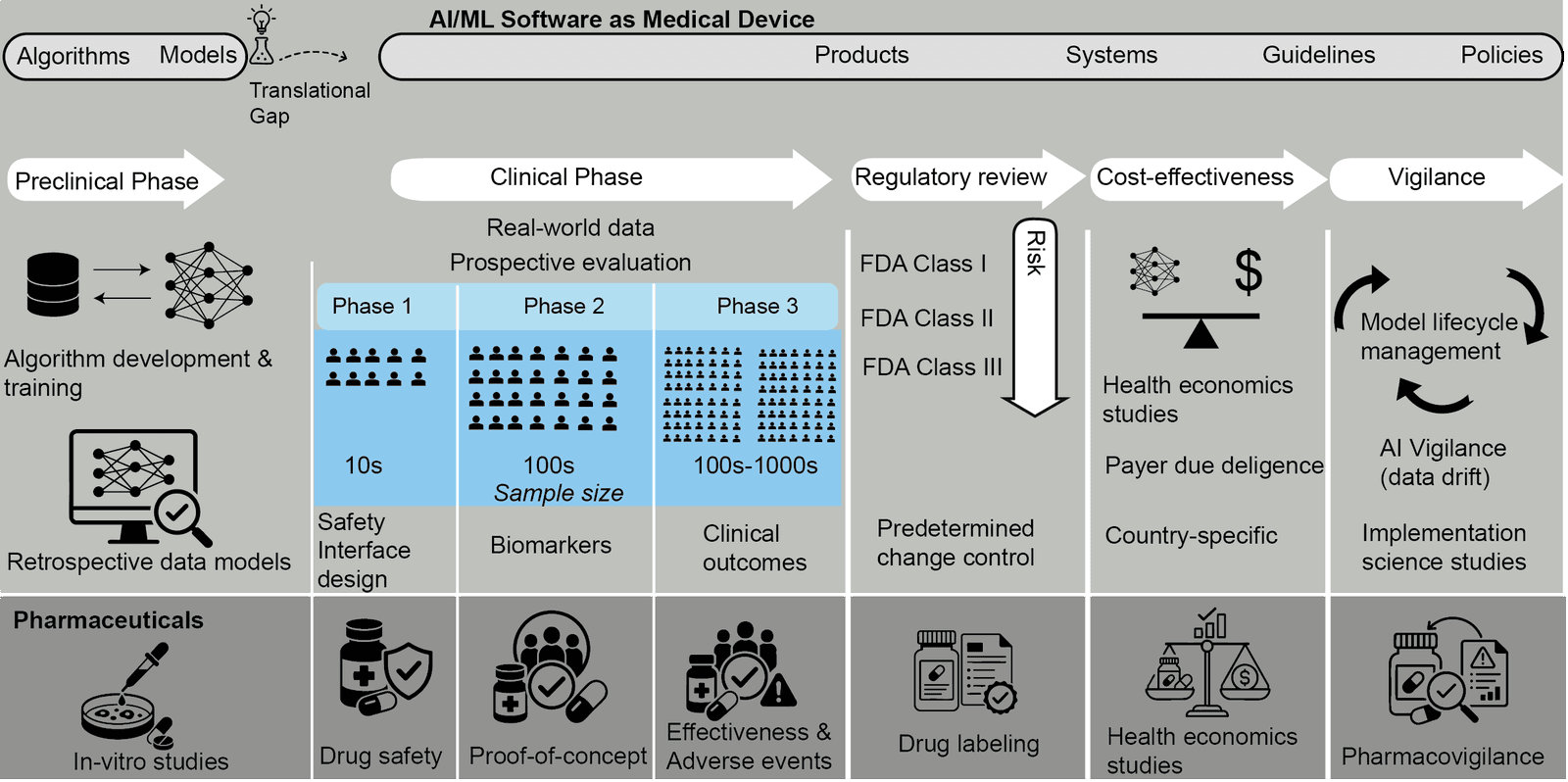
MS-PINPOINT's Arman Eshaghi has co-authored a new perspective in Nature Reviews Neurology examining why artificial intelligence in neurology has, so far, struggled to move from the research lab into everyday clinical practice — and what needs to change. (Nature Reviews Neurology)
The authors argue that neurology is full of promising AI prototypes, yet very few ever reach patients. Their central message is that the field must shift its focus from building ever more models towards the harder work of implementation: validating tools prospectively across many hospitals and countries, embedding them inside the clinical software and workflows that doctors already use, partnering with industry to reach real products, investing in shared data infrastructure, and actively guarding against bias so that under-represented patient groups are not left behind.
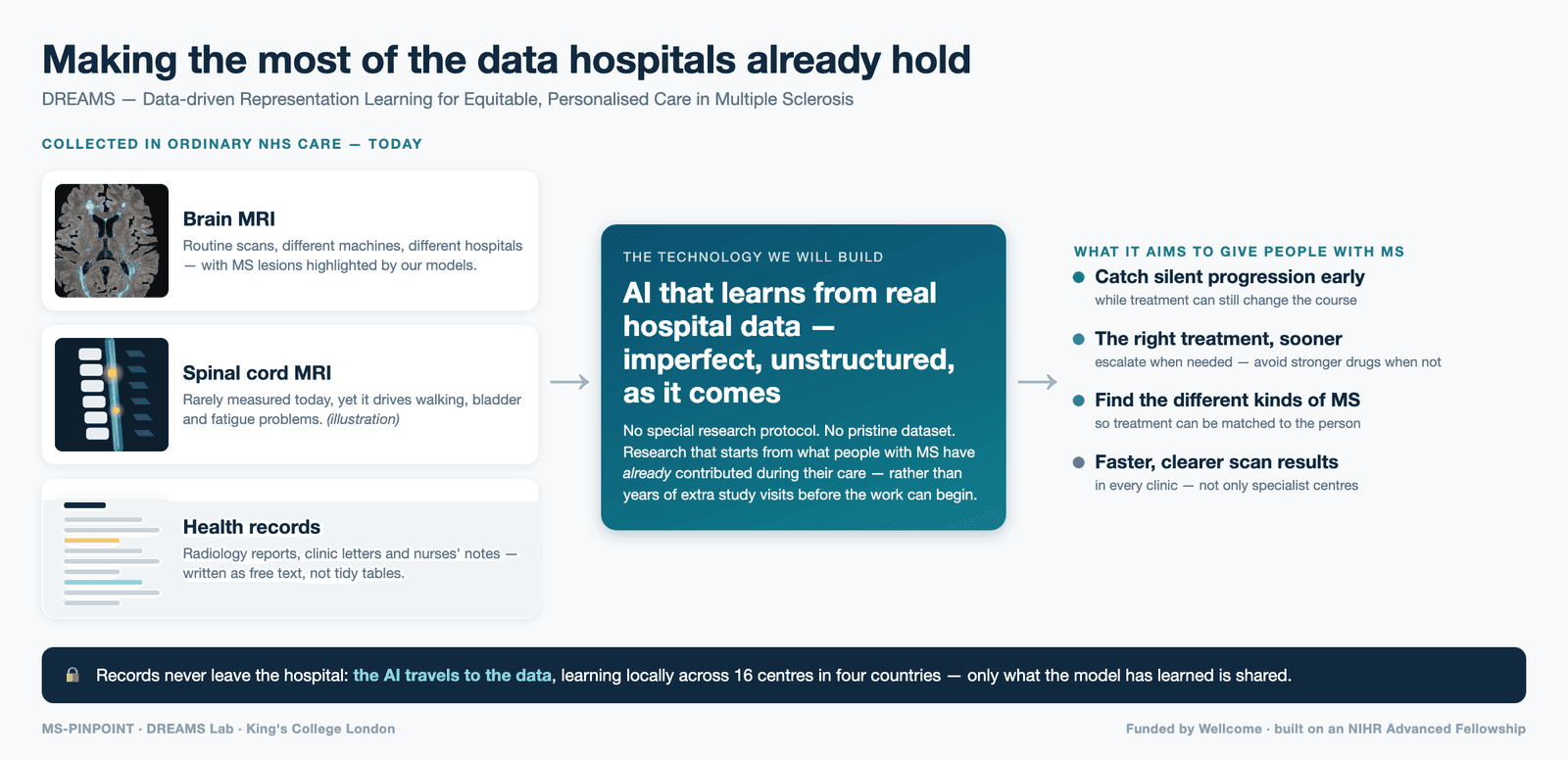
Multiple sclerosis features prominently as one of the imaging-rich areas where AI is advancing fastest. The perspective points to work from the MS-PINPOINT group — repurposing routine, "messy" hospital MRI archives for research and analysis — as an example of the kind of real-world robustness that AI must achieve to be clinically useful, rather than performing well only on pristine research data.
Looking ahead, this is exactly the gap MS-PINPOINT is working to close. By making quantitative MRI analysis reliable on the ordinary scans hospitals already collect, and by validating it across diverse sites, the group's tools could bring precise monitoring of lesions and brain and spinal-cord atrophy into routine care — not just specialist centres. In time, that could mean earlier detection of disease activity, better-informed treatment decisions, and fairer access to advanced monitoring for people living with MS, helping them get the right treatment sooner.